Hello, this is Ribbon Plastic Surgery, where we deliver natural-looking anti-aging.

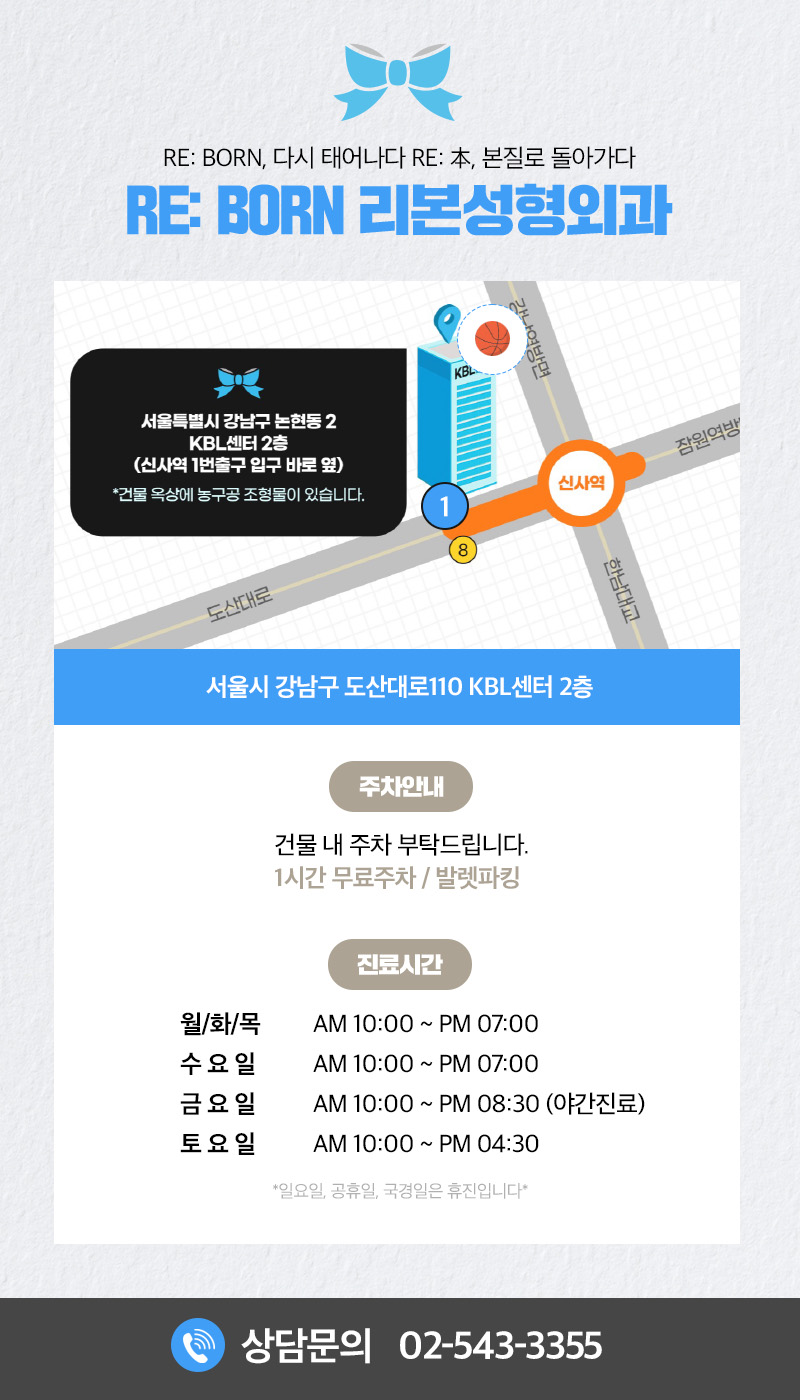
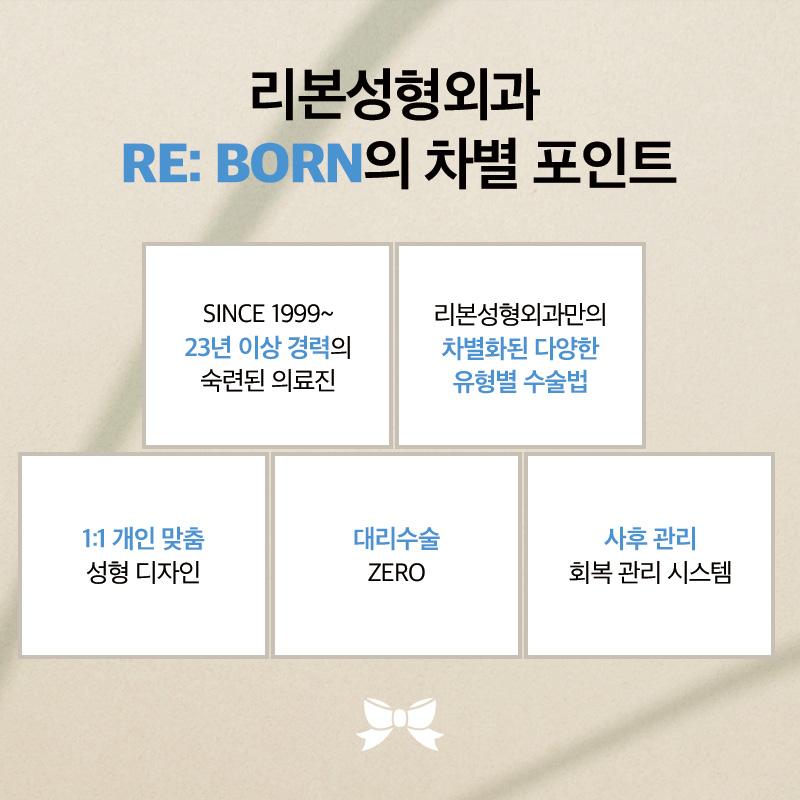
Our clinic opened in 2002 and has consistently met many patients at the same location, right by Exit 1 of Sinsa Station.
I emphasize this point because, given the nature of a local plastic surgery clinic, it is difficult to keep operating for such a long time unless patients continue to visit us.
It is also because the two directors have been delivering good results through years of experience, but...
Above all, I believe our philosophy of not providing excessive treatment and only guiding patients toward procedures that truly suit them has been the reason we have earned steady trust.
In particular, for the thread lifting we will introduce today, we have been performing the procedure from the early days when it first began in Korea for cosmetic purposes over 20 years ago, almost like a pioneer in the field, so we receive many inquiries.
Thread lifting is,
-
what kind of thread is used
-
how many threads are used
-
in what direction, and with what degree of tension, they are pulled
Depending on these various conditions, the difference in results can be dramatic.
It is often called an alternative to a facelift because the effect is immediate, and the maintenance period is relatively long compared with laser, ultrasound, and radiofrequency treatments, so I think many people take an interest in it.
In the article below, I will honestly share what I have learned from performing the procedure myself, and I will also clearly address the questions many of you have been asking.
I will summarize the key points of thread lifting through Q&A, so please read comfortably and I hope this will be a helpful time for you.
Q. How is thread lifting different from other lifting procedures?
Thread lifting refers to a procedure that uses a special medical material called a thread to physically pull the skin upward.
Other lifting procedures would typically include methods such as laser, ultrasound, and radiofrequency.
Procedures that use energy in this way usually concentrate heat in the deeper layers of the skin to damage tissue, and as it recovers, it helps with contraction and collagen synthesis.
Unlike threads, which focus on pulling with physical force, these lifting methods must go through a damage -> recovery process, so they can be described as a more indirect lifting method.
Of course, it is most important to use the method that matches the patient’s skin condition and needs...
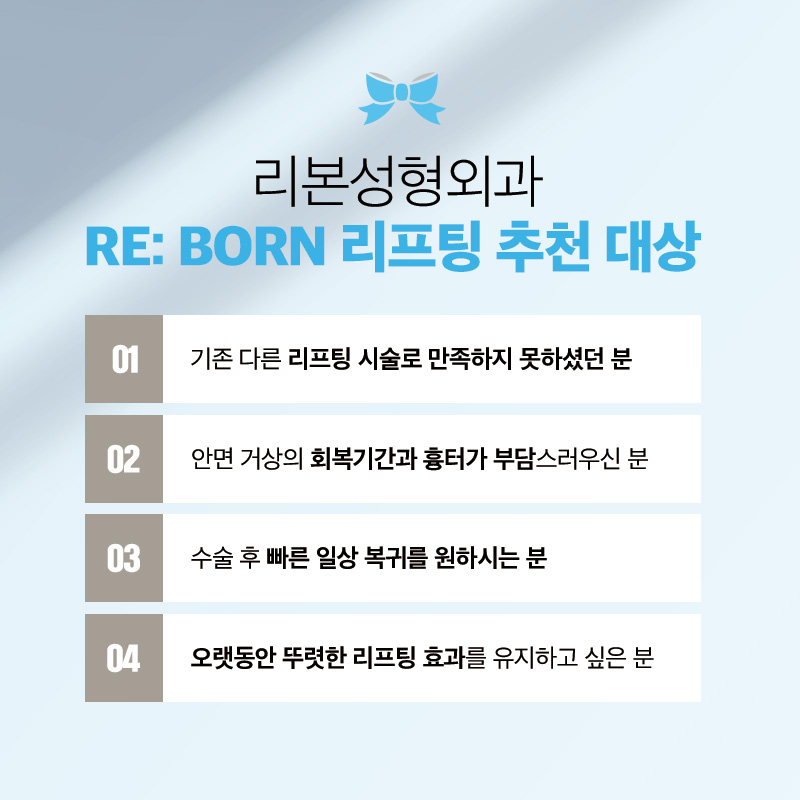
However, if repeated procedures are burdensome or the skin is severely sagging so the effects of the methods above are minimal, thread lifting is the more suitable option to consider.
 Q. What kinds of threads are used?
Threads come in various types depending on their material and whether or not they have barbs.
PDO threads are generally the most commonly used type, and they have the advantage of being safe because they are made from the same material as surgical sutures that have been used for a long time.
Even when inserted into the skin, they do not cause much foreign-body sensation, and since they gradually dissolve over time, they do not need to be removed separately.
The same is true for threads made of materials such as PLLA.
However, because they have a function that enhances volume, they are recommended more for areas that need more volume formation than PDO threads.
Threads are also divided by barbs into mono threads and barbed threads.
Mono threads do not have barbs, so their ability to hook into and lift tissue under the skin is limited, and they are used for purposes such as stimulating tissue and promoting collagen synthesis.
On the other hand, barbed threads can hook onto specific tissue and pull it upward, so they can be considered if you want a more direct lifting effect.
 Q. What are the advantages of thread lifting?
Thread lifting has two major advantages.
One is that you can directly experience the lifting effect.
As a result, the maintenance period is also relatively long.
Another is that it can efficiently lift specific sagging areas of the face.
By comparison, if we take lifting lasers as an example, it is very difficult to limit the procedure to only a specific point when considering the area covered by the handpiece or the purpose of the treatment.
So in a single session, we usually work on at least about one-third of the face.
However, thread lifting can also be used for targeted lifting when a specific area, such as the buccal fat area, nasolabial folds, neck lines, or a double chin, is especially prominent or sagging.
 Q. I heard some people say their cheekbones looked bigger after thread lifting...
Cheekbones appearing larger or the face looking more prominent happens when relatively short lifting threads are inserted beside the cheekbones and pull the nasolabial folds and buccal fat area, causing the soft tissue to gather toward the cheekbones.
In fact, ordinary lifting threads tend to be relatively short.
That is why, when lifting the lower face is necessary, inserting them below the hairline instead of at the hairline can leave a scar and may also cause the cheekbones to look more prominent.
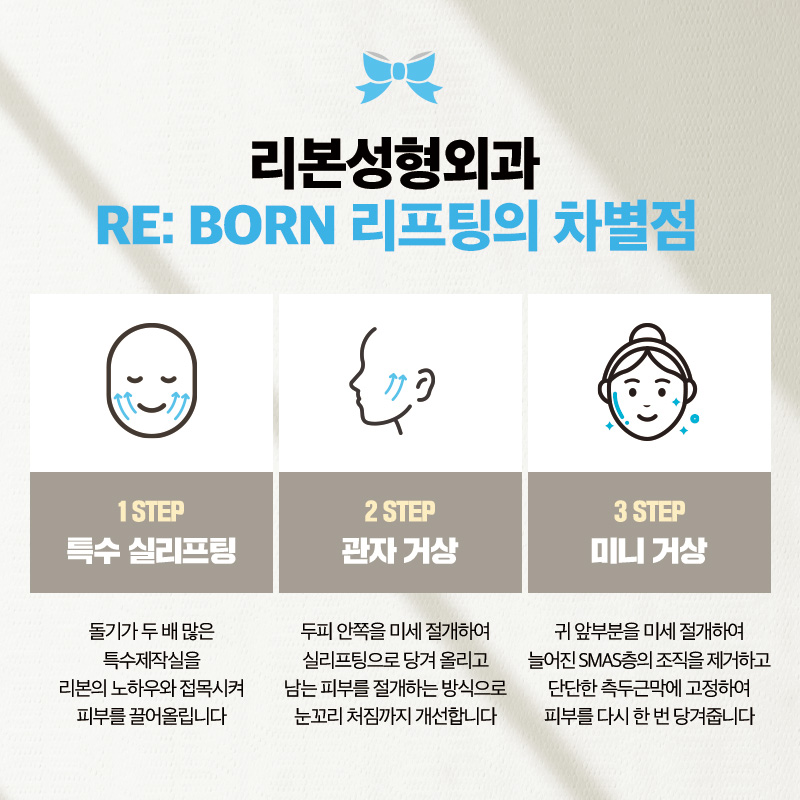
To reduce these issues, our clinic directly makes and uses longer threads.
When longer threads are made and used, they can be inserted at the hairline, so the insertion point is not visible. In addition, they pull from the insertion area, not toward the cheekbones, allowing a smoother lift from the lower face upward.
If you visit our clinic in person, I personally show you and verify this, so please keep that in mind.
Today, I answered some of the questions people often ask about thread lifting.
I spoke honestly, and I hope it was helpful.
Our clinic also operates a YouTube channel to provide various information about thread lifting.
We explain things in more detail while looking at photos directly, so please refer to it if you need help understanding.
Thank you for reading this long post.