Hello, this is Ribbon Plastic Surgery near Sinsa Station.

There are many types of lifting procedures to consider when you are concerned about sagging skin.
Today’s topic is thread lifting, but there are also methods such as laser, ultrasound, and radiofrequency.
However, if you ask whether these procedures directly help with “skin lifting” in the literal sense, it is not easy to answer with a firm yes 100% of the time.
That is because the effects of each procedure vary greatly, and the methods are divided into direct and indirect approaches, making it difficult to group them all under the same term, “lifting.”
For example, laser, ultrasound, and radiofrequency treatments work by delivering energy to a specific layer of the skin, damaging the tissue, and then helping collagen regenerate during the recovery process.
At this point, the tissue damage is somewhat similar to a burn, so you can expect a temporary tightening effect as the tissue contracts.
However, if you want a noticeable lifting effect, the inconvenience is that the treatment may need to be repeated often.
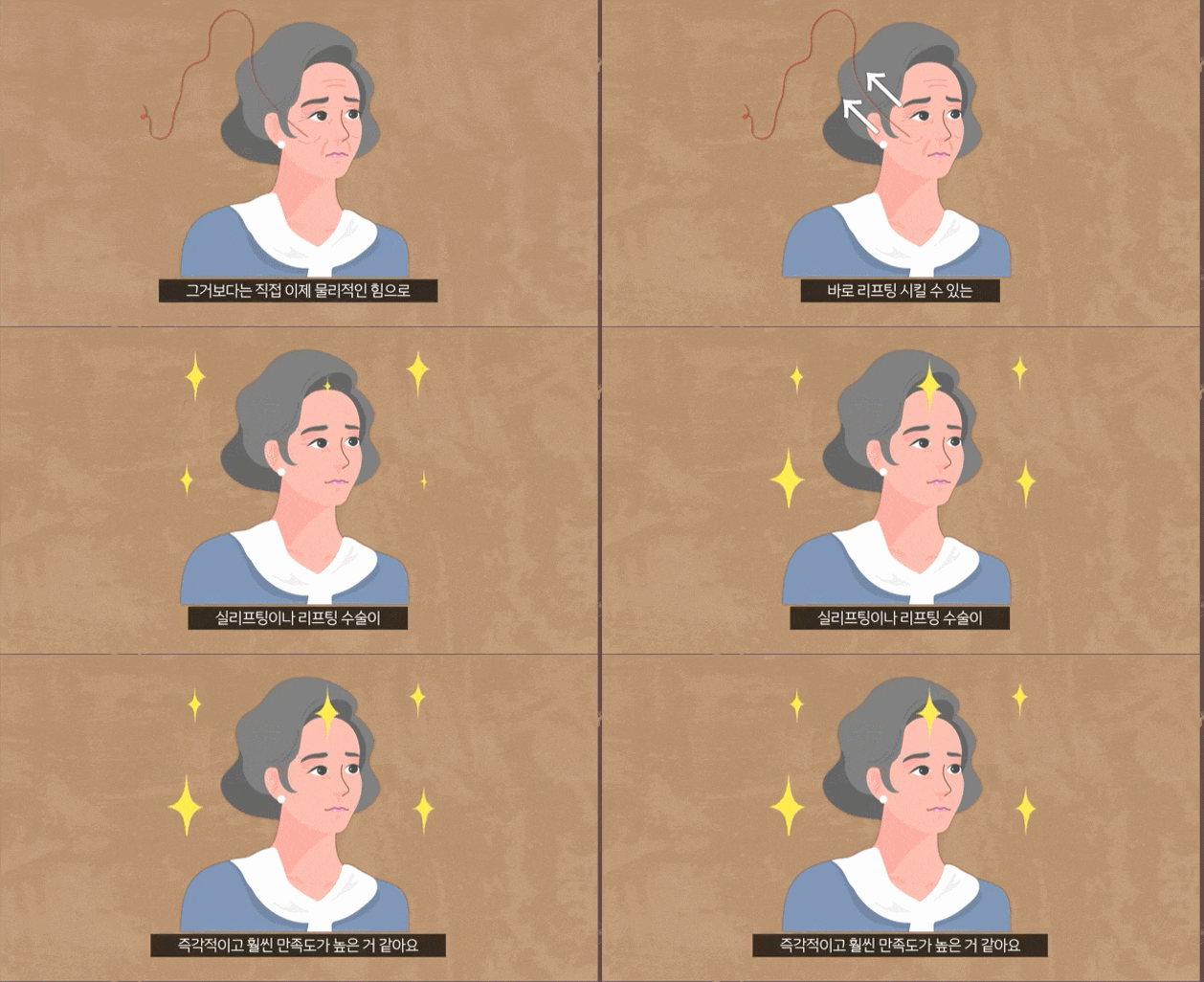
On the other hand, thread lifting involves inserting threads into the skin layer and physically pulling it, so you can expect a more direct “lifting” effect.
That said, thread lifting is performed differently depending on the plastic surgery clinic, and the products used and their effects also vary, so it is advisable to decide on the procedure only after thorough consultation.
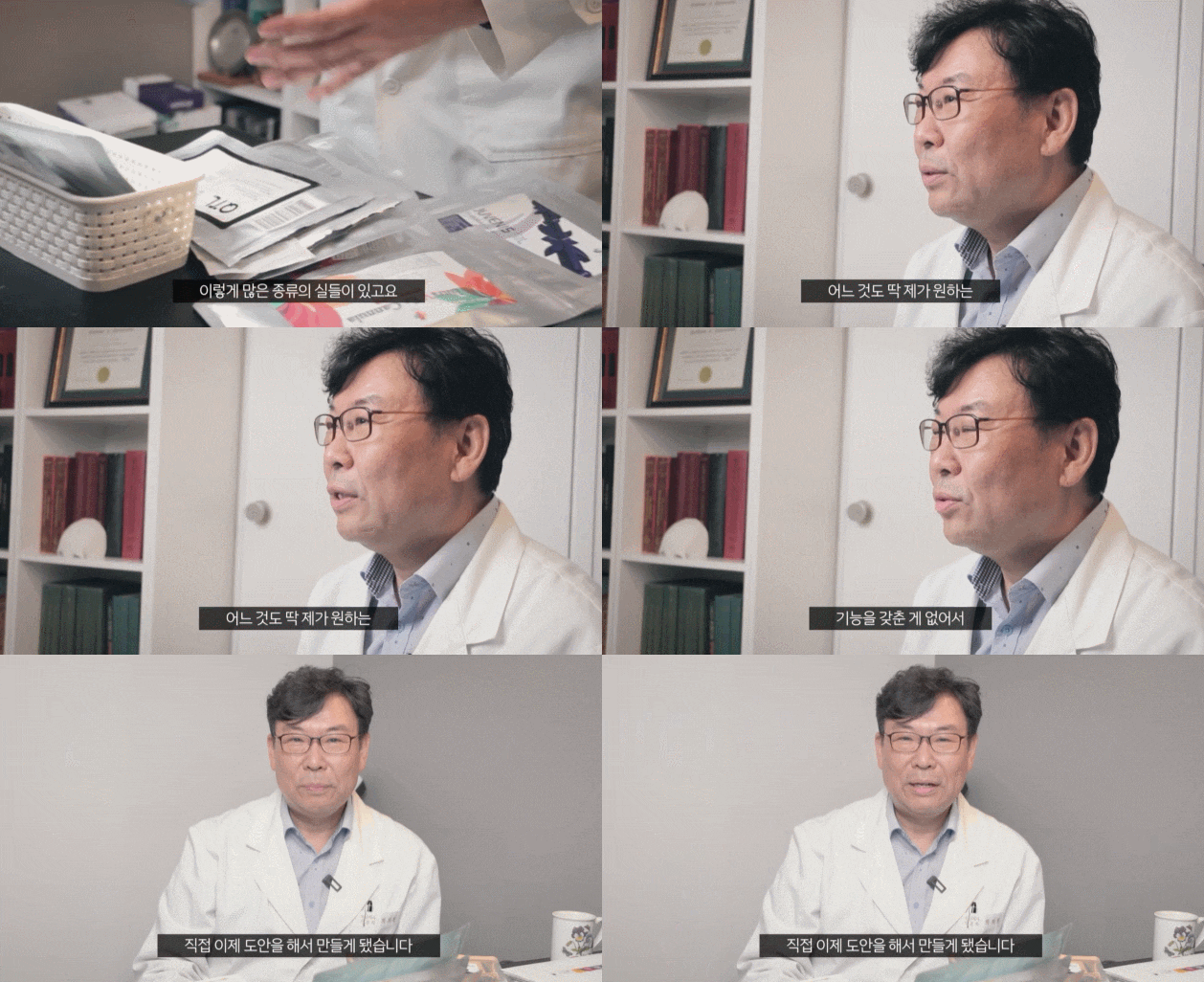
At our clinic, we even manufacture and use our own threads for more satisfying results.
Today, I would like to talk about this in relation to thread lifting.
I will explain the reasons in detail in the following article, so please read comfortably and take away some useful information. ^^
What is good about longer threads?
Commonly used cog threads for lifting have cogs, that is, “barbs,” positioned around the 7 to 8 cm point depending on the product.
In fact, once such a thread is inserted into the skin, it is not that long.
Especially when strong lifting is needed, the thread must be passed through the front area near the hairline, the part right next to the cheekbone, so that it can then be hooked near the nasolabial fold and pulled upward.
The biggest problem in this case is that the force of the thread becomes concentrated around the cheekbone, which can make the cheekbones appear more prominent.
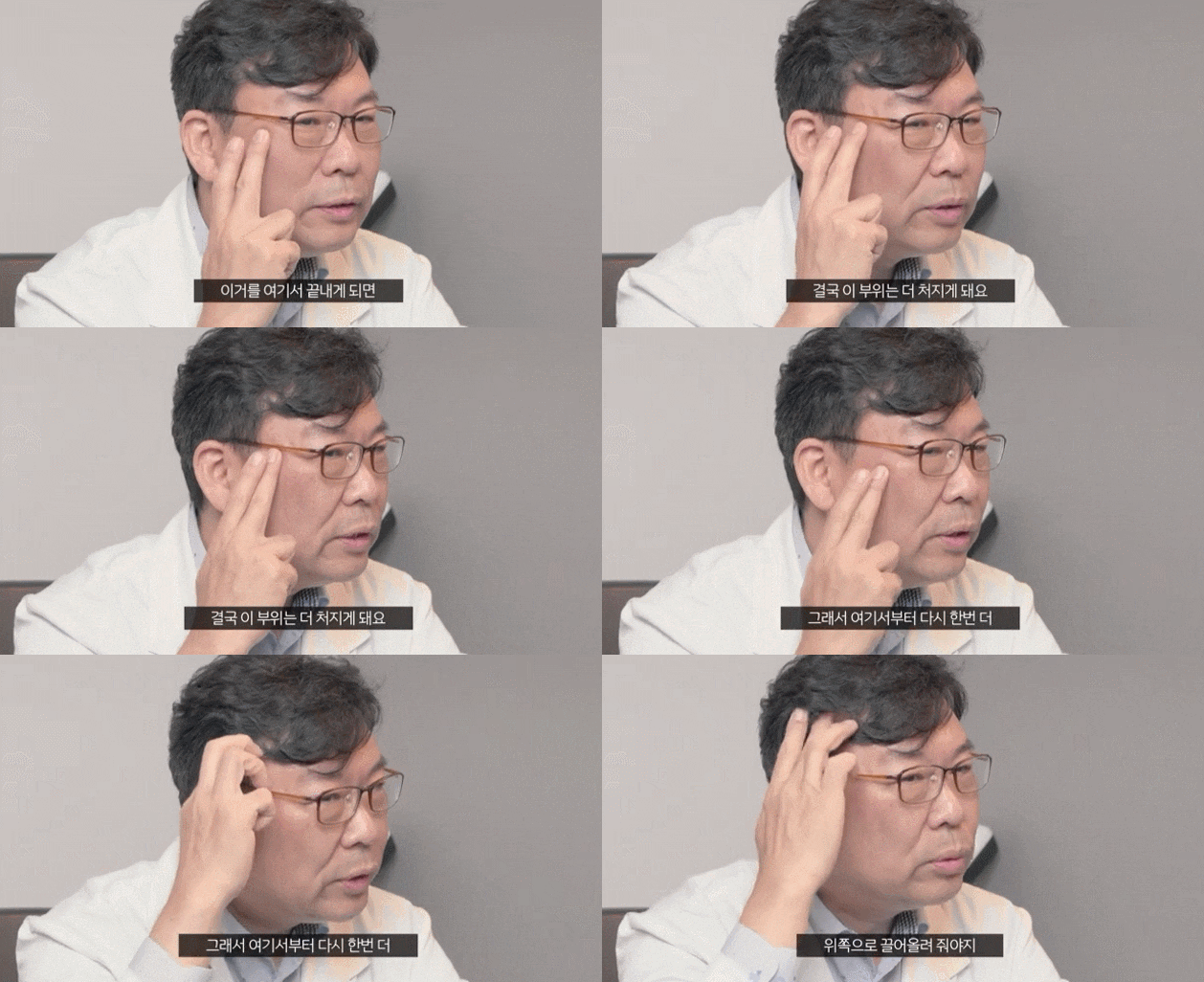
After thread lifting, some patients sometimes say that their cheekbones became more prominent or that their face looks bigger, and this is precisely why.
Also, if the thread is inserted right beside the cheekbone, a scar exposed to the outside is more likely to remain there, so it is true that this can also increase the burden in that respect.
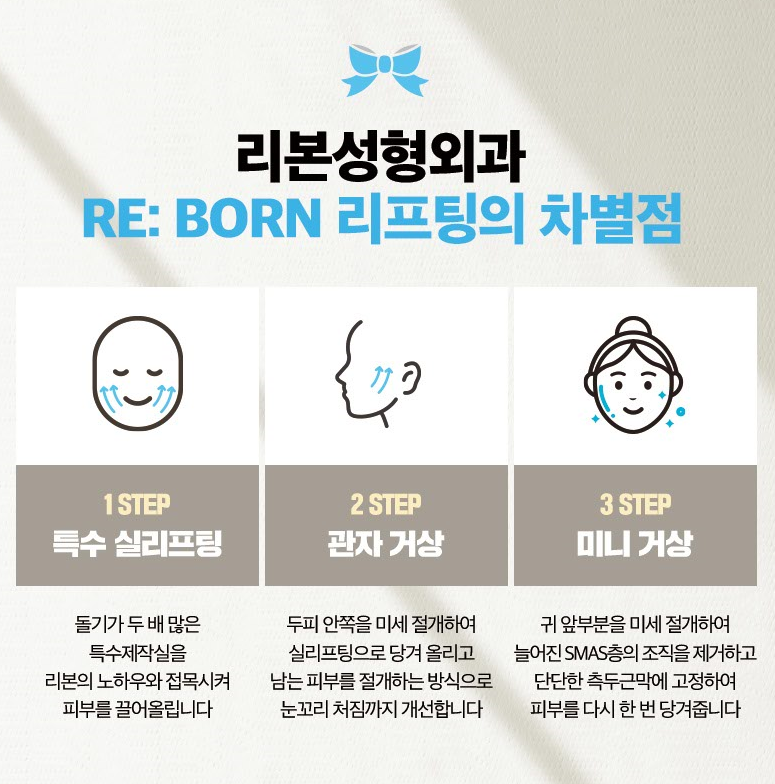
That is why our clinic independently makes and uses much longer threads.
When the thread is longer, the lifting range extends to above the hairline instead of starting from the cheekbone.
Naturally, this has the advantage of making the insertion point less visible because it is hidden by the hair, and because the force is not concentrated on the cheekbones, a much softer lifting effect becomes possible.
Thread lifting that simply pulls upward unconditionally should be avoided.
Because skin sagging usually progresses in the direction of gravity, many people think thread lifting should be done in the opposite direction of gravity.
That is not exactly wrong, but it cannot be said to be entirely correct either.
This is because skin aging is accompanied not only by sagging but also by wrinkles and enlarged pores.
In particular, wrinkles do not appear only horizontally; they can also appear vertically or diagonally, so pulling only upward can actually make wrinkles stand out more.
Therefore, if the goal is to improve wrinkles, the direction and strength of the pull should be planned by considering the direction of the wrinkles in order to expect stable results.
Even for people in the same age group, the type of thread used will differ depending on the degree of skin aging.
For people in their 20s and 30s, sagging is usually not very pronounced and tends to show up as a loss of elasticity, so inserting mono threads to promote collagen formation is helpful.
On the other hand, after the 40s, sagging becomes visible, so it is the right approach to use cog threads for lifting purposes.
Some people also have hollowing along with sagging, and in such cases, it is more efficient to use special threads such as Silhouette Soft to help create volume as well.
Silhouette Soft has round barbs, and because it greatly helps collagen regeneration after insertion, it is also used in a variety of volume-related procedures.
Our clinic continues to study thread lifting in order to achieve even slightly better results.
Since we have been performing the procedure since decades ago, when thread lifting first came to Korea, we will continue to show good results with a spirit of ongoing study.
Thank you for reading this long post.