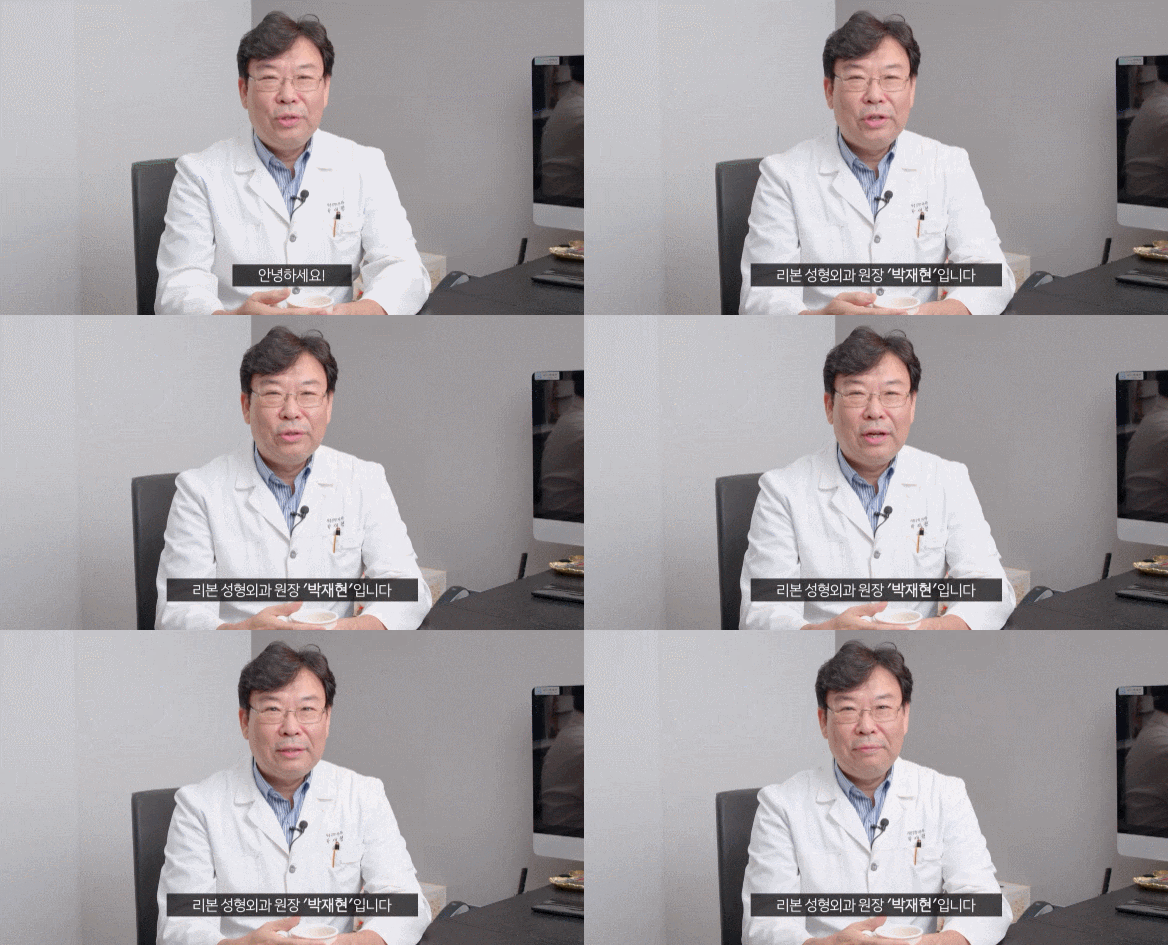
Hello. This is Ribbon Plastic Surgery, located at Exit 1 of Sinsa Station. :)
Sometimes patients visit our clinic because their eyes always look sleepy.
In such cases, some people draw their eyeliner thicker to create a stronger impression, or they force their eyes open, which can leave noticeable wrinkles between the eyebrows or on the forehead.
In many cases, people say, "I want to look naturally pretty even when I open my eyes comfortably."
What kind of surgery do you think is usually needed to improve sleepy eyes? Nine out of ten people would say 'double eyelid surgery.'
People with double eyelids may want them more defined, while those without them may think that folding the skin once can make the eyes much bigger and more defined.
However, it is important to understand that 'sleepy eyes' are not simply a skin issue.
When eyes look sleepy, it means they are not opening properly, and the tissue used to open the eyes is not the skin but the 'muscle.'
In other words, the sleepy-eye appearance happens because this muscle becomes loose.
In this case, double eyelid surgery that folds the skin does not solve the problem and may even make the eyes look sleepier, so caution is needed.
What is needed here is 'eye correction.' Eye correction refers to a surgical method that strengthens the muscle for sleepy eyes and uneven eyes.
- What is ptosis?
- Non-incisional eye correction
- Incisional eye correction
Today, we will go over these three topics in detail!

What is ptosis?
Ptosis means drooping eyelids. There are various reasons why the eyelids droop.
It can occur congenitally due to weak muscle strength at birth, or later in life when the levator muscle of the upper eyelid is injured, when its nerve is damaged, or when a neuromuscular disease such as myasthenia gravis is present.
Among these, the most common is the natural and gradual weakening of muscle strength due to aging.
As you know, muscles are located deeper than the skin.
However, if only the skin is folded at this time (double eyelid surgery), the loosened muscle remains underneath, making the eyelid crease look higher and creating an even sleepier impression.
Eye correction is the surgery performed in such cases. Simply put, it can be understood as a procedure that strengthens the function of the levator muscle, which opens the eyes.

Non-incisional eye correction and incisional eye correction
- Non-incisional eye correction
Non-incisional eye correction is a method of adjusting the levator muscle through a few small holes without making an incision.
The recovery period is about 2 to 3 days, and because there is less scarring and swelling, it allows a quick return to daily life.
However, it is recommended only for patients with mild ptosis whose eyelids are thin and who have little fat or muscle.
Ptosis can also occur later in life due to aging.
Because the muscle does not suddenly weaken but gradually becomes weaker over time, patients above a certain age should be considered to have at least a slight degree of ptosis.
At this time, slightly strengthening the levator muscle can help make the eyes look bigger and more defined.
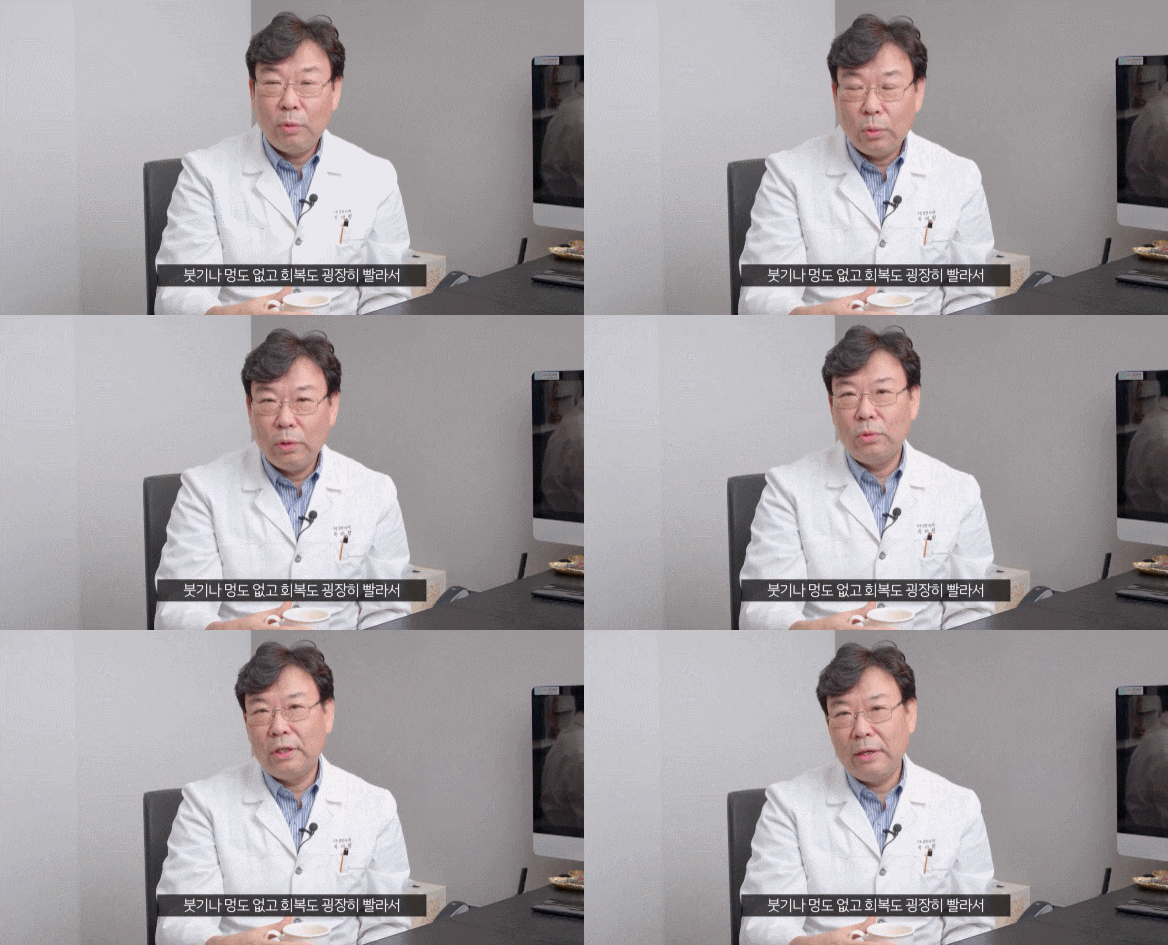
- Incisional eye correction
However, if ptosis is severe, incisional eye correction should be considered.
This method involves making an incision, removing some unnecessary muscle and fat, and then strengthening and fixing the levator muscle.
Because an incision is made, the recovery period is longer than with the non-incisional method, taking about a week, and bruising and swelling may occur during this time.
When only one eye looks sleepy, it is commonly referred to as 'uneven eyes.'
Ptosis can occur on both sides or on only one side.
Even if ptosis is present on both sides, the eyes may differ in size depending on the degree.
In this case, the size difference between the two eyes creates an appearance similar to uneven eyes.
However, operating only on the one eye with more severe symptoms does not necessarily make everything normal.
Opening the eyes happens because neurotransmitters sent from the brain arrive and signal the eyes to open. If only one eye is corrected, this transmission signal may be disrupted, and even the other eye, which was mild, may end up drooping.
Of course, sometimes only one eye is operated on, but if it is judged to be unavoidable during the procedure, both eyes may be operated on.

We explain this in advance to patients before proceeding, so there is no need to worry too much.
If you visit our clinic, you can have a more detailed consultation about eye correction.
Please know that Ribbon Plastic Surgery is always working hard for your healthy eyes.
Thank you. ^^