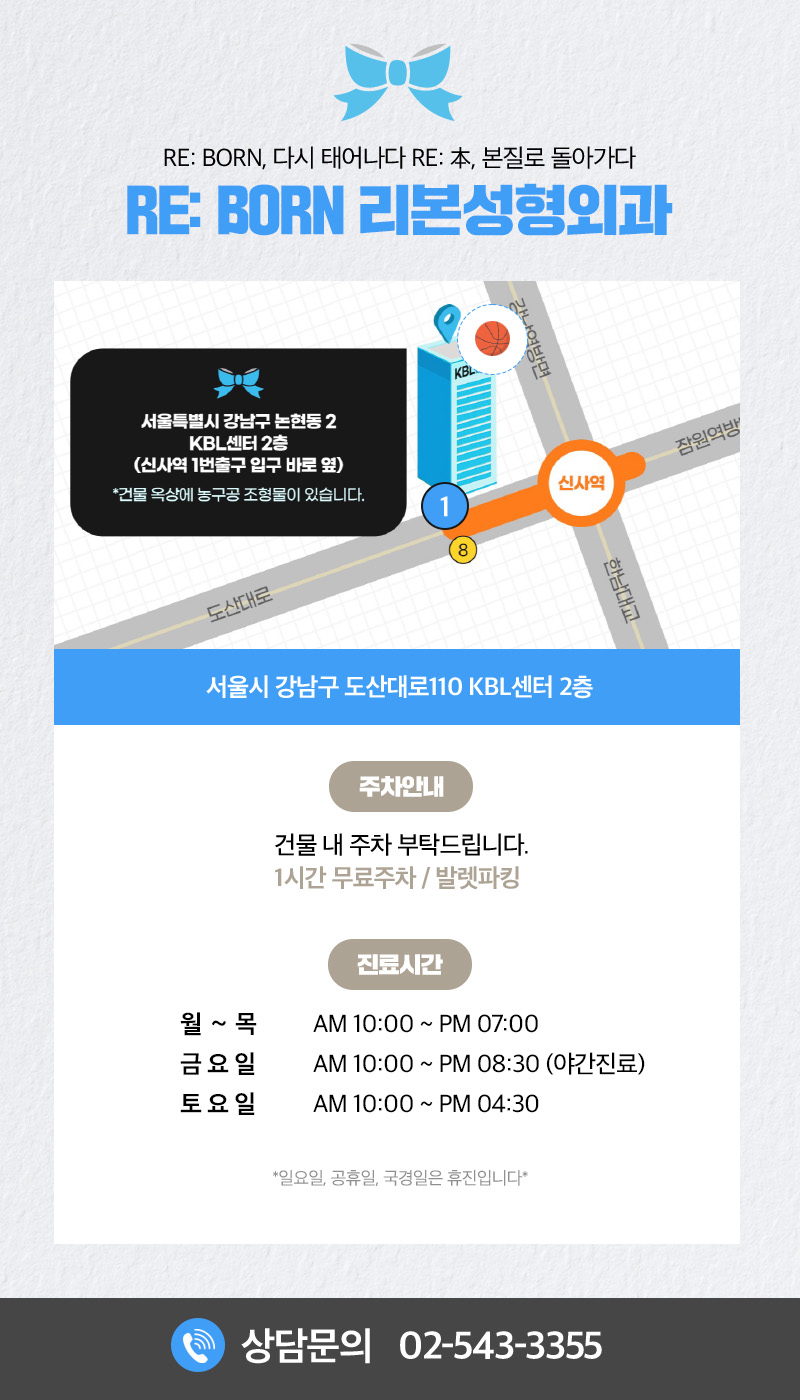
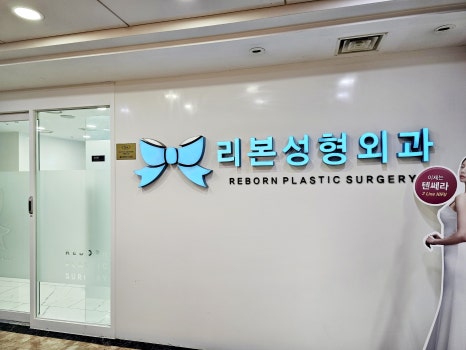
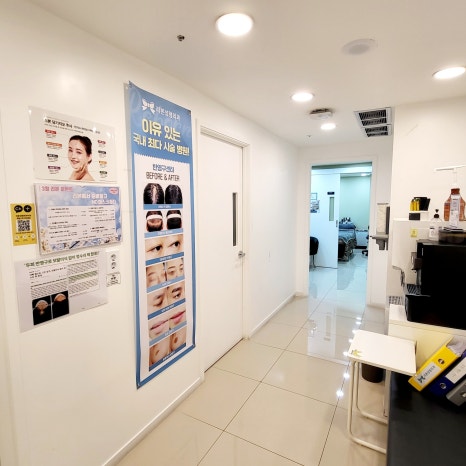
Hello. We are Ribbon Plastic Surgery, meeting you at Exit 1 of Sinsa Station. :)
These days, many people who are over 60, the usual retirement age, are still active in society and maintaining many interpersonal relationships.
In the past, people used to say that once you turned 60, you were already elderly, but there has been a lot of discussion about that standard these days. This is because advances in medical technology have increased life expectancy, and many people are healthier than their age would suggest.
Perhaps because of that, interest in lifting surgery has been increasing every year.
That is because many people want to achieve faster and more noticeable results than with general lifting procedures by surgically tightening sagging skin.
However, lifting surgery is still, after all, a 'surgery' that involves incisions in the skin.
Careful and thorough checks and diagnosis before surgery are essential.
If you make a hasty decision, there are cases where the face may become too unnatural, or a reoperation may be needed due to nerve paralysis, so it is important to determine whether the doctor is skilled and has performed lifting procedures sufficiently.
Among these, the part we will introduce today is the temple lift, commonly called temporal lifting (three-step temple lift).

What is the three-step temple lift?
What we commonly call a 'facelift' is a method that lifts the upper face and the side areas, in other words, the 'entire face.'
In this case, the advantage is that the effect is excellent, but because the incision area is very large and the surgery must be performed while preserving the nerves of the entire face, it is true that the burden on the patient is significant.
The cost is naturally also high.
On the other hand, procedures referred to as mini lifts, such as forehead lifts or temple lifts, can lift the upper face and side areas respectively, offering customized solutions based on the patient’s concerns, with lower cost and less surgical burden.
In the case of the three-step temple lift, it is generally understood as a lifting procedure that can correct the side to lower face.
By making a small incision near the temple area, it can lift the cheekbones, sagging skin below the cheekbones, the jawline, and the double chin, depending on the degree of laxity.
After surgery, the jawline becomes more refined and jowls are reduced to some extent, allowing for a slimmer and more sophisticated impression than before.
However, compared to a facelift, the incision area is limited and the dissection and correction range are also narrower, so it is better to be aware in advance and discuss this during consultation that there is a difference in effectiveness compared to a facelift.
If you decide on surgery without sufficient consultation because you heard that 'a temple lift can give you a sharp jawline,' there is also the possibility that the results may fall short of expectations, leading you to undergo a facelift afterward.
That is why, at our clinic, the directors who have performed temple lifts for a long time provide one-on-one consultations and only recommend the procedure when it is truly necessary, while also considering other possibilities and guiding patients toward a treatment plan that suits them. :)

Lift the SMAS layer, which also causes skin sagging
The SMAS layer stands for Superficial Muscular Aponeurotic System, and refers to the subcutaneous fat and muscle layer within the skin. It covers the entire face and exists between the skin and the facial expression muscles.
Because it functions to transmit the movement of facial muscles to the skin, it has a very thin structure. The problem is that it is too thin and firmly attached to the skin, making it highly vulnerable to gravity.
So when the SMAS layer loosens, it can create sagging cheeks and change the overall shape of the face.
When performing a three-step temple lift, it is important not only to pull the skin but also to simultaneously lift the SMAS layer underneath.
Below the SMAS layer are the retaining ligaments that hold the skin tissue in place.
Only after sufficiently separating the skin and SMAS layer and properly releasing the retaining ligaments underneath can the area be smoothly lifted back to its pre-sagging state.
When this is done, the resistance between the skin and muscle layer is reduced, leading to a great effect on improving wrinkles, and most importantly, it provides a foundation for the side incision area to heal well.
Isn’t it dangerous?
Because this is a surgery that involves an incision in the side scalp, many patients worry about its risks.
The temple area is a sensitive region, and because it is where the hair roots and hair follicles that grow hair are located, a very delicate approach is needed.
At our clinic, directors with sufficient experience personally perform the surgery, and by making incisions in a way that protects the hair follicles and hair roots, it is possible to preserve the nerves and even the hair.
For more details, you can visit Ribbon Plastic Surgery and discuss them in greater depth.
We will continue to strive to deliver beautiful results while always putting patient safety first. Thank you. :)