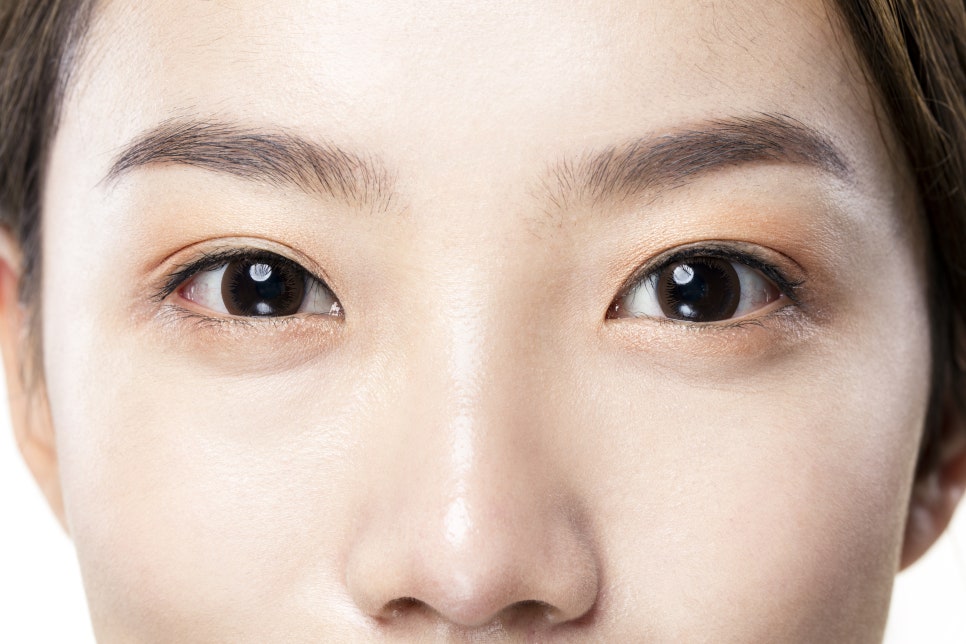
I believe those of you reading this article are looking into “eye correction” because of concerns like the following.
-
One eye is noticeably smaller than the other.
-
The eyelid droops, so you have to lift your head to look at something in front of you.
-
You have a habit of raising your eyebrows to open your eyes better, and your forehead is wrinkled.
-
Your two eyes look uneven, so you feel self-conscious when meeting people.
-
You have been told that your eyes make you look unfriendly.
-
Your eyelids obstruct your field of vision, making it hard to see ahead.
-
Your eyes feel heavy, and even after having double eyelid surgery, you strangely still look sleepy.
The eyelids are located above and below the eyeball in a shape that wraps around it. Among them, the upper eyelids are mainly made up of the muscles that open and close the eyes, so they have a major influence on widening the field of vision.
However, if this function of the upper eyelid is impaired for any reason, it can cause various inconveniences, such as difficulty seeing ahead or using the muscles above the eyebrows to recognize objects.
The medical term for this is “ptosis.” Ptosis literally means that the eyelid is drooping.
In general, many people experience ptosis as skin and muscles loosen with aging. However, some people are born with weakened muscles and have congenital ptosis.
So it is better to understand that ptosis is not a treatment limited only to middle-aged and older adults.
At Reborn Plastic Surgery, we often see people in their 20s and 30s who say, “I had double eyelid surgery at another plastic surgery clinic, but somehow my eyes seem even more tired.”
Through the director’s consultation, we find that in such cases, the muscles, not the skin, are congenitally loose, and in these cases, eye correction is needed to tighten the muscles and improve the sleepy appearance.
Ptosis can present differently in terms of severity from person to person depending on various causes such as congenital factors, aging, and lifestyle habits. Therefore, when undergoing eye correction, a surgical plan tailored to each individual must be established to produce stable results.
There are two main types of eye correction: non-incision eye correction and incision eye correction.
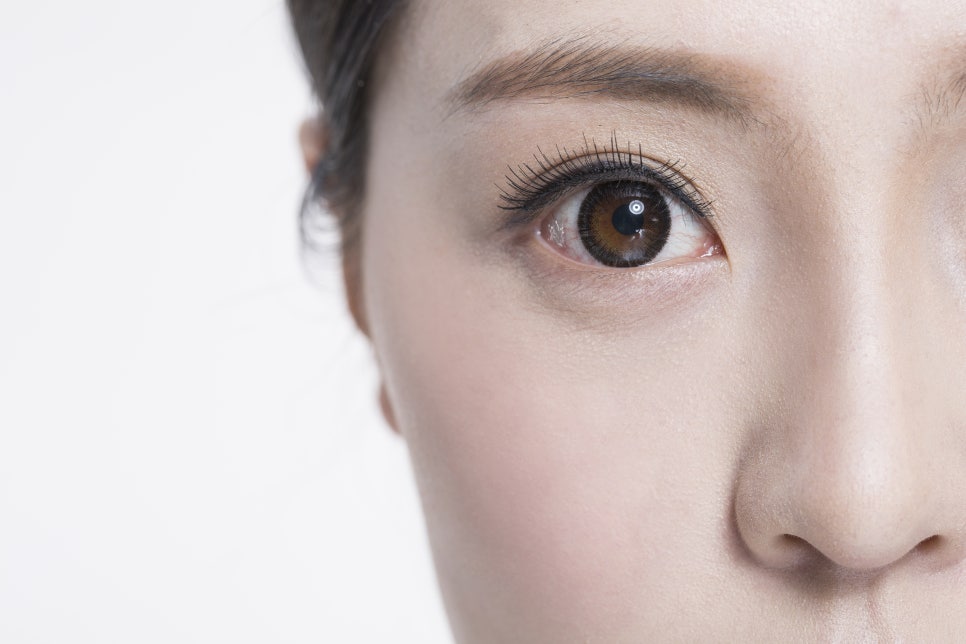
Eye Correction Definition
Eye correction is a surgical method commonly used to correct sleepy-looking eyes and uneven eyes.
When the drooping of the upper eyelid skin originates from the “muscle,” surgery is performed in a way that shortens the loosened muscle.
To give an example, imagine tying a stone to a rubber band and hanging it somewhere. As time passes, the rubber band loosens, and the stone will also move downward.
If you cut that rubber band once, remove the stretched-out part, and then tie it again, the stone will return to its previous position, right? Surgery performed on a similar principle is called “eye correction.”
However, because ptosis varies in symptoms and stages depending on the individual, the surgical method also differs slightly. The table below summarizes the differences between the non-incision and incision methods. :)
| Non-incision eye correction | A method that shortens the muscle without making an incision. It has the advantage of a faster recovery period. However, it is suitable only when the symptoms are mild, the eyelids are thin, and there is little fat. |
|---|
| Incision eye correction | A method that shortens the muscle through an incision and can be applied to a wide range of ptosis symptoms. Because an incision is made, the possibility of scarring is higher than with the non-incision method, but you do not need to worry too much because our clinic provides thorough aftercare. It is suitable for moderate to severe ptosis and is recommended for those who use their forehead and eyebrows a lot or who have impaired vision as a result. |
If the eyes are uneven, is it possible to perform eye correction on only one side?
Yes.
However, many plastic surgery specialists recommend operating on both sides whenever possible.
As mentioned earlier, the eyelids are areas that move, such as blinking, because of muscles, so they are influenced by the brain’s neurotransmitters.
But if only one eye is corrected, this neural circuit can be disrupted, and even the normal eye may end up closing. That is why surgery on both eyes is usually recommended.
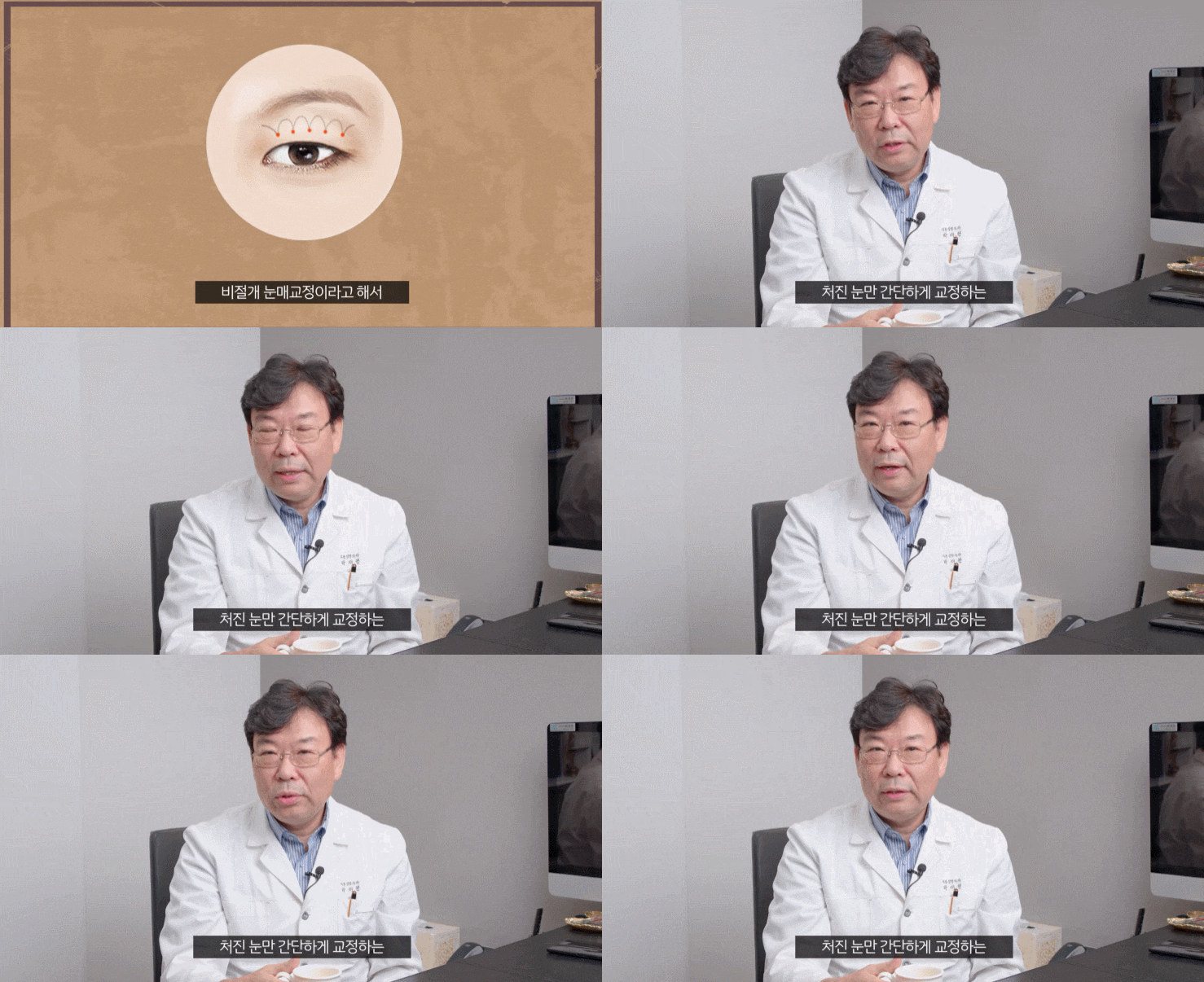
Remember that none of these procedures should be rushed, and you must always consult with a board-certified plastic surgeon to receive guidance on the surgical method that is right for you!
At Reborn Plastic Surgery, our team includes board-certified plastic surgeons with decades of experience. If you need expertise, feel free to contact us at any time.
Thank you. :)