Upper and lower eyelid surgery is what is often called a “filial piety” cosmetic procedure, an anti-aging surgery that children or grandchildren do for their parents or grandparents.
As life expectancy rises and more middle-aged and older adults remain active in social life even after their 60s and 70s, this kind of filial-piety cosmetic procedure has been gaining popularity.
However, among the people who come to Reborn, there are quite a few who seem to have been dragged in reluctantly by their grandchildren and express discomfort with plastic surgery itself.
On one hand, they may feel grateful that their grandchildren want to do it for them, but on the other hand, some people who are reluctant about cosmetic surgery may also feel burdened and hesitant at the thought of having surgery at an age like this...
But middle-aged eye surgery is not simply a procedure focused only on aesthetics.
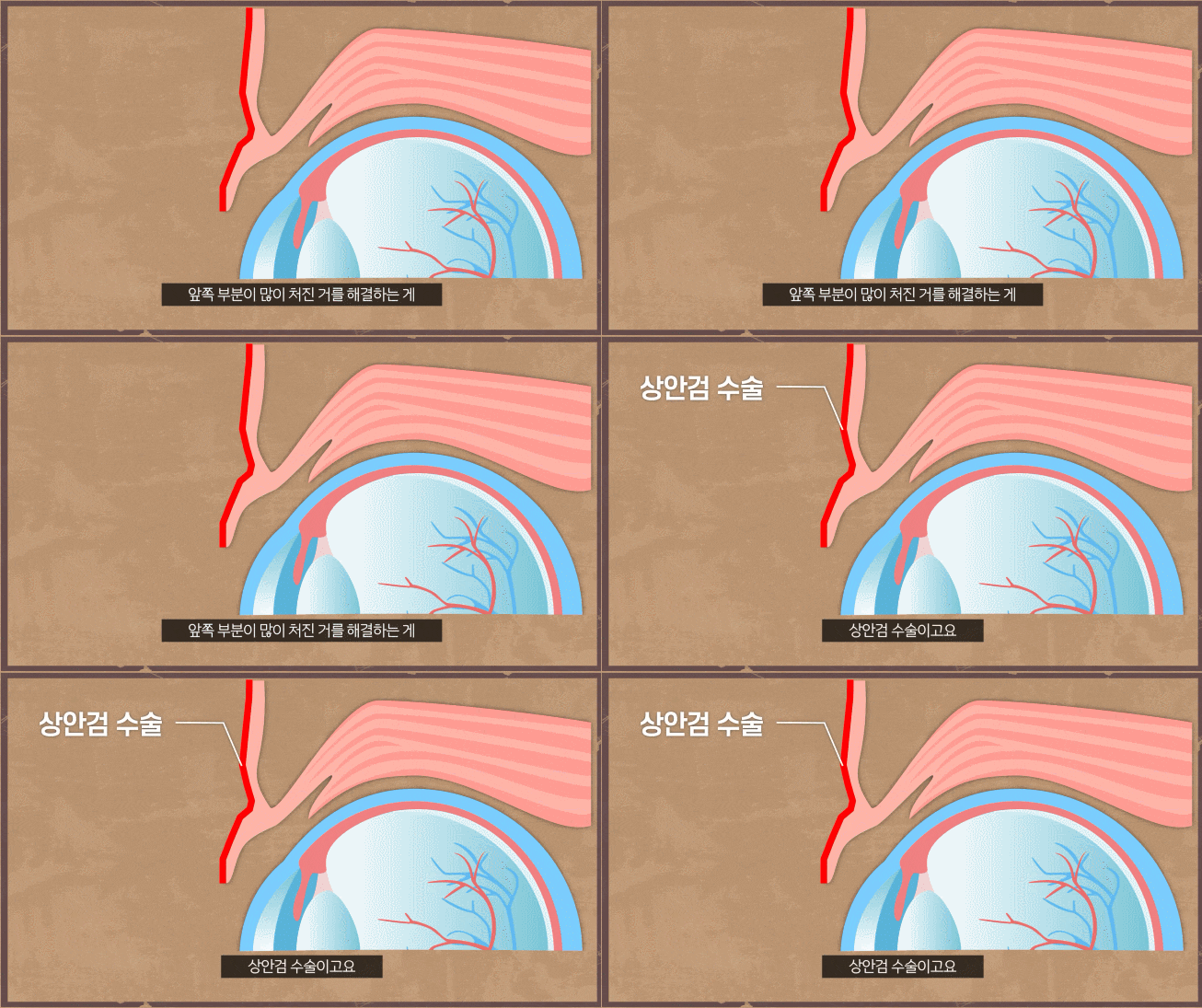
As we age, the first thing to become thin and sag is the eyelid.
Because the eyelids ① protect the eyes and ② affect opening and closing the eyes, sagging eyelids can naturally cause problems in these functional areas as well.
So middle-aged eye surgery refers to surgery that restores eye function while also creating a healthier and younger-looking eye appearance.
“It’s kind of them to offer, but I’m worried it might be too expensive...” In consultations, even middle-aged and older patients who are open to cosmetic surgery almost always say this.
Because they love their children and grandchildren, many people also say, “I’ll think about it if you let me do it at a cheaper place~” because they don’t want to spend money unnecessarily, right?
However, you should not overlook the fact that looking for a plastic surgery clinic with low upper and lower eyelid surgery prices can expose you to serious side effects instead.
Today, I’ll go over the representative side effects of upper and lower eyelid surgery and summarize how the procedure should be performed to help prevent them.
😀 Today’s topic!
① What are upper and lower eyelid surgery?
② What are the side effects of upper and lower eyelid surgery, and how can they be prevented?
① What are upper and lower eyelid surgery?
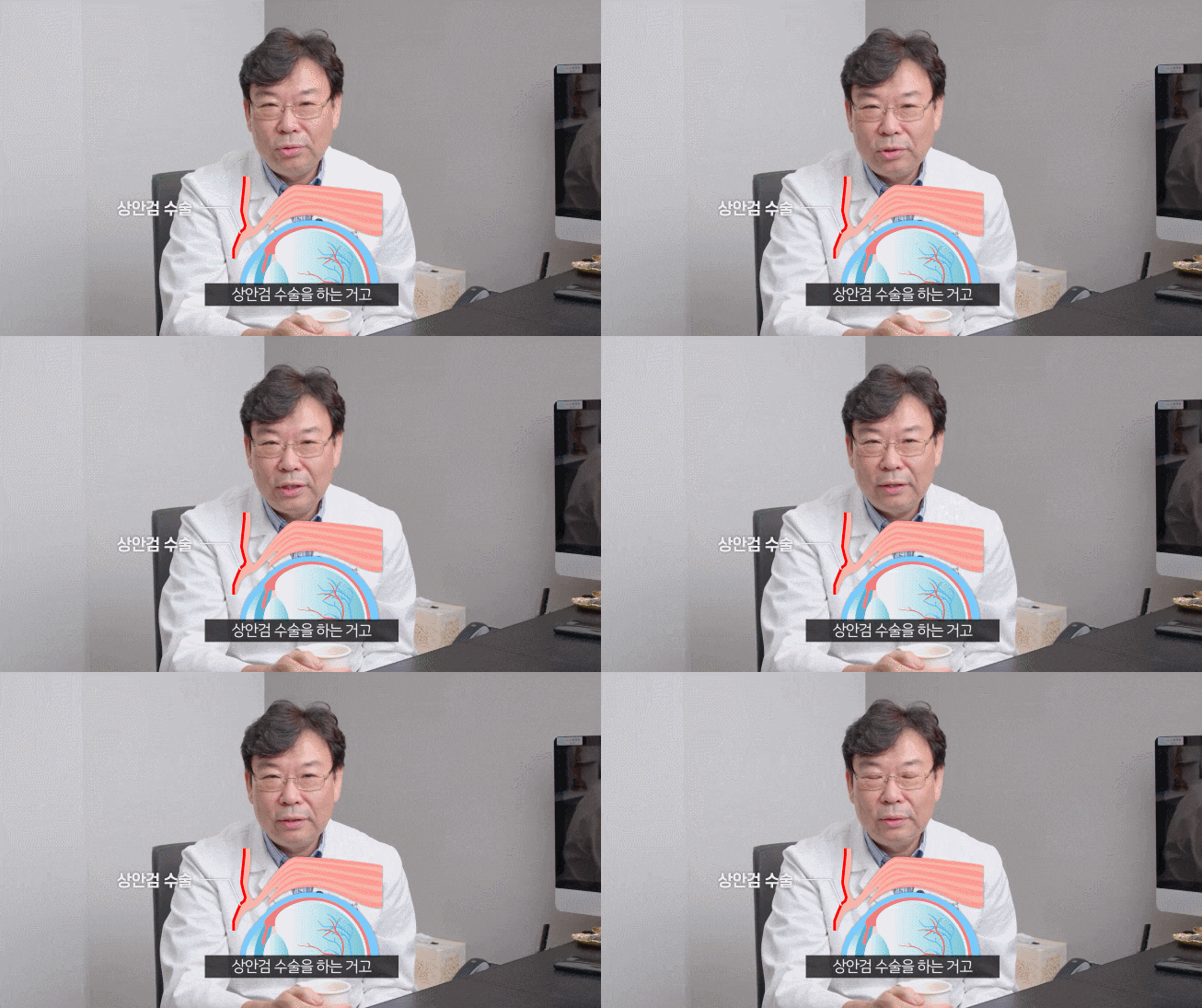
Upper eyelid surgery is an anti-aging procedure that can be applied to sagging, drooping eyelids. It is a surgery in which an incision is made along the double-eyelid line, loosened skin and some unnecessary fat are removed, and then the area is sutured.
After upper eyelid surgery, the sagging skin tissue becomes tighter, making you look younger, and it can also improve outer-corner irritation caused by drooping eyelids, forehead wrinkles, and a sleepy-looking appearance.
On the other hand, lower eyelid surgery is a procedure that repositions under-eye puffiness caused by reduced skin elasticity and improves wrinkles in the tear trough.
The reason the under-eye area becomes puffy is that the orbital fat supporting the area beneath the eyeball pushes outward.
If this area is repositioned into the relatively hollow tear trough, some of the unnecessary fat is removed, and the skin is also lifted, you can achieve a firmer and more elastic under-eye area.
② What are the representative side effects of upper and lower eyelid surgery, and how can they be addressed?
- Upper eyelid surgery
People who need upper eyelid surgery usually have some distance between the eyes and eyebrows, and due to sagging eyelids, they may have a sleepy-looking appearance, use their forehead excessively, and experience various functional problems.
However, even if upper eyelid surgery is possible, the degree of symptoms differs from person to person, so the approach needs to take that into account.
For example, even with the same upper eyelid surgery, some people may be fine with only a small amount of tissue removal, while others may require a significantly larger amount of tissue removal.
The problem is that the more tissue is removed, the higher the chance that the double eyelid will become thicker or end up looking like a sausage-shaped double eyelid.
Upper eyelid surgery involves making an incision at the double-eyelid line, and if too much tissue is removed from this area, there is a concern that the double eyelid may become uncomfortably thick during the later suturing process.
That is why, at Reborn, when a large amount of tissue needs to be removed, we make the incision in an area that is not visible, remove the tissue, and then create the double eyelid as a buried double eyelid.
For middle-aged patients who are worried that a newly formed double eyelid might create too drastic a change in appearance or look unnatural, this can be a good alternative.
- Lower eyelid surgery
One of the representative side effects of lower eyelid surgery is removing too much under-eye fat, which makes the area look sunken after surgery.
Have you ever heard the saying that as you age, only the skin remains? It is a natural phenomenon in which not only the skin’s collagen but also fat is lost, leaving only the outer layer.
The eyelids are the same. Even if the under-eye area currently appears excessively puffy, removing too much can cause fat loss over time and make the under-eye area look overly sunken.
In such cases, dark circles can look more severe and the overall impression can appear dull, which is why many people additionally undergo fat grafting.
To prevent these problems, lower eyelid surgery should be performed in a way that preserves as much fat as possible and increases the elasticity of the skin supporting it.
Reborn Plastic Surgery is staffed by a plastic surgery specialist with over 20 years of experience.
Even people who say they do not want the surgery and were dragged in reluctantly by their grandchildren change their minds after seeing the changes through simulation.
With the level of explanation adjusted to their perspective, the plastic surgery specialist—who has already reached middle age along with years of accumulated know-how and experience—will explain things to you, so please contact Reborn Plastic Surgery if you have any questions.
That’s it for today’s post. Reborn Plastic Surgery will continue researching ways to help you live a healthier and more beautiful life.
Thank you.