"Now that I’m in my 50s, my cheekbones have sagged so much that my nasolabial folds look deeper."
"My eye area is sagging, so I look tired and have a heavy, stuffy impression."
Hello, this is Ribbon Plastic Surgery, where we do our best for everyone who visits our clinic. 🙂
We all know that time passes, but when we face that fact head-on, it can easily make us feel down and anxious. Back pain and aching knees happen in places we can’t see, so we can somehow get by with painkillers, but changes that show on the outside may feel different.
Once you’re in your 50s or older, there are a few areas of the face that noticeably sag. Where are they? That’s right: the "eyelids" and the "deep cheek area."
It makes sense that the eyelids sag, since they are the thinnest part of the skin. But why does the deep cheek area sag?
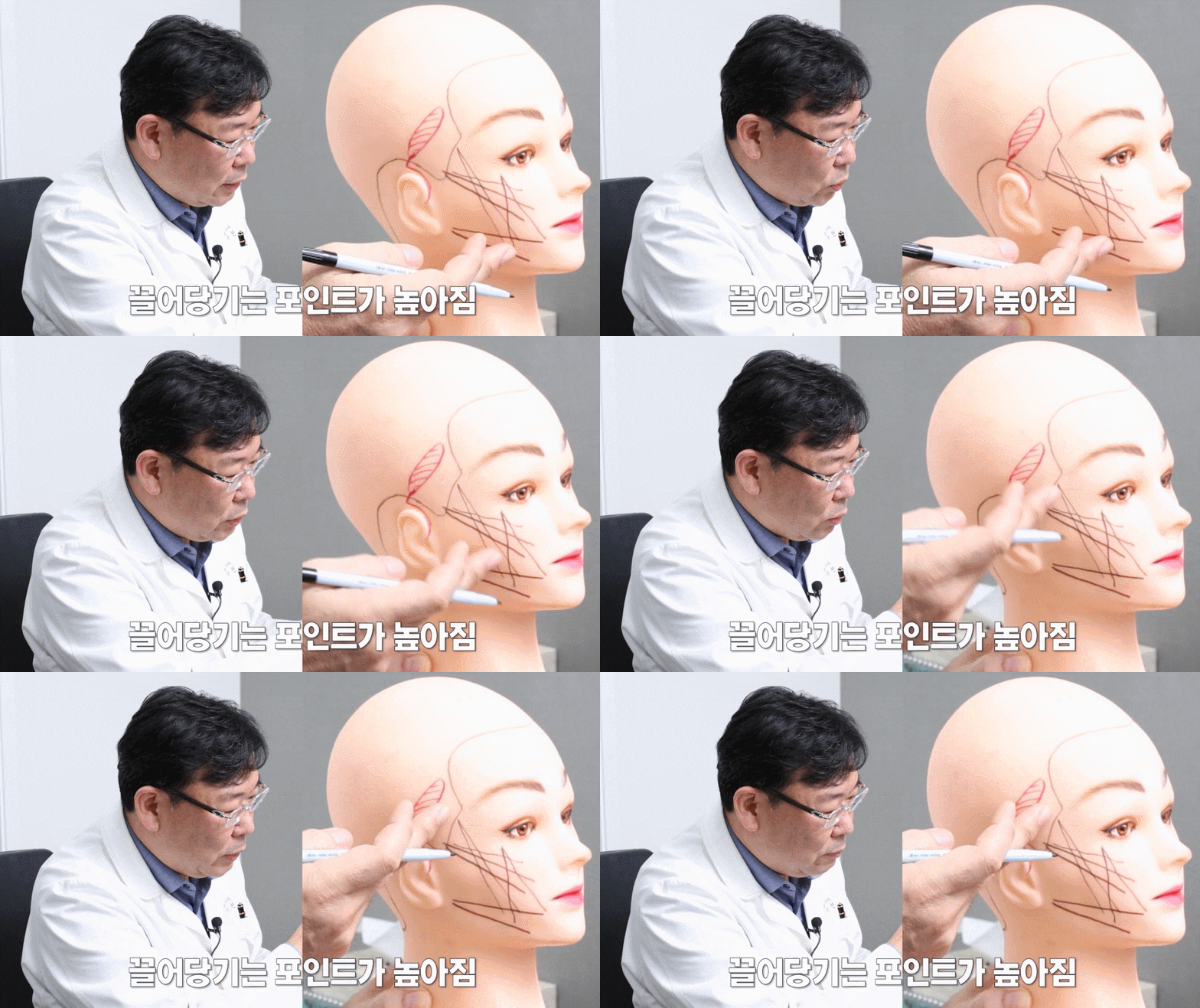
Our skin has a SMAS (Superficial Musculo-Aponeurotic System) layer, which refers to the connective tissue between the deep skin and the fascia.
It can be observed across the entire face and neck, and it plays a very important role in facial lifting.
As aging progresses, not only the outer skin layer but also this SMAS layer becomes loose. As the SMAS layer in the cheek area, which has relatively more volume, sags downward, the deep cheek area beside the mouth appears to bulge.
When the deep cheek area protrudes noticeably, the nasolabial folds are severe, or the eye area sags so much that there are wrinkles connecting the eye area to the temple—commonly called "crow’s feet"—many people think of a "facelift."
But in actual consultations, it is not uncommon for people to say that they feel psychological 부담 about making an overall incision along the hairline and pulling it tight, as well as the cost burden that comes with it.
For people like this, we recommend a "temple lift (three-step temple lift)," which allows selective lifting of the sagging sides that become one of the biggest concerns in middle age.
Let’s take a closer look through the following article~!

What are the wrinkles called "crow’s feet"?
As people age, the skin naturally sags, and both blood vessels and muscles lose elasticity. Wrinkles are the result of this phenomenon.
In particular, eye-area wrinkles become more pronounced as the eyelids sag and you use force when opening and closing your eyes. People who smile often or move the eye area a lot may develop long wrinkles that extend from the eye area to the temple. These are the wrinkles called "crow’s feet."
In the early stages, they can be corrected with Botox, but if they are very deeply etched, treatment procedures may have limited improvement. In such cases, the three-step temple lift is a more efficient method because it physically pulls and secures the skin.
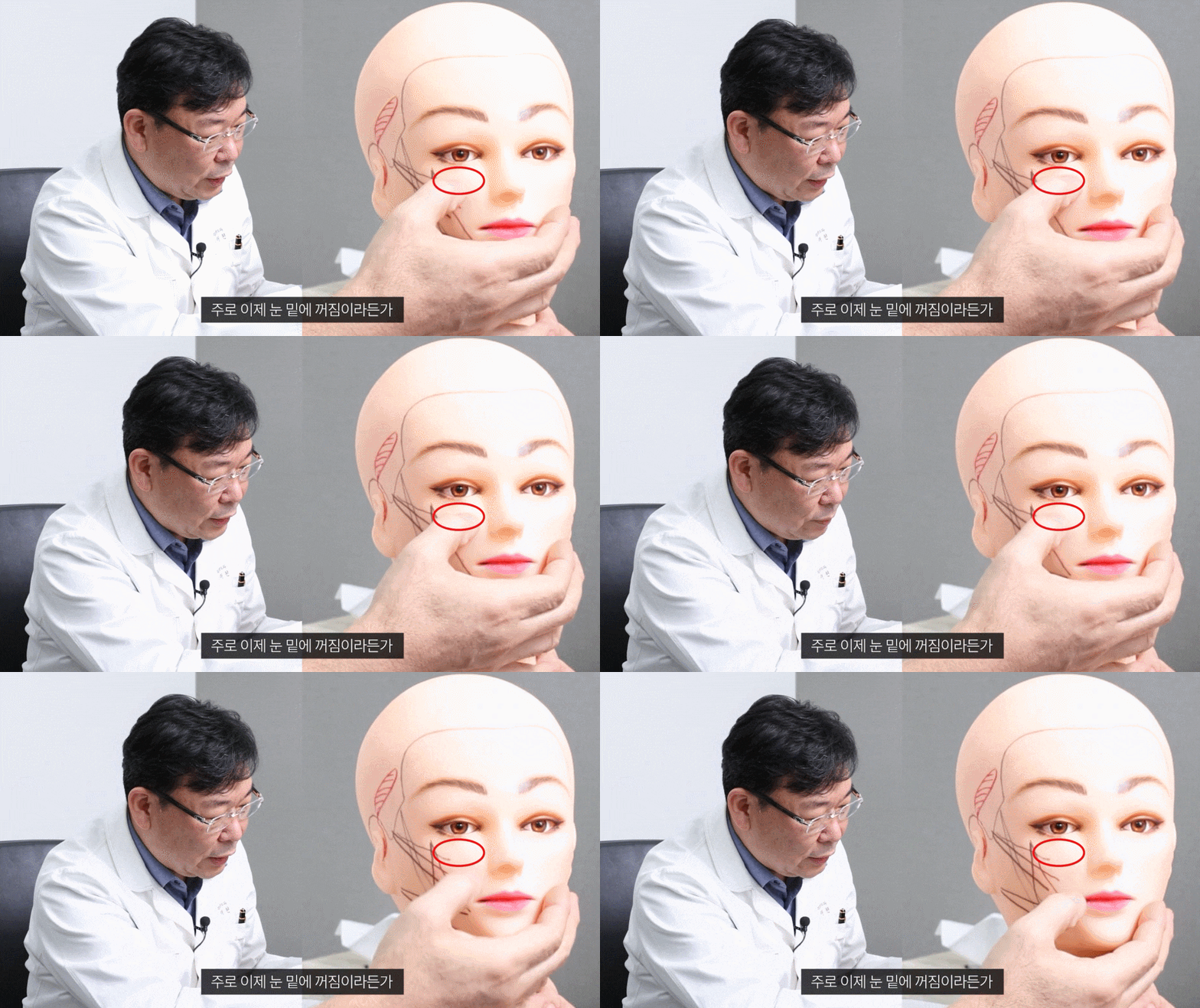 3-step temple lift: what kind of surgery is it, and how far can it improve things?
The three-step temple lift refers to a procedure in which a small incision is made around the temple above the ear, hidden by the hair, to pull up the sagging, wrinkled eye area and lift and secure the cheekbones, deep cheek area, and side contour together.
Compared with a facelift, the incision area is smaller, and compared with thread lifting, the maintenance period is much longer, so it is recommended for people who want to reduce the burden of surgery and cost while achieving greater results.
One important point is that the process of properly dissecting the SMAS layer, which was briefly explained earlier, must be included.
An incision line is made inside the temporal scalp line, and after carefully dissecting all the way to the temple area and the inner eye-area line, the SMAS layer and skin tissue are pulled separately. Then the remaining excess tissue is removed, which increases skin fixation and allows for a smooth and stable lift.
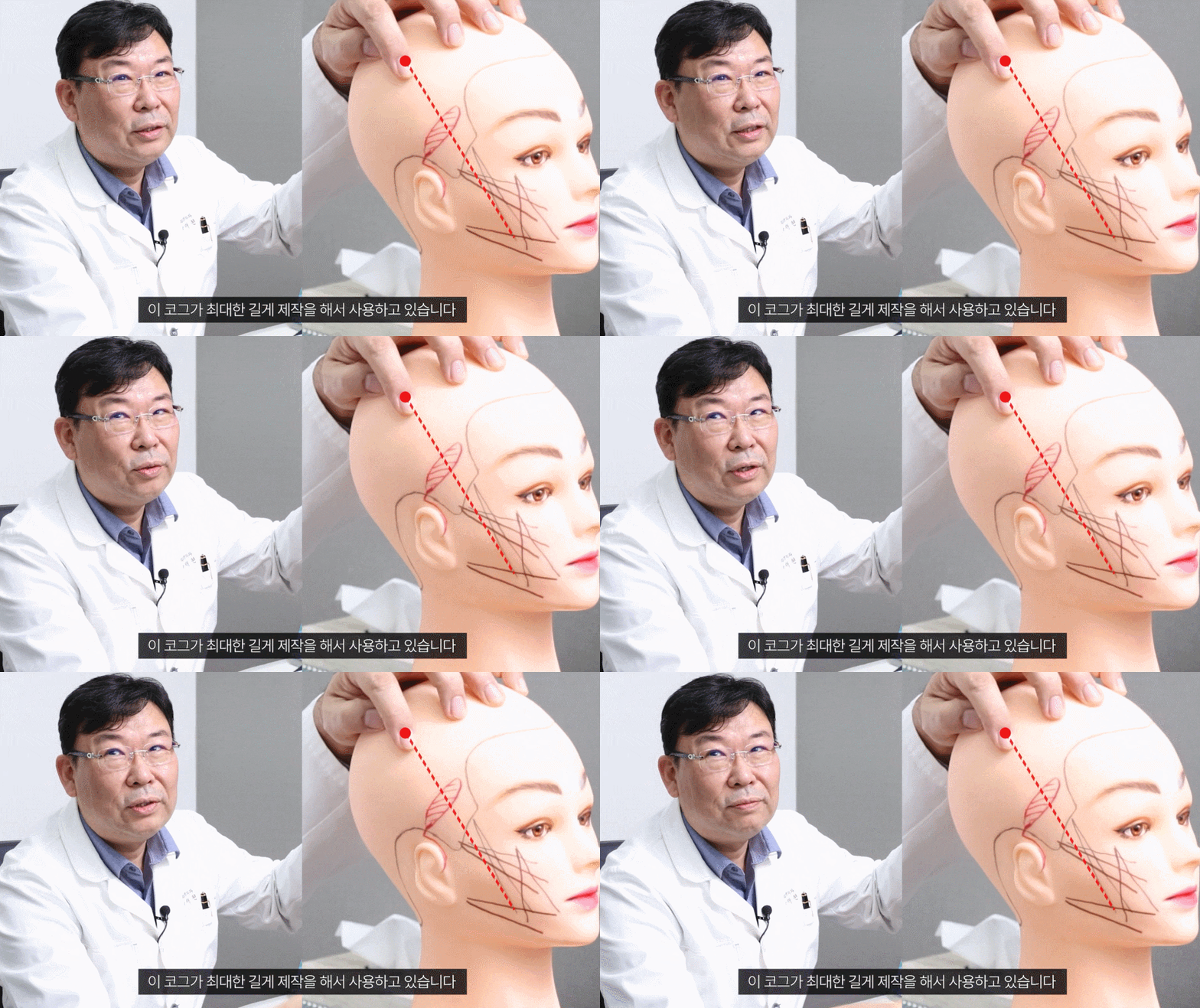
This applies not only when improving crow’s feet wrinkles, but also when lifting the deep cheek area or side contour.
If only the skin is pulled without dissecting the SMAS layer, the skin may become uneven or the wrinkles may actually worsen. The reason is that the SMAS layer stretches the retaining ligaments upward, strongly pulling the fat layer and each skin layer.
You can think of dissection as cutting the rubber band that pulls downward, allowing the skin above it to rise naturally.
After surgery, the sutured area may temporarily look slightly uneven, but it naturally improves after a few days. Temple lift surgery shows its pulling effect immediately after the operation, and when combined with thread lifting, a synergistic effect can be expected.
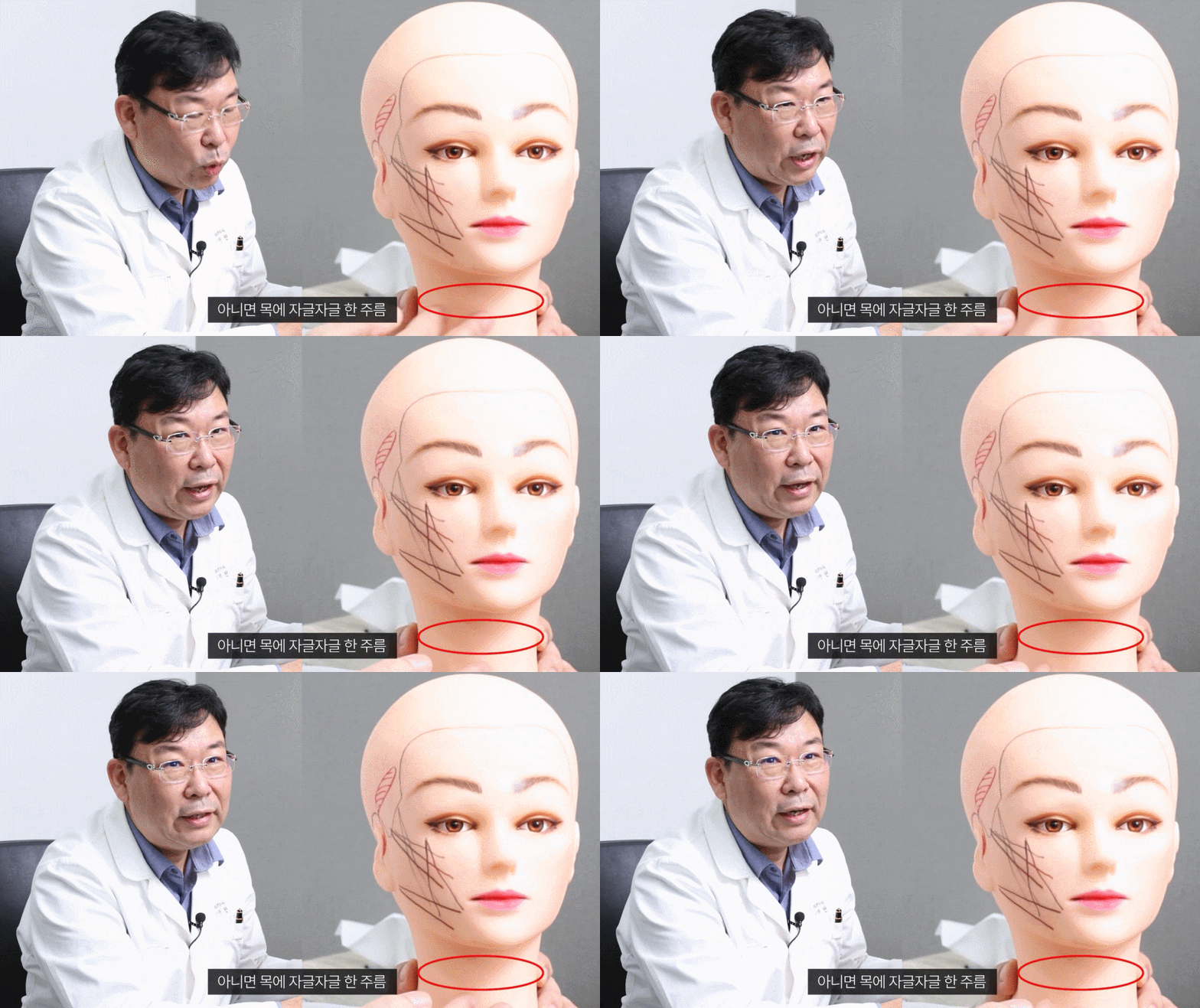
The three-step temple lift is a delicate procedure that must be performed while protecting blood vessels and countless nerves. That is why it is important to receive surgery from a board-certified plastic surgeon with extensive anatomical knowledge and a wealth of clinical experience in facelift surgery.
At Ribbon Plastic Surgery, we do not simply tell you the advantages.
After first checking whether the surgery is truly necessary, and if it is deemed necessary, we carefully explain the possible side effects after surgery and how to prevent them. We also encourage patients to decide whether or not to proceed with surgery themselves, so we hope you can visit us comfortably and have a consultation.
Thank you. 🙂

https://blog.naver.com/reborn1999/223434391830
https://blog.naver.com/reborn1999/223428067310