Hello. We are ‘Re:本 Plastic Surgery,’ welcoming you at Sinsa Station.
Have you ever had concerns like the following?
To save you the trouble, this post is only for those who may find it helpful. If you think, “That is absolutely not me!”, you can press the <Back> button.
But if you have even one of these concerns, the following post will be very helpful. Please check it once.
If this sounds like you, please pay close attention to this post.
| ▲ You naturally have slightly downward-slanting outer corners of the eyes.▲ As you get older, the skin around your eyes sags severely, giving you a gloomy impression.▲ Because of sagging around the eyes, the outer corners become badly chafed.▲ You have consulted a plastic surgery clinic about sagging around the eyes, but were told that upper blepharoplasty alone would not solve this part.▲ You want to change from a drooping, tired-looking impression to one that looks lively and healthy. |
What effects can be achieved with a temple lift (three-step temple lift)?
The types of mini facelift surgery can be broadly divided into two categories.
First, the <forehead lift>, which pulls up sagging eyelids, eyebrows, and the forehead, and second, the <temple lift>, which lifts sagging outer eye corners and the side cheek area.
Among these, today’s topic is the <temple lift (hereinafter referred to as the three-step temple lift)>, which is recommended for people whose outer eye corners droop downward or who have a gloomy expression because of it.
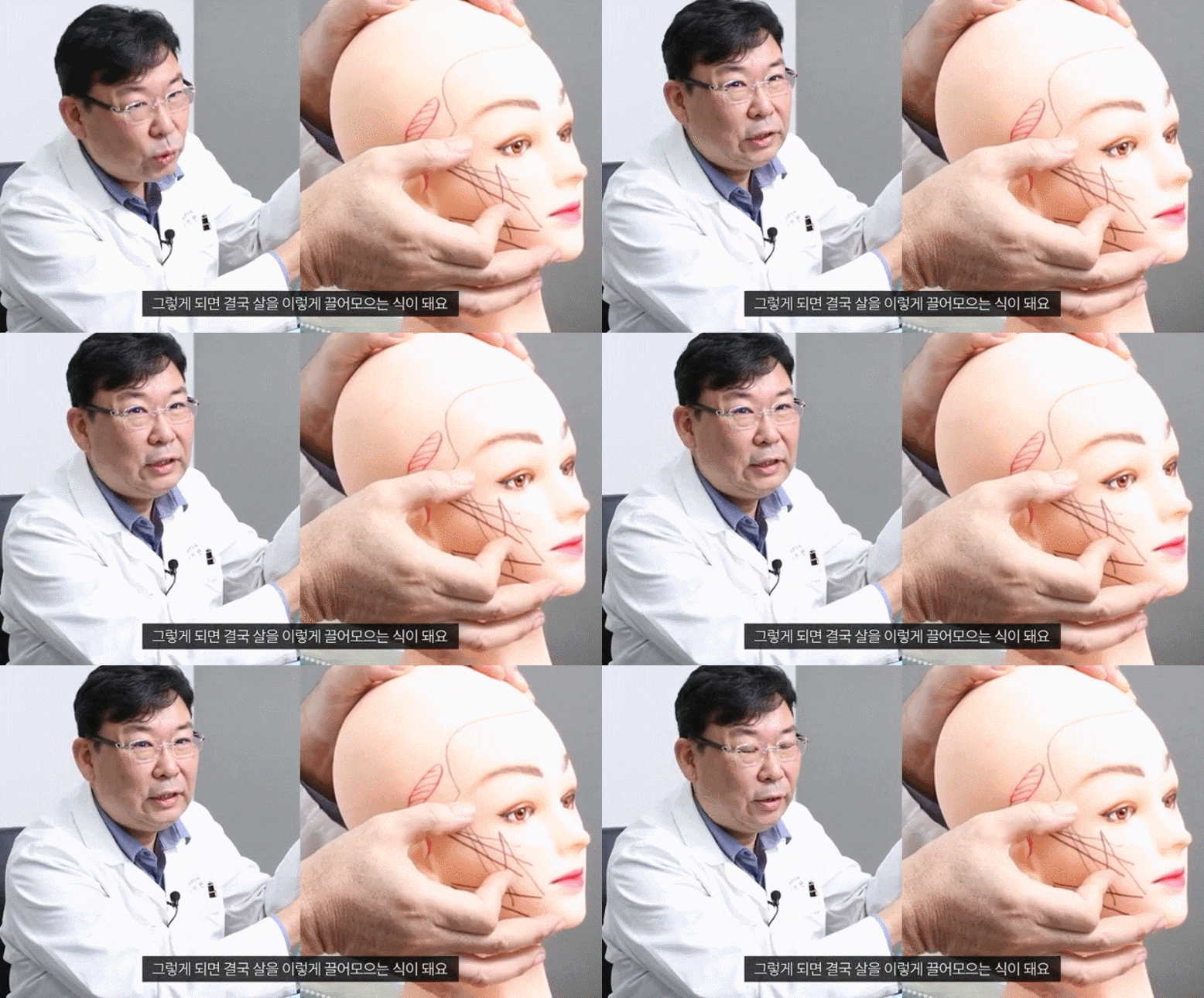
A temple lift refers to a procedure in which an incision is made near the ‘temple’ area, which is hidden by the hair and not visible from the outside, and the drooping outer corners of the eyes are pulled upward to create a younger, more lively impression.
Of course, depending on the direction of the pull, it can also improve sagging cheek tissue or the side facial line, but in general it is applied to improve the direction of the outer eye corners, which cannot be improved by upper blepharoplasty alone.
Some people are born with downward-slanting outer eye corners, but in many cases the skin sags downward as they age, causing the corners of the eyes to point weakly downward.
In particular, those who originally had drooping eyes may feel this sagging more severely as they reach middle age, and this can cause the skin at the outer corners of the eyes to fold, leading to chafing or the dark iris being partially covered at an angle, making vision feel cramped.
If the entire eyelid is sagging, it is still possible to open the eyes to some extent by using the muscles of the eyebrows or forehead, but when the outer corners of the eyes are severely drooping, even this method does not help, and many people find it difficult.
At times like this, using a three-step temple lift can make it possible to change to a more refined eye shape with a short surgery time of about one hour.
What are the features of the three-step temple lift?
① The duration of results is relatively long.
Because of the nature of the skin, the temple area is attached to the scalp rather than the face.
If you look at the human skull, the facial area lacks bone where the eyes and teeth should be located, so tissue replaces this area.
Since skin tends to sag downward under the weight of accumulated fat, the facial area generally sags faster than the scalp.
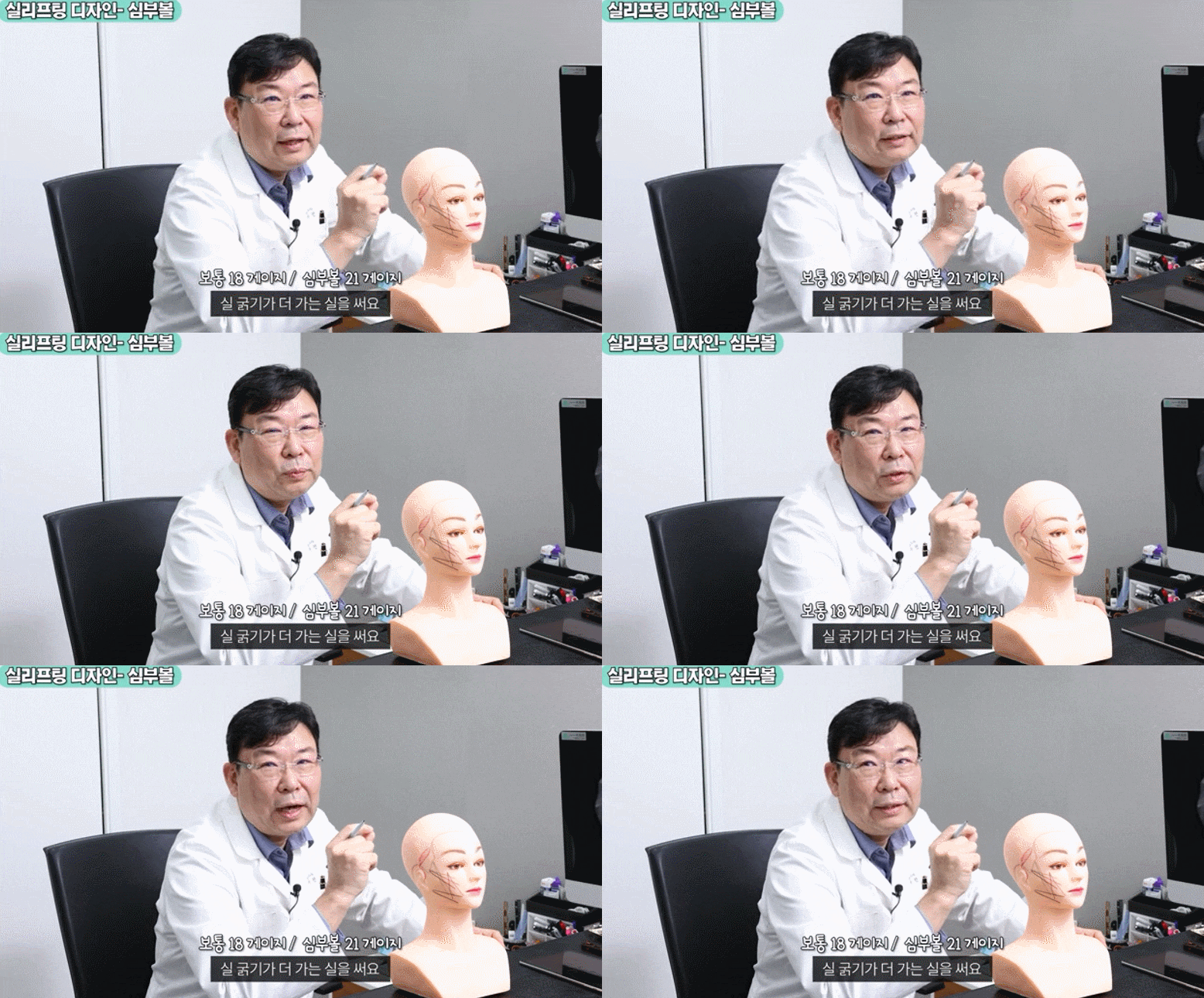
Because the temple area is part of the scalp, if this area is incised, the outer corners of the eyes are lifted in the desired direction, excess tissue is removed, and the area is sutured, the results tend to last longer, so satisfaction tends to continue longer compared with general lifting procedures.
② The incision site is not visible because it is hidden by the hair.
Of course, some younger people in their 20s and 30s also undergo surgery to improve naturally drooping outer eye corners, but the majority are those who have developed sagging later due to aging, and the “middle-aged” group is overwhelmingly larger.
One characteristic of middle age is the burden of undergoing plastic surgery as time passes, along with a strong desire to keep it hidden from others.
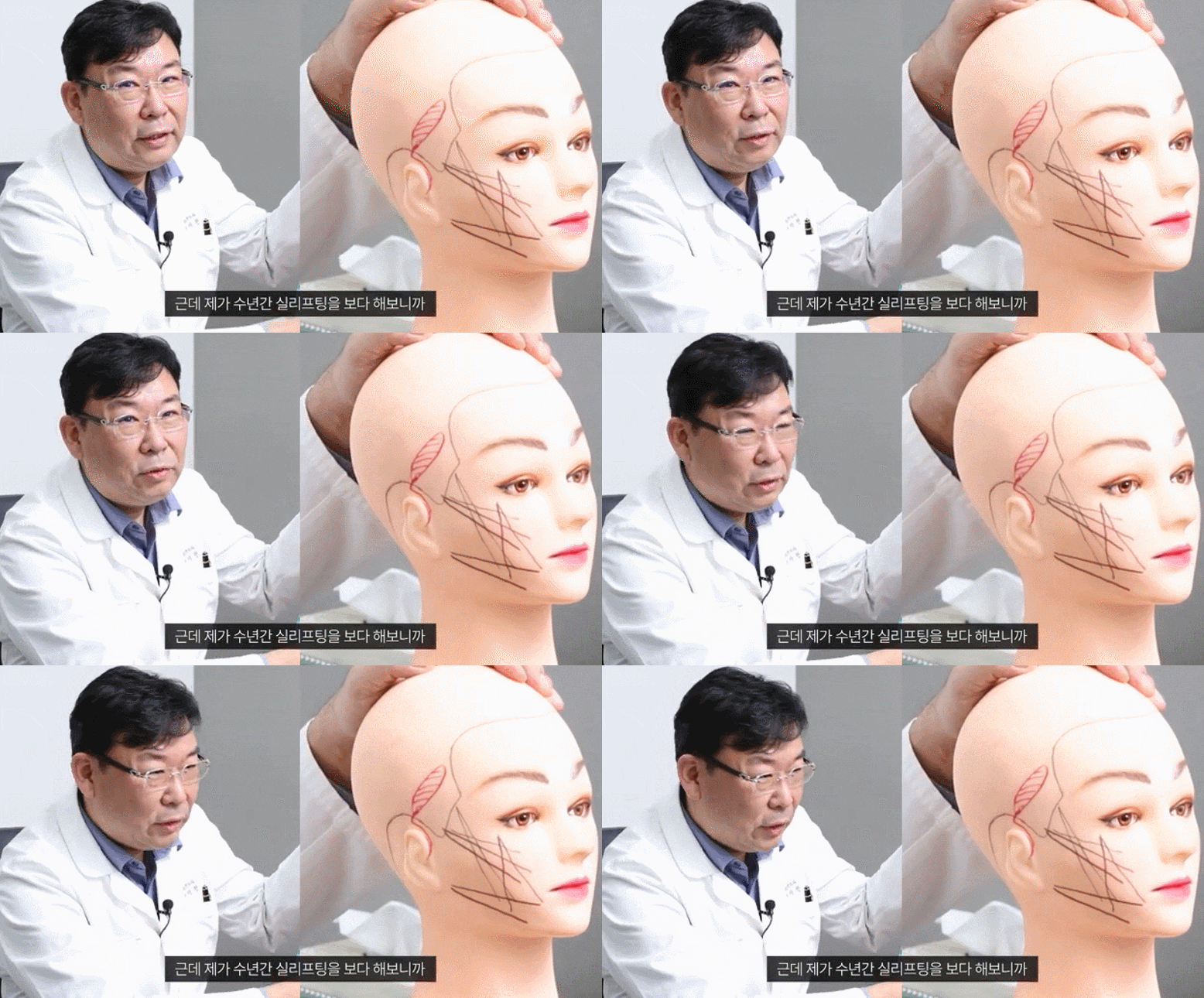
Because the three-step temple lift involves a very small incision in an area hidden by the hair, it is not easy to tell that surgery has been performed.
In addition, at Re:本 Plastic Surgery, we use an “oblique incision” to protect the hair follicles, so you do not need to worry about hair not growing in the incision area after surgery.

What to keep in mind: do not be overly greedy
People who have suffered greatly from drooping outer eye corners sometimes say, “If I’m going to have surgery anyway, I want it pulled up properly.”
However, if you pull the outer corners too strongly upward because of excessive greed, it can instead create a sharp impression and become even more unnatural, so caution is needed.
The most important thing in middle-aged lifting is “naturalness.”
Remember that the key is to avoid looking like you had surgery and to help restore the eye shape you had in your 30s!
At Re:本 Plastic Surgery, one-on-one consultations and surgery with the director are our rule.
We are examining every case carefully, so please contact us if you need help.
Thank you for reading this long post.