Hello. We are Re:本 Plastic Surgery, welcoming you from Exit 1 of Sinsa Station.
To help save your valuable time, we will first guide you through who needs this article.
If you do not fall into any of the categories below, you may press the <Back> button. However, if even one applies to you, please take a little time to read through to the end.
check. Who should definitely read this article
▲ Those who looked into lifting because the outer corners of their eyes are drooping, but felt procedures have their limits
▲ Those considering a facelift to improve sagging side skin, but finding the cost burdensome
▲ Those who want a stronger effect than thread lifting
▲ Those who are okay with surgery if it is for lifting, but are concerned about noticeable scars
▲ Those who want side lifting tailored to each individual
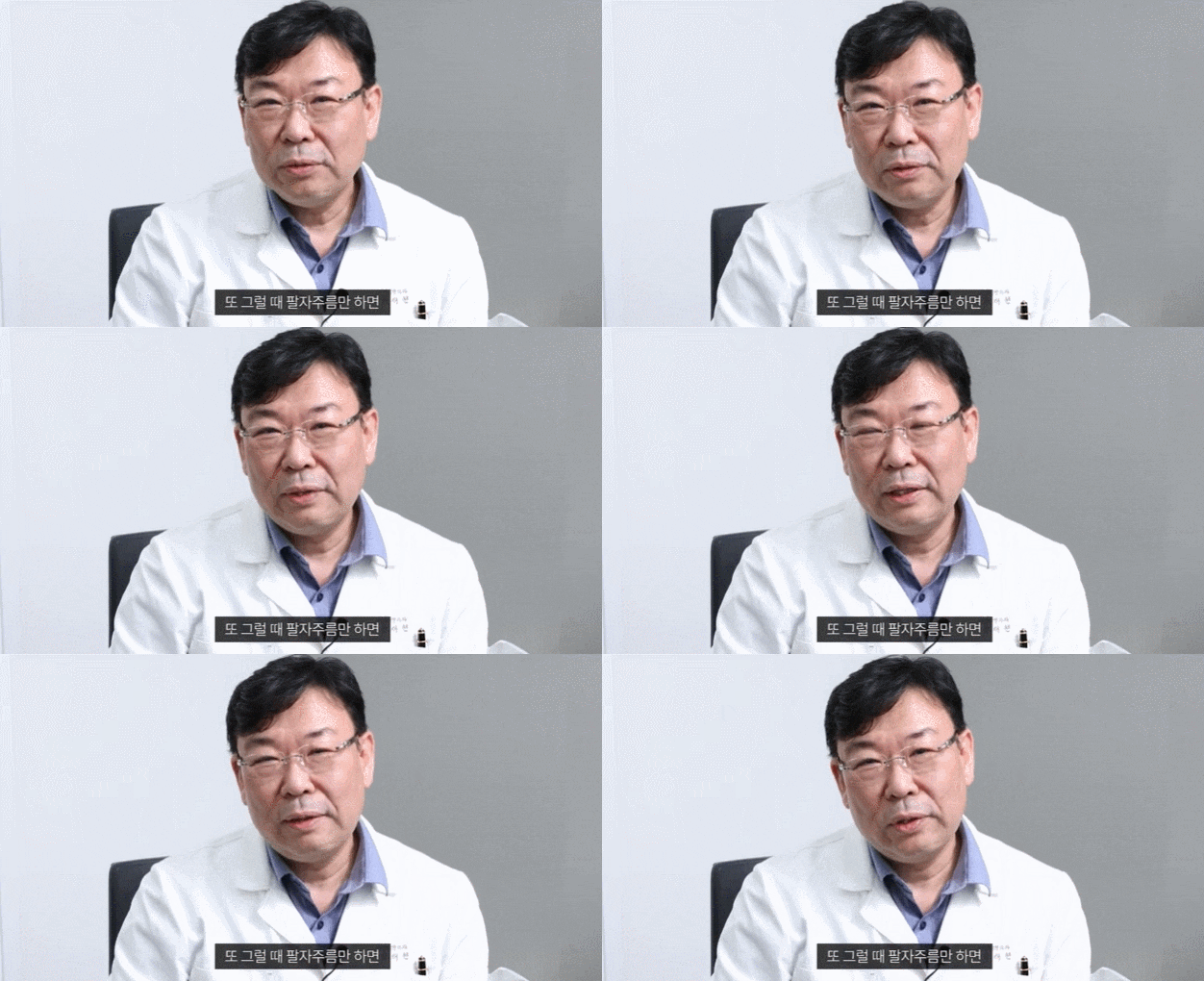
As you can tell from the intended audience of this post, today we will cover the mini facelift known as the <3-Step Temple Lift (temple lift, temple lifting)>, which can raise drooping outer eye corners and lift the sagging side contour.
Compared with thread lifting, it offers better results, and compared with a facelift, it places less financial burden on the patient. Because of these characteristics, many people have recently shown interest in this surgery.
Mini facelifts can broadly be divided into <forehead lifts> and <temple lifts>, but since the target areas are completely different, the results also appear differently.
A <forehead lift> is generally applied to people with drooping eyelids or eyebrow ptosis, and it can create the effect of opening up the field of vision. A <temple lift>, on the other hand, offers those with drooping outer eye corners or sagging side facial tissue a more stable eye shape and a smoother side contour.
In particular, our clinic’s <3-Step Temple Lift> involves an incision inside the hairline where it is not exposed, so the burden of scarring is low. Because only a very small amount is removed to perform the lift, it can be considered a suitable method for those who feel burdened by surgery itself.

Features of the 3-Step Temple Lift
① A lifting procedure that defines contours
Some people are born with drooping outer eye corners, but as aging progresses, the relatively fuller cheekbone area may begin to sag downward, which can also change the shape of the outer eye corners.
As skin elasticity decreases, the fat beneath it may also sag downward, making the side contour look broader and less defined.
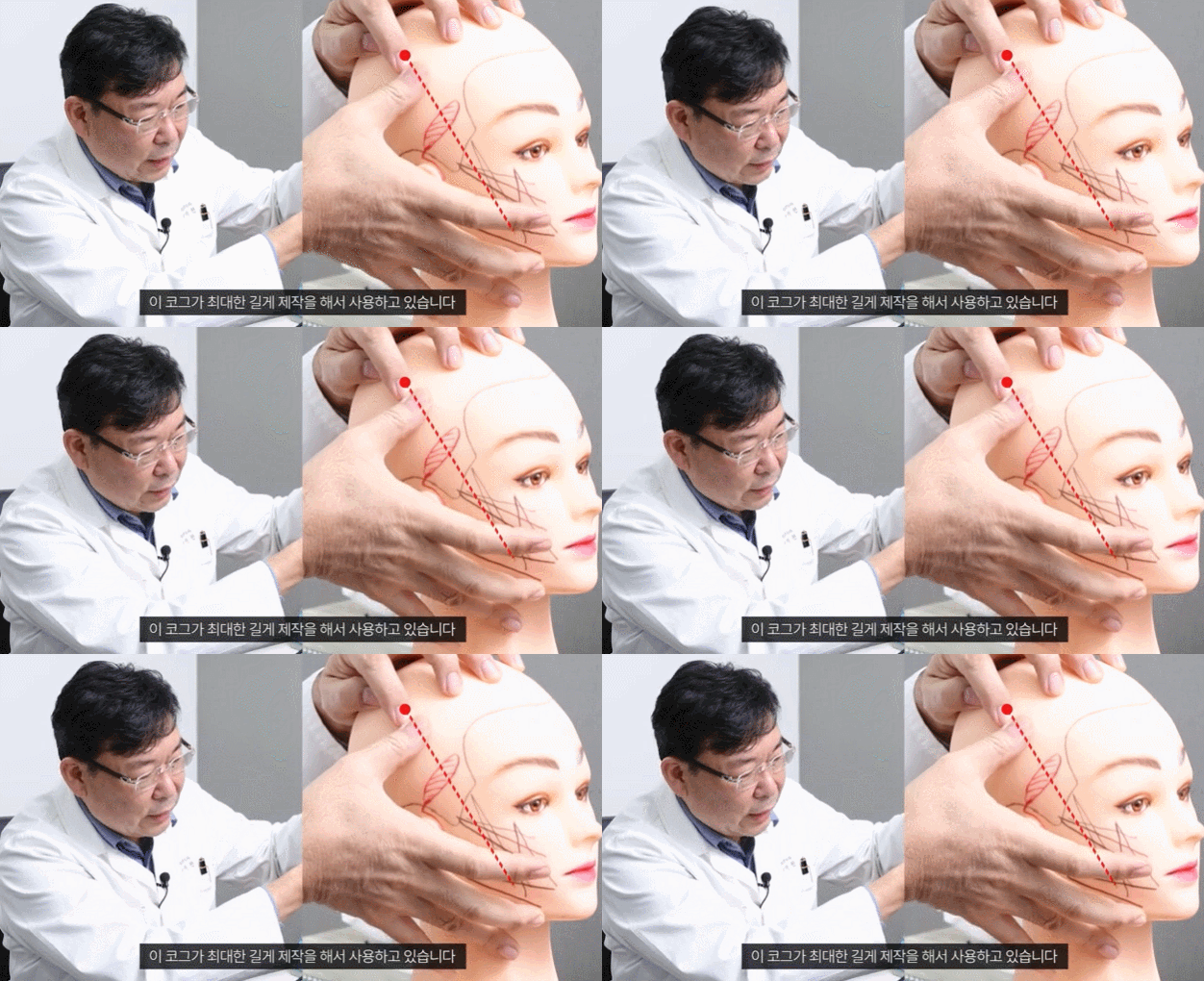
The 3-Step Temple Lift is a surgery that makes an incision in the special temple area and properly separates and lifts not only the skin but also the deeper SMAS layer. As a result, it can create a natural lifting effect on the side facial skin.
For those whose outer eye corners droop and who usually look tired or negative, it can be a good option because the direction of the outer eye corners can be adjusted as desired.
② A lift with a relatively long-lasting duration
Most people considering surgical lifting rather than a procedure-based lift are often dissatisfied with the “duration.”
Even thread lifting, which can produce relatively immediate results, lasts as little as 8 months and as long as about 1 year and 6 months depending on the product, so for those who wanted a longer-lasting result, it can feel like a drawback.
The 3-Step Temple Lift, like a facelift, is a surgery that physically lifts the skin and removes and sutures the excess tissue, so you can expect a much longer-lasting result than with standard procedures.
Skin characteristics also play a role in supporting a longer duration.
Because the temple area is part of the scalp and, unlike facial skin, is closely attached to the skull, sagging tends to appear relatively slowly.
However, there are limitations when it comes to correcting detailed areas such as nasolabial folds, so for those who want focused correction of facial points, we recommend combining thread lifting with the 3-Step Temple Lift.
3-Step Temple Lift: What should you be careful about?
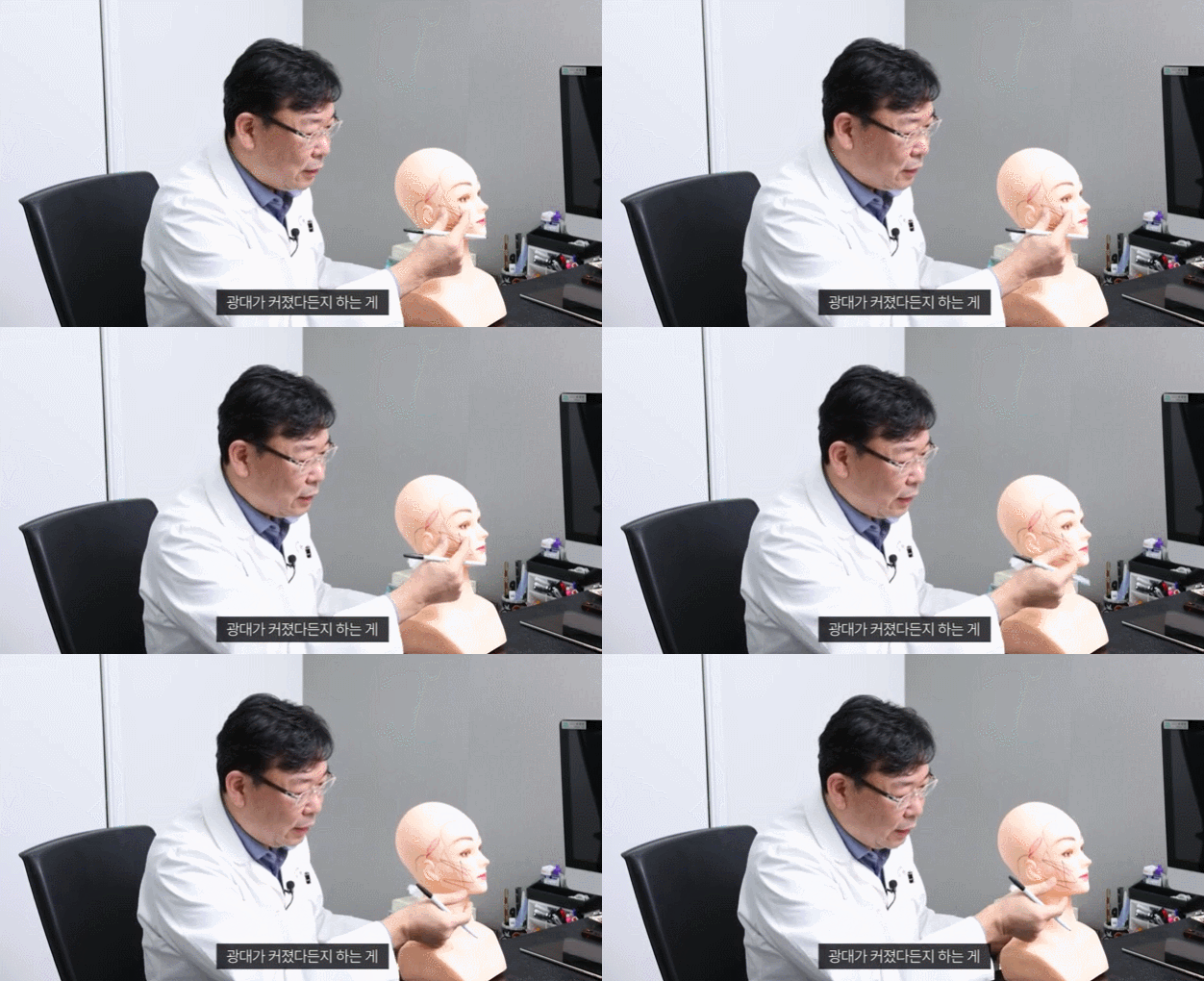
The temple area has a number of cautions because several sensitive nerves pass through it.
When making the incision, it must be done in a direction that does not disturb those nerves, and protecting the hair follicles is especially important.
If the follicles are affected, hair may never grow back there permanently, which is why it is important to go through a board-certified plastic surgeon with delicate technical skill.
At Re:본 Plastic Surgery, to prevent these issues in advance, we only perform an “oblique incision” that avoids the hair follicles.
In addition, for a 3-Step Temple Lift, the SMAS layer must also be lifted together with the skin to reduce the burden on the sutured area and to help prepare for the skin rippling phenomenon that may appear immediately after surgery (a wavy undulation of the skin).
The SMAS layer is a very thin membrane between the subcutaneous fat layer and the muscle layer. Because retaining ligaments extend above it to hold the skin in place, the skin cannot be lifted stably unless those retaining ligaments are released.
This applies not only to the 3-Step Temple Lift but to surgical lifting in general. Please keep this in mind, and we hope you achieve good results by choosing a plastic surgery clinic that delicately dissects the SMAS layer and retaining ligaments and informs you in advance about possible side effects to help prevent them.

At Re:본 Plastic Surgery, the director provides one-on-one consultation, examination, surgery, and aftercare.
Since one director is responsible for one patient from start to finish, please feel free to contact us if needed.
Thank you for reading this long post.

https://blog.naver.com/reborn1999/223470138874
https://blog.naver.com/reborn1999/223472110083