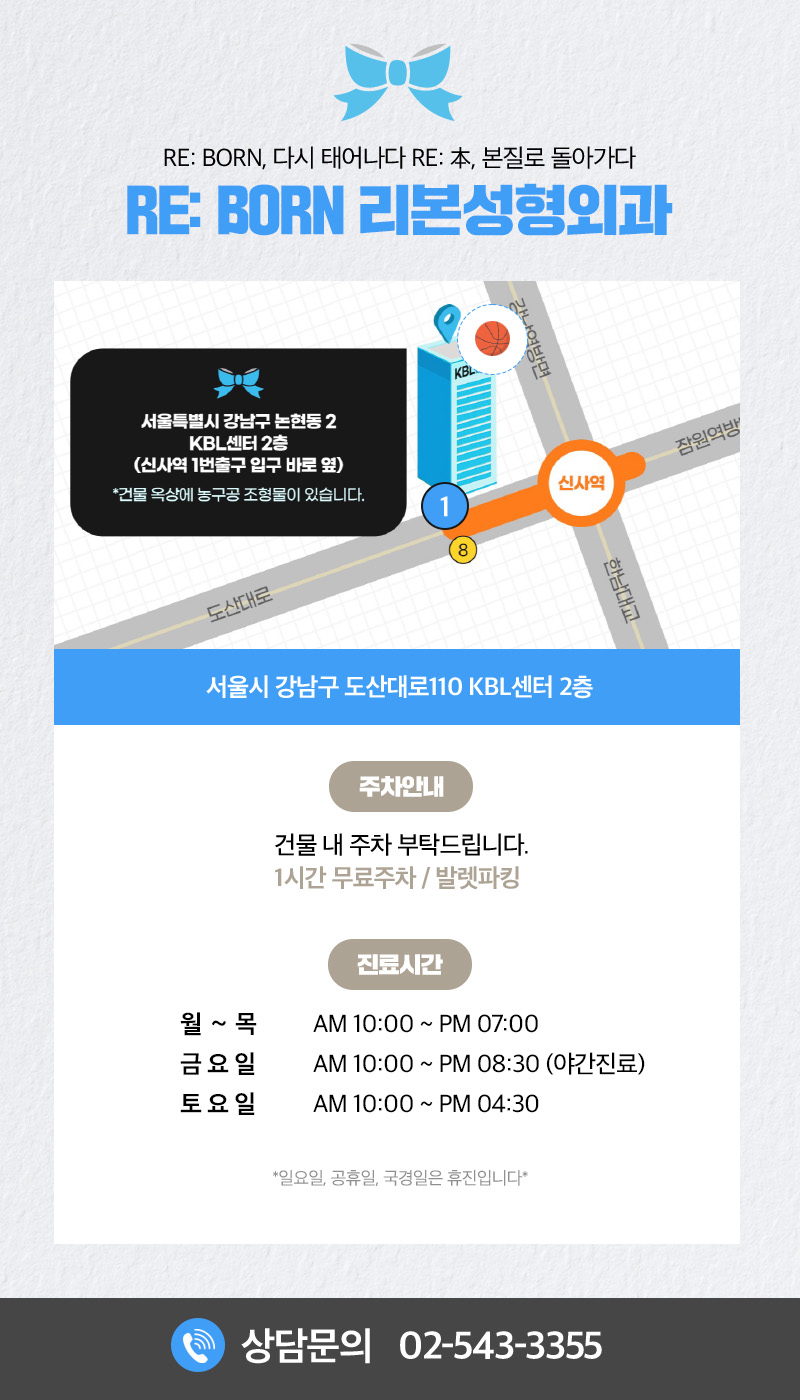
Hello. I am Jaehyun Park, CEO Surgeon of Re:本 Plastic Surgery, located at Exit 1 of Sinsa Station and meeting patients here for over 20 years.

The skin under the eyes, which is thin, is an area that quickly loses elasticity due to aging.
When the skin under the eyes loses elasticity, the fat that sits on the inner side can become noticeably protruded.
In addition, if the tear trough becomes deeply sunken, dark circles become more pronounced and you can look much older. Wrinkles under the eyes also gradually worsen.
To improve these issues, many people look into ‘lower blepharoplasty.’
In general, ‘lower blepharoplasty’ is performed by making an incision along the lower eyelid lash line and repositioning the fat.
But is an incision really necessary?
Why Does Under-Eye Fat Bulge Out?
Fat is distributed throughout the face as well.
Inside the lower eyelid, there are three fat pads.
These are surrounded by a pouch called the ‘orbital septum.’
However, as we age, the orbital septum loses elasticity and becomes less able to firmly support the orbital fat.
As the membrane loosens, the fat on the inner side moves outward and collects under the eyes.
The skin tissue around the eyes is originally thin, and as elasticity decreases with age, when loosened fat collects there, it can look puffed out.
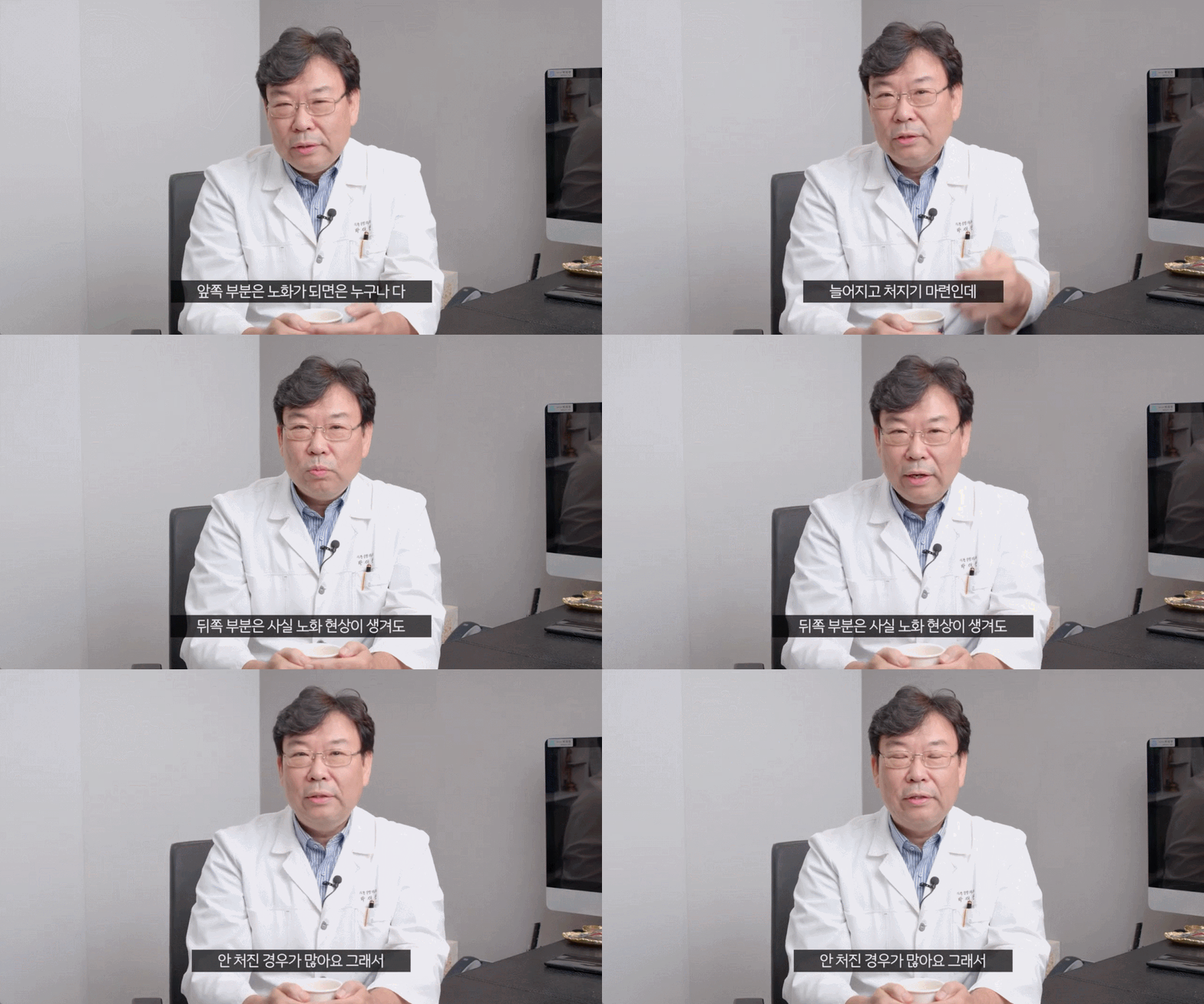
Do you really have to make an incision?
In general, when lower blepharoplasty is performed, an incision is made near the eyelashes of the lower eyelid.
This is because making an incision allows the medical team to observe the skin more precisely during surgery and makes it easier to alter the structures of the under-eye skin that have changed due to aging.
In particular, middle-aged patients often have reduced skin elasticity, with pronounced wrinkles and a deep tear trough.
For this reason, the surgery is performed by making an incision close to the eyelashes, removing some of the sagging skin and fat, and also pulling up and fixing the muscle.
When performed this way, the under-eye area becomes flatter and it can also help improve wrinkles to some extent.
Many people worry that a scar will be visible after an incision.
However, because the incision line is chosen so that it is hidden by the lower eyelashes and then sutured with fine thread, it usually becomes difficult to notice over time.
What is the difference from under-eye fat repositioning?
Under-eye fat repositioning is a method that makes a fine incision on the inner side of the lower eyelid.
Because the incision is made on the inside of the eyelid, there is no visible wound or scar on the outside.
The procedure is carried out by partially removing unnecessary fat or repositioning it to hollow areas.
However, since sagging skin cannot be removed or lifted, this method is chosen by people whose skin still has elasticity and who have little to no wrinkles.
Whether to undergo lower blepharoplasty or under-eye fat repositioning can be decided differently depending on the direction and degree of aging in the surgical area.
If needed, good results can be achieved simply by repositioning or removing only the under-eye fat.
However, everyone has different eye shapes, and the degree of elasticity in the under-eye skin, as well as the direction and extent of aging, all vary.
Therefore, which procedure should be performed can only be determined after visiting the clinic and receiving a precise diagnosis.
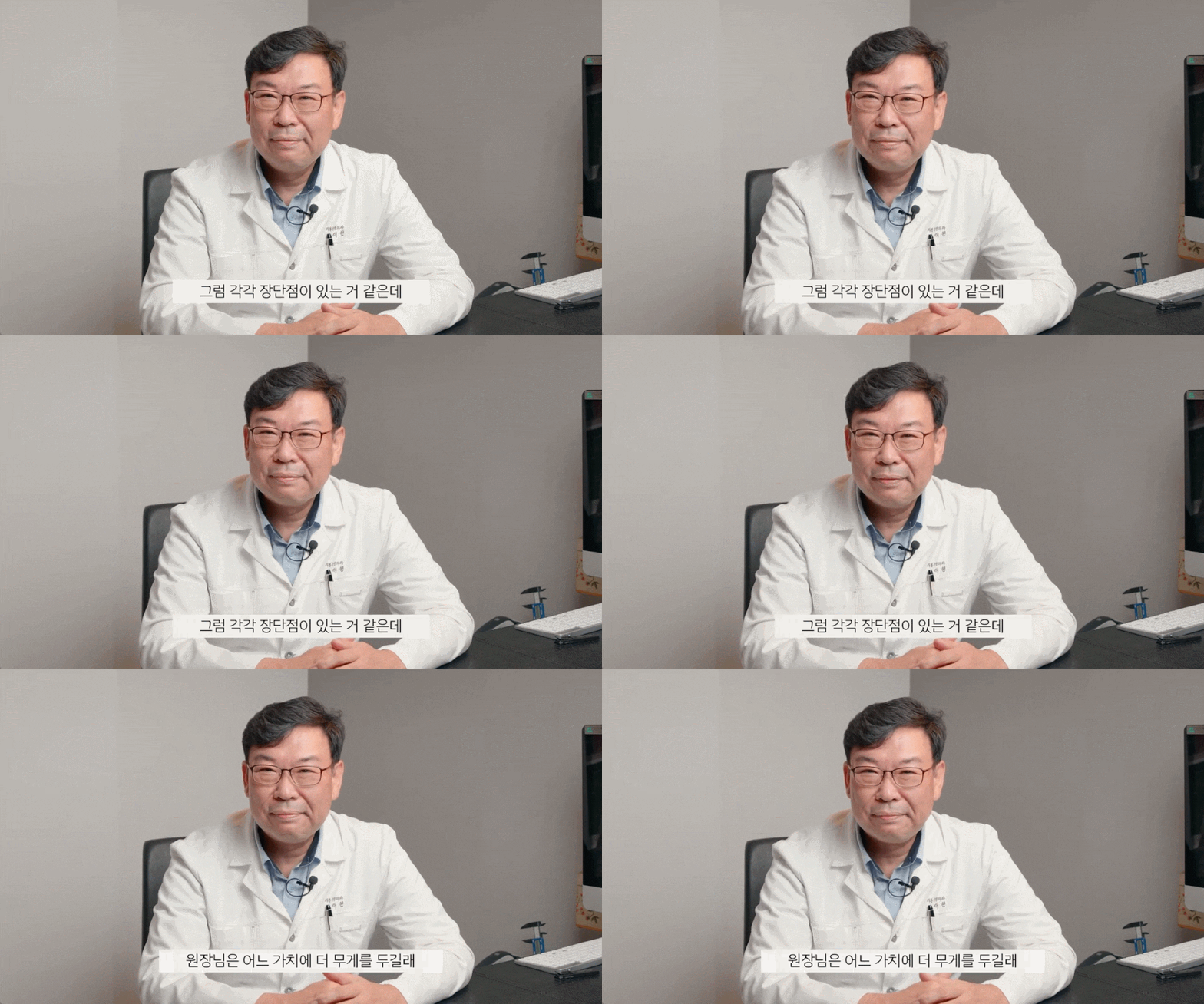
Precautions for Lower Blepharoplasty
Many people worry that after lower blepharoplasty, the under-eye area looks sunken instead.
Fat gradually decreases as we age.
However, this can happen if too much fat is removed in an attempt to maximize the immediate surgical effect.
Lower blepharoplasty should be planned not only for the present effect, but also with future aging in mind, so that stable results can be maintained for a long time.
Also, if too much tissue is removed during lower blepharoplasty, it can distort the overall shape of the eyes.
On the other hand, if too little is removed, satisfaction will be lower.
You should have a thorough consultation with a plastic surgery specialist who has extensive clinical experience and expertise, and the surgery should be planned with precision.
You should also meet with a director who has a deep knowledge of eye anatomy and understands the characteristics of middle-aged eyes well.
At Re:本 Plastic Surgery, we plan surgeries by considering multiple factors from various angles, based on over 20 years of extensive surgical experience.

All surgeries begin with confirming whether the procedure you want is appropriate for your current eyes.
That is why you need to meet a director who is well-versed in various related aesthetic procedures.
A director who knows only one procedure can only present that one procedure as the answer to every problem.
Please keep this in mind, and if you are considering eye surgery for middle age, we recommend deciding after sufficient consultation with a plastic surgery specialist who is well-versed in various age groups and surgical methods.
If you need help, please contact Re:본 Plastic Surgery at Sinsa Station.
The director with over 20 years of experience will personally meet you and help find the procedure that best suits you.
Thank you for reading this long post.