Hello.
We are ‘Re:본 Plastic Surgery,’ meeting you at Exit 1 of Sinsa Station.

As we age, the skin loses elasticity and begins to sag downward.
To help prevent this, and if the degree of sagging is not severe, procedures using laser lifting may be an option.
However, when it comes to lifting already loosened skin, a more direct method may sometimes be more effective than an indirect, fundamental approach using lasers.
That said, many people feel hesitant about facelift surgery because it is, after all, a surgical method.
Thread lifting is a lifting procedure in which medical dissolvable threads are inserted under the skin to physically lift it.
Because it shows immediate changes without using a surgical approach, it has a short downtime and is less burdensome, which is why many people choose it.
How does thread lifting help with sagging faces?
Thread lifting physically lifts sagging skin tissue using medical dissolvable threads.
The threads inserted at this time also encourage collagen production in the surrounding tissue, helping improve elasticity.
As a result, not only can you see an immediate lifting effect, but you can also improve fine wrinkles around the area.
You can target specific areas such as a sagging jawline, double chin, nasolabial folds, and wrinkles around the eyes or neck for lifting.
In particular, it is highly effective for pulling up sagging cheek fat that has lost elasticity with age. It can help create a smoother lower face line.
However, there are many different types of threads used in lifting procedures.
Therefore, you should comprehensively consider the shape of the face, skin elasticity, age, and other factors to choose the appropriate thread and plan the procedure.
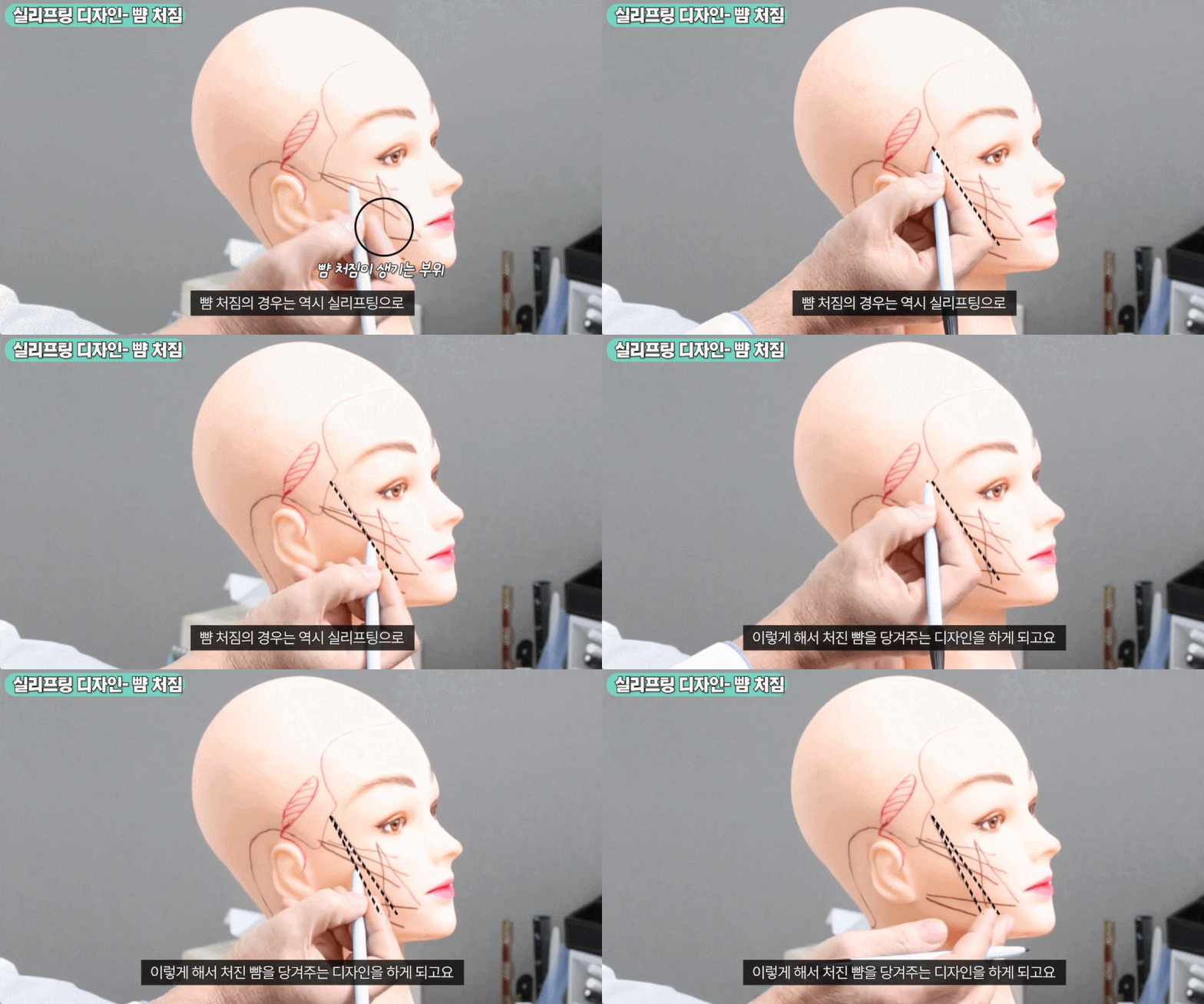
Types of lifting threads
The threads used for thread lifting differ in the presence of barbs, as well as in material and purpose.
In brief, they can be summarized as follows.
| Monothread (POD) | A plain-form PDO (Polydiocanone) thread inserted into the dermis to induce collagen regeneration |
|---|
| Cog thread (PDO) | A PDO thread with barbs in various forms; inserted into the dermis-subcutaneous fat layer and pulled to lift the skin |
| Cog thread and cone thread (PLLA) | A cone-type PLLA (Poly L Lactic Acid) thread inserted into the dermis-subcutaneous fat layer to lift the skin while also helping increase volume through its own collagen-producing properties |
To explain the ingredients a little more, the most commonly used ingredient is POD.
It is a safe thread that is also used as a suture in heart surgery, and it gradually dissolves after insertion.
When the thread is inserted and stimulates the skin, the stimulated skin becomes activated and produces collagen.
However, PLLA thread is a ‘collagen auto-generation inducer’ that produces collagen on its own.
Compared with POD thread, it is more suited to the purpose of increasing volume.
Thread lifting: points to note
The effect of thread lifting varies depending on the type of thread, the thickness of the thread, and the material of the thread.
In addition, the result can vary significantly depending on how deep it is inserted, in which direction it is pulled, and with how much force.
If the thread is inserted too deeply, the barbs do not properly engage, reducing the lifting effect.
If it is inserted too superficially, a side effect called a ‘dimple’—an indentation—may occur, or the thread may become visible through the skin with a bluish color.
Therefore, before the procedure, the skin condition must be sufficiently assessed, and the procedure should only begin after a detailed design tailored to each individual’s skin condition.
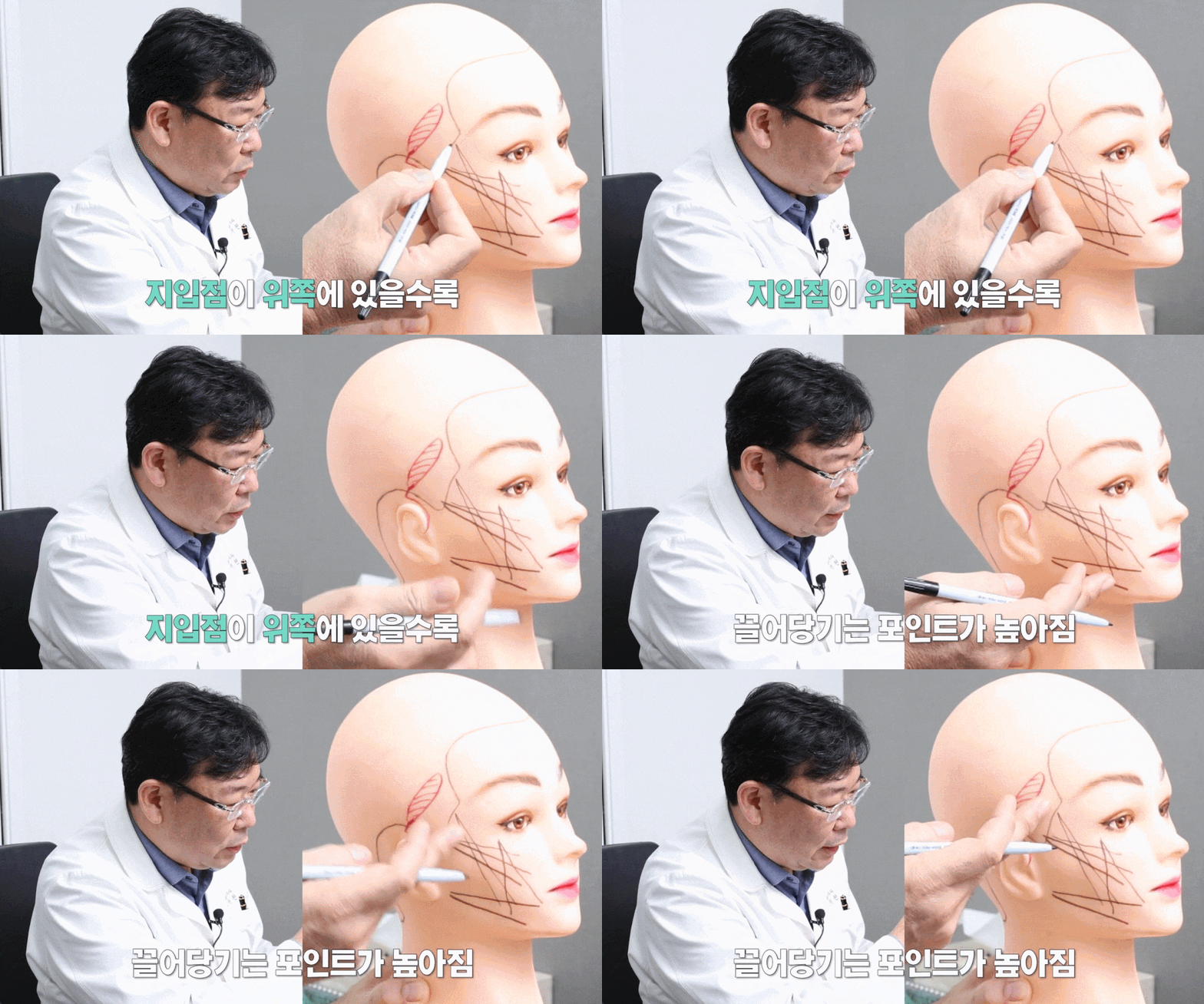
How to prevent cheekbone prominence from becoming more noticeable with thread lifting
The threads commonly used for thread lifting are mostly short in length.
Because of this, when the threads are inserted and pulled, force often concentrates on the cheekbones.
In such cases, the cheekbones may appear larger and make the face look bigger, so caution is needed.
To prevent this, our Re:본 Plastic Surgery has developed and uses its own thread made with approved ingredients.
The Re:본 thread is long enough to effectively distribute the force that tends to concentrate on the cheekbones.
Thread lifting is a procedure in which the surgeon’s manual skill, sense, and experience-based know-how are especially important.
Unlike other laser device procedures that rely heavily on the equipment itself, satisfaction can vary greatly depending on who performs the procedure and how carefully it is done.
At Re:본 Plastic Surgery, a board-certified plastic surgeon with more than 20 years of experience carefully evaluates each person’s face and proceeds with the procedure only after thorough consultation.
Today, we focused on how effective thread lifting can be for sagging cheek fat.
One more thing to add: when cheek fat has sagged and anti-aging care is needed, approaching it with the idea that thread lifting is always the answer can be risky.
There are various ways to lift sagging cheeks and improve overall skin elasticity to create a smoother facial line.
Among these various methods, you need to comprehensively assess your skin type and the degree of cheek sagging, then attempt lifting with the method that best suits those factors in order to achieve the desired result.
Rather than standardizing a specific procedure and performing it unconditionally, our clinic suggests a better direction that is truly suited to you.
If you think you need care for sagging cheek fat and anti-aging, you are welcome to visit our Re:본 Plastic Surgery.
We will do our best to help with consultation and the procedure.
Thank you for reading this long post.