Hello. We are Re:本 Plastic Surgery, welcoming you from Exit 1 of Sinsa Station.
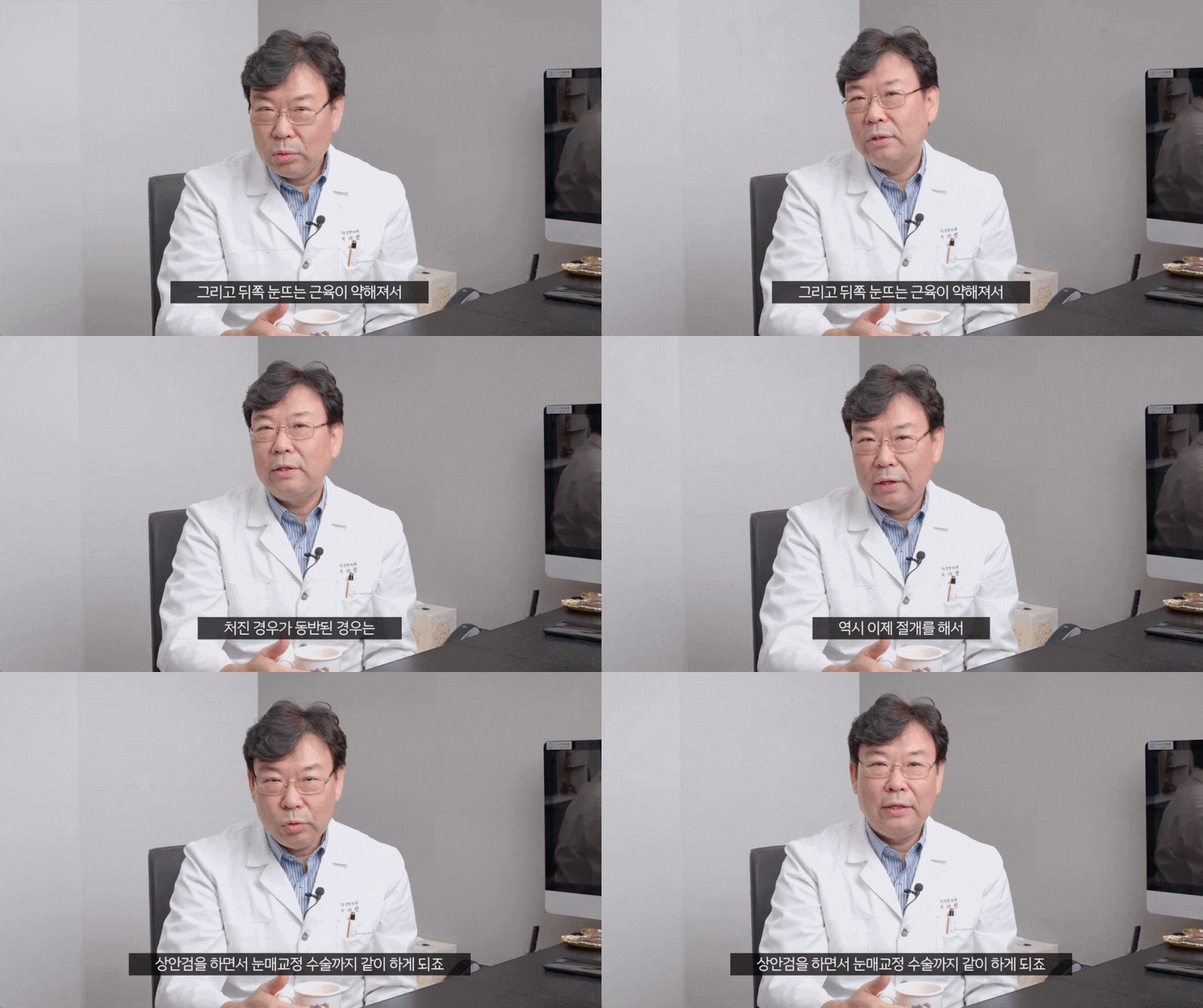
There is a muscle in the eyelid that raises and lowers the eyelid.
This is called the levator palpebrae superioris. When the strength of this levator muscle weakens and the upper eyelid does not lift well and droops downward, this is called ptosis.
When ptosis occurs, the eyelid covers the pupil, so the eyes may look smaller and give a sleepy impression. In addition, if you use your forehead muscles to open your eyes, deep forehead wrinkles can form.
Ptosis can occur due to congenital factors, or it can develop because the levator muscle weakens due to aging and other reasons.
In addition, ptosis can also occur due to eye diseases, hereditary factors, or trauma caused by accidents or impact.
Self-diagnosis for ptosis
If you think you have opened your eyes fully but your eyelids usually droop, or if people often tell you that you look sleepy, you should suspect ptosis.
If ptosis is severe, it can cause various functional problems, such as eyelashes curling inward and poking the eye, or irritation around the eyes.
If, when you open your eyes comfortably without using your eyebrows or forehead, the eyelid covers more than one-third of the black pupil, there is a high possibility of ptosis.
Ptosis eye correction
Ptosis can be corrected by strengthening the function of the muscle that opens the eyes through eye correction surgery.
Even when you open your eyes comfortably without straining your forehead or eyebrows, the eyes can appear more clearly open.
In principle, eye correction surgery is performed when ptosis symptoms are present.
There are two surgical methods for eye correction: incision and non-incision.
In the non-incision method, ptosis is corrected by accessing the inside of the eye and shortening the levator palpebrae superioris.
Compared with the incision method, there is less bruising and swelling, and recovery is relatively faster, but it is not suitable for people whose eye-opening strength is significantly weakened or who have thick eyelids.
The incision method involves making a direct incision in the eyelid and performing the surgery while directly viewing the inside.
The muscle is shortened, weak muscle tissue is secured, and depending on the case, fat or skin may be removed.
For this reason, if ptosis is severe and the strength to open the eyes is greatly weakened, or if there is a large amount of soft tissue or thick eyelid skin, incision-based eye correction is necessary.
To summarize, it can be organized as follows.
| | Non-incision | Incision |
|---|
| Surgical candidates | When the eyelid skin is thin; when the sizes of both eyes are different; eyes that look sleepy even with double eyelids; mild ptosis | Suitable for all cases; severe ptosis; people with significantly drooping eyelids; people who use the eyebrows or forehead a lot when opening their eyes |
| Degree of correction | Difficult to correct in severe cases | Severe cases can also be corrected |
| Fat removal | Partially possible | Always possible |
| Scarring | Very little | May occur |
Things to note about eye correction
Some people come in thinking, "You must have eye correction surgery when getting double eyelid surgery," or "Eye correction surgery is a surgery that makes the eyes bigger."
In principle, eye correction surgery is necessary when there are symptoms of ptosis, and when the strength to open the eyes weakens after double eyelid surgery, making it likely that the crease will loosen.
Conversely, if the eyes need eye correction but only double eyelid surgery is performed, the crease may loosen easily or the eyes may look even sleepier after the surgery.
Eye correction is not simply a surgery to make the eyes bigger; it is a procedure that must be carried out with full consideration of the functional aspects.
If eye correction is not really necessary and it is done only to make the eyes look bigger, we do not recommend it.
In such cases, it may look unnatural instead.
Also, for eye correction, it is important to carefully examine the degree of ptosis, the thickness of the eyelid skin, the amount of soft tissue, and other eye conditions, and then establish a surgical plan appropriate to those conditions.
To do this, you should have a thorough consultation with a plastic surgeon with extensive surgical experience and proceed with the surgery that is right for you.
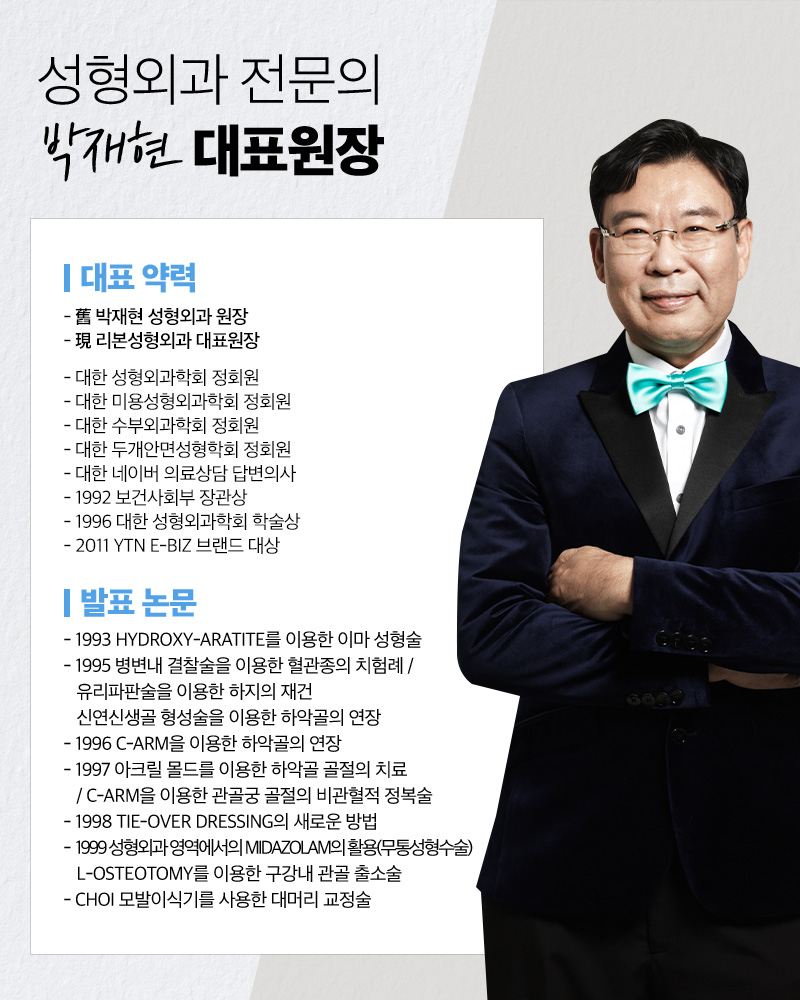
At Re:본 Plastic Surgery, our medical team with extensive clinical experience personally diagnoses your eyes, establishes a surgical plan, and performs the procedure.
Today, we talked about ptosis and eye correction.
Eye surgery can show significant results even if only a small mistake is made during the procedure.
In particular, if you do not receive treatment from a doctor with extensive clinical experience across various cases and age groups, it becomes difficult to receive the necessary surgery.
Every surgery begins with checking whether that surgery is appropriate for your eyes.
At Re:본 Plastic Surgery, the doctor with more than 20 years of experience meets you in person and finds the surgery that is the best fit for you.
If you need help, please feel free to contact Re:본 Plastic Surgery at any time.
Thank you for reading this long post.