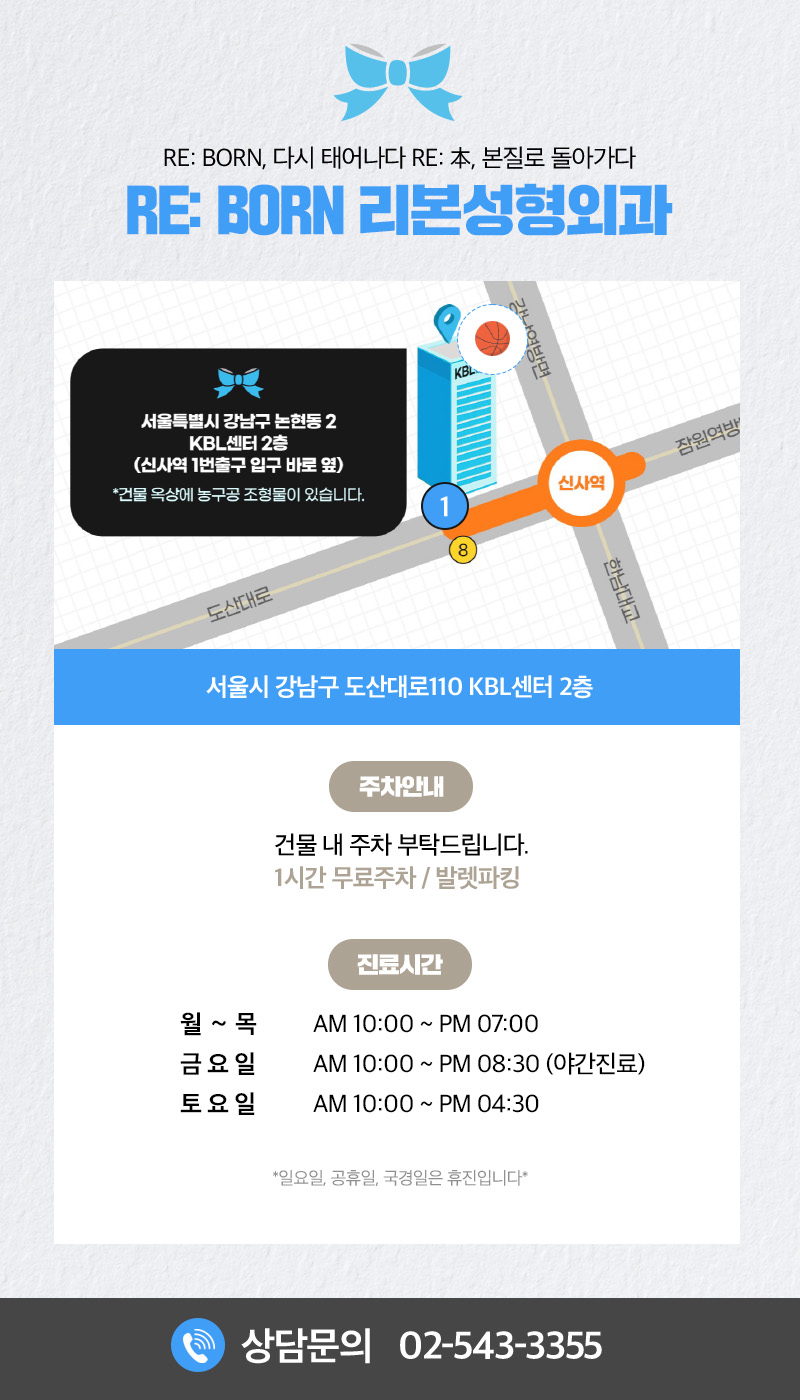
Hello. We are ‘Ribbon (Re:本) Plastic Surgery,’ meeting you at Exit 1 of Sinsa Station.

Thread lifting is a procedure that involves inserting medical threads into the skin to physically pull up sagging and wrinkled areas, with the expectation of anti-aging effects.
Compared with surgical methods such as a facelift, it is a relatively 부담less way to see results, which is why many people choose it.
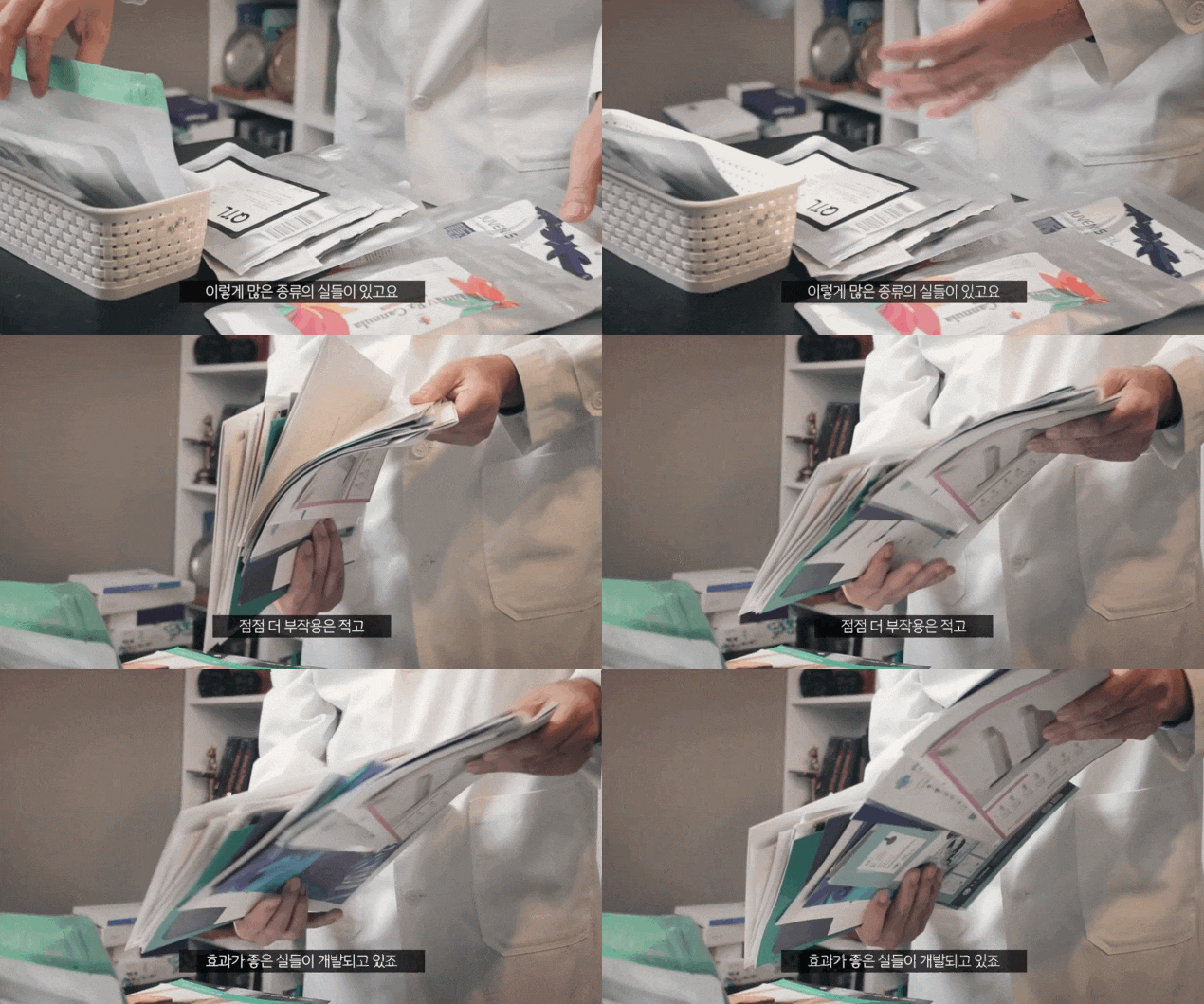
There are many lifting thread products available, with different ingredients and shapes.
Of course, the procedure method and design change depending on which product is used, and the results also differ.
However, thread lifting is a procedure that is relatively less dependent on the product itself.
This means that even if the same thread and the same amount are used, the result of thread lifting can vary completely depending on the practitioner.
Thread lifting?
If you are over 30, skin elasticity starts to decline rapidly.
As a result, the cheeks sag, nasolabial folds deepen, and the facial contours become less defined, changing your overall appearance.
Wrinkles known as “marionette lines” may also form below the corners of the mouth.
Thread lifting is a procedure that can improve these issues immediately without the help of surgery.
By inserting dissolvable medical threads into the skin and hooking them beneath the sagging area to pull it upward, the skin is directly lifted.
Thanks to this, there is an advantage in that noticeable results can appear even after a single treatment.
Also, as time passes after the threads are inserted, they dissolve and mildly stimulate the skin tissue.
The stimulated skin produces collagen actively in the surrounding tissue in order to recover.
Because of the effect of collagen remodeling, it can also help to some extent in improving skin elasticity.
Types of lifting threads
Thread lifting can largely be divided into PDO (Polydioxanone) threads and PLLA (Poly L Lactic Acid) threads.
PDO threads are an ingredient whose safety has long been proven.
Since they dissolve and disappear over time, there is no need for separate removal, and their intended use differs depending on whether or not they have barbs.
First, threads with barbs are called cog threads, and they are used by hooking into the skin tissue above the sagging area to physically pull the skin and make lifting possible.
Monothreads without barbs are thinner than a strand of hair.
Rather than for direct lifting, they are used by inserting them into the skin for the purpose of regenerating collagen.
At this time, PDO threads mildly stimulate the skin tissue and improve elasticity.
Unlike PDO threads, PLLA threads are collagen auto-induction agents that generate collagen on their own.
While lifting the skin, they also act as a collagen-producing material, so compared with PDO threads they are more suited to the purpose of adding volume.
In particular, Silhouette Soft, one of the PLLA threads, has cone-shaped barbs wrapped 360 degrees around the thread and is also called a cone thread.
It is more flexible than cog threads, so it is used in areas that move a lot, such as around the mouth, but it is also said to be relatively weaker in force.
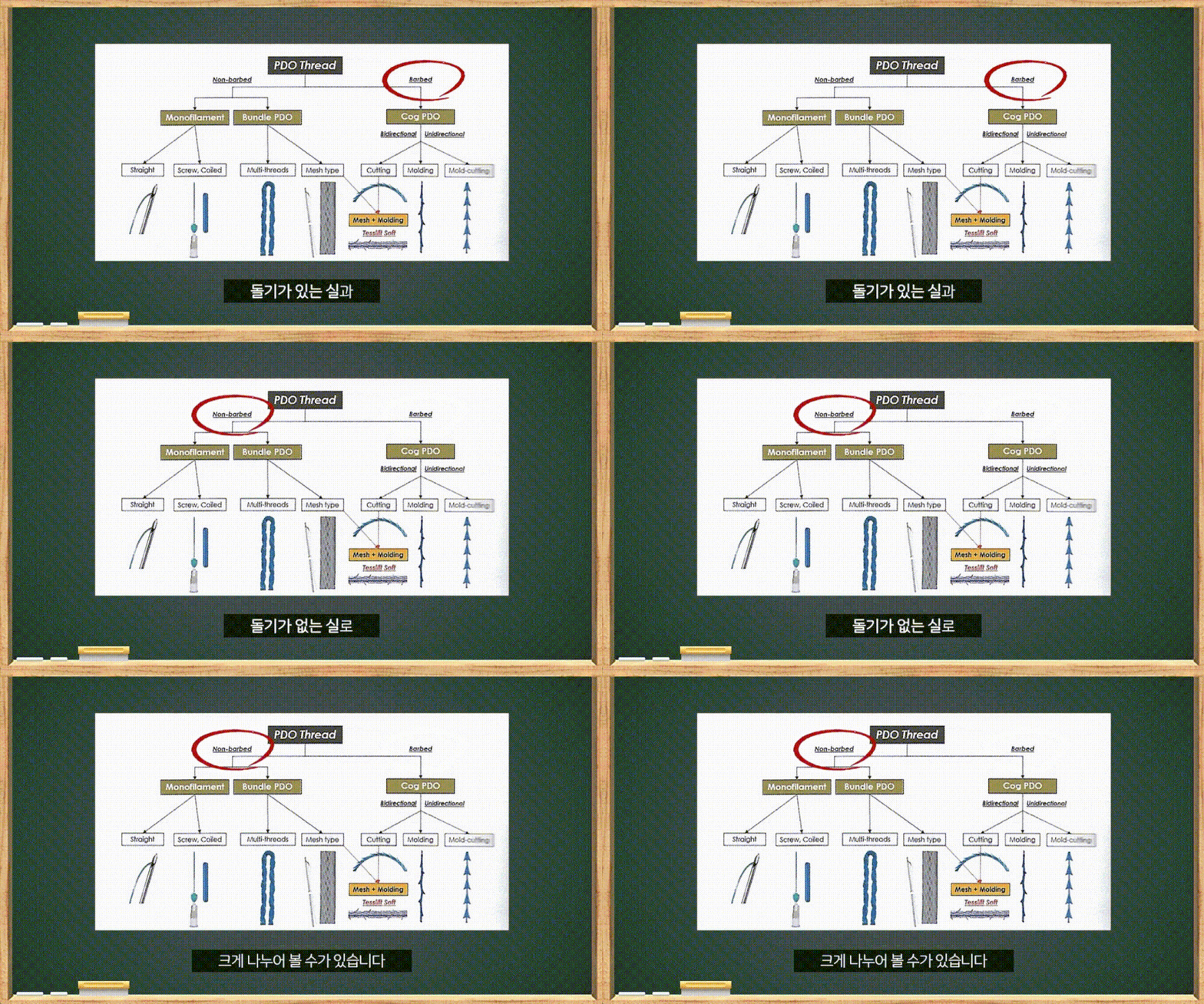
Each type of thread has clear strengths and weaknesses depending on its type and shape.
In particular, cog threads, which are directly involved in lifting, come in many products depending on the shape of the barbs, and the results vary when the threads are used.
Which thread should be used should be determined comprehensively through a careful diagnosis based on each person's skin characteristics, degree of aging, and the direction of aging.
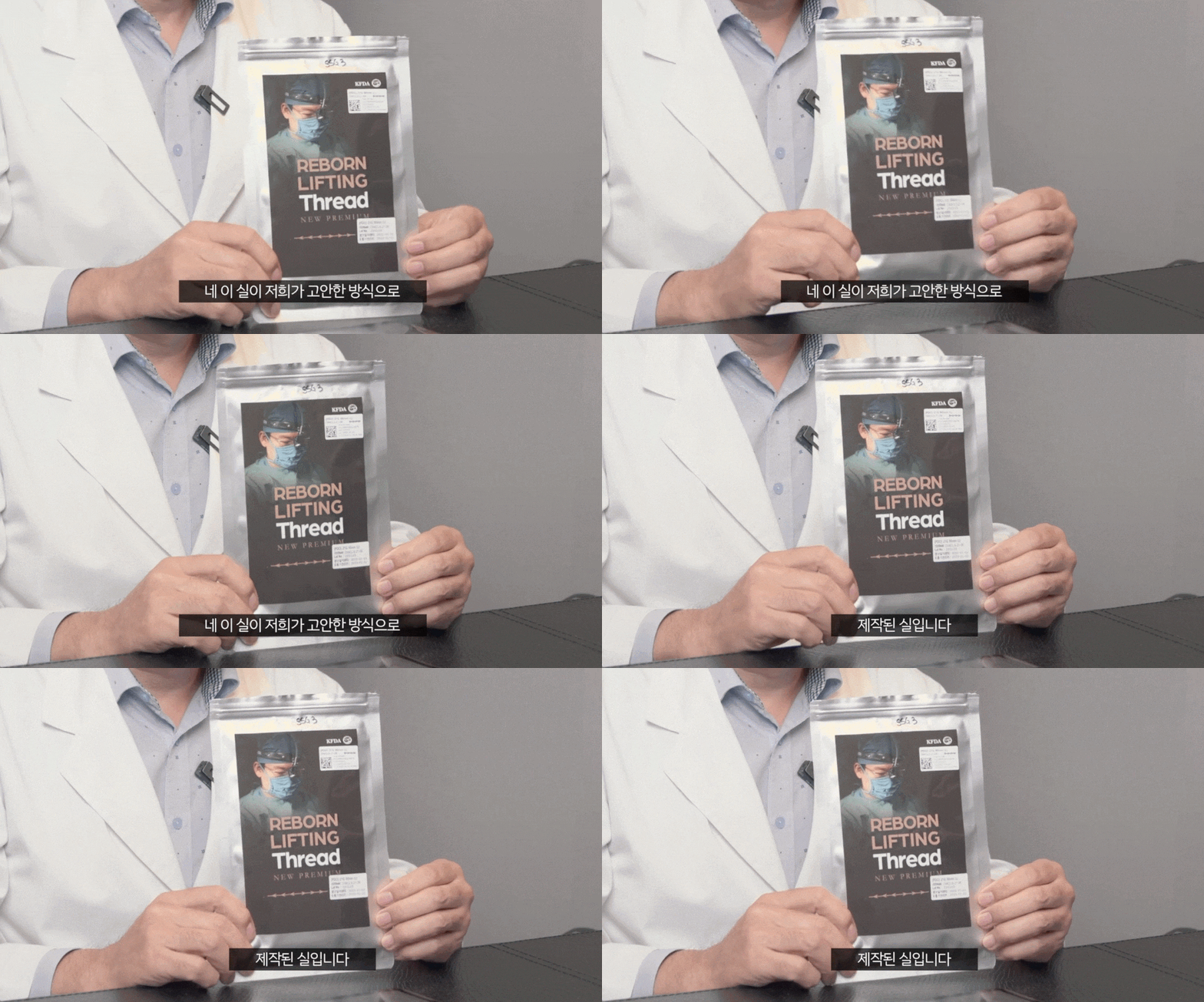
Ribbon Thread
Re:本 Plastic Surgery is making various efforts to compensate for the shortcomings of thread lifting, including manufacturing and using its own threads.
Existing threads are somewhat short in length.
For that reason, they are inserted around the cheekbone area and pulled.
When thread lifting is performed, the area where the thread is inserted may swell slightly, or swelling may occur depending on the patient.
Of course, this is not something to worry about too much, because it disappears within a few hours at the earliest and within a few days at the latest.
However, it is unavoidable that the procedure will be somewhat noticeable right after treatment.
Also, during the pulling process, too much force may be concentrated on the cheekbones, making them look larger after the procedure or causing the overall facial balance to appear disrupted.
However, because short threads enter from the side of the cheekbone, even when pulled, the force only reaches up to the cheekbone.
To compensate for this, a method is sometimes used in which lifting is performed once more from the cheekbone toward the hairline.
To address these shortcomings of existing threads, Re:本 Plastic Surgery makes the threads themselves longer.
If the threads are longer, the insertion point can be placed higher, allowing force to be distributed more evenly and making it possible to maintain a more natural and stronger thread lifting effect.
The area where the thread is inserted is also hidden by hair, so the wound from insertion is not exposed, which has the advantage of leaving almost no visible sign immediately after the procedure.
Ribbon Thread is made only with ingredients approved by the Ministry of Food and Drug Safety, so it is safe.
Also, before the procedure, a suitability test is conducted.
Thread lifting procedures are mainly performed on the face.
Because of this, they must address both aesthetic and functional concerns.
Since this is a procedure influenced more by the doctor’s skill than by dependence on equipment, extra care is needed when choosing where to undergo treatment.
It is especially important to look into whether the plastic surgery clinic understands the strengths and weaknesses of each thread product and how it approaches the procedure.
If you want an immediate change for a sagging face but are unsure which procedure is right for you, please visit Re:本 Plastic Surgery.
A board-certified plastic surgeon with more than 20 years of experience will personally examine your skin type and face in detail and help you find the most suitable procedure through 1:1 customized care.
Thank you for reading this long post.