Hello. We are ‘Re:本 Plastic Surgery,’ located at Exit 1 of Sinsa Station.

Marionette lines gradually deepen as both cheeks sag and the volume around the mouth is lost.
It is often caused not simply by the skin sagging, but by the ligaments that support it becoming loosened.
The skin around the mouth has less moisture and fewer sebaceous glands than other areas.
It also moves a lot when eating, making facial expressions, and speaking.
For this reason, once wrinkles form, they are difficult to make disappear again.
Marionette Thread Lifting
When marionette lines start from the corners of the mouth and fall downward, the corners of the mouth can look droopy and the face can appear much older.
Because this can make someone look much older than deep nasolabial folds alone, many people visit us to have them improved.
The causes of deep wrinkles like marionette lines vary, which makes them quite difficult to remove.
In particular, they are not easy to improve with procedures that rely only on equipment.
Wrinkles caused by sagging tissue especially require a physical method that directly lifts the sagging cheek area.
If a surgical method feels burdensome, we recommend ‘thread lifting.’
Thread lifting is a procedure that induces an immediate lifting effect by inserting threads under the skin through small openings and then pulling them using the barbs on the threads.
Unlike lifting procedures that use laser devices, it physically pulls the area causing the problem, so an immediate improvement can be expected.
In addition, unlike facelift surgery, it does not involve surgical cutting, so the downtime is relatively short and the burden is less.
Things to Note About Thread Lifting
However, unlike other device-based procedures that can depend somewhat on the equipment itself, thread lifting is a procedure whose satisfaction level varies greatly depending on who performs it.
Because it directly lifts the skin tissue, the provider’s delicate hand technique, sense, and know-how are more important than anything else.
Since the direction and degree of aging differ from person to person, and each person has a different skin type, the appropriate procedure should be performed according to the cause of the marionette lines and the patient’s skin condition.
If this is ignored and the procedure is performed uniformly as if it were mass-produced in a factory, the likelihood of side effects such as dimpling or the threads becoming visible through the skin increases.
Dimpling refers to the skin becoming indented.
This can occur for various reasons, such as which skin layer the thread is inserted into, how much force is applied when pulling the thread, and which thread is selected.
If the dimpling is mild, it may resolve naturally over time, but if it is severe, marks may remain even after the thread dissolves, so special caution is needed.
Also, the thread most commonly used to improve wrinkles such as marionette lines is generally PDO thread.
However, PDO thread has a bluish tint, so if the procedure is performed on someone with very thin skin or placed too superficially, the thread may show through the skin.
Therefore, before undergoing thread lifting, please make sure that thread lifting is suitable for your face and that the person performing the procedure has sufficient experience and know-how in lifting procedures.

Other Side Effects?
The representative side effects of thread lifting are the dimpling mentioned above and the thread becoming visible through the skin.
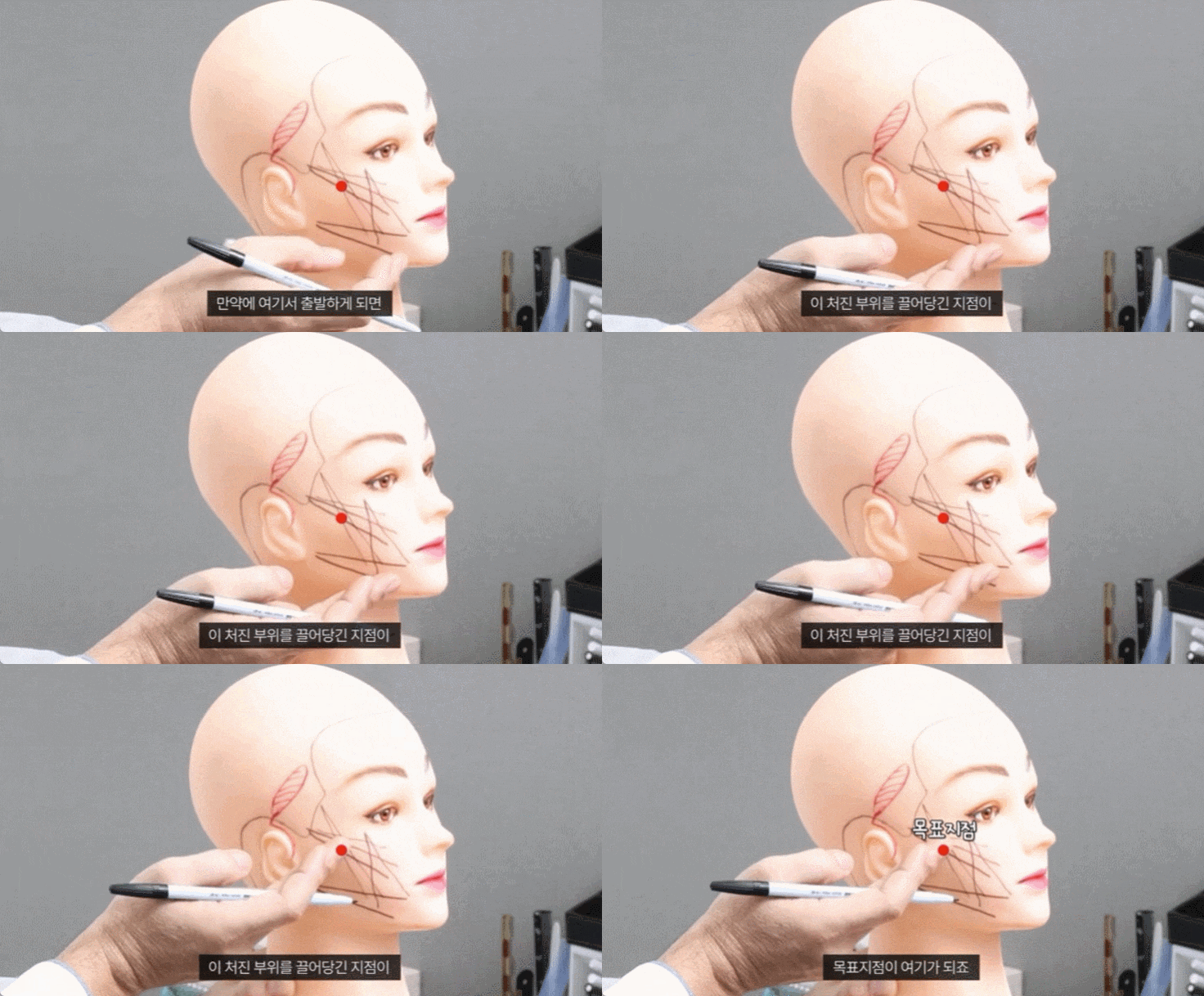
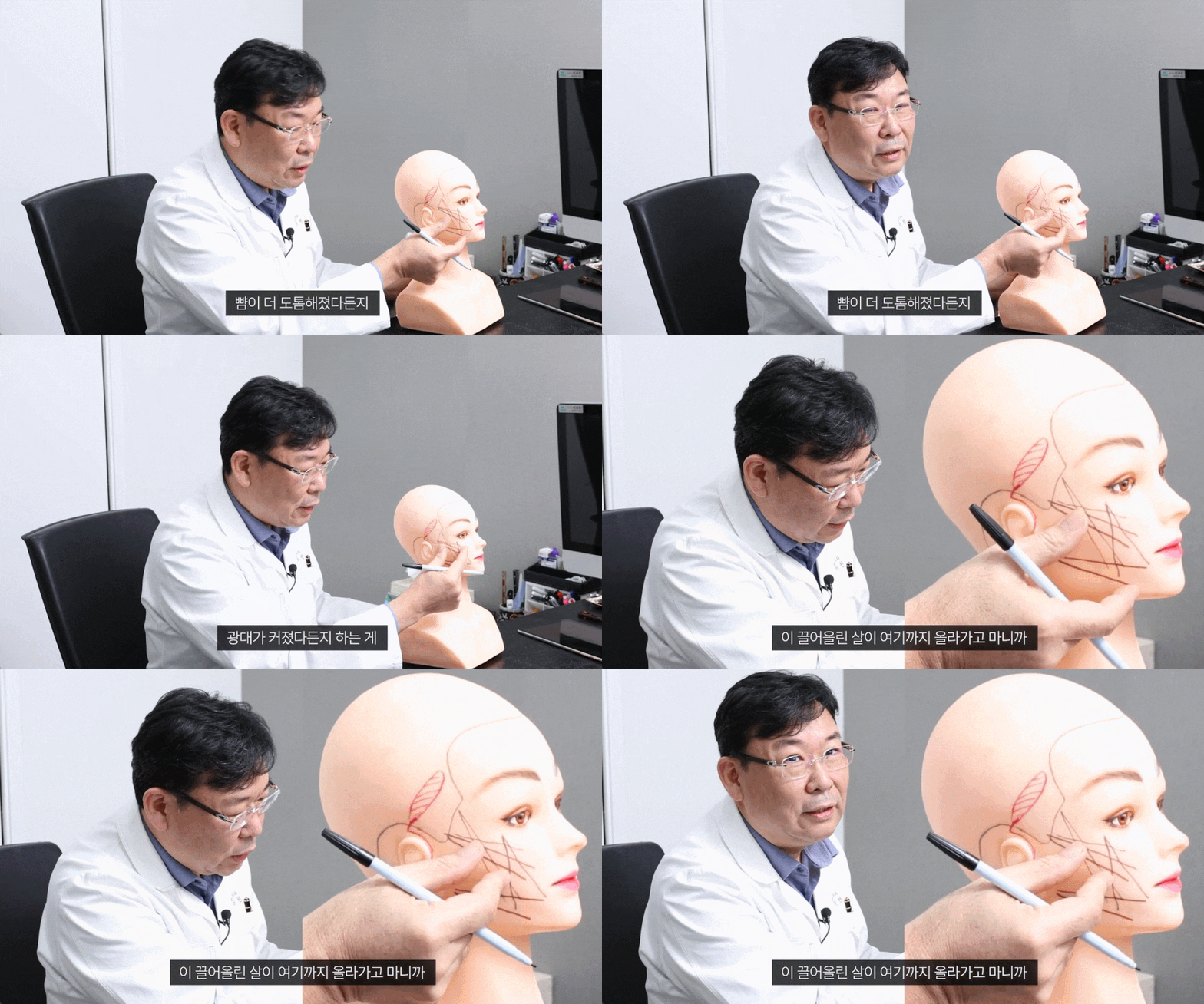
In addition, if the design is done poorly, a side effect in which the cheekbones appear larger may occur.
The reason the cheekbones can appear larger is related to the position of the thread barbs and the length of the thread.
In general, lifting threads are relatively short, and the barbs are located about 6–7 cm apart.
Because of this, when the lower face is lifted, the force tends to gather around the cheekbones.
If this is not redistributed once more, the cheekbones may appear larger or the face may look bigger overall.
To prevent this, Re:本 Plastic Surgery custom-produces and uses ‘Reborn Threads.’
Reborn Threads are longer than conventional threads and have a barb design created to distribute force.
This helps prevent excessive force from concentrating on the cheekbones.
Also, because the insertion point is closer to the hairline rather than beside the cheekbones, the inserted area is covered by hair, which has the advantage of making the procedure less noticeable even immediately after treatment.
After lifting, if you open your mouth wide or yawn, a ‘pop’ sound may occur, as if the thread has snapped.
Nowadays, products are released with improvements that address thread snapping, so it is very rare for the inserted thread to break.
The ‘pop’ sound is usually the sound of a thread that was caught during the process of opening or moving the mouth becoming released and then caught again, so there is no need to worry too much.
However, if you feel that the thread has become loose and its fixing strength has weakened again, please visit the clinic where you had the procedure.
In addition, bruising or swelling may occur during the process of inserting the thread under the skin, but these will subside over time.
Thread lifting is highly effective for improving wrinkles like marionette lines that are difficult to eliminate by simply improving elasticity.
However, our face is organically connected, and the causes of problems are diverse and complex.
Therefore, an approach such as ‘thread lifting is always the answer for marionette lines’ is risky.
Before receiving a procedure, please have a specialist carefully assess your skin condition, identify the cause of your concern first, and then decide the direction of treatment.
If you are worried about sagging, loosened skin caused by aging or deep wrinkles like marionette lines, please contact Re:本 Plastic Surgery at any time.
A plastic surgery specialist with over 20 years of experience will personally and carefully assess each individual face and, after thorough consultation, help improve your concerns.
Thank you for reading this long post.