Hello. We are Re:本 Plastic Surgery, located at Exit 1 of Sinsa Station.

As we age and the signs of aging appear, the elasticity of the skin tissue generally decreases overall.
When elasticity decreases, the fat that made up the volume of the face is affected by gravity and begins to sag.
The volume that is needed is lost, and as the skin stretches downward, the once-smooth line of the lower face becomes uneven.
Not only that, but jowls can form, nasolabial folds can deepen, and marionette lines can appear, leaving visible traces of time on the face.
We cannot stop the passage of time, but there are various ways to slow it down.
Among them, thread lifting is a procedure that many people choose because it directly lifts sagging skin tissue.
Compared with device-based lifting, its effects appear more immediately, and because it places less surgical burden on the body, many people seek out this procedure.
Thread Lifting
Thread lifting is a lifting procedure in which dissolvable threads are inserted into the dermal layer under the skin to pull up sagging skin.
Because it physically lifts the skin, it can help improve nasolabial folds and glabellar wrinkles that are not easy to remove with laser lifting.
In addition, after the procedure, the threads slowly break down within the skin and stimulate the surrounding tissue.
During this process, collagen is activated, which can help increase skin elasticity.
In general, the effects of thread lifting are most clearly visible immediately after the procedure and within 3 to 4 months, and they can last from 6 months to as long as 2 years.
The duration, the presence of side effects, and the results vary from person to person.
These differences arise because the type of thread, the clinician’s level of skill, and each patient’s skin type are all different.
Therefore, to maintain the lifting effect for as long as possible, you should first receive thorough consultation to determine whether thread lifting is right for you.
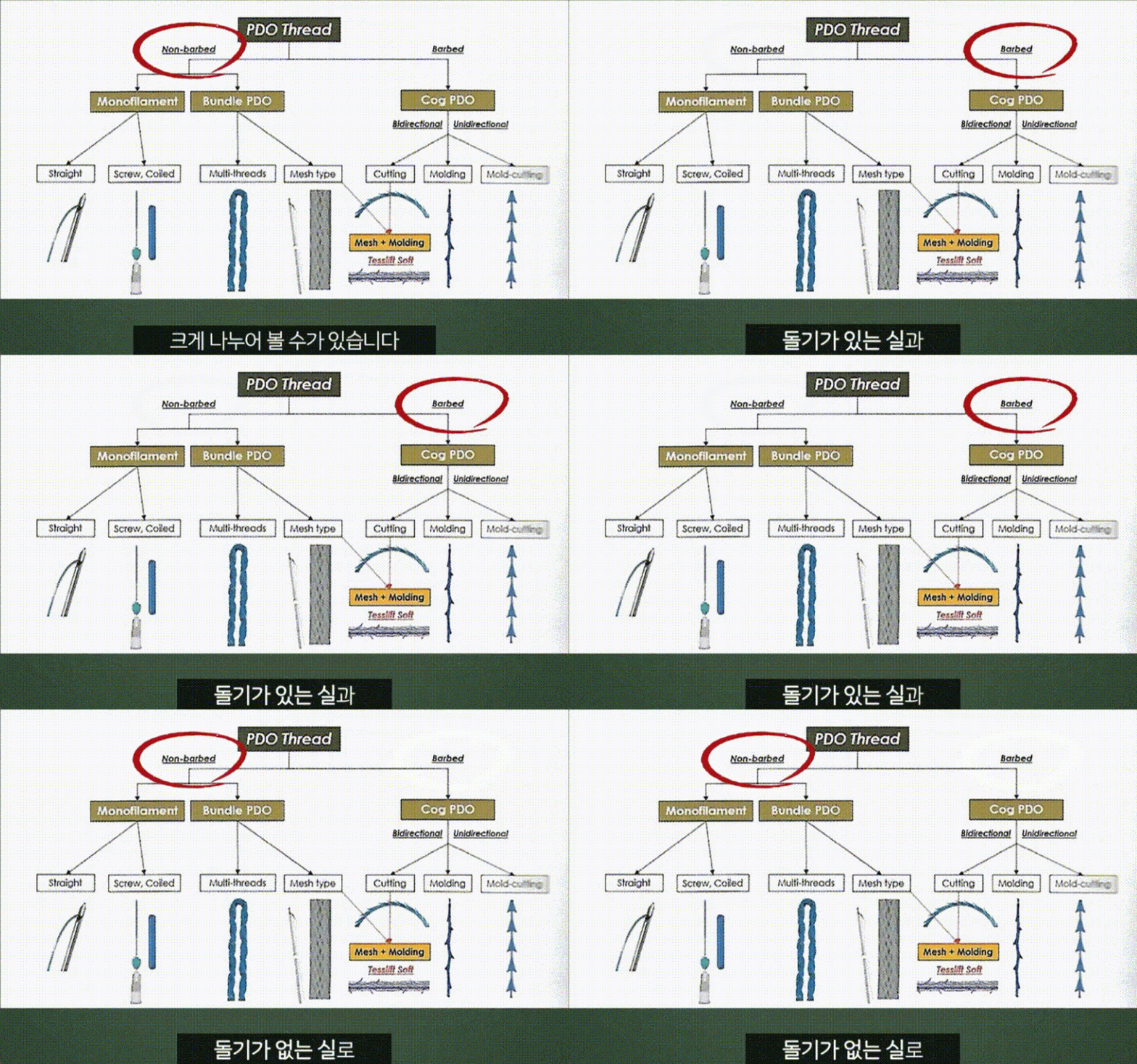
Side effects of thread lifting?
Thread lifting is a less burdensome procedure compared with using surgical methods such as a facelift.
However, because it uses a physical method to pull up the skin tissue, it is a procedure that depends greatly on the practitioner’s manual skill.
Before the procedure, the patient’s skin characteristics and the degree of sagging must be carefully evaluated in a comprehensive manner, and only then should the procedure be performed with precision.
If the procedure is carried out uniformly without properly recognizing each individual’s unique characteristics, the risk of side effects increases.
Typical side effects of thread lifting include dimpling and visible threads.
Dimpling refers to an indentation in the skin.
If the location of the inserted thread, the pulling direction, or the amount of force is incorrect, indentations in the face may occur.
If the dimpling is mild, it will naturally resolve over time, but if it is severe, traces may remain even after the thread dissolves, so special caution is needed.
Visible threads are a side effect that can occur when the procedure is performed at an incorrect location or on a skin type that is not suitable.
The threads commonly used in thread lifting are PDO threads, which have a bluish color.
If these threads are inserted too superficially, or if the procedure is performed on someone with thin skin, the threads may become visible through the skin with a bluish appearance.
If the threads become visible, they eventually need to be removed again.
At that time, if a barbed thread was used, removing it can place a significant burden on the body.
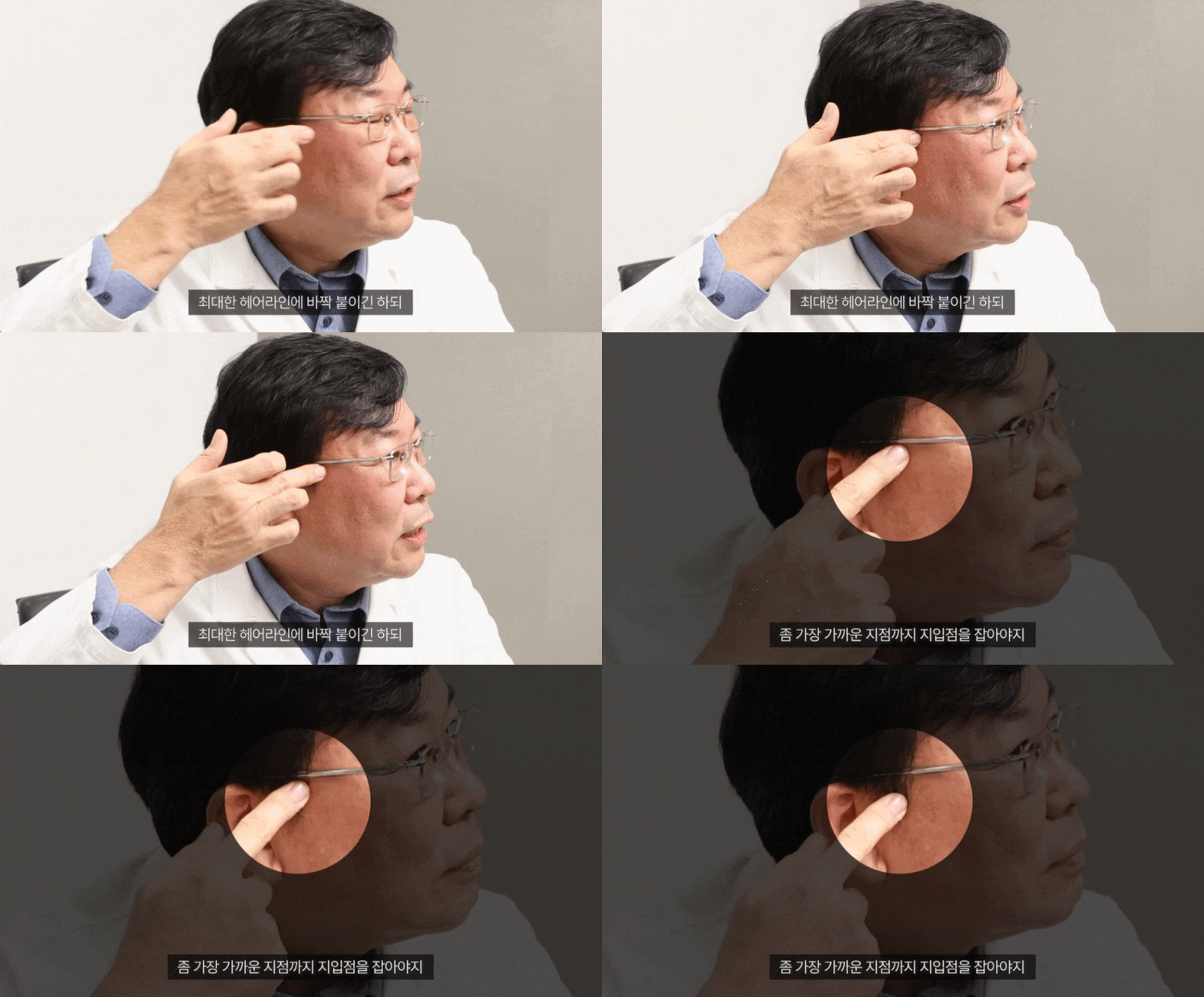
A side effect that makes the cheekbones look larger?
The ordinary threads on the market have barbs spaced about 6 to 7 mm apart, so when the thread is pulled, the force tends to concentrate in the cheekbone area.
If this is not further dispersed and lifted, the cheekbones may appear larger or the face may look bigger due to increased volume.
For this reason, to compensate for these limitations of conventional threads, Re:本 Plastic Surgery independently produces and uses “Rebon Thread” made from safe ingredients approved by the Ministry of Food and Drug Safety.
Rebon Thread is longer than existing threads and has barbs designed to disperse force rather than concentrate it in one place.
Therefore, it helps prevent excessive force from concentrating on the cheekbones, and because the insertion area is closer to the hairline, another advantage is that the treatment area is hidden by the hair.
Many people think of thread lifting when they are looking for a lifting procedure because they are concerned about sagging skin.
Thread lifting does not simply end with pulling sagging skin upward.
It requires carefully considering the balance of the face, the direction of wrinkles, and how to pull each area, as well as the results after lifting.
If the design is made considering only the treatment area, the face may look unnatural or you may suffer from unwanted side effects, so caution is needed.
If you are considering a lifting procedure because of a sagging face, we recommend receiving treatment from a doctor who has extensive knowledge of human anatomy and substantial experience with a variety of cases.
Before the procedure, you should also remember that careful diagnosis, consultation, and design must be given 충분한 time.
Re:本 Plastic Surgery is led by a board-certified plastic surgeon with more than 20 years of experience, who carefully diagnoses your skin type and face in person and recommends only the procedures that are truly necessary.
In addition, we perform a “procedure suitability test” before treatment, so you can visit with peace of mind.
If you are worried about a sagging and drooping face, please visit Re:本 Plastic Surgery.
We will help you kindly and carefully.
Thank you.
| Re:本 Plastic Surgery, Exit 1 of Sinsa Station |
|---|
| Main number: 02 - 543 - 3355 |
This post was written directly by Re:本 Plastic Surgery for the purpose of providing information and advertising, in accordance with Article 56, Paragraph 1 of the Medical Service Act.
The effectiveness of treatment may vary depending on the individual.
All procedures and treatments may carry the risk of side effects or complications depending on the individual.
Please be sure to proceed only after sufficient consultation with medical staff who have extensive experience.