Hello. We are Re:본 Plastic Surgery, meeting you at Exit 1 of Sinsa Station.

Re:본 Plastic Surgery has been performing thread lifting since the technique was first introduced in Korea.
I can’t even count how many thread lifting procedures we have done so far, but it has been more than 20 years in total.
These days, thread lifting has become fairly mainstream, but before that, it was not well known and even had a negative image.
If you think about Botox, you may understand the feeling.
Nowadays, many people get Botox, but there was a time when even the fact that a celebrity had Botox was viewed negatively.
When I say I have been doing thread lifting for more than 20 years, many people are surprised, saying they did not know the procedure had been around that long.
Today, I’d like to take some time to explain why I introduced thread lifting and have continued doing it until now.
Of course, I have been writing about thread lifting consistently, but today I will especially organize the reasons I recommend thread lifting among many lifting procedures, along with the things you should know to fully enjoy the benefits.
What is thread lifting?
Thread lifting is a procedure in which dissolvable threads are inserted beneath the skin to pull up tissue and create a lifting effect.
For effective lifting, the threads usually have “barbs.”
The principle of ordinary thread lifting is to hook these barbs into the skin tissue and pull to achieve a physical lifting effect.
The threads inserted into the skin are usually PDO threads, which are safe enough to be used for heart sutures.
When PDO threads are inserted into the skin, they gradually dissolve over time.
As the threads dissolve, they stimulate the surrounding tissue and activate collagen regeneration.
Of course, it does not compare to a direct collagen booster treatment, but even after the thread dissolves, some elasticity can be maintained.
Recently, lifting threads made with PLLA, the main ingredient of Sculptra, which is a type of collagen booster, have been released, and many people are seeking them out.

Advantages of thread lifting?
The biggest advantage of thread lifting is that it can produce satisfying results in a relatively short time.
In the case of laser procedures, which many people compare most often, there are limitations when it comes to directly creating a “lifting” effect.
Laser devices send energy deep into the skin to “remodel collagen,” restoring firmness from within.
They can improve the “elasticity” that causes the skin to sag, but they do not have enough power to directly lift already loosened skin.
Because of this, their effect may be limited for deep wrinkles or sagging, loose jowls.
Thread lifting can provide immediate physical lifting without going through surgical processes such as skin incision, so it is a relatively less burdensome procedure.
For those who did not get the results they wanted from lifting devices, or who want relatively quick results, thread lifting may be helpful.
Types and safety of lifting threads
Since thread lifting involves injecting something called a “thread” into the body, many people ask about safety.
Some people worry that the threads may build up in the body or remain there for a long time.
Most of the threads released recently are biodegradable.
They do not leave a foreign-body sensation behind.
Of course, depending on how the threads are made or the manufacturing process, threads made from longer-lasting materials have been developed, which can cause problems such as lasting too long or becoming excessively stiff.
Even so, they are not greatly harmful to the human body, so there is no need to worry too much.
On the other hand, some people are so satisfied with the lifting effect that they want it to last forever.
However, even if the threads remain for a long time, that does not mean the effect lasts longer, and if something does not biodegrade, it simply means that a foreign substance continues to remain inside the body.
In the long run, that is not necessarily a good thing.
Of course, the chance of causing major problems is low, but because the effect is limited, we recommend other methods such as combining it with lifting surgery rather than using permanent threads.
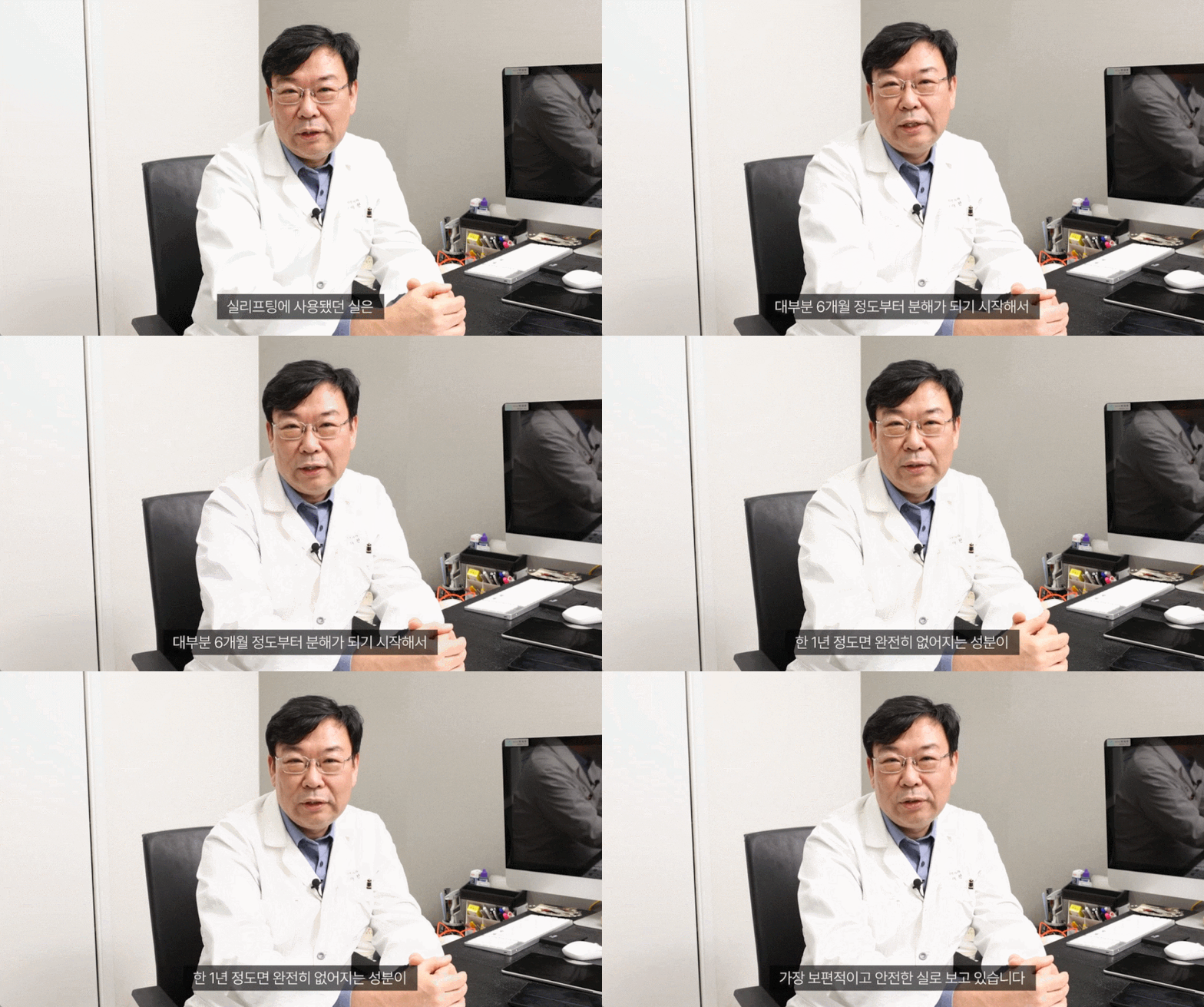
In general, the threads used for lifting begin to break down after about 6 months, and threads that completely disappear in about 1 year are considered the most common and safest.
However, please keep in mind that the duration of thread lifting can vary depending on each person’s skin environment and condition.

Side effects of thread lifting?
There is always a risk of side effects with any procedure.
That is why even though I have been performing thread lifting for more than 20 years, I still focus all my attention at my fingertips whenever I do thread lifting.
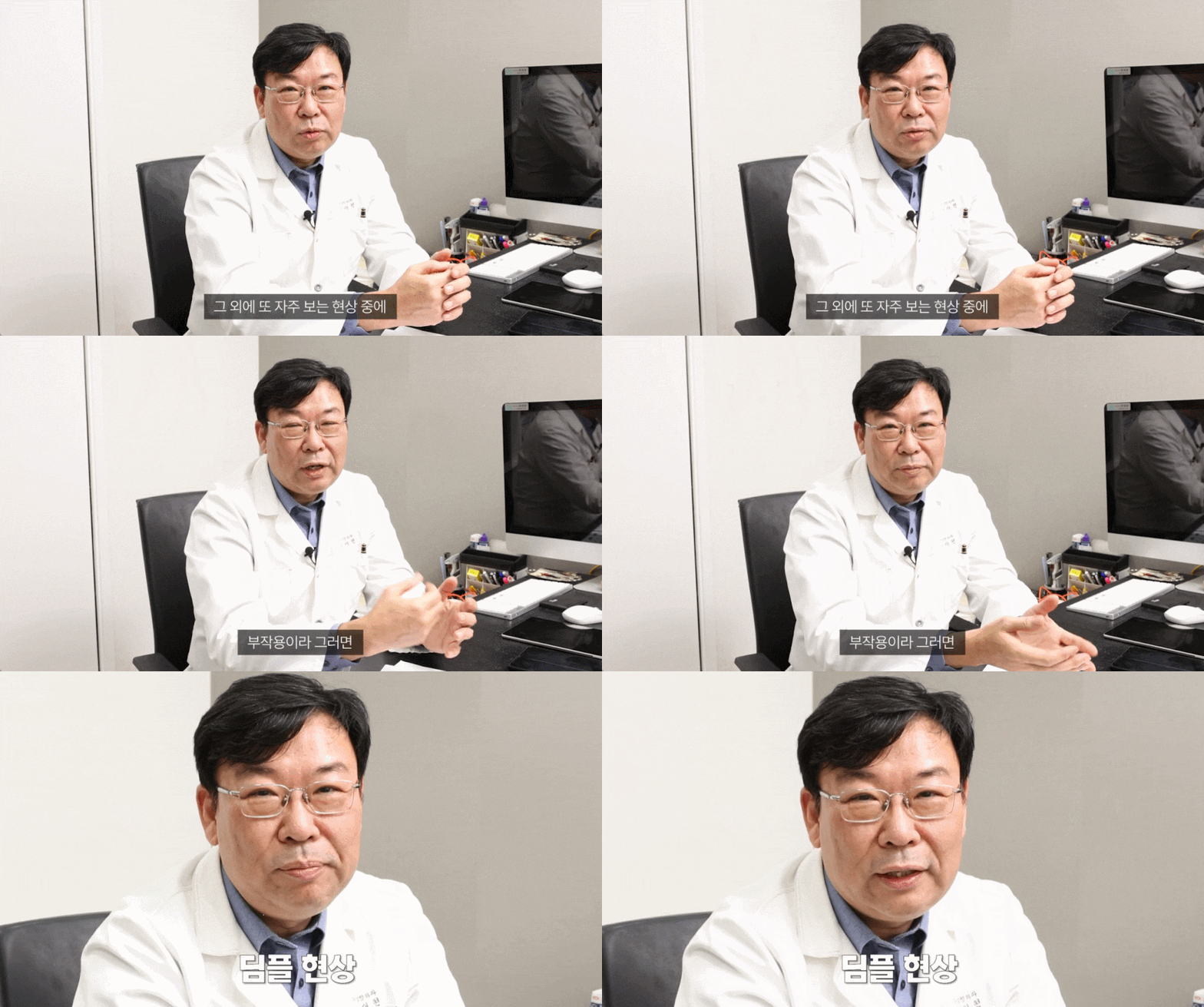
The typical side effects of thread lifting are dimpling, visible threads, wrinkling of the skin, and a widened cheekbone appearance.
First, a dimple refers to a sunken area of the skin.
It is one of the common side effects that can occur due to various reasons, such as the location of the skin layer where the thread is inserted, or the direction and force used when pulling the thread.
If the dimple is mild, it will naturally resolve over time, but if it is severe, a mark may remain even after the thread dissolves, so special caution is needed.
Visible threads occur because the PDO threads most commonly used for thread lifting are blue.
If the procedure is performed on someone with very thin skin, or if the threads are inserted into a layer that is too shallow, the threads may show through the skin.
In addition, a rippling effect, where the skin becomes uneven and wrinkled, can also occur, so special caution is necessary.
Usually, the barbs on standard threads are spaced about 7–8 cm apart.
That is actually a very short distance.
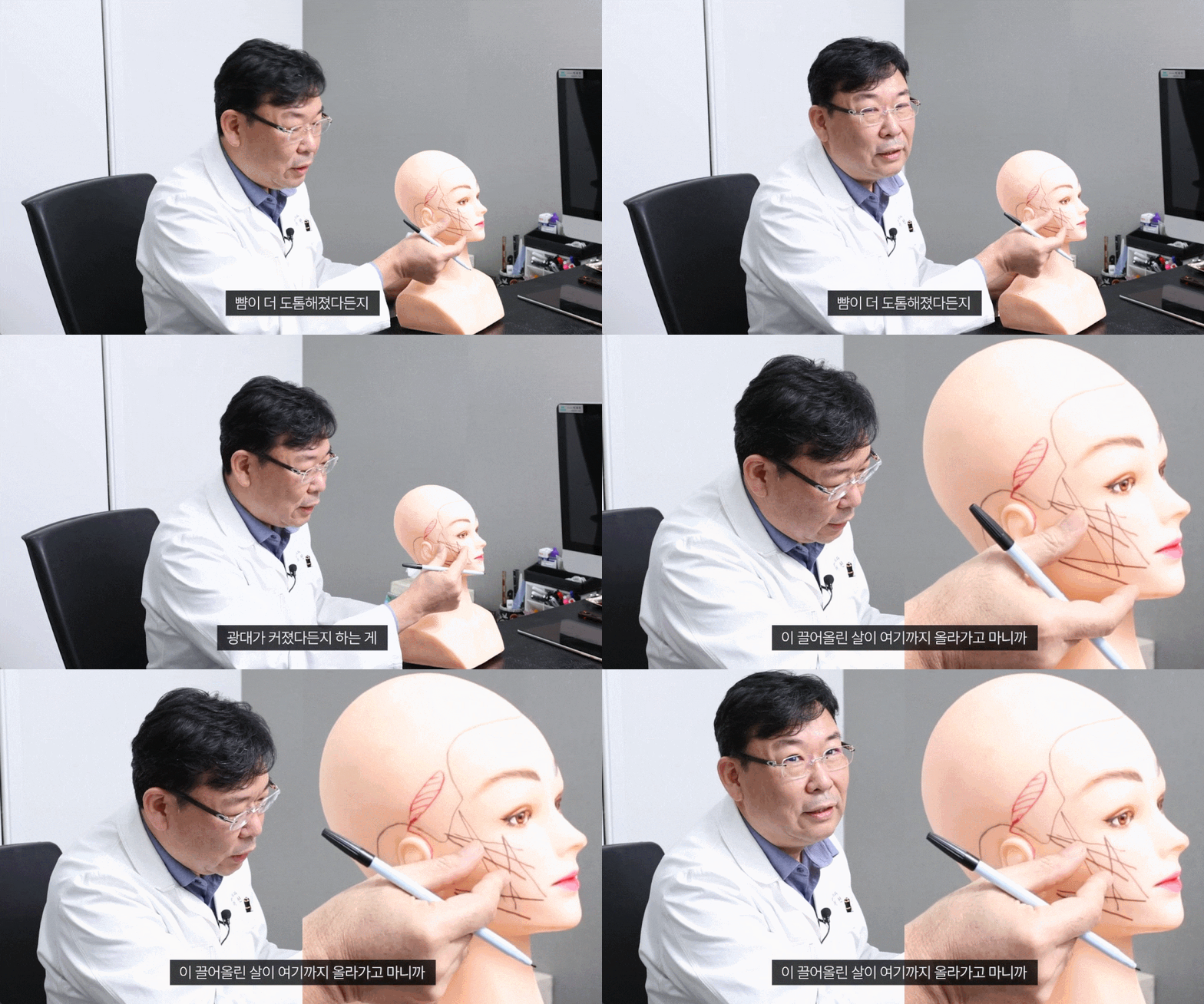
If the area that needs lifting is located in the lower part of the face, such as the nasolabial folds or deep cheek fat, the threads may be pulled toward the cheekbone area, making that area appear especially prominent.
If fat gathers around the cheekbones and that area becomes more pronounced, the face may appear larger after thread lifting, or unnecessary wrinkles may form.
Re:본 Plastic Surgery’s thread lifting
has a unique design?
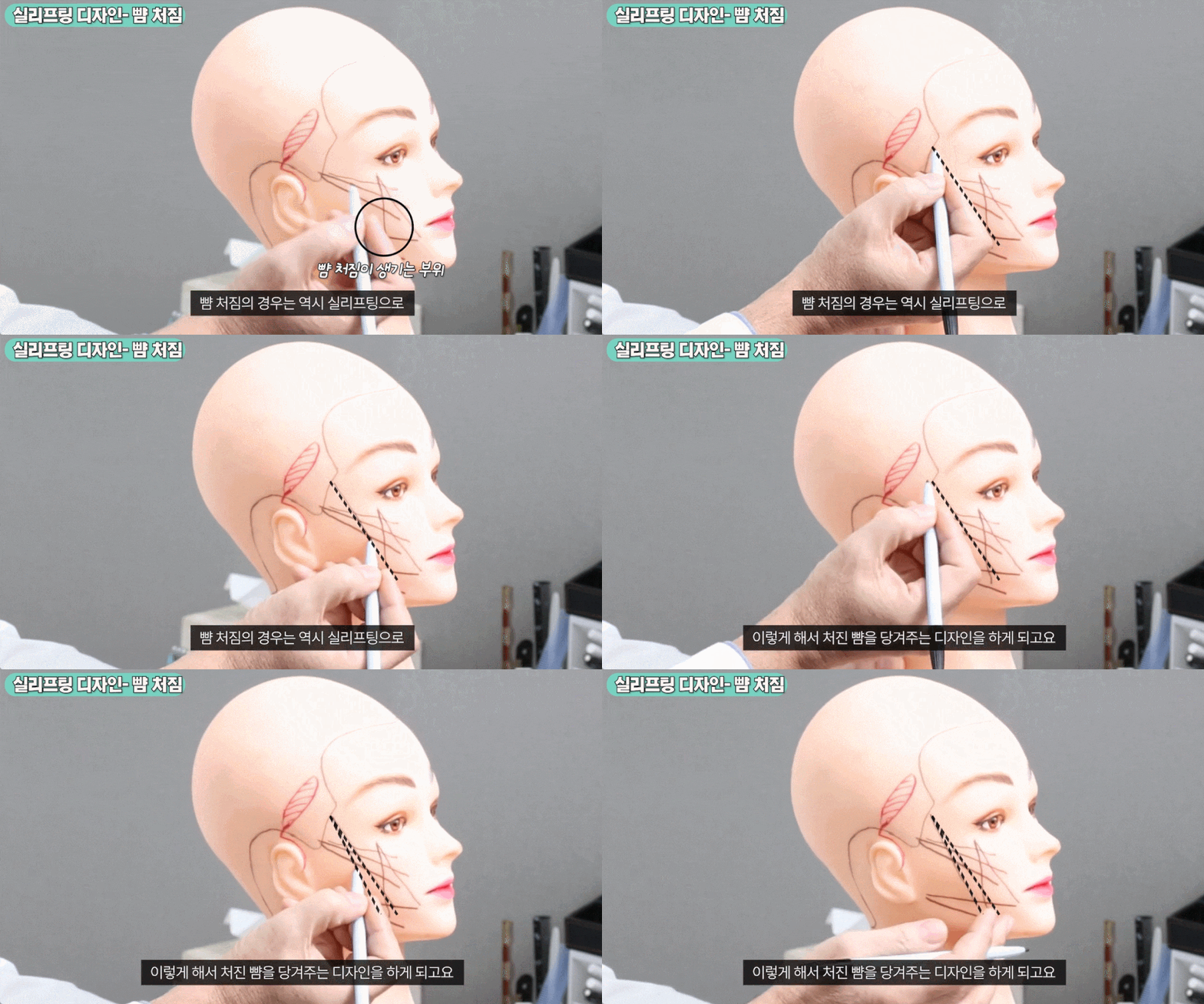
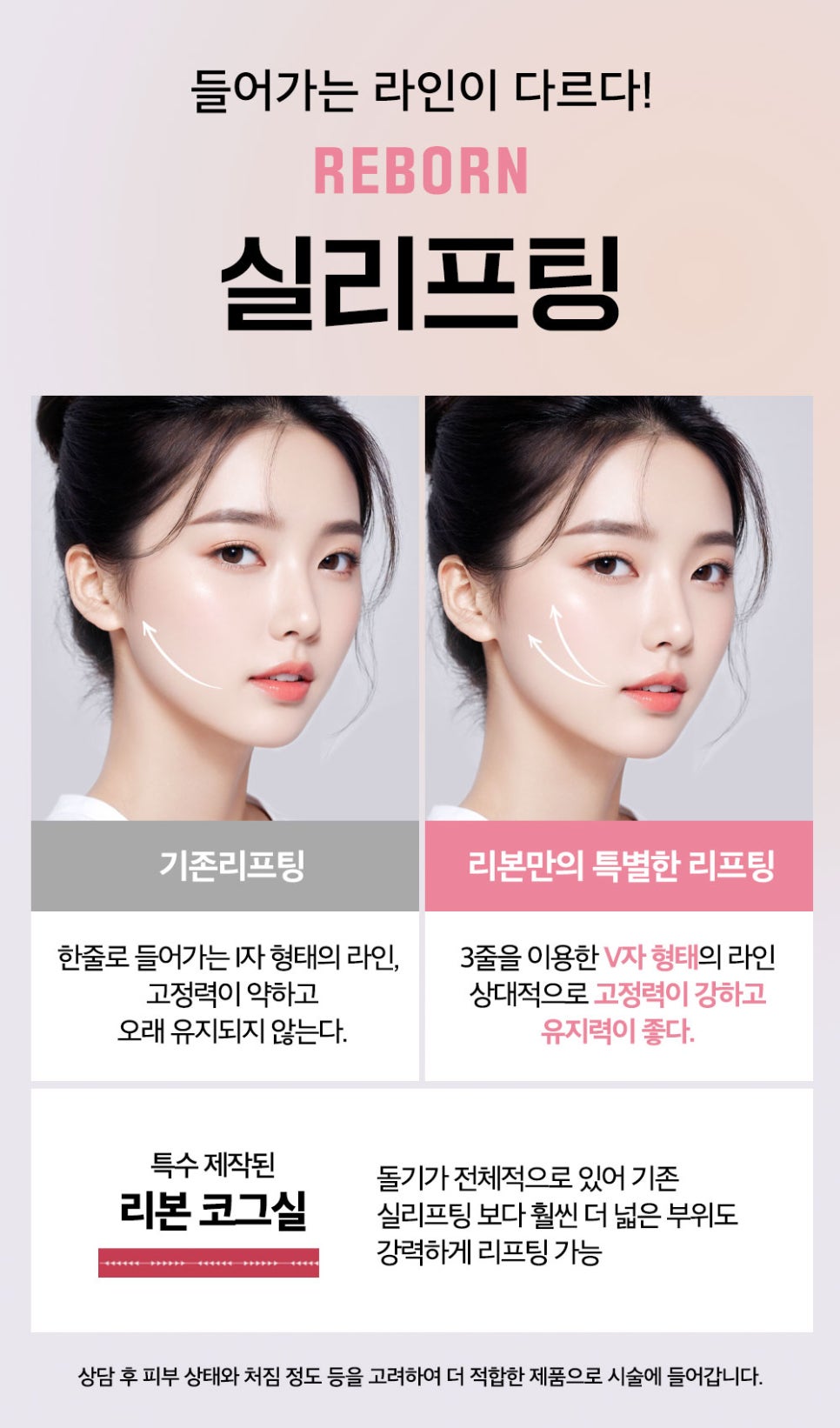
To compensate for several shortcomings of existing thread lifting methods, Re:본 Plastic Surgery performs lifting in a V-shape rather than an I-shape.
If thread lifting simply pulls upward from bottom to top, first, the threads are weakly hooked and do not stay fixed well, and there is also a problem that they can loosen easily.
In addition, the tissue may gather to one side, making that area stand out or causing the face line to become uneven.
To prevent this, Re:본 Plastic Surgery pulls the threads in a V-shape so that the force carried by the threads is more evenly distributed.
Depending on the need for stronger lifting, three threads may also be used.
The principle is easier to understand if you think of a swing.
A swing uses two ropes to support one seat.
If there were only one rope supporting the swing, the force would not be fully balanced, and the swing could break easily.
However, even if ropes of the same thickness are used, if the swing is supported by two or three ropes, it can remain sturdy for a long time.
Based on this principle, Re:본 Plastic Surgery’s thread-lifting treatment lifts sagging tissue using two threads, or three threads when necessary.
Re:본 threads
However, all the threads available on the market were designed for I-shaped lifting, so they were not suitable for Re:본 Plastic Surgery’s lifting procedure.
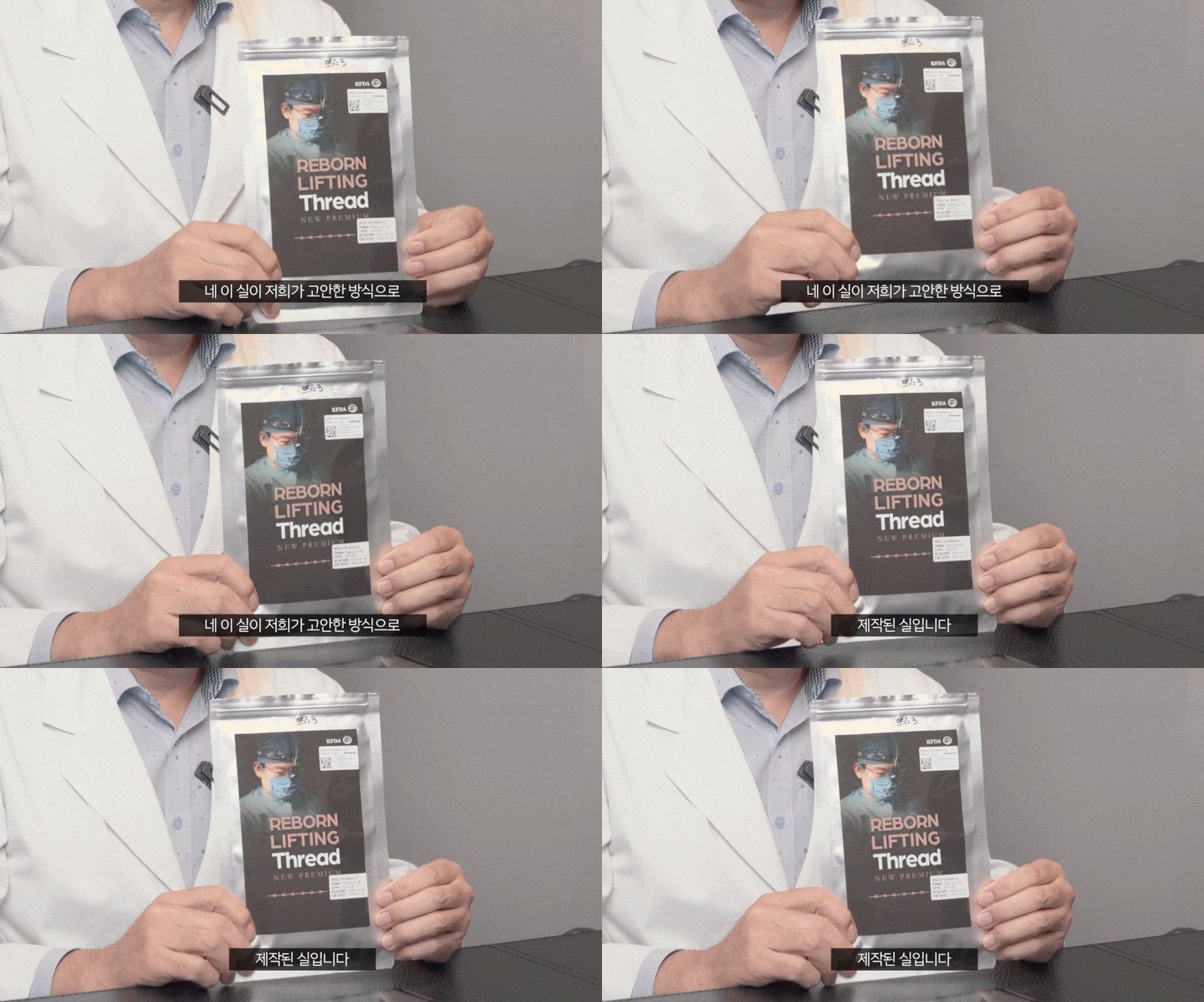
Because of that, we developed our own “Re:본 threads.”
We developed them in a way that minimizes the shortcomings of existing threads while making the most of their advantages, and when Re:본 threads are used,
First, three threads are bundled as one set, allowing for firmer fixation.
Second, because the force does not concentrate near the cheekbones and is sufficiently distributed, there is relatively less risk of the cheek area gathering and making the face look larger after the procedure.
Lastly, because the insertion point is the hairline rather than the area near the cheekbones, there is the advantage that the procedure is not noticeable immediately afterward.
Re:본 Plastic Surgery’s Re:본 threads are made with approved ingredients, and because they are manufactured to match the timing of the procedure, the effect lasts for a long time.
Before the procedure, we always perform a “procedure suitability test,” so you do not need to worry that the threads may not be right for you.
Today, I talked about thread lifting, which Re:본 has also been performing for more than 20 years.
In fact, thread lifting has continued to evolve, and during its transitional period, there were reports of threads breaking and various side effects.
However, the threads currently on the market have continued to improve and have now secured sufficient safety, and the related knowledge and technical skill of the doctors performing the procedures have also greatly improved, so there is no need to worry too much.
That said, thread lifting is a procedure that depends heavily on the hands of the practitioner.
It is widely popular, and almost every clinic that offers cosmetic procedures performs thread lifting.
Thread lifting is a physical method of lifting.
Therefore, I strongly recommend receiving sufficient consultation from medical staff with enough clinical experience and anatomical knowledge, and having a thorough diagnosis before undergoing the procedure.
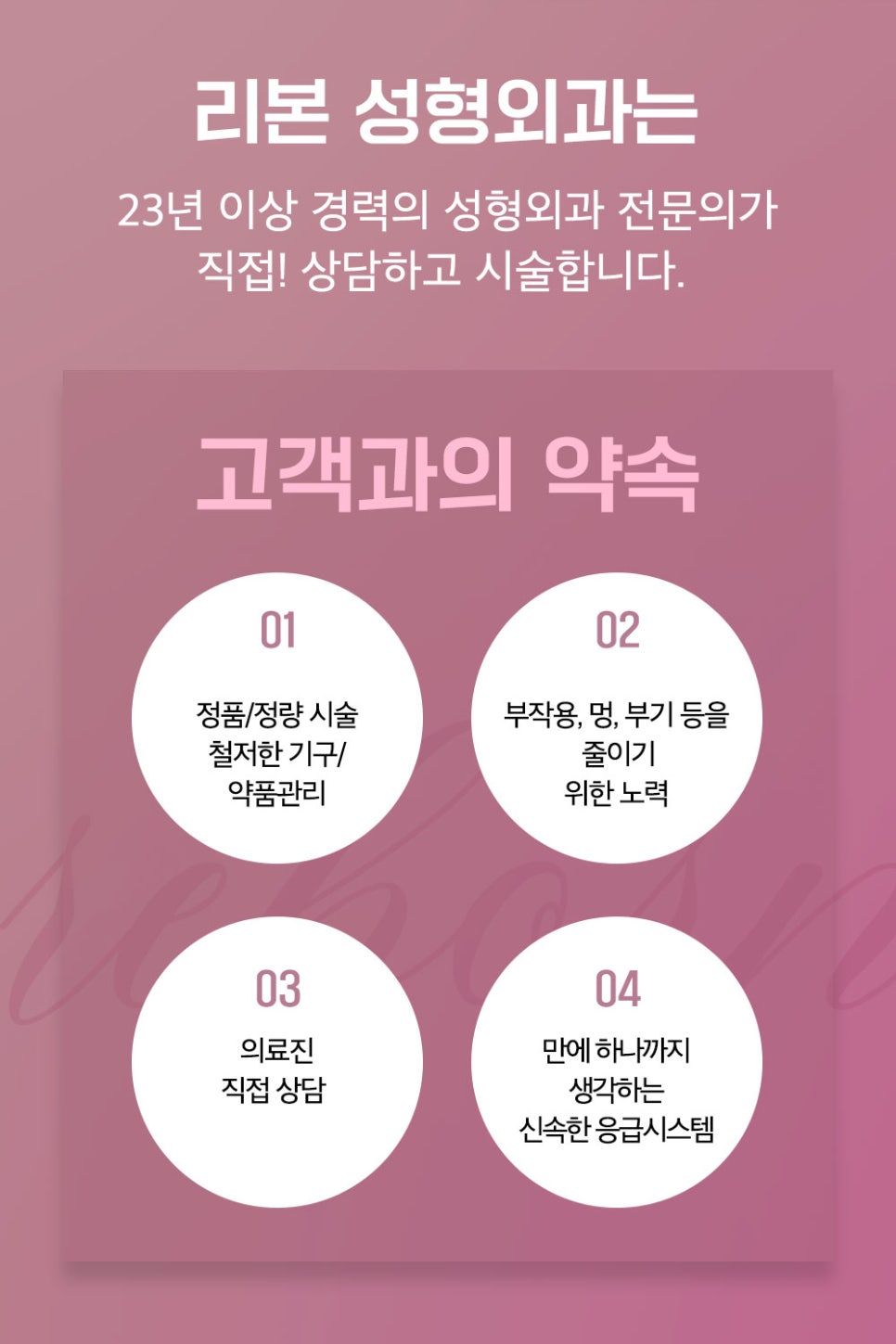
At Re:본 Plastic Surgery near Sinsa Station, a board-certified plastic surgeon with more than 20 years of experience personally handles everything from consultation to the procedure and aftercare, helping reduce anxiety and 부담 about the treatment.
If you need help, please feel free to contact us at any time.
For any procedure, we will carefully assess your skin condition, identify the cause of your concerns, and guide you toward improvement.
Thank you for reading this long post.