Hello, we are ‘Re:Born Plastic Surgery,’ meeting you at Exit 1 of Sinsa Station.
Wrinkles that appear around the lips when speaking or smiling are called “nasolabial folds” because they resemble the shape of the number 8.
Nasolabial folds are wrinkles that naturally develop as we age and are considered one of the typical signs of looking older.
The biggest reason nasolabial folds form is sagging cheeks that lose elasticity as we get older.
The retaining ligaments that support and hold the skin and fat gradually lose their elasticity, and under the influence of gravity, the cheek tissue sags downward and folds.
Nasolabial folds caused by sagging cheek tissue tend to become deeper than wrinkles formed by moving the facial muscles when making expressions or speaking.
For this reason, it is difficult to clearly remove nasolabial folds simply by filling in volume with fillers.
Thread lifting is a procedure that physically pulls the skin tissue by inserting medical threads under the skin.
Because it pulls up the cheek tissue that causes deep nasolabial folds, it can improve them more effectively.
However, because thread lifting is a procedure performed in a physical manner, the technician’s skill and experience are especially important.
What Is Thread Lifting?
Thread lifting is a non-invasive procedure used to restore skin elasticity and improve facial sagging.
It is mainly used to improve cases where the skin has sagged due to aging or nasolabial folds have become deeper, by inserting lifting threads made of biocompatible polymer materials under the skin to support and pull the skin.
During this process, the threads gradually break down within the skin and are absorbed and disappear, stimulating collagen formation and ultimately increasing skin elasticity.
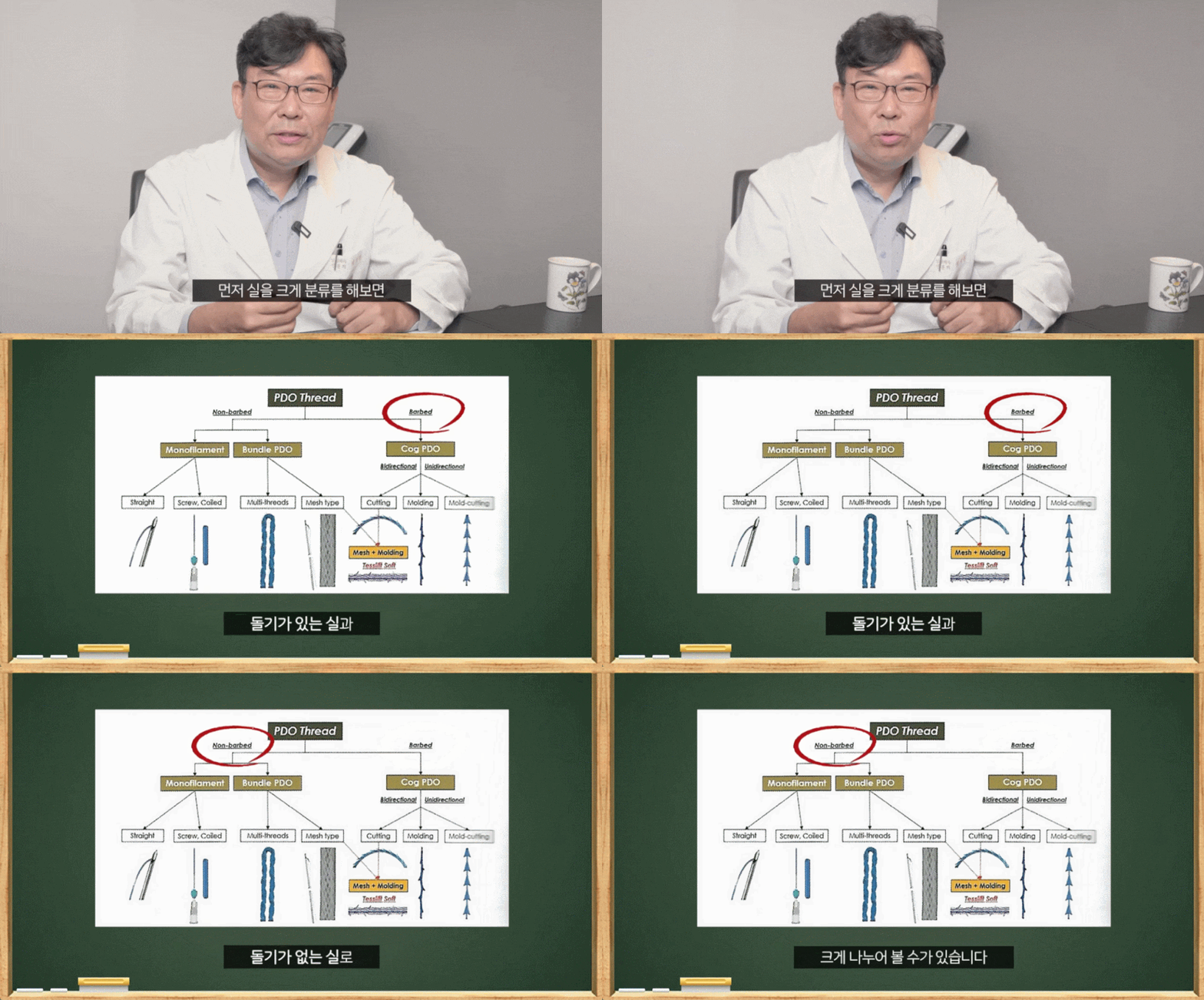
Lifting threads can be broadly divided into two types depending on their material.
The first is PDO (polydioxanone) thread, which is biodegradable and naturally breaks down over time.
PDO thread provides a gentle lifting effect and promotes collagen production within the skin, allowing for natural-looking results.
The second is PLLA (polylactic acid) thread, which provides a stronger lifting effect and is characterized by longer-lasting results.
PLLA thread further strengthens the density of the skin tissue, allowing for a more noticeable lifting effect.
These threads are selected according to the patient’s condition and desired results, based on their characteristics and effects.
Thread Lifting Side Effects?
Thread lifting is a relatively safe procedure, but like all medical procedures, side effects can occur.
The most common side effects include pain, swelling, and bruising. These symptoms are temporary after the procedure and gradually disappear over time.
In rare cases, dimpling may occur, or the thread may become visible beneath the skin, and wrinkles or other side effects may also appear.
Dimpling refers to indentations in the skin. Mild dimpling gradually disappears over time, but if the symptoms are severe, they may remain even after the thread dissolves, so caution is needed.
In general, the most commonly used PDO thread has a bluish tint.
For this reason, if it is inserted too superficially or if the procedure is performed on someone with thin skin, the blue thread may sometimes be visible from the outside.
Because each person’s skin type, degree of aging, and fat distribution are different,
the starting point and ending point of the thread, the depth of the tissue where it is inserted, the direction and strength of the pull, and even the type of thread must all be adjusted differently to suit each individual’s characteristics.
For this, it is necessary to receive a thorough diagnosis of the skin condition before the procedure and to undergo treatment by a plastic surgery specialist with extensive clinical experience and anatomical knowledge who can carefully design the procedure according to each person’s skin condition.
Why Is Re:Born Plastic Surgery’s Thread Lifting Special?
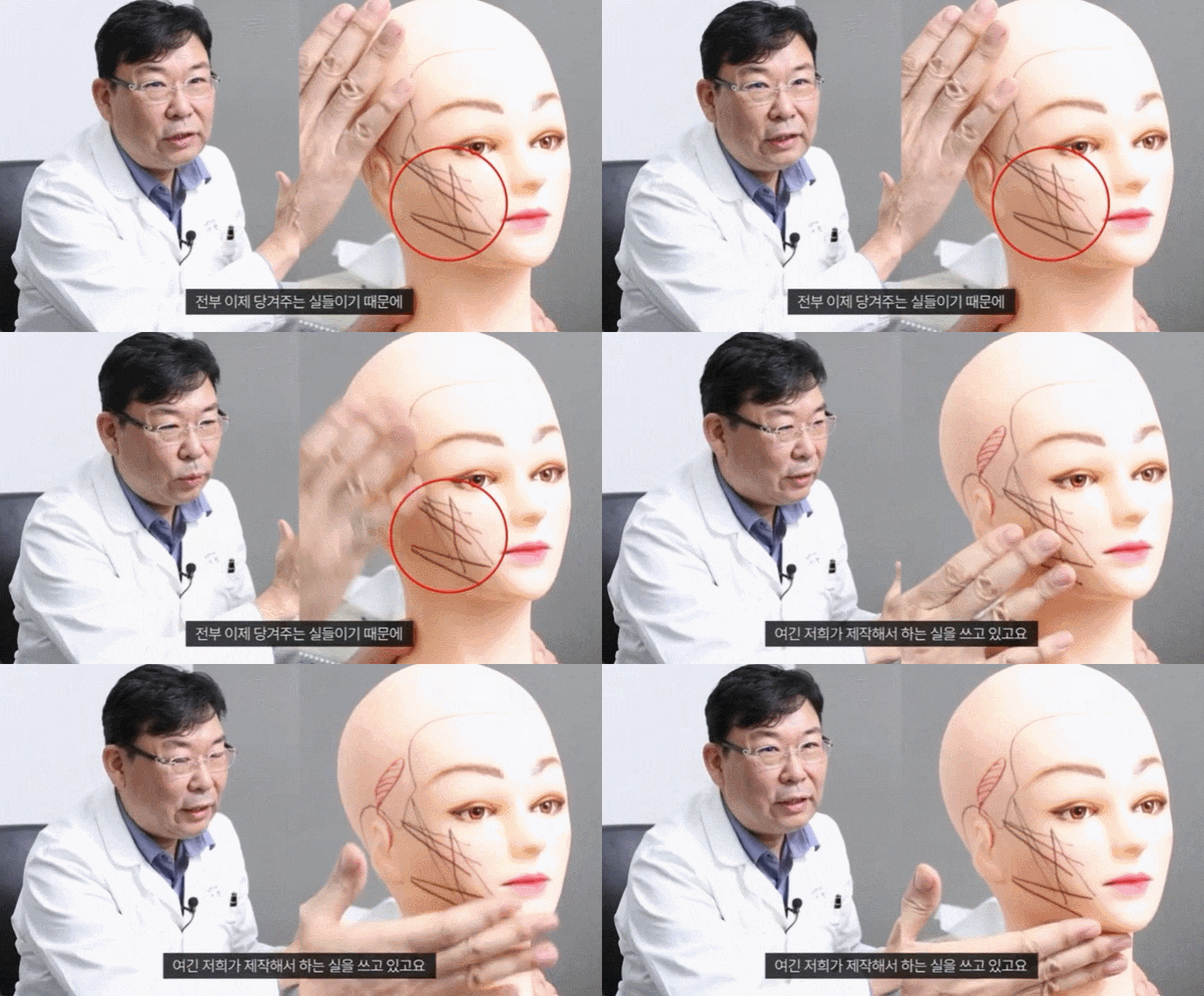
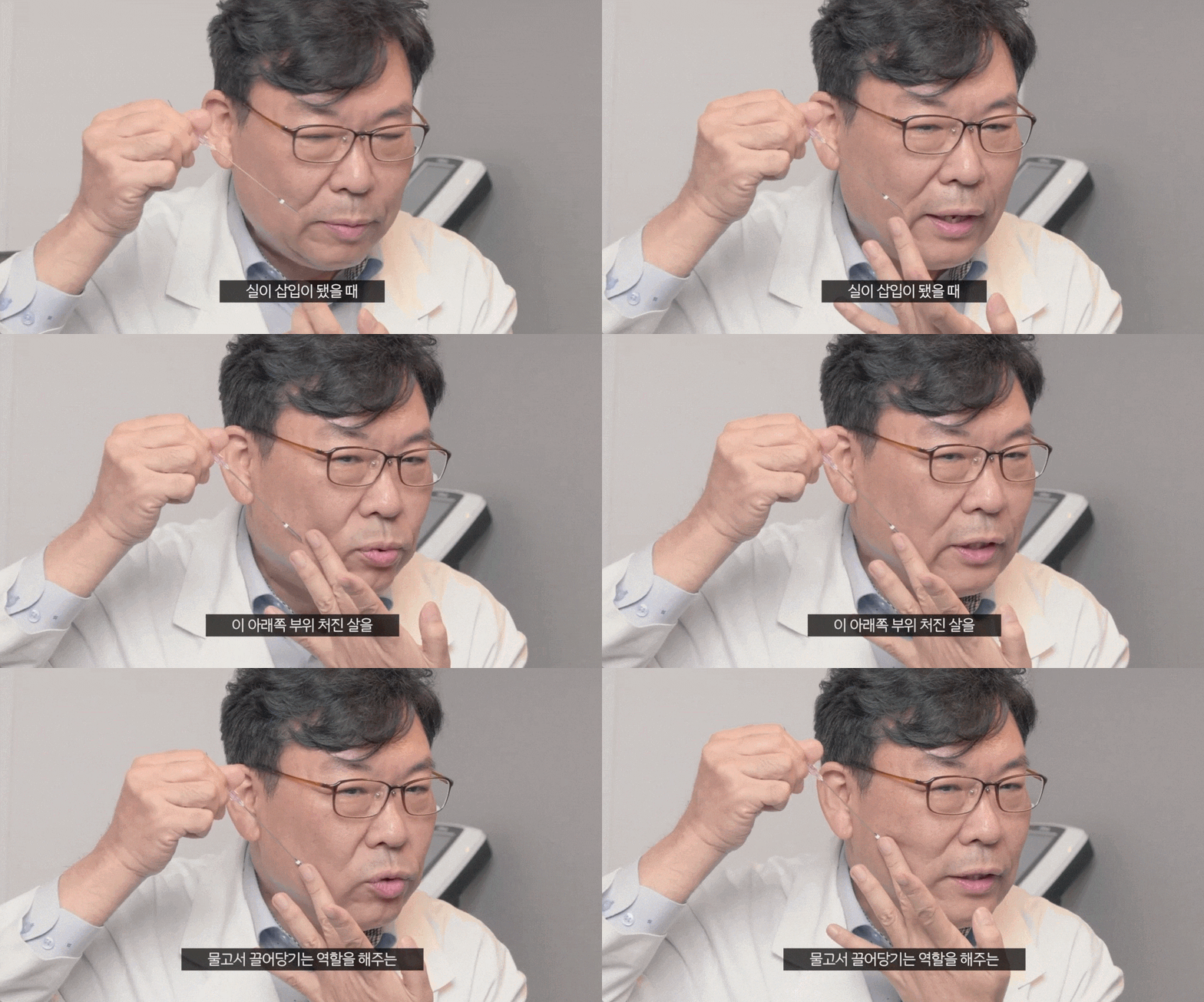
Re:Born Plastic Surgery addresses several limitations of existing threads and performs thread lifting in a V-shape rather than a straight line to make the procedure safer and more effective.
If thread lifting simply pulls upward from below, the threads can be weakly anchored and fail to hold well, and they may easily loosen.
In addition, the lifted threads may gather to one side, making that area look especially prominent or causing the facial contour to appear uneven.
You may have experienced, or heard of, cases where the cheekbones seemed larger after thread lifting, or the face looked bigger than before.
To prevent this, Re:Born Plastic Surgery not only distributes the force carried by the threads in a V-shape,
but can also use two or three rows of threads to further enhance the lifting effect.
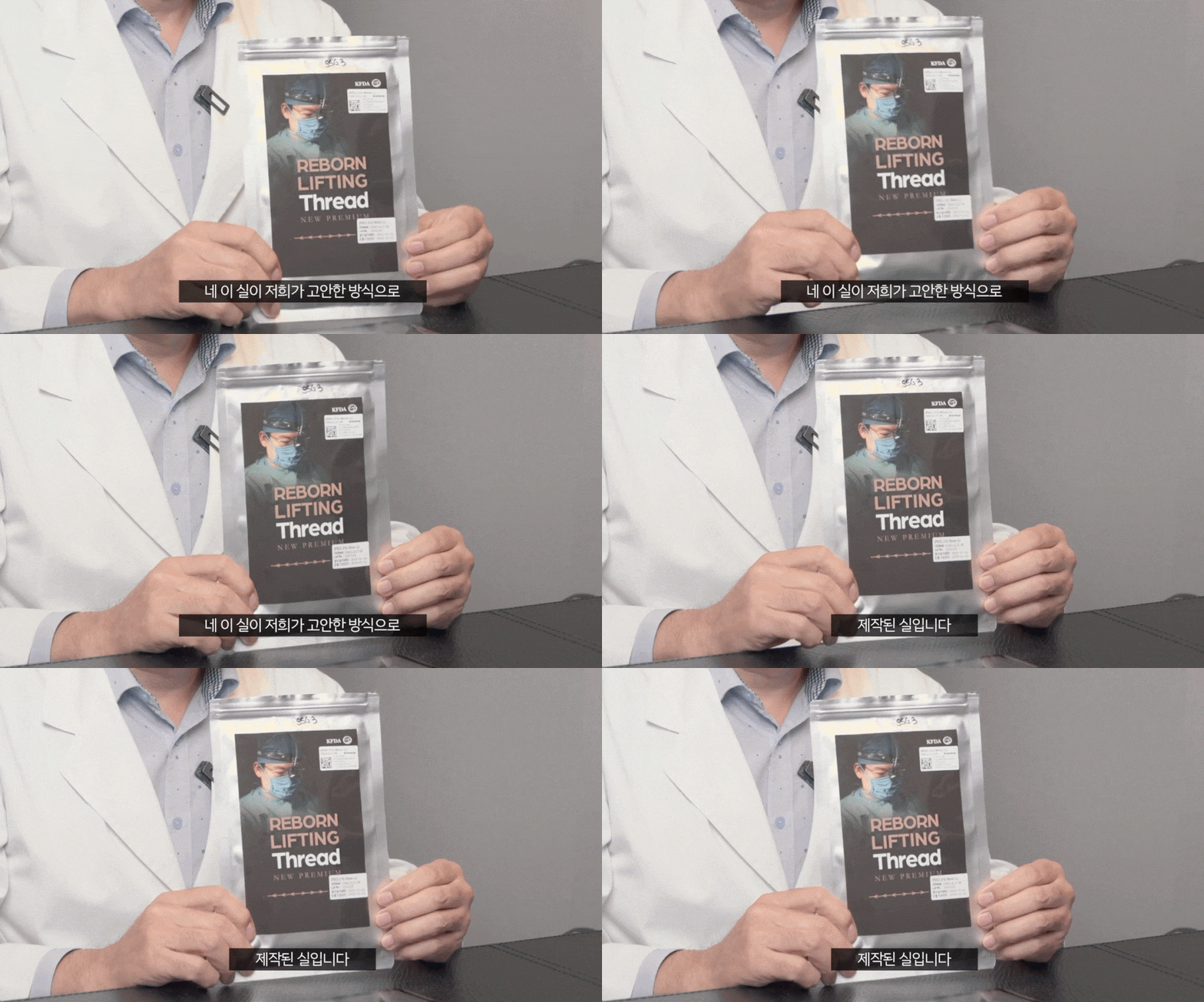
To do this, Re:Born Plastic Surgery uses its own specially developed “Ribbon Thread.”
Ribbon Thread consists of a set of two to three strands, allowing it to secure skin tissue more firmly.
In addition, the barbs are not arranged in just one direction but are distributed in both directions, which helps disperse force effectively.
It is also longer than conventional threads and is inserted from the hairline, so it has the advantage of not being noticeable immediately after the procedure.
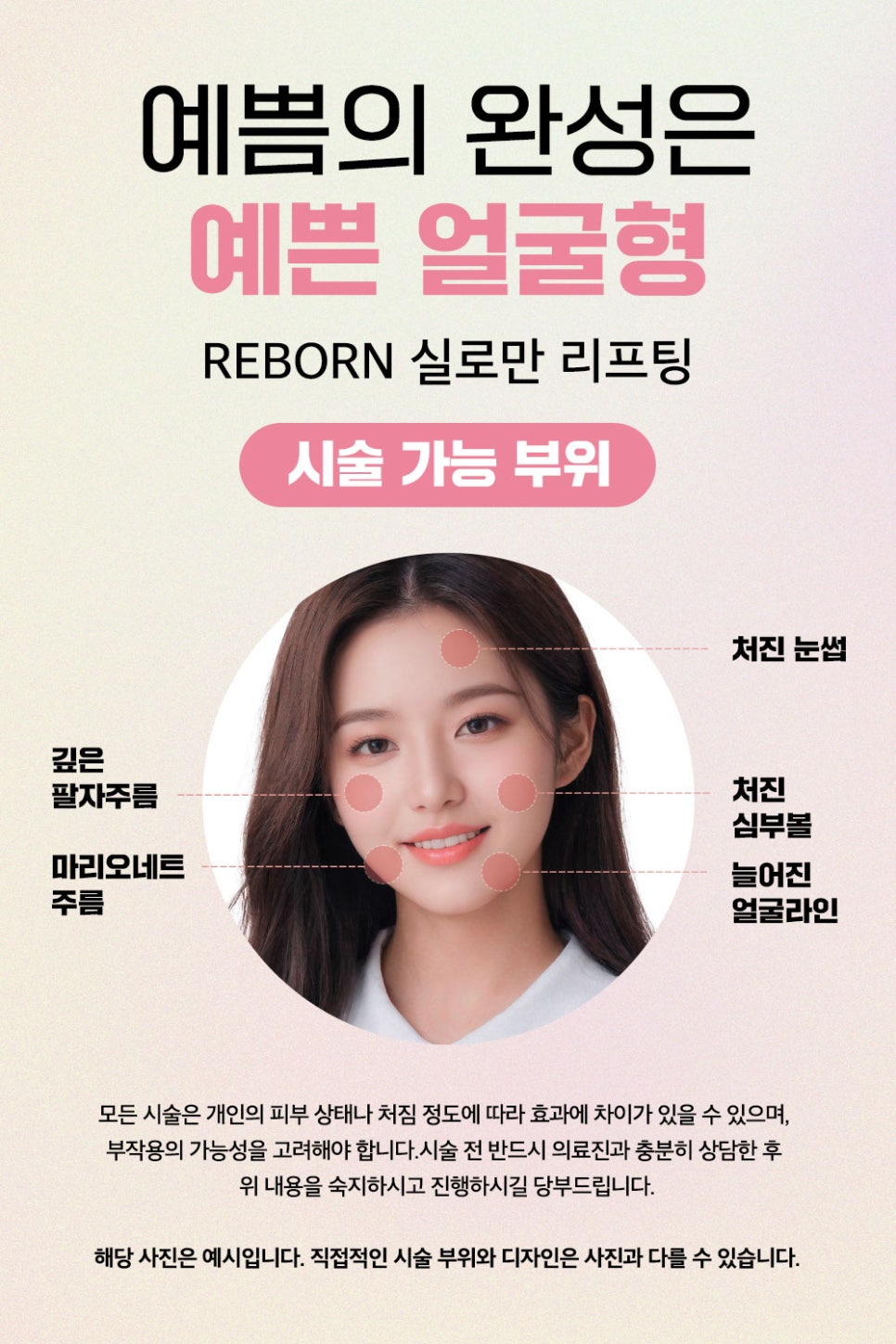
Thread lifting is one of the methods that can effectively improve deeply sunken nasolabial folds.
However, it is also a procedure whose results vary greatly depending on the practitioner’s experience, know-how, and skill.
Therefore, if you are considering thread lifting, we strongly recommend receiving a thorough consultation from medical staff with sufficient clinical experience and anatomical knowledge before proceeding.
At Re:Born Plastic Surgery, the director who has continuously performed the procedure since thread lifting was introduced to Korea in the early 2000s personally provides consultations and assists with the procedure.
If you are concerned about sagging and stretched facial skin, deep nasolabial folds, or marionette lines, please contact Re:Born Plastic Surgery.
Thank you.