Over time, everyone experiences signs of aging.
As we get older, changes occur throughout the body, which is unavoidable.
Our skin is no different.
As we age, the skin gradually loses elasticity and sags downward under the influence of gravity.
If the degree is not severe and the condition can be improved simply by restoring skin elasticity,
it may be improved with device-based lifting or collagen injections that help enhance the skin’s fundamental elasticity.
However, there is inevitably a limit to lifting skin that has already become stretched out.
Thread lifting directly pulls up skin tissue that has lost elasticity and become saggy, so it provides a real lifting effect, and that effect appears immediately.
It is a method of inserting threads in the form of injections without making an incision in the skin to pull up areas with reduced elasticity,
and it is a procedure with a relatively long retention period and strong fixation, while placing less burden on recovery compared with surgical methods such as a facelift.
In addition, the inserted threads do not simply lift sagging areas; they also help actively promote collagen synthesis in the surrounding area and improve elasticity.
Thanks to this, they can help refine the facial line and keep the surrounding skin healthy.
So, what materials are these threads that create such a variety of effects made of?
Threads commonly used can be broadly divided into PDO threads and PLLA threads according to their ingredients.
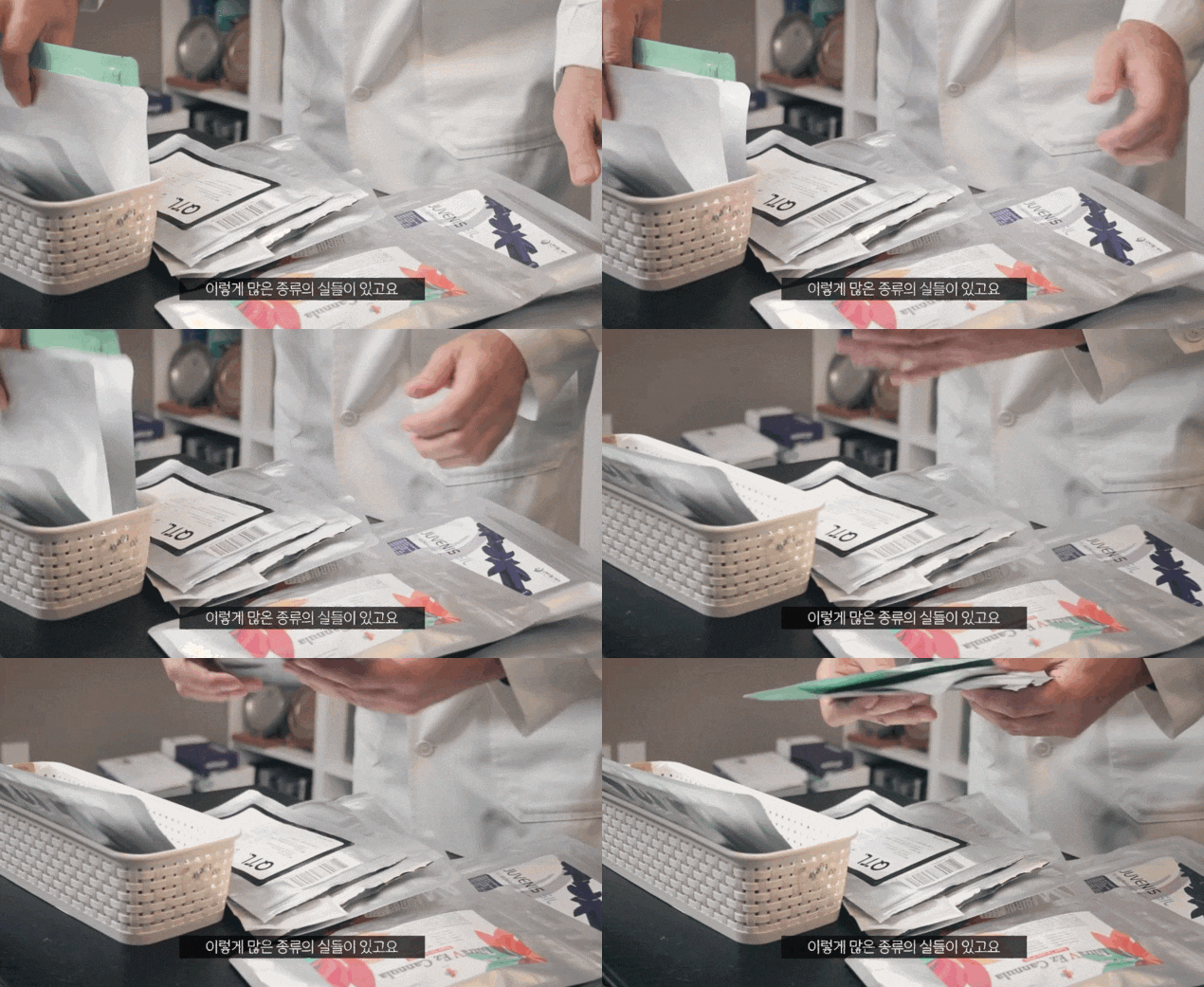
PDO Threads
PDO (Polydioxanone) threads and PLLA threads are both made of biocompatible, biodegradable materials.
Both are inserted into the skin to stimulate collagen production, increase skin elasticity, and help reduce wrinkles.
However, the two materials also differ in several ways, including chemical structure, decomposition process, and duration of effect.
First, PDO threads have strong tension and are widely used as surgical sutures.
Because they are biodegradable, they naturally break down and are absorbed by the body over time.
During this process of dissolving and being absorbed, they induce collagen regeneration, so an effect of adding volume to sunken areas can also be expected.
Compared with non-dissolving threads, which are now rarely used, they cause less foreign-body reaction in the tissue while retaining the advantages of thread lifting,
and have become a main ingredient in many lifting thread products.
Compared with monothreads without barbs, cog threads that use barbs to physically pull tissue are now used more often.
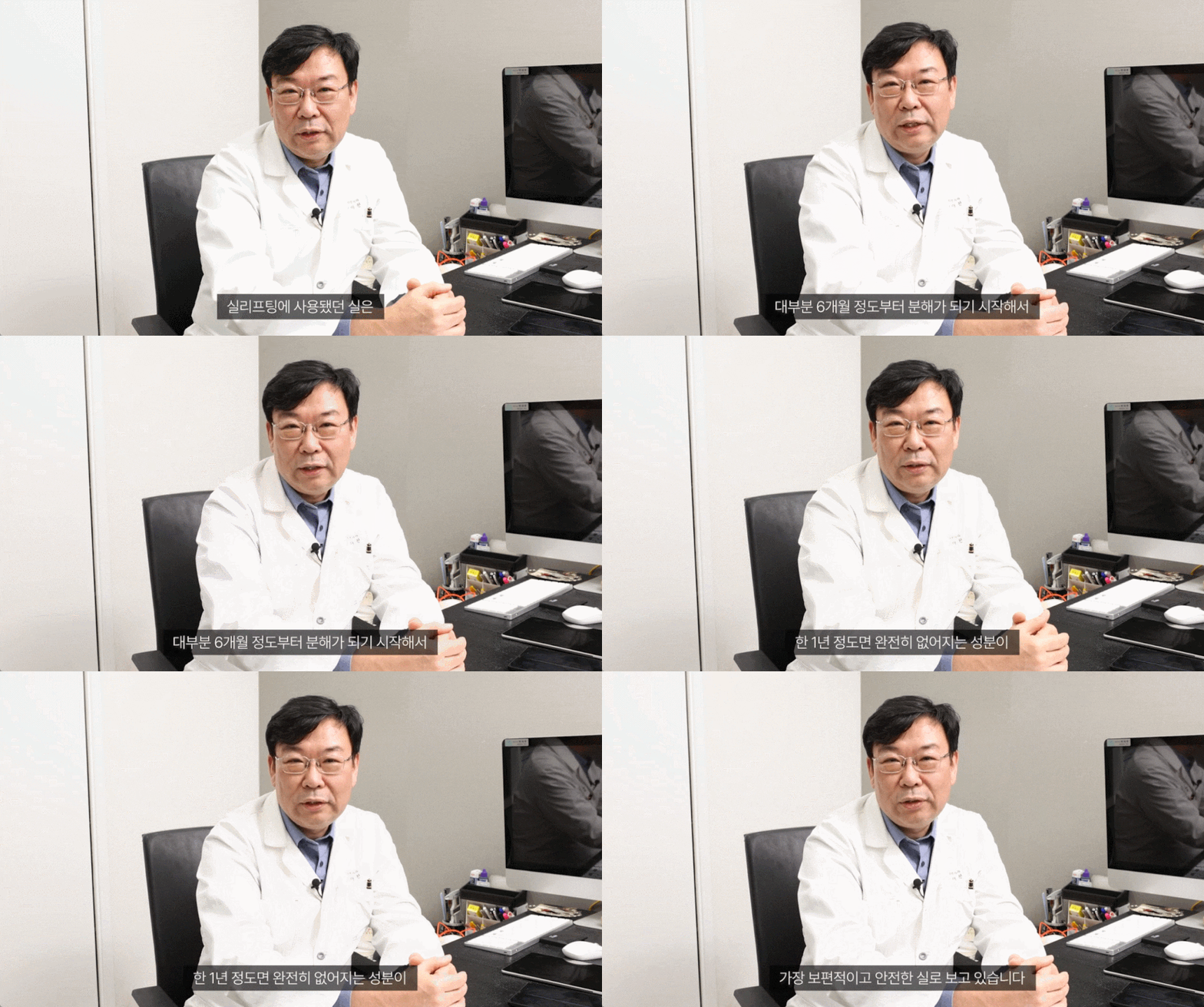
PLLA Threads
PLLA threads are designed for more long-term effects, focusing on improving skin structure by inducing collagen production.
PLLA has a strong collagen-stimulating effect, so its results can last longer than PDO.
In general, if PDO threads have a retention period of about 6 months to 2 years, PLLA threads have a retention period of about 18 months to 3 years.
In particular, the representative PLLA thread, “Silhouette Soft,” has cone-shaped barbs.
These cones are arranged on both sides of the thread and, after insertion into the skin, strongly bind with the skin tissue to prevent the skin from sagging under gravity.
In addition, because the shape of the barbs and the thread itself are flexible, it has the 특징 of allowing lifting even in areas that are difficult for PDO threads to reach, areas that move a lot, or in people with thin skin.
However, compared with PDO threads, the tension is somewhat lower, and the lifting strength is weaker than expected.
It also has the drawback that it takes longer than PDO threads for skin elasticity to improve.
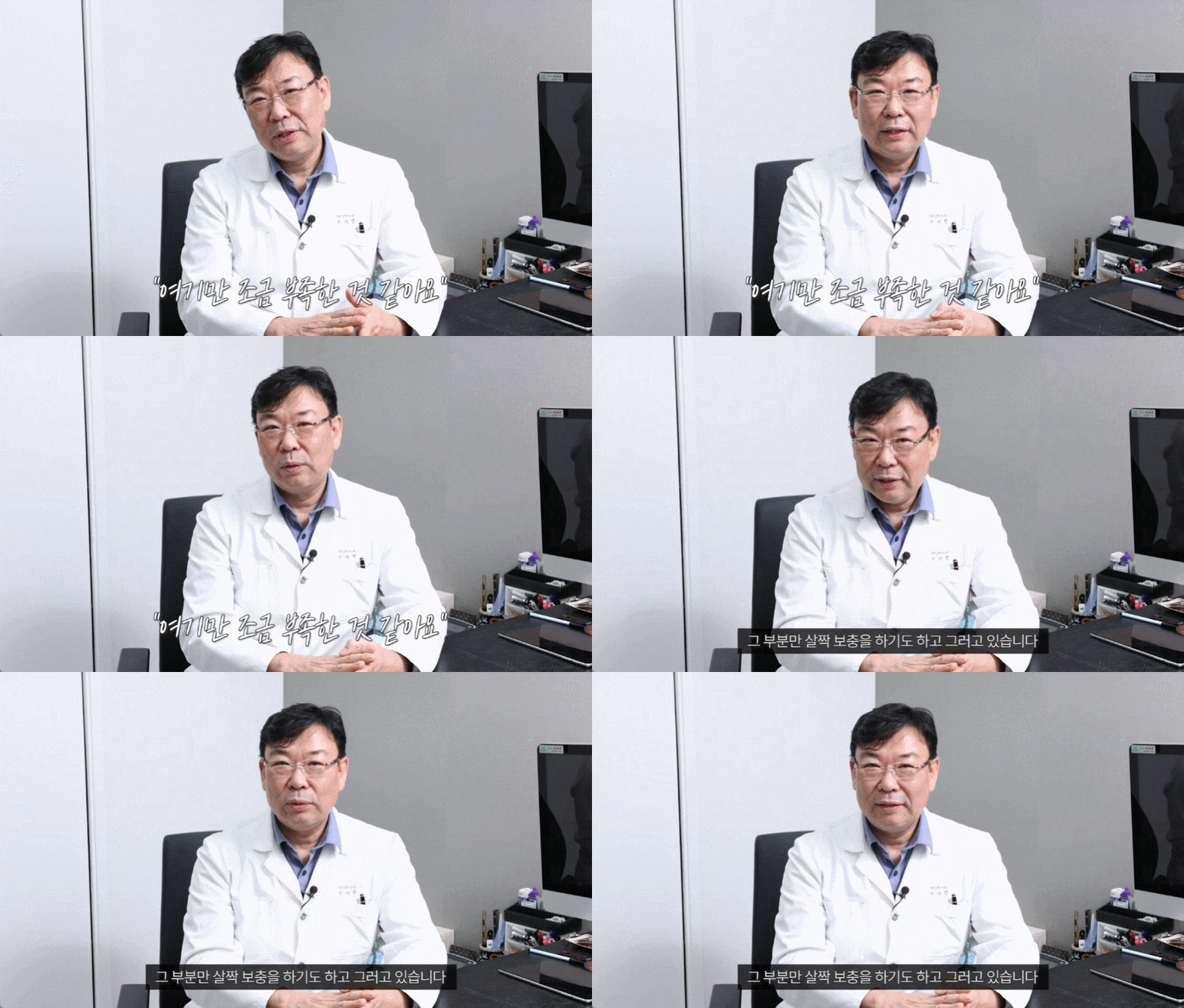
Which Thread Is Right for Me?
The appropriate type of thread varies depending on skin condition.
In particular, the results of thread lifting depend more on the practitioner’s skill and the patient’s skin type than on the thread itself.
Skin weight, thickness, and density, in particular, have a major impact on lifting results.
Thread lifting is not simply a matter of inserting threads and pulling; it must be performed with consideration for the face’s structure and lines.
This is because an incorrect design can create an unbalanced facial shape.
Therefore, to receive the proper procedure suited to your skin type, we recommend that you proceed only after receiving sufficient consultation and a careful diagnosis from an experienced specialist.

Thread lifting is not a simple procedure; it requires specialized knowledge.
It is an effective method for improving skin elasticity and wrinkles, but if you make the wrong choice, it can instead cause side effects, so please make your decision carefully.
Thank you.
https://blog.naver.com/reborn1999/223716475836
| This post was written for informational purposes in compliance with Article 56, Paragraphs 1–15 of the Medical Service Act. All treatments carry a risk of side effects and complications depending on the individual. Before treatment, be sure to have a thorough consultation with medical staff who have extensive experience before making a decision. |