As we age and collagen begins to diminish, skin that has lost its elasticity is gradually pulled downward by gravity.
In particular, when the cheeks sag, nasolabial folds often form from the sides of the nose downward.
Visually, deep nasolabial folds can strongly create the impression of looking older, so in comics and other media, lines shaped like the Korean character for eight are sometimes drawn around the mouth to indicate aging.
However, the area around the mouth where nasolabial folds form is one of the most frequently moved parts of the body, and the skin there is thin and flexible.
Because of this, as we age, elasticity in this area decreases, and even if wrinkles form, it becomes difficult for them to recover.
When nasolabial folds are caused by sagging cheeks due to skin aging, it is difficult to improve them by simply filling in the wrinkles or increasing elasticity in that area.
Thread lifting is a procedure that physically lifts sagging skin tissue, so it can be very helpful in improving these deeply formed nasolabial folds.

Thread lifting?
Thread lifting is a procedure that does not involve incising the skin. Instead, through tiny openings, medically approved dissolvable threads with proven safety are inserted to hook into the skin tissue and pull up sagging areas.
Because the skin is not cut, it places less burden on the body than lifting surgeries such as a facelift, and because it is a procedure that physically pulls tissue, it has the advantage of showing results faster than device-based lifting, which is why many people seek it out.
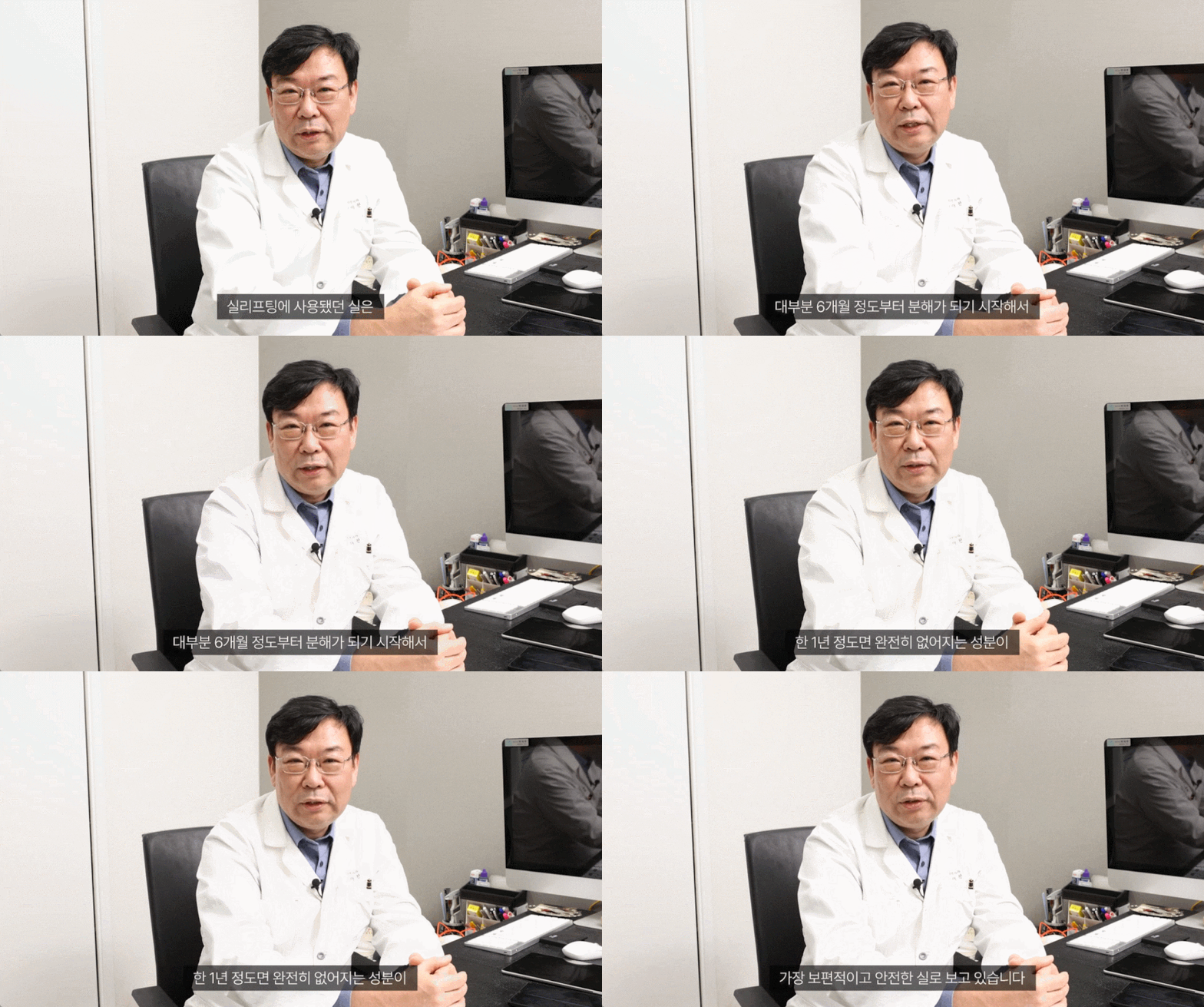
In general, PDO threads used for thread lifting are safe medical threads that are even used as sutures in heart surgery, and they are divided into cog threads and smooth threads without cogs.
Threads without cogs are used not so much for the purpose of lifting itself, but to give the skin slight stimulation and improve elasticity.
Therefore, if your goal is "lifting," such as pulling up sagging cheeks, PDO cog threads are recommended.
If you want both lifting and volume, PLLA threads, which can stimulate collagen production on their own, may be used instead of PDO threads.
Of course, which thread to use should be determined comprehensively after carefully diagnosing the cause of the nasolabial folds, the degree of sagging in your face, each person's skin characteristics, and the current condition.
What is the difference from laser lifting?
As mentioned earlier, it can produce results more immediately than laser lifting.
In the case of laser device lifting using high-frequency ultrasound, the method does not directly pull on the skin tissue. Instead, it improves elasticity by reactivating collagen within the skin.
Therefore, there are limitations when it comes to improving skin that is already sagging and stretched.

It also takes a long time for collagen to regenerate, and because the duration of effect is short, repeated procedures are necessary.
Above all, because device-based lifting targets relatively broad areas, it has the drawback of being somewhat less efficient for areas that require point lifting, such as nasolabial folds and marionette lines.
In contrast, thread lifting allows for point lifting that targets the desired area.
Because it is a procedure that physically pulls up skin tissue, if the design and procedure are done well, you can achieve the desired results with just one session, and the effect lasts longer than the procedure time might suggest.
Therefore, in cases of severe sagging, thread lifting may be more satisfying than device-based lifting.
However, laser lifting makes the skin denser and firmer, so when combined with thread lifting, they create a synergistic effect.
It can help maintain the effects of thread lifting for longer and strengthen skin elasticity.
 Of course, I am not saying, "Thread lifting is the answer for deep nasolabial folds!"
Our face is organically connected, and the causes of any problems are diverse and complex.
Therefore, procedures should be carried out in a direction that carefully diagnoses your skin environment, identifies the cause of the concern, and improves it accordingly.
For this reason, I ask that you receive a proper diagnosis from a specialist and have a thorough consultation.
Thank you for reading this long post.
| This post was written for informational purposes in compliance with Article 56, Paragraph 1 through Paragraph 15 of the Medical Service Act. All treatments carry the risk of side effects and complications depending on the individual. Before treatment, please be sure to make a decision only after sufficient consultation with medical professionals who have extensive experience. |