One of the changes everyone experiences as they age is a decline in skin elasticity and wrinkles.
As signs of aging begin to remain on the face, your own appearance can start to feel awkward and unfamiliar.
In particular, sagging cheeks and deeper wrinkles gradually make a once-youthful impression look duller.
A thread lift is a non-surgical lifting procedure in which dissolvable medical threads are inserted into the skin to physically lift it.
Because the procedure is performed by making only tiny openings in the skin, it has less downtime than surgical methods, which means you can return to daily life right away.
In addition, as the threads dissolve, they help promote collagen regeneration so that skin elasticity can be naturally maintained even after the procedure.
Many people choose thread lifting as a way to achieve an immediately visible lifting effect while maintaining a natural youthful look.

Reasons to Look for a Clinic with Extensive Experience
Many clinics that perform aesthetic procedures today offer thread lifting.
Thread lifting is a procedure that deeply inserts threads into the skin to directly pull tissue.
Therefore, it requires anatomical knowledge, extensive experience, and skilled manual technique.
An injector who lacks experience or understanding of the procedure may misplace the insertion position or angle of the threads.
In such cases, the face may appear asymmetrical or the skin may become indented, and
the cheekbones may appear more prominent or the facial contours may become uneven, making the overall line look unnatural, so special caution is needed.
With thread lifting, even a slight difference can cause the left and right sides of the face to be unbalanced or force tension to concentrate in unnecessary areas, making the face look unnatural instead.
Therefore, if you are considering thread lifting, I urge you to choose a place with extensive clinical experience and proven expertise.
Types of Lifting Threads
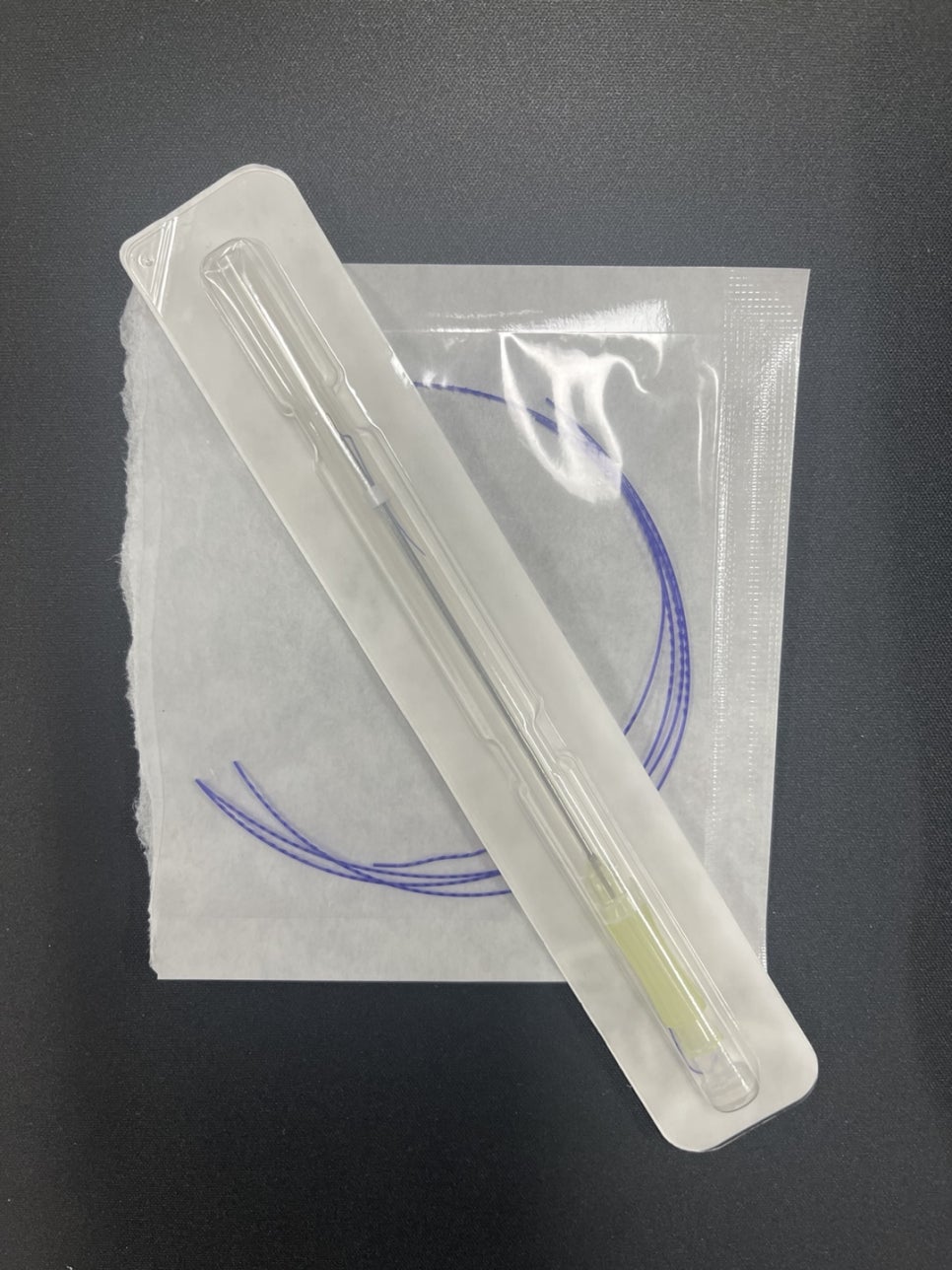
The threads used for thread lifting vary in effect depending on the type, and it is important to choose appropriately according to skin type and the treatment area.
They are generally divided into PDO (Polydioxanone) threads and PLLA (Poly L-Lactic Acid) threads,
and these two differ not only in ingredients but also in form and function.
First, PDO threads are currently the most commonly used threads in thread-lifting products, and they include cog threads and mono threads.
Cog threads have barbs, allowing them to strongly pull skin tissue and deliver an excellent immediate lifting effect.
Mono threads have a smooth, barb-free form and are mainly used to stimulate collagen production through skin irritation, thereby increasing elasticity.
Recently, there are various ways to regenerate collagen, so more people are looking for cog threads than mono threads.

PLLA threads are an ingredient in Sculptra and are excellent for adding volume to the skin and improving elasticity.
Represented by Silhouette Soft, these threads have good flexibility, so they can be applied naturally even in areas with frequent movement,
and they have the advantage of directly inducing collagen production, allowing elasticity to be maintained for a long time after the procedure.
Which thread to use should be carefully selected according to the patient’s skin condition and desired results.
Sufficient Consultation and a Detailed Plan
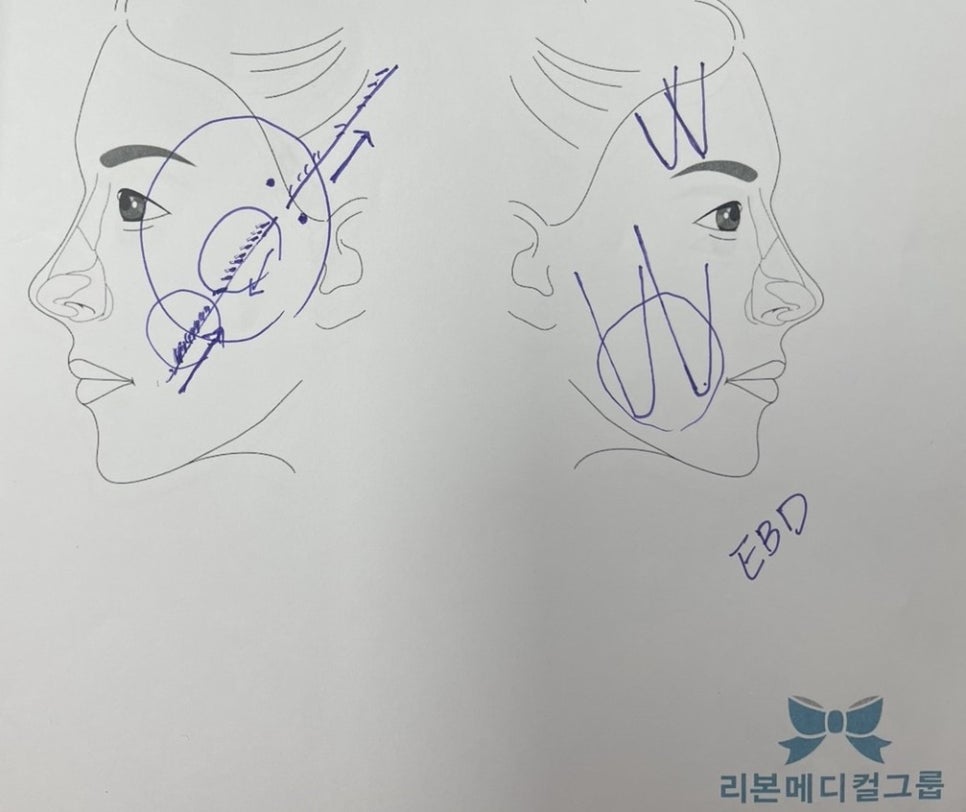
Thread lifting is not simply inserting threads and pulling.
A systematic design is essential, taking into account the anatomical structure of the face, the direction in which wrinkles form, and the degree of skin sagging.
For this, sufficient consultation and accurate planning are important.
Each person’s face has a different shape and contour, and the degree of sagging also varies over time.
If a procedure is performed uniformly while ignoring these characteristics, side effects or unsatisfactory results may occur, so please be careful.
Thank you.
| This post was written for informational purposes in compliance with Article 56, Paragraphs 1–15 of the Medical Service Act. All treatments carry a risk of side effects and complications depending on the individual. Before treatment, please be sure to have a thorough consultation with medical staff who have extensive experience before making your decision. |