Thread lifting is an effective non-surgical procedure that improves sagging skin and restores elasticity, and it is loved by many people regardless of age.
However, while learning about thread lifting, you may come across various types of threads and find yourself 고민ing over which one to choose.
In particular, PLLA threads and PDO threads are the most widely used materials in thread lifting, and they differ in terms of retention period and effects.
Because these two threads work differently and produce different results even within the same thread lifting procedure, their suitability may vary depending on the patient’s skin condition and the purpose of the treatment.
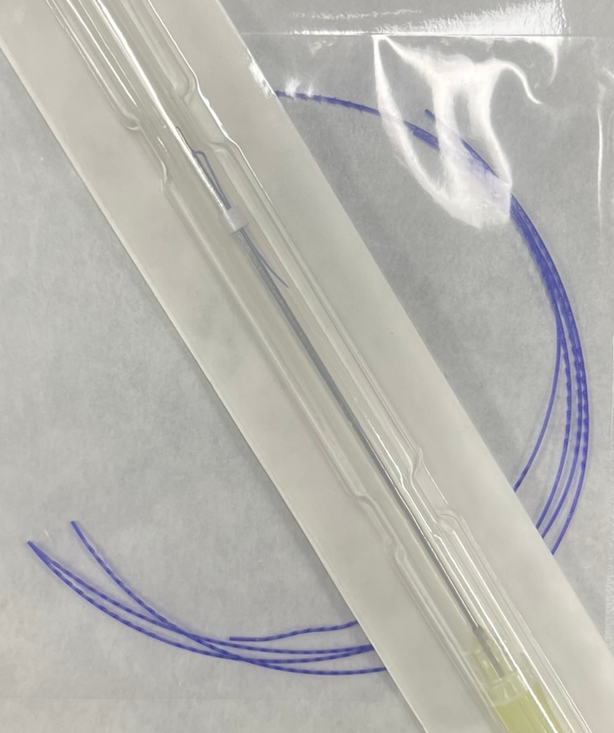
What Is Thread Lifting?
Thread lifting is a procedure in which dissolvable medical threads are inserted into the skin to physically support and lift sagging tissue.
The inserted threads pull the skin upward, improving wrinkles and sagging, and during the dissolving process, they also stimulate collagen production, which has the added effect of improving overall skin elasticity.
Compared with laser lifting, changes can be felt in a relatively short time, and although it does not involve surgical action like an operation, the effects last for a long time, which is why many people seek out this procedure.
In general, the threads used for thread lifting can be divided into PDO threads and PLLA threads according to their composition.
Since each type differs in retention period, effect, and strength, it is important to clearly diagnose each patient’s skin condition and goals before choosing a thread.

PDO Threads
PDO threads are the most stable and widely used material in thread lifting.
They are excellent not only for safety but also for producing immediate results.
PDO threads are the longest-used material in thread lifting and are medical threads whose stability has been proven.
These threads remain in the skin for about 6 months to 2 years, and while they dissolve, they also induce collagen production, helping to improve overall skin elasticity.
In particular, because they strongly pull up sagging tissue, they are suitable for areas that need a quick lifting effect, such as nasolabial folds and marionette lines.
Since visible changes can be seen immediately after the procedure, they are recommended for those who want fast results.
Also, when PDO threads are made into a cog thread with a barbed structure, they can support the skin tissue more strongly and maximize the lifting effect.
Compared with other threads, the retention period is relatively shorter, but they are suitable for those who want both improved skin elasticity and immediate lifting at the same time.

PLLA Threads
Compared with PDO threads, PLLA threads are characterized by a longer retention period and a skin-improving effect that continues over time.
PLLA threads remain in the skin for about 1.5 years to as long as 3 years.
While dissolving, they continuously and actively stimulate collagen production, allowing the skin to improve at its core.
These threads are especially effective in areas where the skin is thin or lacks volume.
Over time, the skin gradually becomes firmer, and depressed areas can naturally appear filled in.
Because the retention period is long, they are recommended for those who want long-term changes.
Since PLLA threads provide results that appear gradually over time, they may be suitable for people who value ongoing skin improvement more than immediate changes.

Difference in Retention Period Between PDO Threads and PLLA Threads
PDO threads and PLLA threads show clear differences in retention period and how they work.
PDO threads maintain their effects for about 6 months to 2 years and provide a fast, strong lifting effect.
On the other hand, PLLA threads last for about 1.5 to 3 years and have the advantage of gradually improving the skin through collagen production.
PDO threads are suitable when immediate results are desired, while PLLA threads are suitable for areas where long-term change or volume replenishment is important.
Of course, a longer retention period does not automatically make a thread better, just as showing immediate effects does not automatically make it a better thread.
Rather, it is most important to understand these characteristics well and use them appropriately according to the patient’s skin condition and desired results.
Thread lifting is not simply the process of inserting threads; it requires precise design and technique that take the facial structure and balance into account.
Therefore, if you are considering a lifting procedure, we urge you to choose an experienced practitioner.
 Today, we looked at the types of lifting threads according to their composition.
Of course, what determines the result is not only the type of thread, but also the precision of the procedure based on a design that is appropriate for each patient’s face.
Thank you for reading this long post today as well.
| This post was written for informational purposes in compliance with Article 56, Paragraphs 1–15 of the Medical Service Act. All treatments carry the risk of side effects and complications depending on the individual. Before treatment, be sure to have a thorough consultation with experienced medical staff before making a decision. |