As we age, the skin loses elasticity and both cheeks begin to sag.
When the cheeks sag, the contours of the face become less defined, giving a more aged appearance.
In addition, when sagging cheeks create jowls, nasolabial folds or marionette lines become more prominent.
'Thread lifting,' known as a non-surgical lifting procedure, can effectively improve these issues, which is why many people seek out the treatment.
Because it physically pulls up the skin tissue, it can provide visible lifting results in a relatively short period of time, and it may also support longer-term elasticity.

What Is Thread Lifting?
Thread lifting is a non-surgical procedure that inserts dissolvable medical threads into the skin to physically pull up and support sagging tissue.
The inserted threads physically lift the skin to provide a lifting effect, and then dissolve over time.
During this process, collagen production is stimulated, which improves skin elasticity and smooths the facial contours.
As a result, the lifting effect can be maintained for a relatively long period.

PDO Threads and PLLA Threads
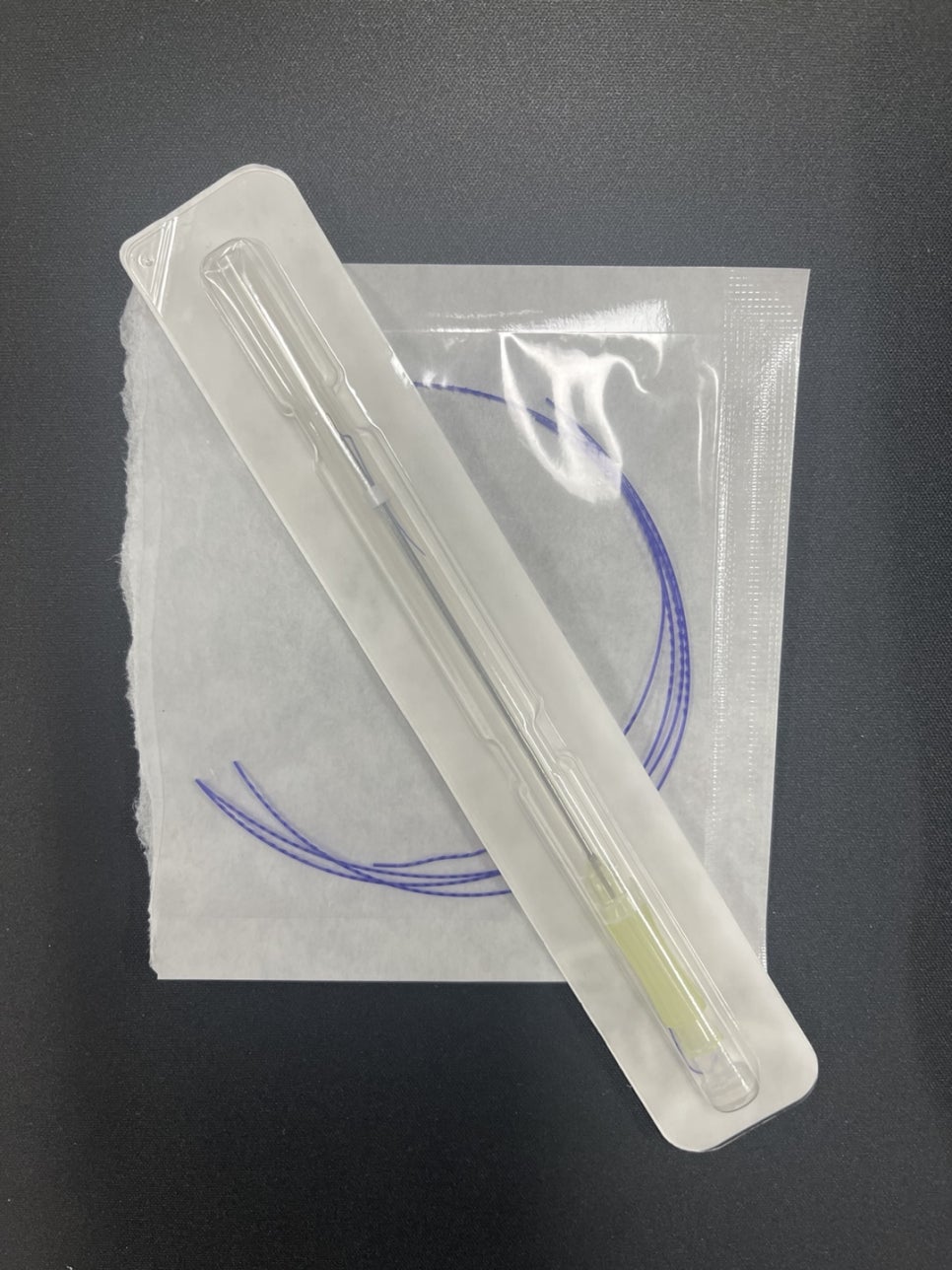
The threads commonly used in thread lifting are PDO (Polydioxanone) threads and PLLA (Poly-L-Lactic Acid) threads.
Each type of thread has its own characteristics and effects, and is selected according to the purpose of the procedure and the patient's skin condition.
PDO threads are a safe material that has been used in medical settings for a long time.
They are highly biocompatible components used even in heart surgery, and after being injected under the skin, they naturally dissolve within about 6 months to 1.5 years.
In particular, the barbed 'cog threads' are excellent not only at physically pulling up tissue to lift sagging areas, but also at providing strong support, allowing for an immediate lifting effect.
Thanks to these characteristics, they are effectively used in areas such as nasolabial folds, a sagging jawline, and sagging deep cheek areas.
In addition to cog threads, straight 'mono threads' are used to induce collagen production, reduce fine wrinkles, and improve elasticity.
PLLA threads have a longer duration than PDO threads and are focused on restoring volume and generating collagen.
PLLA is also used as the main ingredient in Sculptra, a collagen booster, and remains in the skin for 1 to 3 years.
These threads are especially effective in thin or sunken areas of the skin, and as time passes, they stimulate collagen production in the deeper layers of the skin, which has the characteristic of providing more natural-looking volume over the long term.
However, PLLA threads have the drawback of slightly weaker tension compared to PDO threads, so their immediate lifting effect is somewhat less pronounced.
They are mainly used for sunken areas or deep wrinkles that require volume restoration, and are suitable when a long-term, gradual change is desired.
PDO threads and PLLA threads may be used alone to take advantage of their respective characteristics, but in many cases they are used in combination depending on the situation.
For example, in cases of severe cheek sagging, PDO threads can be used to strongly lift the skin, while PLLA threads can be used to fill in the lacking volume.
In this way, combining the strengths of each thread can provide both immediate effects and long-term improvement.
Of course, the results of thread lifting are not determined solely by the type of thread.
Only when the practitioner accurately understands the characteristics of the threads and designs the treatment according to the patient's skin condition and goals can the desired results be achieved.
The direction of insertion, depth, and pulling force of the threads all need to be precisely calculated in order to minimize side effects and maximize effectiveness.
Therefore, it is important to determine which thread is appropriate between PDO and PLLA through consultation with a qualified medical professional.
Things to Consider Before a Cheek Sagging Lifting Procedure
Just as important as the type of thread is the practitioner's experience and skill, as well as the process of thoroughly analyzing the patient's skin condition.
Thread lifting is not a procedure that ends simply by inserting threads.
To achieve natural results, it must be accompanied by precise planning that takes into account the insertion depth and direction of the threads, as well as the skin's level of elasticity.
To do this, the contours of the face and the degree of sagging must be carefully analyzed so that the placement of the threads and the pulling direction can be precisely designed.
If the procedure is performed without this kind of analysis, it may be difficult to achieve effective results, and unwanted problems may occur.
Everyone's skin condition and facial lines are different.
Therefore, rather than simply following a standard procedure, a customized design that reflects the individual's skin characteristics and degree of sagging should be created.
For example, inserting threads too deeply in someone with thin skin may cause side effects,
while in cases of severe sagging, a design that provides stronger support may be needed.
As such, a careful approach that considers the final outcome is necessary to achieve the desired results.
If you are considering thread lifting, we recommend choosing a clinic that not only understands the characteristics and effects of the threads, but also has a system that can take into account the medical team's expertise and design ability, as well as each patient's individual condition.
Thank you for reading.
| This post was written for informational purposes in compliance with Article 56, Paragraphs 1 through 15 of the Medical Services Act. All treatments carry a risk of side effects and complications depending on the individual. Before treatment, please be sure to have a thorough consultation with a medical professional with extensive experience before making your decision. |