Silhouette lifting is known as a relatively simple procedure. Without the process of surgery, it can sharpen facial contours and lift sagging areas.
Because it physically pulls up loosened tissue, you can see the change immediately after the procedure. In addition, as time passes, it stimulates collagen production in the skin, so it also has the advantage of helping to restore some elasticity.
However, as with any procedure, if the design is incorrect or the practitioner lacks experience, unexpected problems can still occur.
One of the main concerns is that the cheekbone area may become more prominent, making the face look larger or appear asymmetric.
In particular, if the procedure is performed indiscriminately without considering the person’s facial and skin characteristics, the likelihood of this problem increases.
When the cheekbones appear larger, the face may not simply look bigger, but broader and flatter from the side.
Such changes in appearance can go beyond simple cosmetic dissatisfaction and cause psychological stress for the patient.
So if you are planning silhouette lifting, you should fully understand not only the benefits of this procedure, but also the possibility of side effects and the preparation process needed to help prevent them.
 Silhouette lifting?
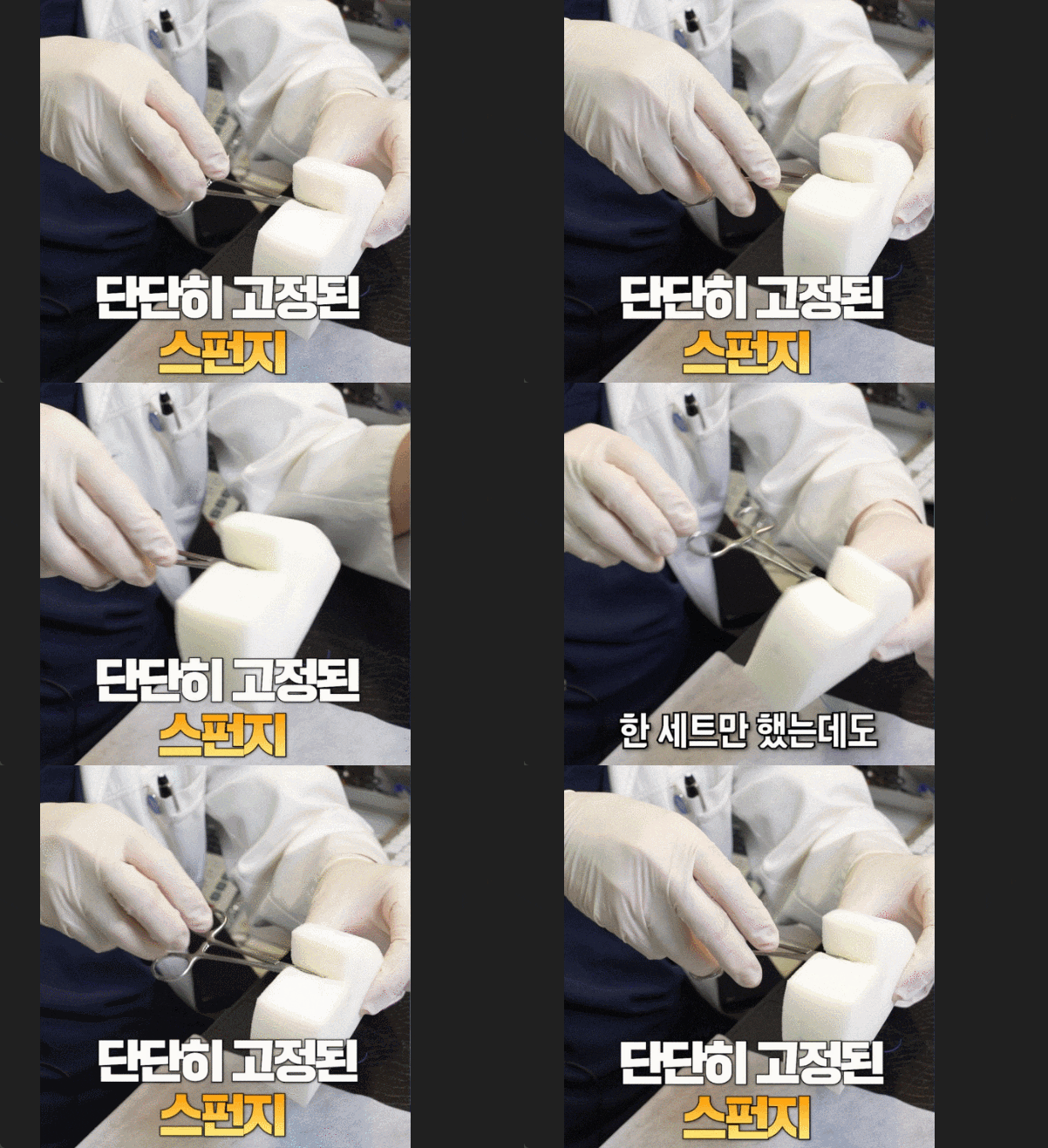
Silhouette lifting works by inserting dissolvable medical threads into a specific layer of the skin to physically pull and lift sagging tissue.
The inserted threads use cogs (barbs) to catch and hold the skin tissue in place.
They lift sagging cheek flesh or a blurred jawline, helping the facial contours look clearer.
Over time, the inserted threads are naturally absorbed by the body.
In this process, they stimulate the surrounding tissue and induce new collagen production.
This helps restore skin elasticity and prevent sagging.
In other words, silhouette lifting improves the skin’s contours in the short term and helps reorganize and maintain the skin structure in the long term.
 Silhouette lifting and enlarged cheekbones
The biggest reason the cheekbones may look larger after silhouette lifting is an incorrect procedure design or a lack of skill.
Silhouette lifting works by inserting threads to pull up sagging skin tissue.
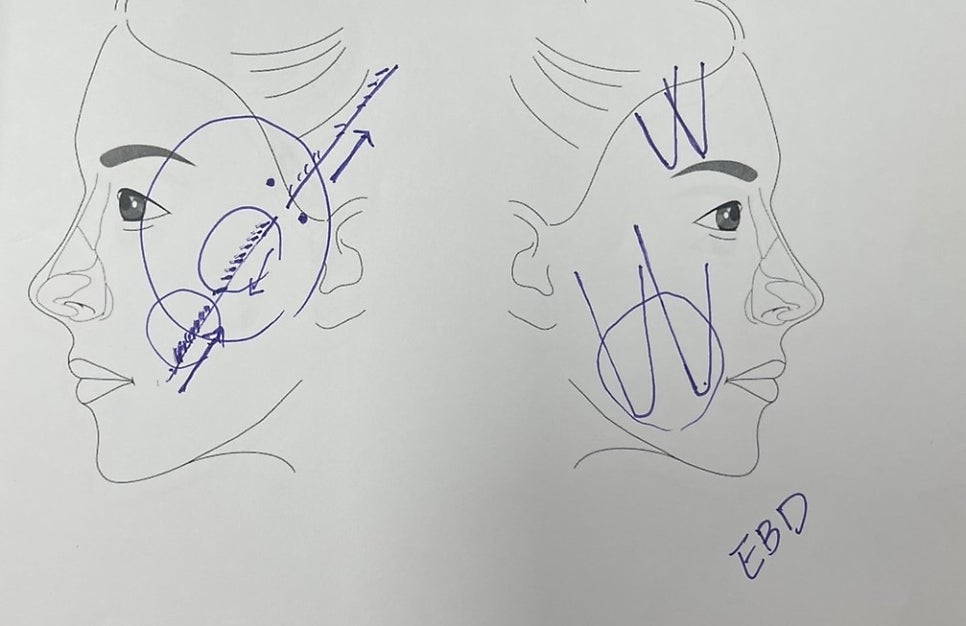
If the direction and depth of the threads are inappropriate, uneven force can be applied to certain areas.
In particular, because the cheekbone area has a thin skin layer and sensitive tissue, it can become more noticeable when pulling force is concentrated there.
Also, a design that focuses only on pulling upward from below can make the cheekbones stand out.
If the practitioner focuses only on pulling tissue without considering the overall facial contour, the pulling force can be concentrated around the cheekbones.
For example, if strong upward pulling force is applied from below the cheekbones during thread insertion, the tissue may gather upward and create the effect of the cheekbones protruding more.
This problem is especially more likely to occur when relying on only one thread.
In other words, the problem of enlarged cheekbones is likely caused by the practitioner not fully considering the patient’s skin condition or by a lack of precision during the design process.
How can enlarged cheekbones be prevented?
Therefore, to prevent enlarged cheekbones, we recommend choosing a place where every part of the silhouette lifting process is precise, careful, and systematized.
Most importantly, the procedure must be designed to match the patient’s facial contours and skin condition.
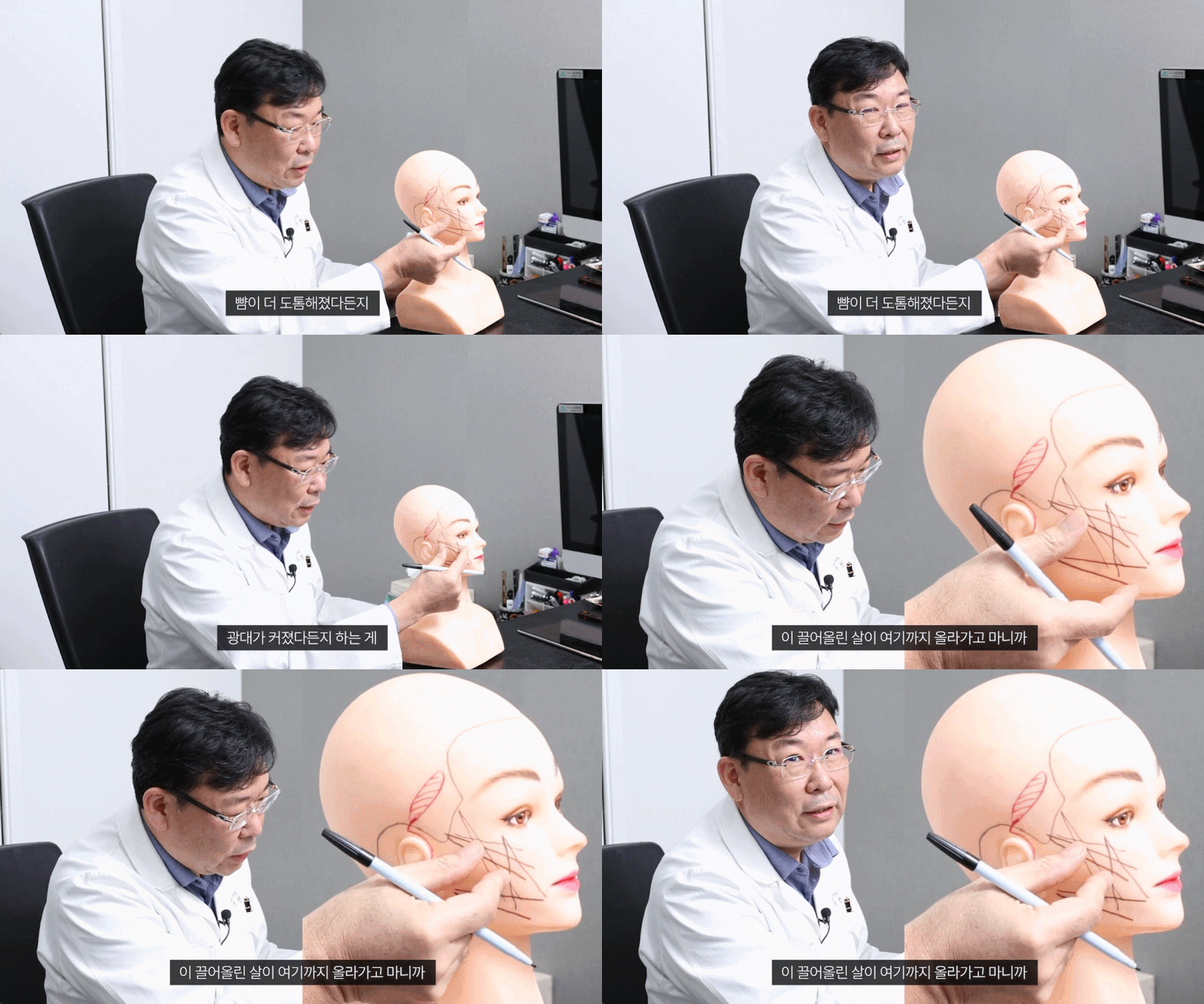
The insertion direction and depth of the threads should be carefully adjusted so that the pulling force does not concentrate on the cheekbone area, and the tension of the threads should be designed to distribute evenly across the entire face.
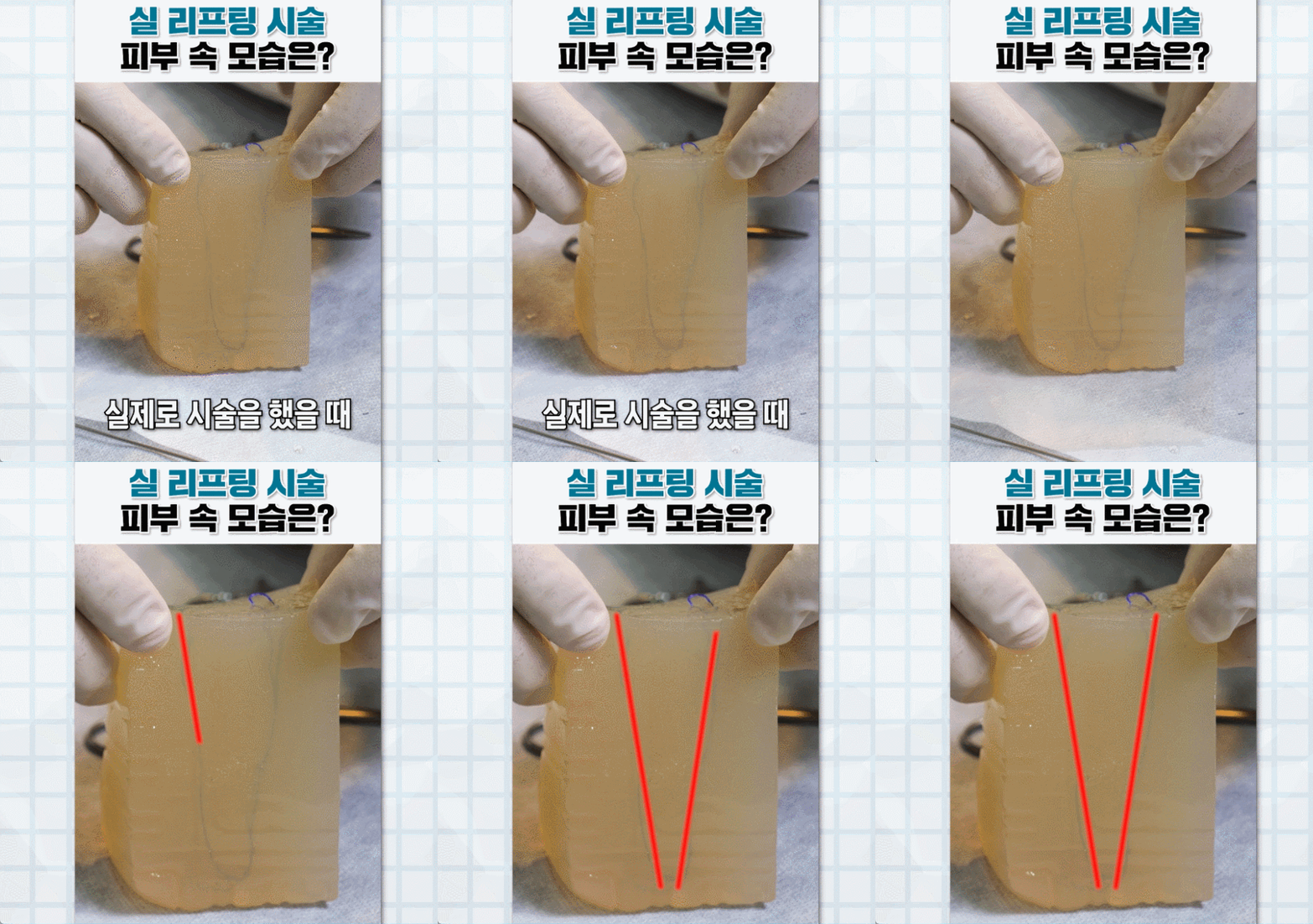
Even in the same area, rather than proceeding with a single thread in an I-shape, distributing the force evenly in a V-shape is more effective for prevention.
Of course, the type and characteristics of the threads should also be considered carefully.
Threads with too much tension can effectively lift sagging tissue, but if used incorrectly, they can produce unnatural results.
Post-procedure care is also important.
It takes some time for the threads to settle stably within the skin.
During this period, it is better to avoid strong stimulation to the skin, frequent facial movements, and exaggerated expressions.
It is also important to prevent loss of skin elasticity through sun protection and moisturizing care.
 Silhouette lifting is an effective method for improving facial contours and smoothing wrinkles or pulling up sagging skin.
However, to achieve satisfying results without side effects, thorough preparation and careful selection are necessary.
So if you are considering silhouette lifting, please choose an experienced practitioner who has thoroughly analyzed the patient’s facial contours, and proceed only after receiving sufficient diagnosis and consultation.
Thank you for reading this long post today.
| This post was written for informational purposes in compliance with Article 56, Paragraphs 1–15 of the Medical Service Act. All treatments carry the risk of side effects and complications depending on the individual. Before treatment, please be sure to make your decision after sufficient consultation with medical staff who have extensive experience. |