When dry winter weather continues, skin can become rough and lose elasticity, causing a lot of concern.
Low humidity and cold winds draw moisture out of the skin and weaken the skin barrier, accelerating the decline in elasticity.
In particular, a decrease in collagen is a factor that makes these problems even worse.
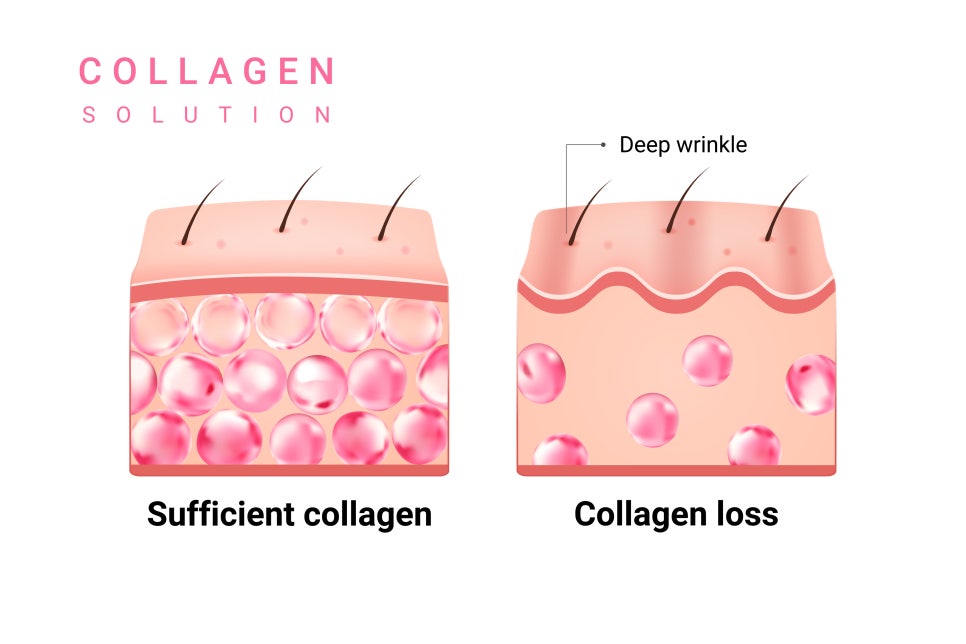
Collagen is a type of protein that supports the structure inside the skin and plays a key role in determining skin density and elasticity.
However, as we age, the rate of collagen production decreases and the rate of breakdown increases.
As time passes, skin elasticity collapses, wrinkles increase, and the skin becomes thinner and sags.
In addition, environmental factors such as UV exposure, air pollution, and stress also accelerate collagen breakdown.
Many people rely on collagen supplements or cosmetics to solve this problem, but these products only work on the surface of the skin and cannot affect the deep dermal layer.
Because this is not a fundamental solution, a method that can directly stimulate collagen production inside the skin is needed.

What Is a Collagen Booster?
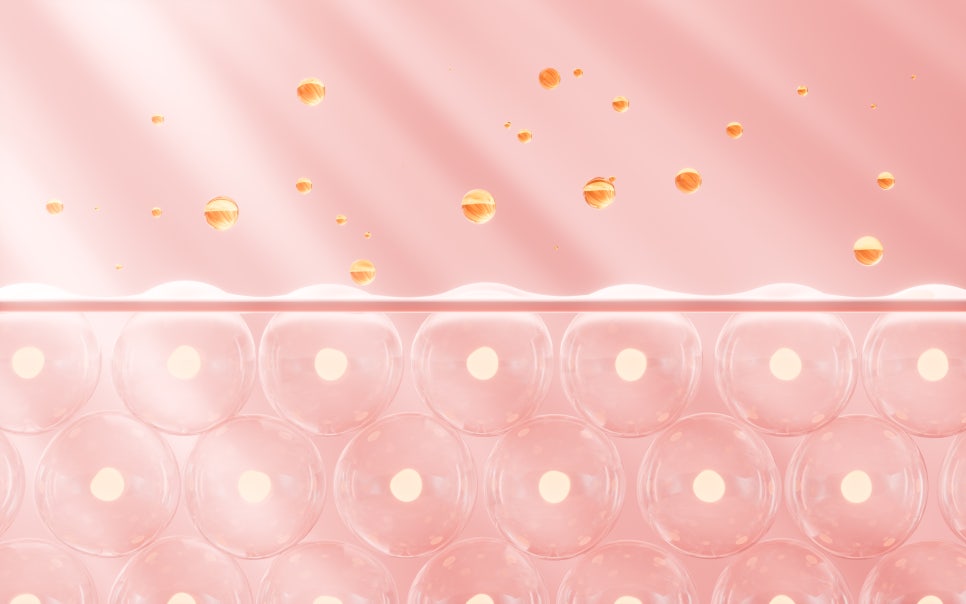
A collagen booster is a procedure that does not simply add collagen to the skin, but works deep within the dermis to induce the skin to produce collagen on its own.
The active ingredients injected into the dermis stimulate fibroblasts and help generate new collagen fibers.
This helps increase skin density and restore elasticity, naturally improving wrinkles and hollowness.
In particular, it has the advantage of naturally restoring areas where volume has decreased, such as deep wrinkles like nasolabial folds or hollowness under the eyes, using the body's own collagen.
However, the collagen booster itself is a procedure that strengthens the skin’s fundamental structure, so it is difficult to produce immediate results.
In general, the hyaluronic acid ingredient included in collagen boosters also provides some dewy hydration and moisturizing effects even in the early stage after the procedure.

Effects of PDLLA
PDLLA (Poly-D,L-Lactic Acid) is one of the main ingredients in collagen boosters.
In general, after PDLLA is injected subcutaneously, it gradually breaks down and is converted into water and carbon dioxide.
During this process, it gives micro-stimulation to skin cells, activates fibroblasts, and promotes the production of new collagen fibers.
Fibroblasts are important cells responsible for producing structural proteins in the skin, such as collagen, elastin, and hyaluronic acid.
In other words, PDLLA stimulates these cells and helps form new tissue deep within the skin.
It may be easier to understand if you think of it as the process of new flesh growing over a wound.
PDLLA particles are also round and fine.
Because of this, the improvement effect is distributed evenly across the skin rather than concentrated in a specific area, and the risk of side effects such as nodules is relatively low.
What to Check Before Getting a Collagen Booster Procedure
To fully benefit from a collagen booster, there are several important points to consider even when choosing a clinic.
First, you should choose a clinic with experienced medical staff.
Ingredients such as PDLLA need to be injected so that they are evenly distributed deep within the skin.
If the depth is chosen incorrectly or too much is injected into one area,
that area may become hard and develop problems such as nodules, or it may be difficult to achieve the desired result.
Skilled technique is needed to carefully adjust the injection depth, amount, and location by comprehensively assessing the patient’s skin condition, thickness, and degree of sagging.
To naturally restore the skin’s elasticity and volume through a collagen booster, please make sure you fully understand your own skin condition and proceed at a trusted clinic.
Aftercare After a Collagen Booster Procedure
After a collagen booster procedure, the skin becomes sensitive, so proper aftercare is very important.
Immediately after the procedure, the skin has tiny wounds from the injection needles, and it is also in the early stage of collagen production deep in the skin, so this period must be managed well to achieve the best results.
First of all, pay attention to sun protection.
UV rays strongly irritate the skin and promote collagen breakdown, so when going outside, be sure to use sunscreen with SPF 30 or higher and add physical protection such as a hat or parasol.
Strong sunlight can interfere with skin recovery, so extra caution is needed.
Second, it is best to avoid activities such as saunas, steam rooms, and strenuous exercise.
For 1 to 2 weeks after the procedure, it is advisable to refrain from activities that excessively raise the skin’s temperature.
This is because exposing the skin to a hot environment can cause inflammation or worsen swelling.
You should also avoid touching or rubbing the treated area.
Because tiny wounds from the injections remain at the treatment site, there is a possibility of bacterial infection.
Frequently touching or irritating the area with your hands can be harmful to the skin, so it is important to minimize stimulation as much as possible.
When washing your face, it is recommended to use lukewarm water instead of very hot or cold water and to cleanse gently.
In addition, sufficient hydration and skin moisturizing care are needed.
A collagen booster is a procedure that restores elasticity from deep within the skin, but if dryness continues after the procedure, the skin may become sensitive.
Using a moisturizer that contains hyaluronic acid can also be helpful.
Please note that drinking enough water to improve the body's overall hydration can also have a positive effect on skin recovery.
During the skin recovery process, mild side effects such as bruising and swelling may occur, but they will naturally fade over time, so there is no need to worry too much.
However, if the treated area swells excessively or pain persists, please consult the medical staff at the clinic where the procedure was performed and receive appropriate care.
Thank you for reading this long post.
| This post was written for informational purposes in compliance with Article 56, Paragraphs 1 to 15 of the Medical Service Act. All treatments carry a risk of side effects and complications depending on the individual. Before treatment, be sure to have a thorough consultation with experienced medical staff before making your decision. |