As we age, skin elasticity decreases and the face begins to sag under the influence of gravity.
As a result, nasolabial folds become deeper, marionette lines become more pronounced, and sagging cheeks can cause the jawline to lose definition.
This can make a person look older and tired, creating a negative impression.
Many people consider thread lifting to improve these changes.
Thread lifting is a procedure that inserts medical dissolvable threads into the skin to lift sagging tissue.
As the threads dissolve, they stimulate collagen production, so overall skin elasticity may also be expected to improve.
However, the effects of thread lifting vary depending on the type of thread used.
It is important to choose the right thread according to your skin condition and desired results.
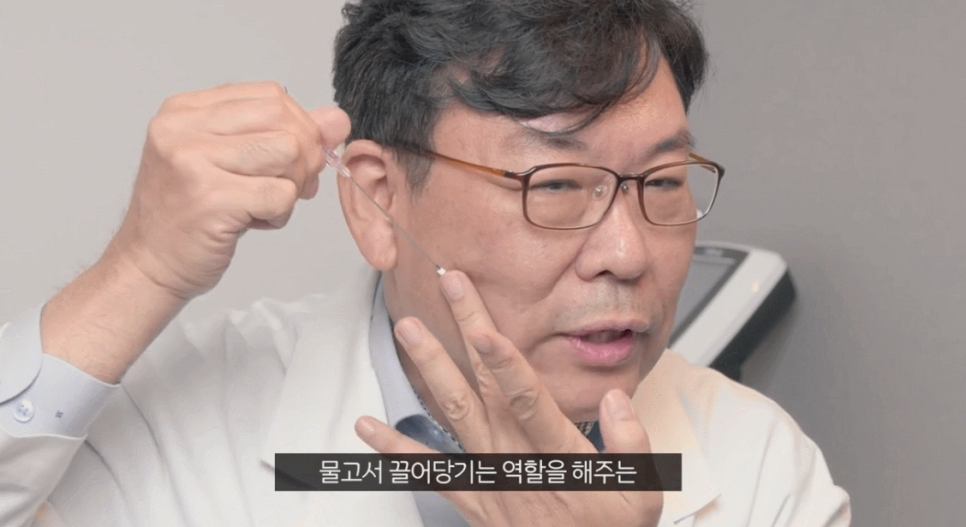
Types of Lifting Threads
The threads used for thread lifting are generally designed to dissolve in the body and have the effect of stimulating tissue to induce collagen production.
However, there are differences depending on the thread’s composition, physical properties, duration, lifting strength, and more.
The most commonly used thread types today are PDO, PLLA, and PCL.
Each has its own characteristics, advantages, and disadvantages.
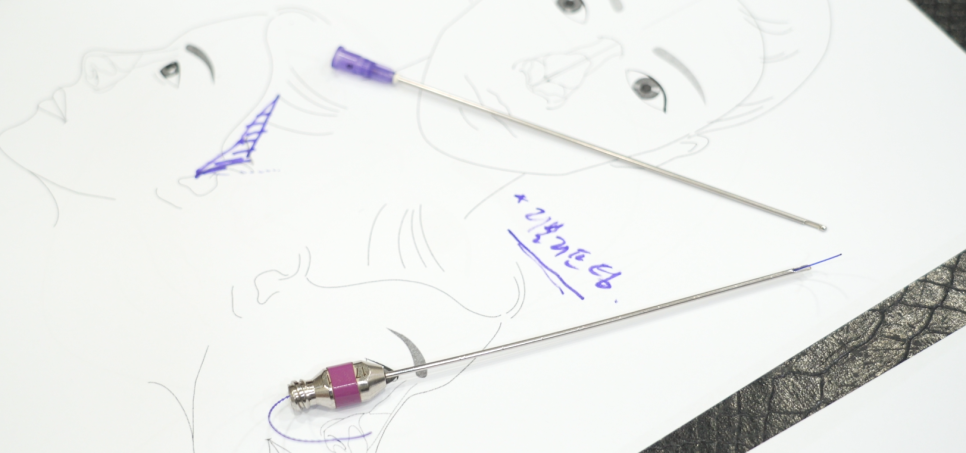
PDO Threads
PDO threads are the most widely used threads and are characterized by relatively fast absorption.
They dissolve in the skin in about 6 months to 1 year and have relatively strong tension, providing an immediate lifting effect.
PDO threads are relatively strong in tension, allowing them to effectively support and pull skin tissue.
They may also help improve skin elasticity to some extent by inducing collagen production as the threads dissolve.
However, because the tension is strong, even a small mistake during the procedure can lead to side effects such as dimpling or thread visibility, so extra caution is needed.
When receiving the procedure, please have a thorough consultation with a careful and meticulous medical professional before proceeding.
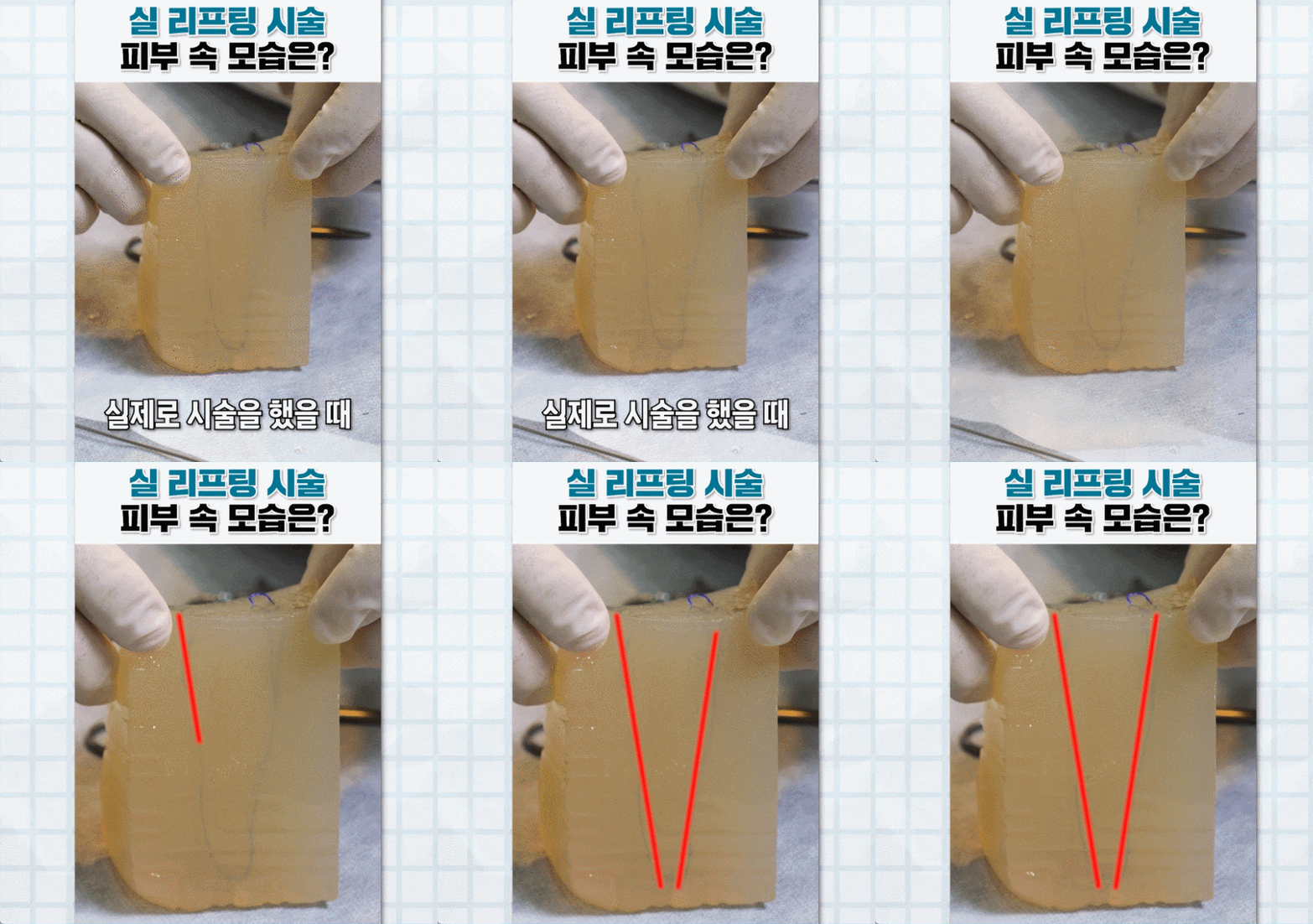
PLLA Threads
PLLA threads have a longer duration than PDO threads and more actively stimulate collagen production within the skin.
They remain in the skin for about 1 to 2 years and are more effective than PDO threads at improving skin volume.
In particular, when inserted deeper into the skin, they help maintain skin elasticity over a longer period, so they are recommended for cases where the skin is thin or volume enhancement is needed.
However, compared with PDO threads, PLLA threads have a relatively weaker immediate lifting effect.
Therefore, it is important to consider that the effects appear gradually,
and the dramatic results generally expected from a 'thread lifting procedure' may be somewhat less noticeable.
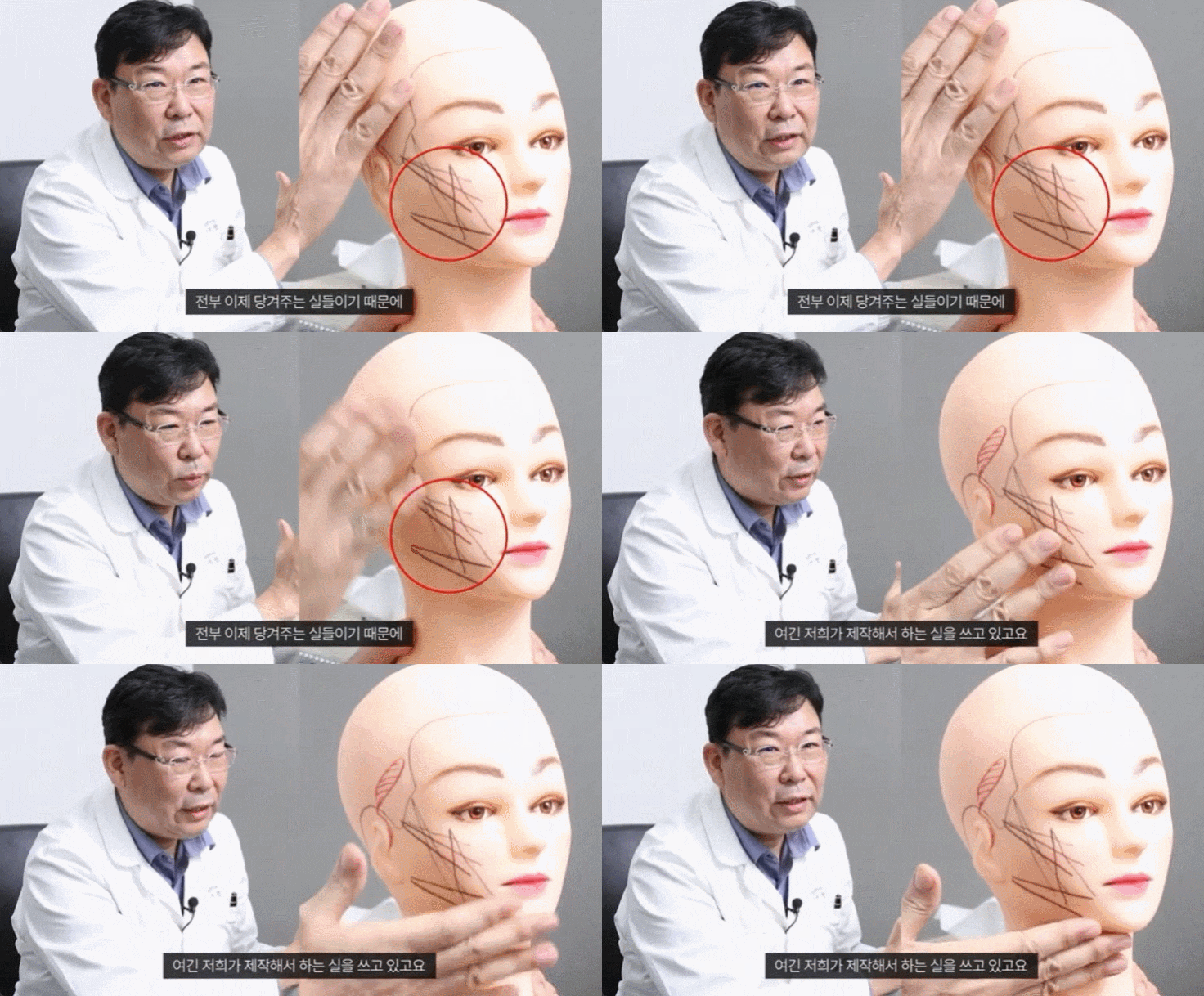
PCL Threads
PCL threads have the longest duration and can last about 2 to 3 years.
Because they slowly break down in the skin while having excellent tissue-regenerating effects, they can be a suitable choice when long-term lifting is desired.
PCL threads stimulate skin tissue more deeply and help maintain elasticity improvement over a long period.
Over time, you can expect improved skin density and reduced wrinkles.
However, they are relatively expensive, and their tension may be somewhat weak when applied to the skin.
For this reason, they are more suitable for long-term skin elasticity improvement and wrinkle reduction than for strong lifting effects.
PCL threads are appropriate when the skin tissue is thick or when a long-lasting result is desired.
When choosing thread lifting threads, it is important not to consider only the duration or effects, but also to carefully analyze your own skin condition and facial contours.
If the skin is thin and a thread with too much tension is used, the skin may become pulled and uneven, or dimpling may occur.
On the other hand, if the skin is thick and a thread with weak tension is used, the effect may be minimal.
Therefore, sufficient diagnosis and consultation with an experienced medical professional are necessary to choose the right thread.

Thread lifting is an effective procedure for refining facial contours and improving skin elasticity, but not everyone gets the same results.
Because the effects of the threads can vary depending on skin condition, a cautious approach is important.
Even when using the same thread, results can differ depending on an individual’s skin thickness, elasticity, and fat distribution, so extra care is needed.
Therefore, before performing thread lifting, the procedure should be planned by precisely analyzing each person’s facial contours and the location of wrinkles, and the threads should be inserted accordingly.
Before undergoing the procedure, please fully understand your own skin condition and have a thorough consultation with an experienced medical professional.
Thank you for reading.
| This post was written for informational purposes in compliance with Article 56, Paragraphs 1–15 of the Medical Service Act. All treatments carry a risk of side effects and complications depending on the individual. Before treatment, please be sure to make your decision only after having sufficient consultation with a medical professional with extensive experience. |