Thread lifting is considered a relatively simple procedure, but it is a delicate treatment that requires careful planning of the facial structure.
However, because it is seen as a “petit procedure,” many people choose a thread lift clinic without sufficiently considering the medical staff’s experience and skill.
As a result, there are not a few cases where people do not get the results they wanted or experience side effects.
Thread lifting is performed by inserting medical threads into the skin to lift sagging tissue, and as the threads dissolve, they stimulate collagen production.
It has the advantage of offering relatively immediate effects, along with the potential for long-term improvement in skin elasticity.
However, the results vary depending on which threads are used, how the treatment is designed, and, above all, how skilled the medical staff are.
If the procedure is done incorrectly, the face may become asymmetrical, or problems may occur because the threads do not settle properly inside the skin, so special care is needed.
Therefore, rather than looking only at price and reviews, we recommend choosing only after fully considering the clinic’s treatment experience and the expertise of the medical staff.
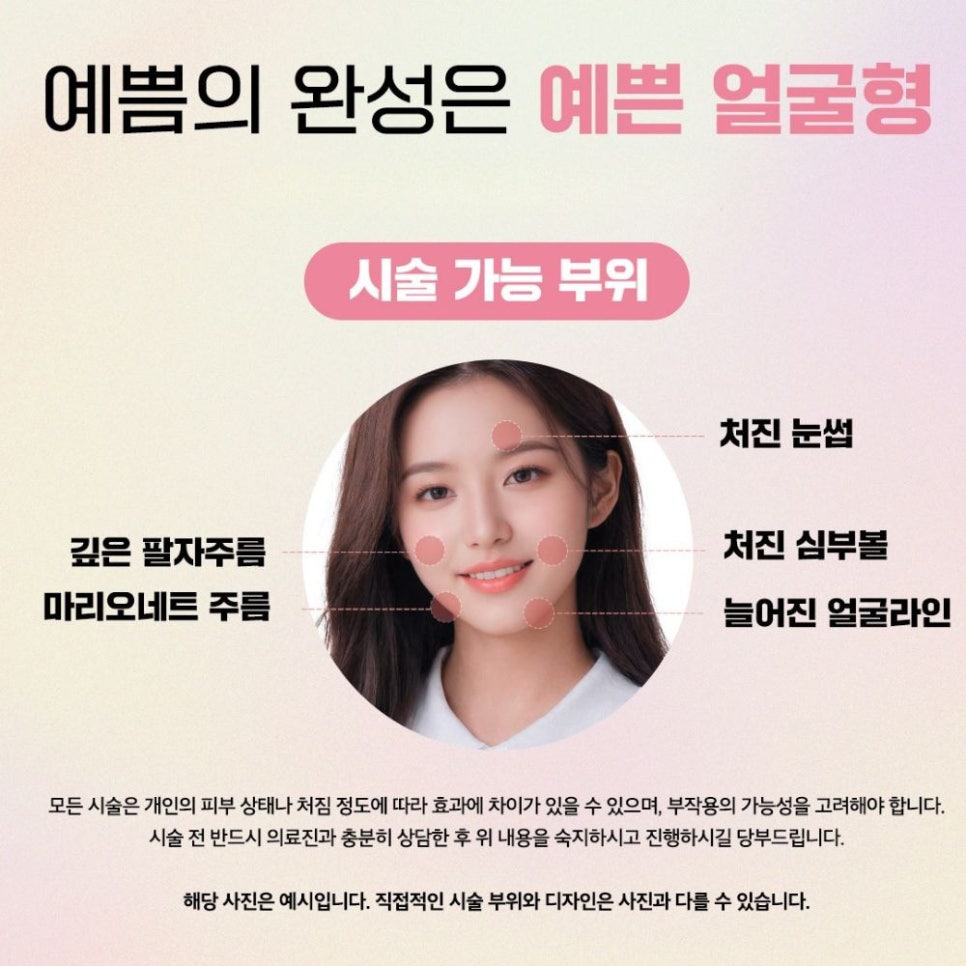
Thread lifting is not a simple “petit” procedure.
Many people tend to think of thread lifting as a simple procedure.
This is because it is classified as a “petit” procedure.
Here, the word “petit” means that there is no surgical operation involved; it does not mean that it is a “simple” procedure.
Thread lifting is a treatment that requires precise design with consideration of the facial anatomical structure.
Rather than simply focusing on pulling the skin or smoothing wrinkles, the direction of thread insertion, the tension, and the number of threads must be adjusted while considering the overall harmony of the face.
The most important thing in thread lifting is to naturally refine the facial contours while preventing any specific area from being pulled unnaturally.
For example, if threads are inserted simply to pull up the nasolabial folds and the force is concentrated in one area, it can make the cheekbone area stand out or make the face look wide and flat.
Also, if the insertion depth of the threads is adjusted incorrectly, the skin may become uneven or the outline of the threads may become visible through the skin.
To prevent these problems, you need to choose a medical professional with the ability to design treatment while considering the balance of the entire face.
From the consultation stage, the medical professional should directly analyze the facial contours and skin condition in sufficient detail and be able to suggest a customized lifting procedure suited to the individual.
The results also differ depending on the type of thread.
Another important factor in thread lifting is which thread is used.
Depending on the ingredients and structure, threads can differ in lifting effect, duration, and skin response.
Representative thread types include PDO, PLLA, and PCL threads based on their ingredients, and each has different characteristics and effects.
PDO threads are the most commonly used threads and are broken down in the body within 6 months to 1 year.
They provide excellent immediate lifting effects, but the duration is relatively short.
On the other hand, PLLA threads and PCL threads last for 1 to 2 years or longer.
They are characterized by strong collagen-stimulating effects, improving volume and enhancing elasticity.
Therefore, when choosing threads, you should decide only after comprehensively evaluating the improvements your skin needs and your skin’s characteristics.
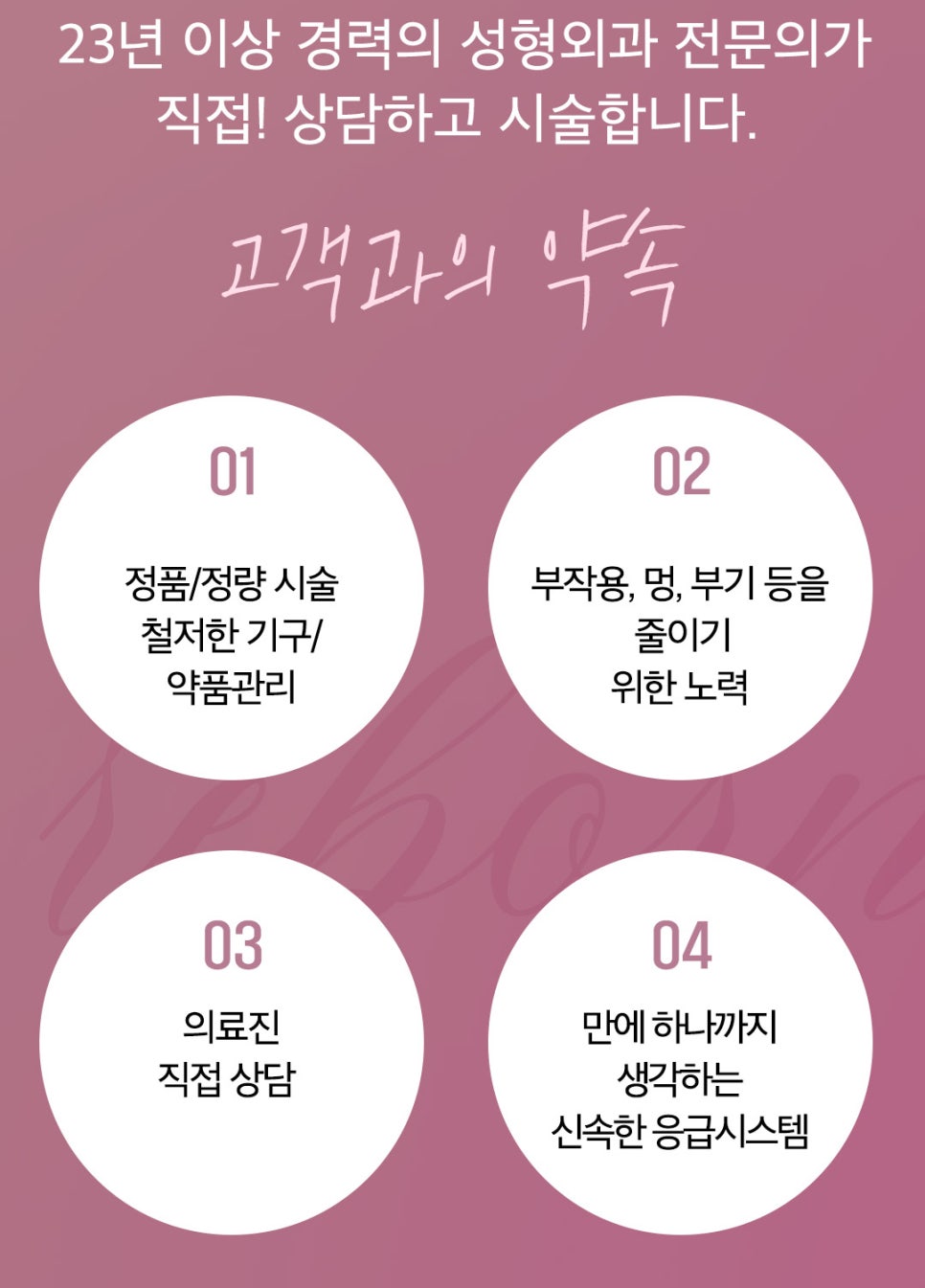
Be careful of side effects.
Thread lifting is a relatively safe procedure, but if performed by an inexperienced medical professional, various side effects can occur.
The most common side effects include uneven pulling, thread visibility, uneven skin texture, and thread migration.
Uneven pulling is a problem that occurs when the thread settles to one side only or when the balance beneath the skin is uneven.
In such cases, the facial contour may change unnaturally, or a particular area may be pulled too tightly.
Also, if the thread is inserted too shallowly, or if the skin is thin, the thread may become visible through the skin, which is known as “thread visibility.”
To prevent these side effects, it is important to insert the threads after fully considering the skin type.
Uneven skin texture is also a problem that appears when the area where the thread has been inserted is pulled unnaturally.
If the threads are not placed in the skin with proper tension, certain areas may become sunken or the skin surface may wrinkle, so special caution is needed.
To prevent these side effects, you should choose a medical professional with extensive thread lifting experience and the ability to accurately analyze facial structure.
If you choose a clinic simply because the cost is low, you may not only fail to get the results you want, but may also need additional treatment because of side effects,
so please compare carefully and make your decision cautiously before choosing a clinic.
Thread lifting is not a simple procedure.
In the end, choosing the clinic is an important factor that determines the outcome, so please judge carefully and make your decision after sufficient consultation.
Thank you for reading this long post.
| This post was written for informational purposes in compliance with Article 56, Paragraph 1 through Paragraph 15 of the Medical Service Act. All treatments carry a risk of side effects and complications depending on the individual. Before treatment, please be sure to have a thorough consultation with a medical professional with extensive experience before making your decision. |