Skin boosters and collagen boosters are not procedures that create immediate changes.
Because they gradually induce changes within the skin, it is difficult to expect noticeable effects right after the procedure.
The process of collagen production and skin tissue remodeling takes time, and the speed varies from person to person.
For this reason, many people have questions such as:
“When will I start seeing results?”
“How many sessions do I need for my skin to improve?”
However, it is difficult to say exactly when the effects will appear.
That is because subtle changes are easy to miss as the skin changes slowly.
For the same reason, it is not easy to determine the treatment interval.
Because it is difficult to know exactly when the effects will appear, it is also hard to judge when an additional treatment is needed.
If repeated too soon, it may become an unnecessary procedure, and if delayed too long, the effect may be reduced.
In the end, finding the optimal interval with collagen production in mind is the most important thing.
So how should you determine the collagen booster and skin booster intervals and the timing of their effects?

When do skin booster effects appear?
Skin boosters do not simply provide a moisturizing effect on the surface; they work by inducing collagen production in the deeper layers of the skin to restore elasticity.
Because they gradually create changes within the skin, this is a treatment that requires time rather than producing immediate results.
In general, various skin boosters made with PDLLA contain hyaluronic acid,
so some moisturizing effect can be obtained immediately after the procedure.
The skin may feel more hydrated and firmer.
However, the point at which collagen production begins to activate in earnest is about 4 to 6 weeks later.
Ingredients such as PDLLA are slowly broken down in the skin, stimulating fibroblasts and inducing new collagen production.
On average, it takes about 3 to 6 months for this process to progress sufficiently.
For this reason, the effects of skin boosters become more noticeable over time rather than immediately after the procedure.
Two to three months after treatment, skin density increases, wrinkles are softened, and overall skin elasticity improves.
Therefore, rather than expecting immediate changes, consistent long-term care is necessary.
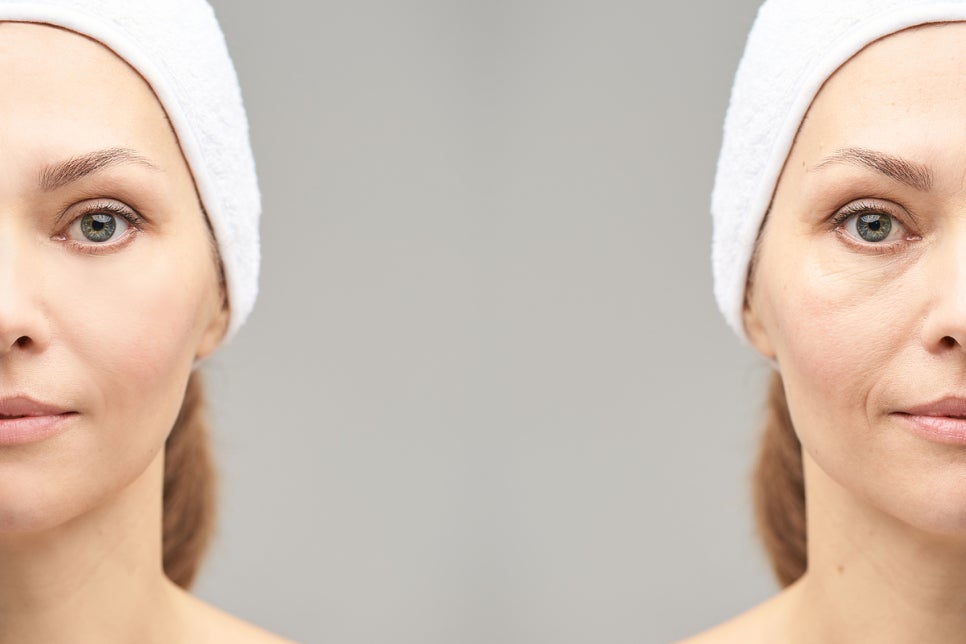
How often should the procedure be done?
In general, it is recommended to receive about three treatments at 4-week intervals at first.
This is to restore the weakened skin barrier and activate lost collagen.
After that, it is better to continue maintenance treatments once every 6 months to 1 year.
It is difficult to expect sufficient change from just one skin booster treatment.
When additional stimulation is provided at regular intervals, collagen synthesis is further activated and the effects accumulate.
In particular, as we age, the rate of collagen production slows down, so regular care is important.

How can you maximize the effects?
When considering the procedure, it is important not only to follow a fixed schedule, but also to carefully review the practitioner’s skill and the clinic’s expertise.
Skin boosters work by being injected directly deep into the skin, so it is important that they are administered evenly throughout the skin layers.
This is because if the ingredients are not evenly distributed during the process of activating collagen production, it is difficult for the effects to appear consistently.
For this reason, many people have recently been looking for skin boosters made with PDLLA.
PDLLA has round, small particles, and when injected into the skin, it has the characteristic of spreading more evenly and uniformly than other ingredients.
As a result, the risk of clumping in specific areas or uneven skin improvement is relatively reduced.
Aftercare is also important.
Since time is needed for new collagen to be produced within the skin, it is best not to expose the skin to unnecessary irritation during that period.
Sun protection is especially important.
This is because ultraviolet rays are a major cause of collagen breakdown.
After the procedure, it is recommended to use a sunscreen with SPF 30 or higher.
Using a hat or umbrella for physical protection at the same time is even more effective.
Also, since the skin is in a sensitive state, it is best to avoid saunas, steam rooms, and intense exercise that generate strong heat.
In addition, maintaining adequate moisture through sufficient hydration is also important.

But most importantly, before deciding on treatment, you should accurately understand your own skin condition and goals through 충분한 consultation.
Even with the same skin booster, the effects may differ depending on the ingredients used and the product’s characteristics.
It is important to find the right solution based on each person’s skin characteristics and improvement goals.
To do this, the practitioner’s experience and skill are important.
Rather than choosing a clinic simply based on price or the number of treatments,
we ask that you carefully diagnose your skin condition and make your decision only after 충분한 consultation with medical staff who can provide the right products and procedures for your current skin condition.
Thank you for reading this long post.
| This post was written for informational purposes in compliance with Article 56, Paragraphs 1 through 15 of the Medical Service Act. All treatments carry the risk of side effects and complications depending on the individual. Before treatment, please be sure to have a thorough consultation with medical staff with extensive experience before making your decision. |