"How long do bruising and swelling last after getting thread lifting?"
When you are thinking about when to return to daily life, or if you have an important appointment soon after the procedure, you may be concerned about how long the bruising or swelling will last.
Bruising and swelling after the procedure are part of the normal recovery process, but they can vary depending on your skin condition and the procedure method.
So, I will explain in detail what happens after thread lifting and what methods can help minimize bruising and swelling.

Why do bruising and swelling occur after thread lifting?
Thread lifting is a procedure in which medical dissolvable threads are inserted into the skin to lift sagging tissue.
During this process, the small blood vessels in the skin may be stimulated and cause bleeding.
This leads to bruising.
The extent of the bruising varies depending on how much the blood vessels were damaged during the procedure.
Please note that the thinner the skin and the more blood vessels distributed in the area, the more severe the bruising can be.
Swelling occurs when the skin tissue is temporarily stimulated during the procedure and an inflammatory response is triggered.
In particular, the area where the thread was inserted may temporarily swell because the tissue is being pulled.
Usually, swelling begins immediately after the procedure, becomes most severe on the first or second day, and then gradually subsides.

How long do bruising and swelling last after thread lifting?
Most bruising and swelling subside within about 1 to 2 weeks.
However, this can vary depending on your constitution, the area treated, and the type of thread used.
Bruising generally fades and disappears over 1 to 2 weeks as the color gradually lightens.
However, if your skin is thin or you bruise easily, it may last longer.
Swelling is usually at its worst on the second or third day after the procedure.
After that, it gradually goes down, and major swelling usually disappears within about a week.
However, mild swelling may remain, and it can take as little as 2 weeks or as long as 4 weeks to become completely natural-looking again.
Also, as the threads settle into place within the skin, you may feel some mild tightness or pulling.
This usually adjusts within 2 to 3 weeks, so there is no need to worry.
Bruising and swelling after the procedure are part of the natural recovery process.
Therefore, in most cases, they will naturally disappear over time.
However, if bruising remains for more than 2 weeks or the swelling continues severely, please visit the clinic for an examination.
In particular, if the skin becomes uneven or one side is significantly more swollen, the position of the thread or the tissue response may need to be checked.
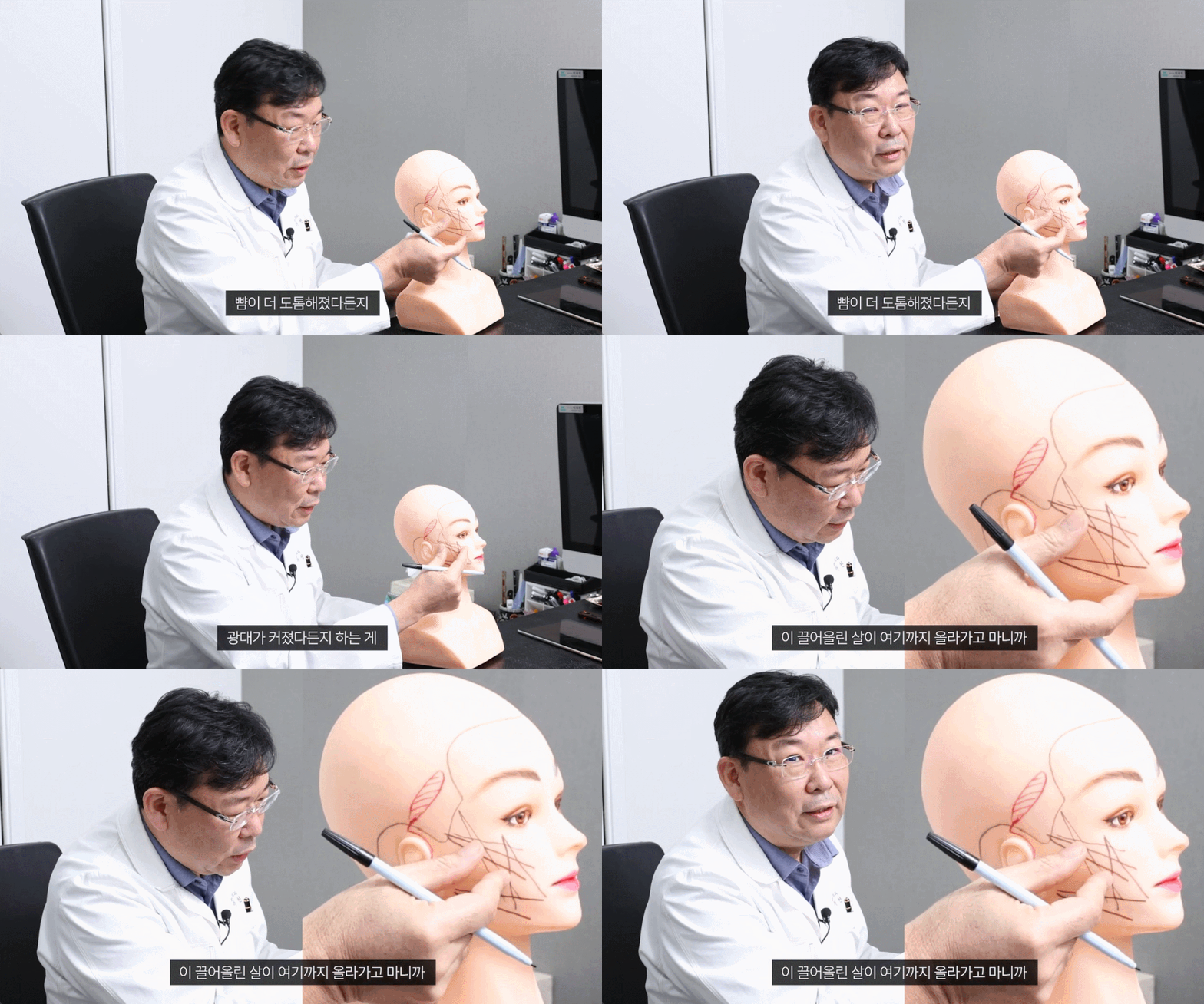
How can you reduce bruising and swelling?
To minimize bruising and swelling after thread lifting, post-procedure care is very important.
Cold compresses are helpful immediately after the procedure.
However, placing an ice pack directly on the skin can actually damage the skin.
It should be used with a cloth or towel in between, and you should not leave it on for too long; it is better to apply it at intervals of about 10 to 15 minutes.
Bending your head down can increase blood circulation and make bruising and swelling worse.
Therefore, when sleeping, raise your pillow so that your face is positioned above your heart, and in daily life, please avoid keeping your head bent downward for long periods.
Hot environments and alcohol consumption can dilate blood vessels.
This can cause bruising and swelling to last longer.
Please avoid heat-inducing exercise, saunas, and drinking alcohol for at least 1 to 2 weeks.
In addition, clinics provide various precautions to reduce bruising and swelling and to help achieve better results.
To minimize side effects and achieve the desired results, please be sure to follow these precautions in your daily life.

Thread lifting is not simply a procedure that pulls the skin upward; as the threads gradually dissolve, it promotes collagen production.
Because of this, if post-procedure care is done well, the results can be maintained for a long time, and the skin can become somewhat more elastic and healthy.
However, before that, the most important thing is to receive sufficient consultation from medical staff with extensive experience in thread lifting and then proceed with the procedure.
If you are considering thread lifting, please choose a clinic that performs the procedure after carefully analyzing each person’s skin condition and facial contour.
Thank you for reading this long post today.
| This post was written for informational purposes in compliance with Article 56, Paragraph 1 through 15 of the Medical Service Act. All treatments carry a risk of side effects and complications depending on the individual. Before treatment, please make sure to make your decision only after sufficient consultation with medical staff who have extensive experience. |