After getting thread lifting, it’s only natural to look in the mirror a few extra times.
If your jawline looks neatly defined and your sagging cheeks seem slightly lifted, it can make you feel pleasantly satisfied.
But the more you like the change, the more a concern can also settle in the back of your mind.
"How long will it last?"

Many people know that thread lifting uses dissolvable threads, so the threads will eventually disappear from the body over time.
Because of that, many people worry that the effect may fade too quickly.
Also, if you have heard people around you say, “It didn’t last even a few months,” you may start to hesitate before getting the procedure.
However, the duration of dissolvable thread lifting is not determined simply by the material of the thread.
How the threads are placed inside the face and how naturally they settle into position play an important role.
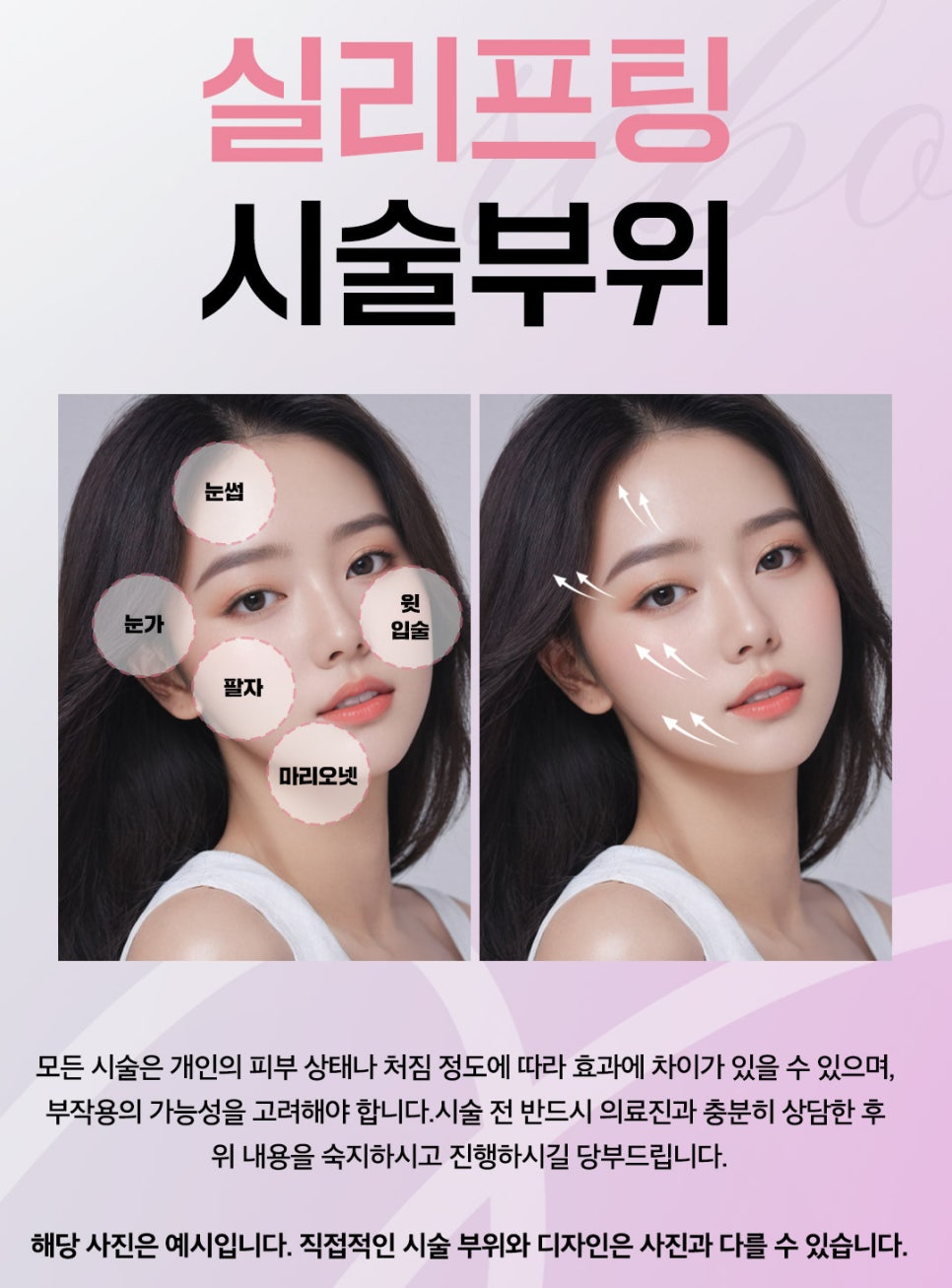 How long does dissolvable thread lifting last?
Because they are called dissolvable threads, some people ask, “Doesn’t everything just disappear after a few months?”
How long does dissolvable thread lifting last?
Because they are called dissolvable threads, some people ask, “Doesn’t everything just disappear after a few months?”
Of course, the threads do dissolve in the body.
And as the threads dissolve, they stimulate the surrounding tissue.
In that process, they help promote collagen production and restore skin elasticity.
The most widely used PDO threads typically dissolve in the body in about six months on average, while threads such as PLLA or PCL can last from one to three years.
However, you should not decide on the procedure based only on the number of years quoted.
Duration is important, but even more important is how securely the threads are positioned.
If the pulling direction or insertion position is incorrect, even a long-lasting thread may not maintain the desired effect for long.
That is because the threads can loosen or move out of place after a short time.

Design is important.
When people think about lifting, they may simply think, “Isn’t it enough to just pull it up?”
But the face is not such a simple structure.
The face is a three-dimensional structure that moves in multiple ways.
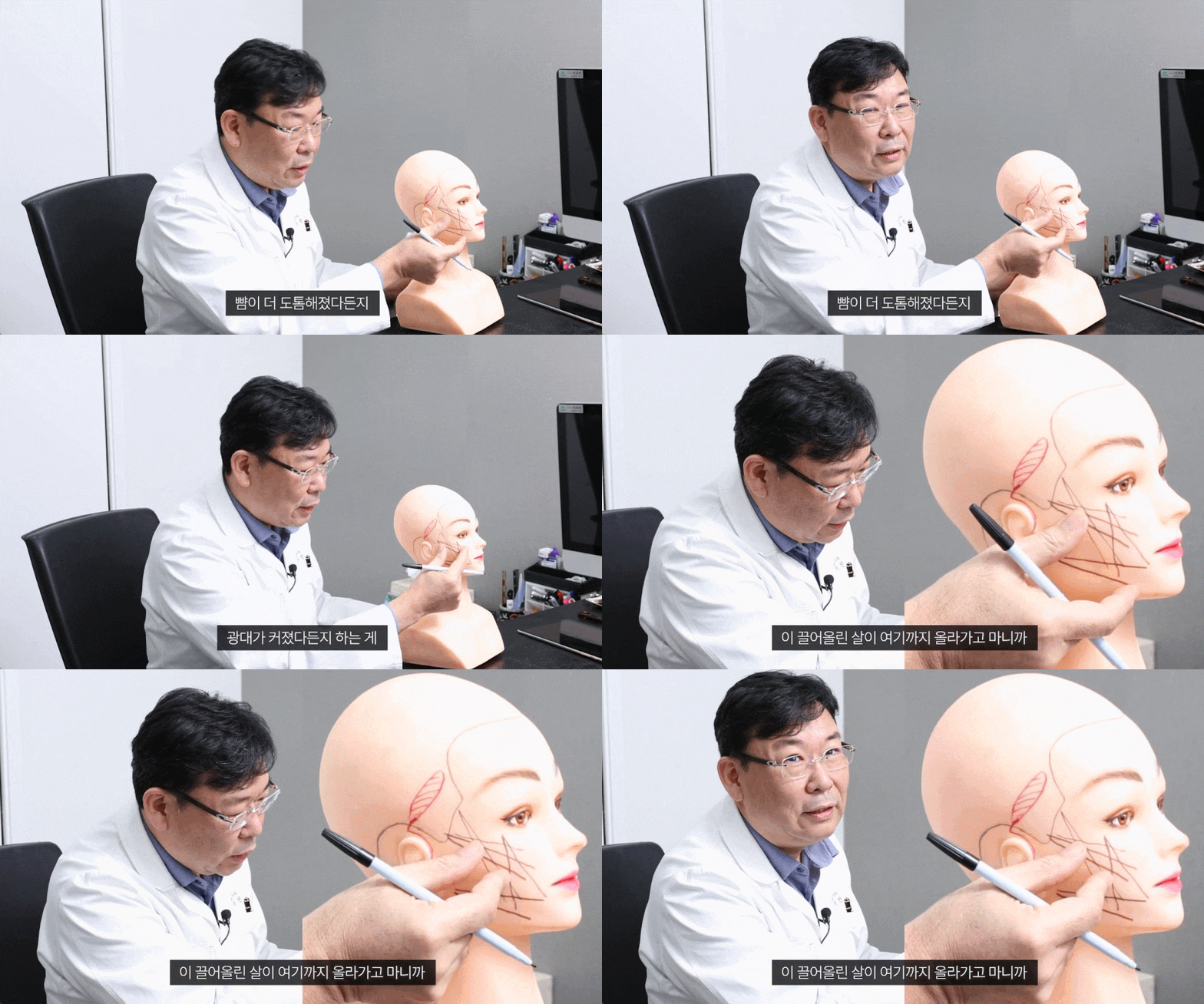
Because of that, if force is applied in only one direction, it is easy for facial balance to be disrupted.
In addition, if the threads are inserted in only one line, that single strand must bear all the weight on its own.
In that case, the threads may loosen too quickly, or one side may be pulled too strongly, making the face look asymmetrical.
That is why thread lifting should be performed in a way that distributes the load across the threads.
For example, the threads can be arranged in a V-shaped structure or distributed across two or three directions.
This helps prevent too much weight from being placed on only one area of the face.
“How the design is done” does not simply mean deciding the shape.
It should be planned by considering how long each thread can hold up and how harmoniously it will blend with the face.
Precautions for dissolvable thread lifting
One good thing about thread lifting is that the change can be felt immediately after the procedure.
But what really matters is what comes after that.
Only when the threads settle into the skin, the skin’s elasticity recovers over time, and facial expressions become more natural can you truly say the lifting was done well.
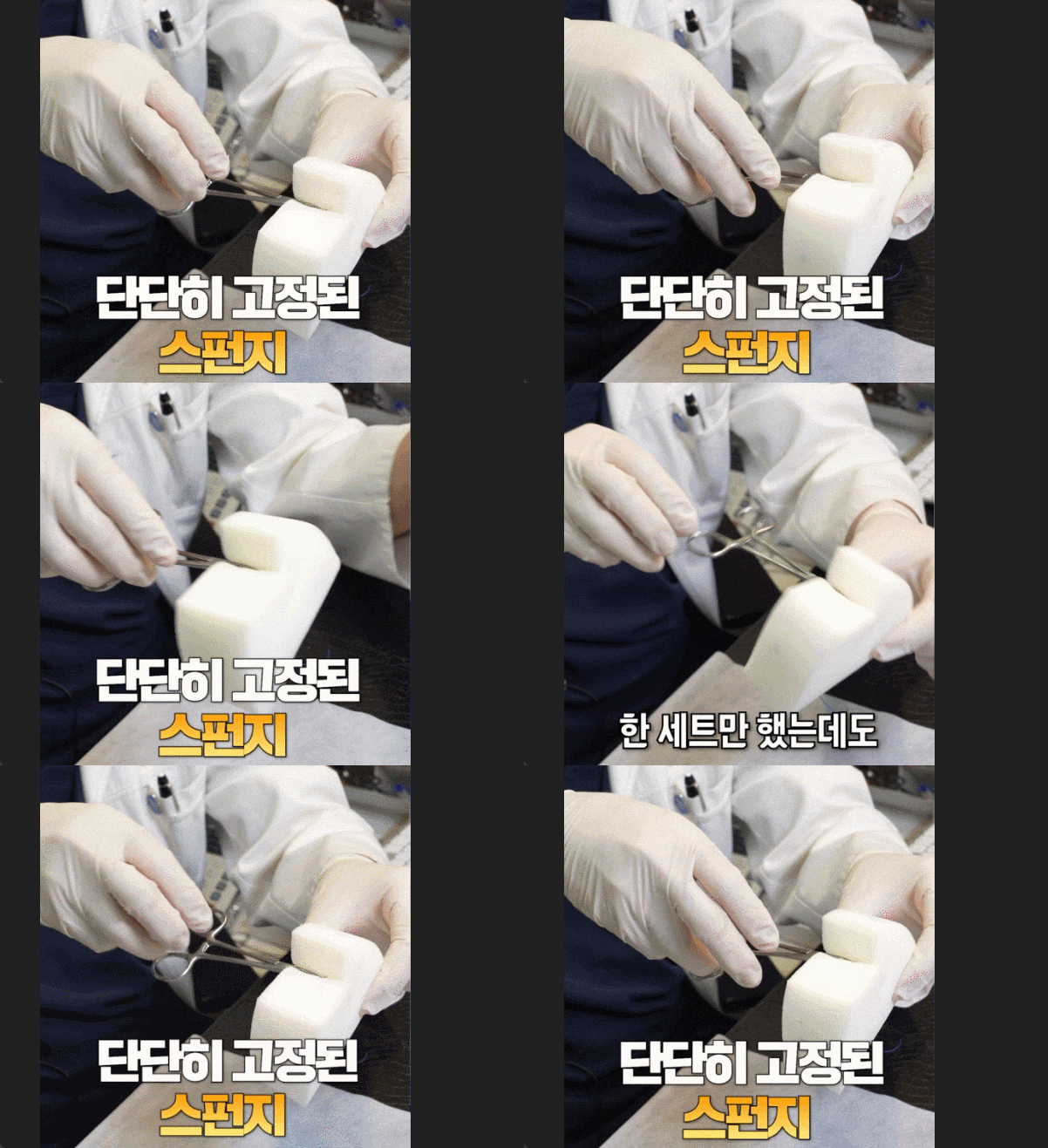
However, this kind of natural flow does not happen on its own.
If the procedure is not designed by carefully considering things like facial movement, skin thickness, and elasticity, the threads may lose their direction or the lifting effect may wear off before long.
Also, even if the threads are inside the skin, they may shift if you massage too often or rub too hard, so extra caution is needed.
Therefore, after the procedure, please follow the precautions given by the clinic carefully and pay attention to moisturizing and sun protection.
If any problem occurs, or if you feel that the threads are loosening, please visit the clinic right away and receive appropriate care.
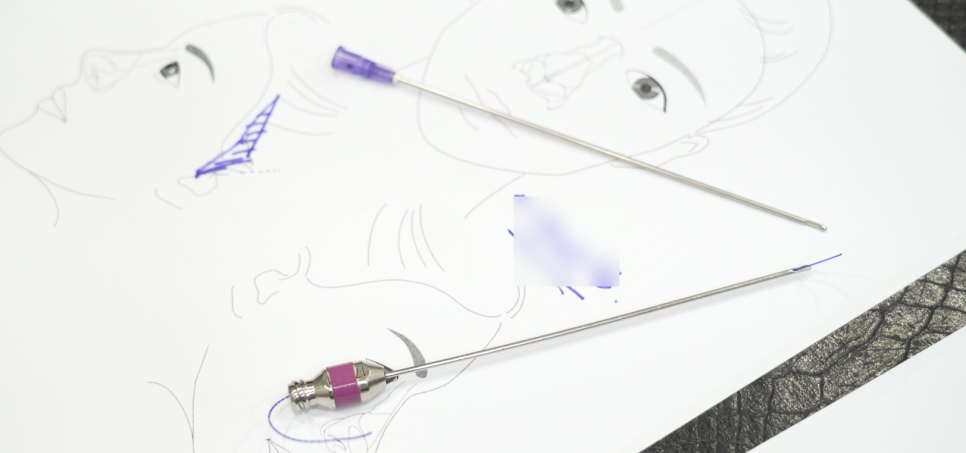
It is nice to hear that the lifting went well and that you look prettier, but what matters more is that the change does not collapse too quickly.
So when getting a lifting procedure, rather than simply looking at what the thread is or which product it is, be sure to check how the thread is anchored and where the force is distributed.
To do that, it is important to receive a thorough consultation with a director who has extensive understanding and experience with thread lifting.
In particular, I strongly advise you to avoid places that rush through consultations and do not take the time seriously.
Thread lifting is a procedure that can clearly define the facial contour and naturally lift sagging skin without surgical operation.
Because it works by inserting medical threads into the skin without making an incision, it supports the skin and helps restore elasticity.
Recovery is faster than with surgery, and returning to daily life is relatively easy.
But what is truly important in thread lifting is not simply “how strongly the threads pull,”
but rather the delicacy of how the thread direction, depth, anchoring points, and distribution of pulling force all work in harmony.
Therefore, if you are considering thread lifting, please make sure the clinic carefully designs the procedure according to your skin condition and facial structure.
Thank you for reading this long post.
[Will thread lifting break?]
| This post was written for informational purposes in compliance with Article 56, Paragraph 1 through 15 of the Medical Service Act. All treatments carry the risk of side effects and complications depending on the individual. Before treatment, please make sure to make a sufficient consultation with experienced medical staff before deciding. |