As we get older, the skin naturally loses elasticity.
This is because around the age of 25, the production of collagen—which has a major impact on skin elasticity—can no longer keep up with the rate at which it is lost.
On top of that, external irritants such as ultraviolet rays, fine dust, and stress accelerate the skin’s aging process.
Even if it seems on the surface like nothing more than dryness and dullness, many cases reveal that the skin’s internal elasticity structure has already broken down.
In such cases, it is difficult to improve the condition simply by applying basic skincare products well.
The skin needs a process of being replenished from within again.
This is exactly what a “skin booster” can do.
A skin booster refers to an injectable procedure that helps skin tissue actively produce collagen.
Rather than simply filling the surface, it can help restore the skin’s health by inducing fundamental changes deep within the skin.

Skin booster?
Some people may think of skin boosters simply as hydration injections or dewy-skin injections.
But in reality, they work through a more complex mechanism.
They directly stimulate fibroblasts in the skin tissue to induce the production of new collagen.
Rather than simply coating the surface or directly injecting collagen or moisture, they encourage the skin itself to change on its own.
Of course, many products contain hyaluronic acid, so short-term hydration or radiance may appear as well.
However, the full effect usually begins to appear only after 2 to 4 weeks.
As skin density gradually increases and wrinkles or hollow areas slowly improve, the skin’s overall elasticity is restored.
That is why skin boosters are more suitable for those who want to recover the skin’s natural strength rather than for short-term cosmetic purposes.
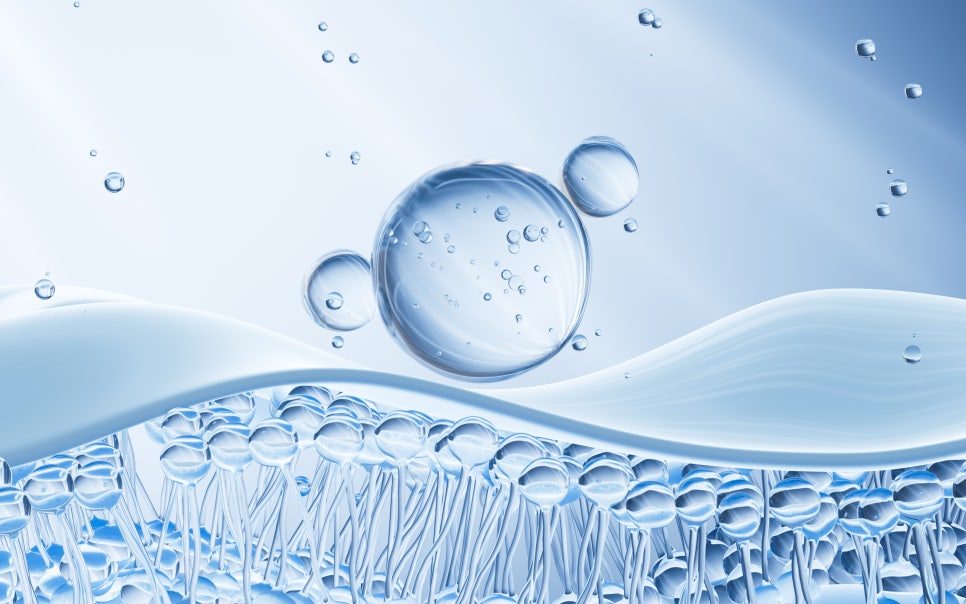
Types of skin boosters
Skin boosters come in various types depending on their ingredients, such as PLLA, PDLLA, and PDRN.
And depending on which ingredient is used, the mechanism of action and results differ.
Among them, PDLLA is a biodegradable polymer called Poly-D, L-Lactic Acid, which slowly breaks down in the body and is converted into water and carbon dioxide.
In this process, it gives fine stimulation to the skin tissue and strongly induces collagen production.
One advantage of PDLLA is the uniformity of its particles.
Thanks to its small particles and ability to spread evenly, it can act uniformly across the skin.
As a result, it is relatively less likely to cause side effects such as excessive swelling in only one area or the formation of nodules.
Because of these characteristics, it can help induce a natural and stable improvement, especially in areas with severe hollowing or in faces with significantly reduced elasticity.
Things to be careful about with skin boosters
Even if the ingredients of a skin booster are good, results are not guaranteed in every case.
That is because skin thickness, the direction of elasticity, hollowed areas, and even pore location differ from person to person.
The results can change completely depending on where, how, and how much is injected.
In particular, “regeneration-focused ingredients” such as PDLLA are greatly affected not only by effectiveness but also by safety, depending on the depth, distribution, and injection amount.
If the practitioner lacks experience with the procedure or has insufficient understanding of human anatomical structure, problems such as nodules, clumping, or asymmetry may occur, so extra caution is needed.
Therefore, sufficient consultation must always come first before the procedure.
You should receive consultation and treatment from experienced medical staff who can comprehensively assess not only the visible condition of the skin, but also the current density of the skin tissue, the degree of collagen loss, and the likelihood of a regenerative response.
Aftercare is also important.
Collagen is not produced immediately after the procedure, but over a certain period of time.
Therefore, after the procedure, please make sure to protect yourself well from ultraviolet rays and pay special attention to moisturizing.
 A skin booster is not a procedure that makes you look better quickly. Rather than an immediate, noticeable change, it is a procedure that gives the skin time to recover again.
That is why the results of skin booster treatment may feel slow, but once the skin regains its own ability to recover, the changes become much deeper and longer-lasting.
Thin and dull skin cannot regain elasticity no matter how much you cover the surface.
The more this is the case, the more what is needed is an approach that rebuilds the structure inside the skin.
Skin boosters like PDLLA, which directly stimulate the skin and induce structural recovery, can become the starting point of a fundamental change that makes the skin healthier beyond simple cosmetic effects.
What matters most is not which ingredient the procedure uses, but who is performing it and how they are approaching it.
If you are considering a skin booster, we strongly recommend that you first receive sufficient consultation at a place with a high level of understanding of the procedure and proceed from there.
Thank you for reading this long post.
| This post was written for informational purposes in compliance with Article 56, Paragraph 1 through Paragraph 15 of the Medical Service Act. All treatments carry the risk of side effects and complications depending on the individual. Before treatment, please make sure to make your decision after sufficient consultation with experienced medical staff. |