From the corners of the mouth downward, the long lines that extend along the jawline are called “marionette lines” or “marionette wrinkles.”
This name comes from the resemblance to the mouth shape of a Western marionette puppet.
They are lines that make the corners of the mouth look as if they are turned down, even when you are not making any expression, and can make it hard to get rid of a slightly sulky look even when you smile.
The problem is that these lines do not just make you look older.
They can be mistaken for a depressed or sharp impression, and can even make your overall appearance seem sagging and dull.
That is why many people have recently been looking for ways to improve marionette lines.
Among them, today I want to talk about thread lifting.
Thread lifting is a procedure in which medical threads are inserted under the skin to physically pull up sagging tissue, while also inducing collagen production over time to improve skin elasticity.
Although it may seem like a relatively simple procedure on the surface, the marionette line area, which spans the corners of the mouth and the jawline, has a more complex structure than you might think,
so even a small asymmetry can make the expression look awkward or change the impression.
Today, I would like to explain why marionette lines appear, how thread lifting works in plastic surgery, and what points should be handled carefully in order to achieve good results.
If you have been worried about changes in your impression due to marionette lines, please read this post to the end.

What Are Marionette Lines?
Marionette lines are line-shaped wrinkles that extend downward from the corners of the mouth along the jawline.
They are changes that alter the deep layers of the skin, making the entire lower face look saggy and heavy.
The area around the mouth, which is strongly influenced by facial expressions, has active muscle movement and tends to accumulate repetitive daily habits, so wrinkles can form more deeply there compared with other areas.
Also, as we age, the density of collagen and elastin that support the skin decreases, and the fat layer and fascia layer underneath slowly shift downward with gravity.
As the tissue pushed downward sags, the area next to the corners of the mouth folds into a wrinkle-like crease.
This is how marionette lines form.
Therefore, marionette lines should be seen as the result of changes that occur from within, rather than as wrinkles that are merely visible on the surface.
The problem is that when this kind of folded line appears right next to the corners of the mouth, it can make you look pouty or dissatisfied even without speaking, and sometimes even smiling can feel unnatural.
Because it can distort emotional expression, it is hard not to notice.
Also, since this line is directly connected to the shape of the jawline, it can change the overall impression even more strongly.

What Is Thread Lifting?
Wrinkles formed in the deep layers of the skin, like marionette lines, are difficult to improve sufficiently with skincare or massage that only addresses the surface.
That is why a popular non-surgical option these days is thread lifting.
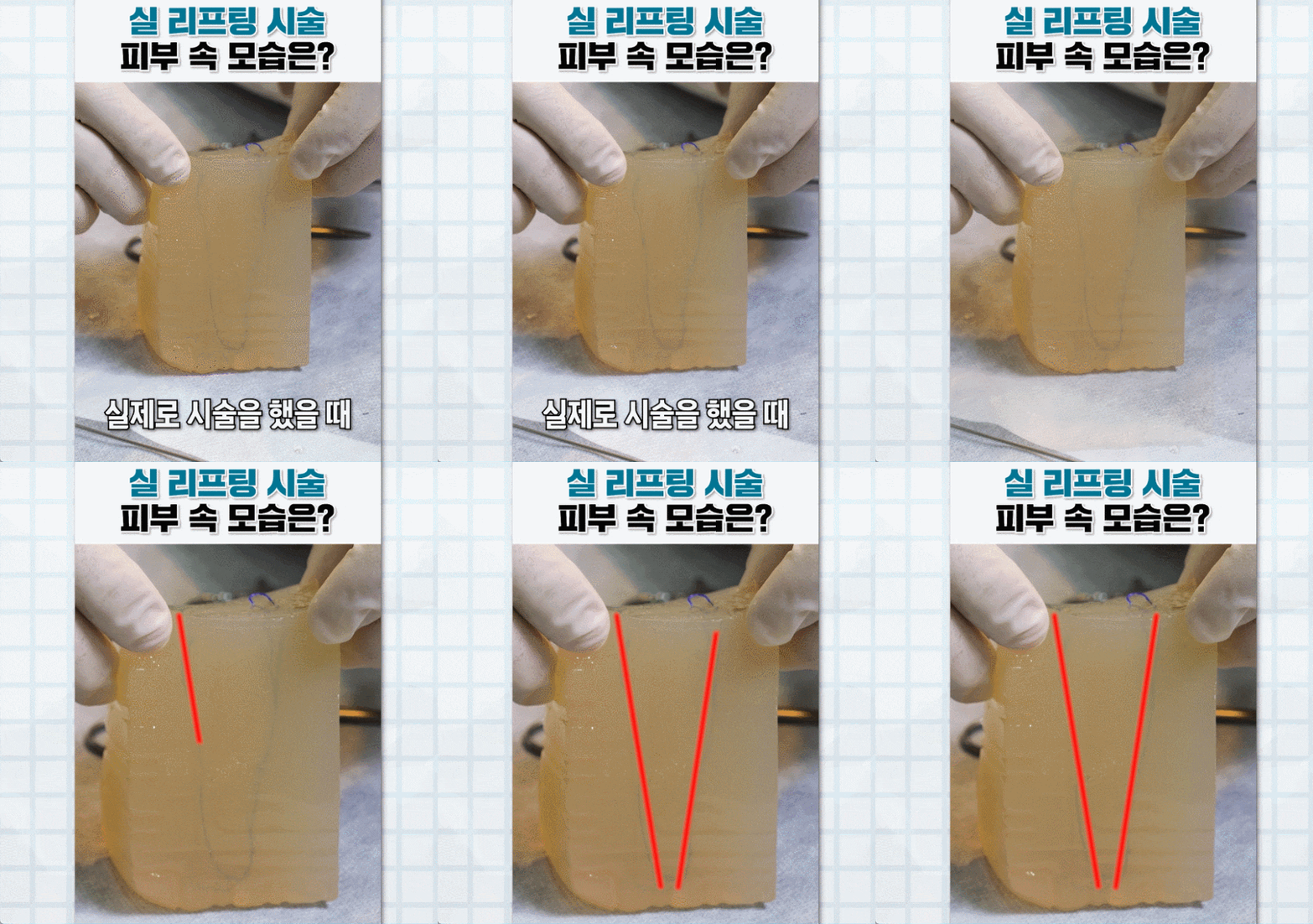
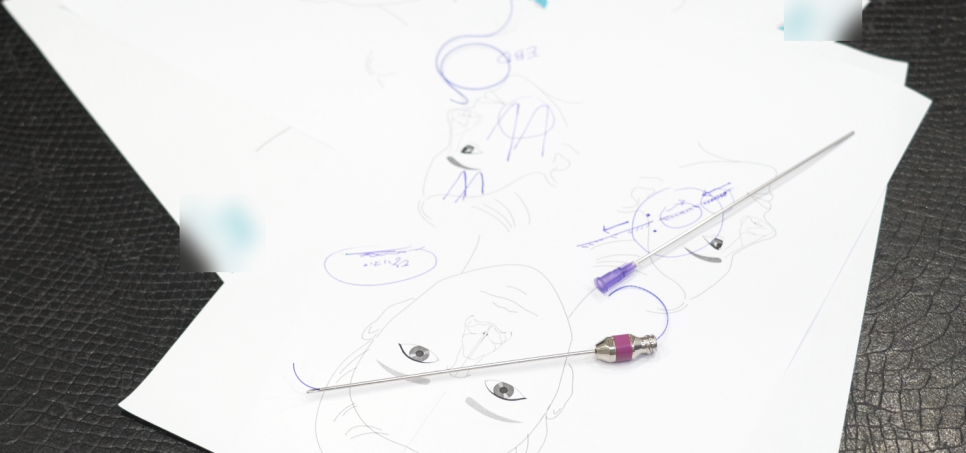
Thread lifting is a procedure in which special dissolvable threads are inserted under the skin to physically pull up and secure sagging tissue.
These threads naturally dissolve and disappear in the body over time, and in the process of dissolving, they also stimulate collagen production, helping restore skin elasticity.
In other words, it is a procedure that can provide a relatively immediate lifting effect, while also helping revive elasticity from within the skin over time.
The threads used for lifting have tiny protrusions called “cogs,” which grip the tissue firmly and help lift and hold it in place.
For this reason, the direction in which the threads are inserted and the depth at which they are placed greatly affect the result of the procedure.
In particular, marionette lines are located in the lower face rather than the center of the face, and are closely connected to the muscles around the mouth where facial expressions change frequently.
So if you simply pull upward without a proper plan, one corner of the mouth may seem to lift more than the other when smiling, or thread marks may become visible.
Thread lifting can certainly be an effective method for marionette lines.
However, to see such results, a careful diagnosis and precise design must come first.
To expect a natural and stable lifting effect, the type, number, and direction of the threads must be decided by considering the overall flow of the face, the balance between the corners of the mouth and the jawline, skin thickness, and the distribution of fat.
Precautions for Marionette Line Thread Lifting
Because thread lifting has the image of being a relatively simple procedure, many people approach it casually.
However, especially in the marionette line area, where facial expression changes are concentrated, the procedure method can make the expression look awkward or the impression stronger.
One of the side effects that requires the most caution is the phenomenon in which the cheekbones appear larger.
If the threads are pulled strongly in only one direction while focusing only on the marionette lines, the sagging tissue can shift upward and make the cheekbone area look swollen.
In such cases, it is not uncommon for the face to take on an unnatural and stiff impression instead.
So rather than focusing only on the goal of “lifting” and pulling in a single direction, it is necessary to distribute multiple threads appropriately.
When considering thread lifting, we recommend choosing a clinic that does not focus only on improving wrinkles or lifting the face,
but instead carefully diagnoses and designs the procedure while considering the face’s three-dimensional balance.
Also, the cheek area in particular can develop issues such as asymmetry, dimpling, or visible threads from even a small mistake.
Therefore, you must be sure to check whether the practitioner has sufficient anatomical knowledge and clinical experience.
Marionette lines are wrinkles that affect the overall impression of the face, not just unattractive lines on the skin.
Thread lifting may seem like a relatively simple way to address them without surgical procedures.
However, in reality, it is a high-difficulty procedure that requires delicate work in a sensitive area.
Therefore, if you are considering thread lifting, please be sure to carefully check the clinic’s systematic process and the experience and skill of the medical staff.
Thank you for reading this long post.
| This post was written for informational purposes in compliance with Article 56, Paragraphs 1–15 of the Medical Service Act. All treatments carry a risk of side effects and complications depending on the individual. Before treatment, please be sure to make a sufficient consultation with medical staff who have extensive experience before making your decision. |