As elasticity decreases, the jawline becomes less defined, and the skin texture starts to sag, you become newly aware of the years that have passed.
Of course, it is natural for changes to come with age, but advances in modern medicine make it possible to gradually slow the speed of aging.
The same applies to aging changes in the skin and face.
It can lift sagging skin and also improve skin elasticity, which tends to decline over time.
Among these options, the method that can deliver noticeable results relatively quickly without the process of surgical intervention is thread lifting.
Thread lifting is a procedure that inserts special medical threads into the skin layers to provide an immediate, physical lifting effect.
Among them, PDO threads are a type of medical thread also used as sutures in heart surgery, so their safety is to some extent established.
The threads inserted into the body gradually break down over time and are dissolved, absorbed, and disappear.
As they break down, they stimulate the surrounding tissue and actively promote collagen production.
Thanks to this, the lifted result can be maintained for some time even after the threads disappear.
Of course, because thread lifting acts directly on skin tissue, you must receive a thorough diagnosis and consultation before undergoing the procedure.
However, when performed properly, it is one of the procedures that can deliver both facial contour definition and improved skin elasticity.

PDO threads?
PDO threads are materials whose safety has been proven through clinical use over a relatively long period among the various threads used for thread lifting.
Threads made from the biocompatible substance polydioxanone (Polydioxanone) were originally medical sutures used in surgery.
When inserted into the human body, they have a low likelihood of immune reactions or side effects, and after a certain period they naturally break down, are absorbed, and are eliminated.
This is the reason why PDO material is used most often as a thread-lifting thread material.

When PDO threads are inserted into the skin, they do not only produce a simple physical lifting effect.
As fibroblasts are stimulated around the area where the thread is placed, collagen and elastin production is activated, and skin regeneration is promoted, creating a dual effect.
Because of this, even after the thread dissolves and disappears, the skin can remain firm for a certain period.
In addition, PDO threads break down in the body over about 6 months. During that time, the stimulated collagen effect often lasts for more than a year.
Because the power to restore elasticity begins from deep within the skin, you may actually feel a more natural lifting effect as time passes rather than immediately after the procedure.
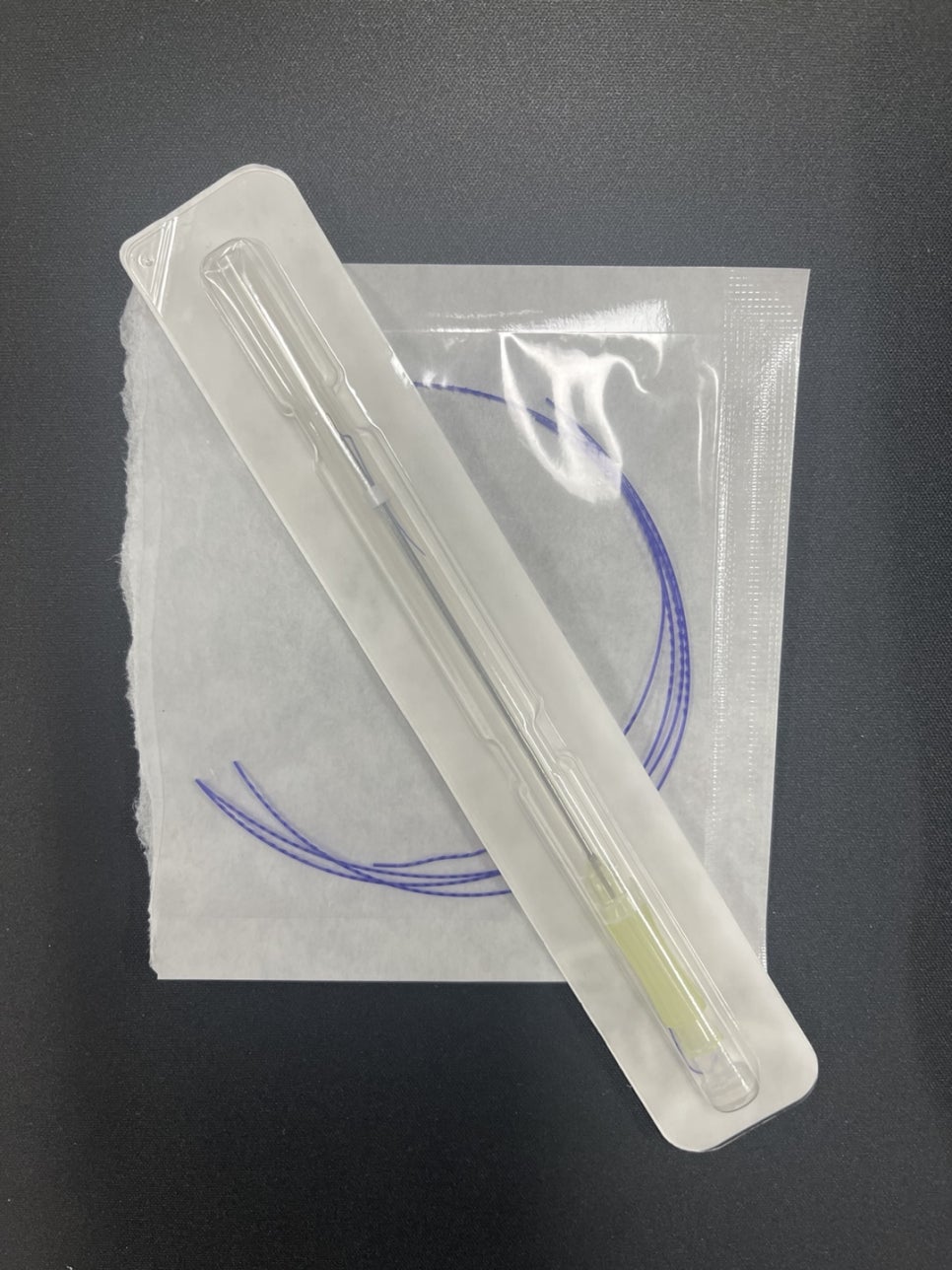
PDO thread types
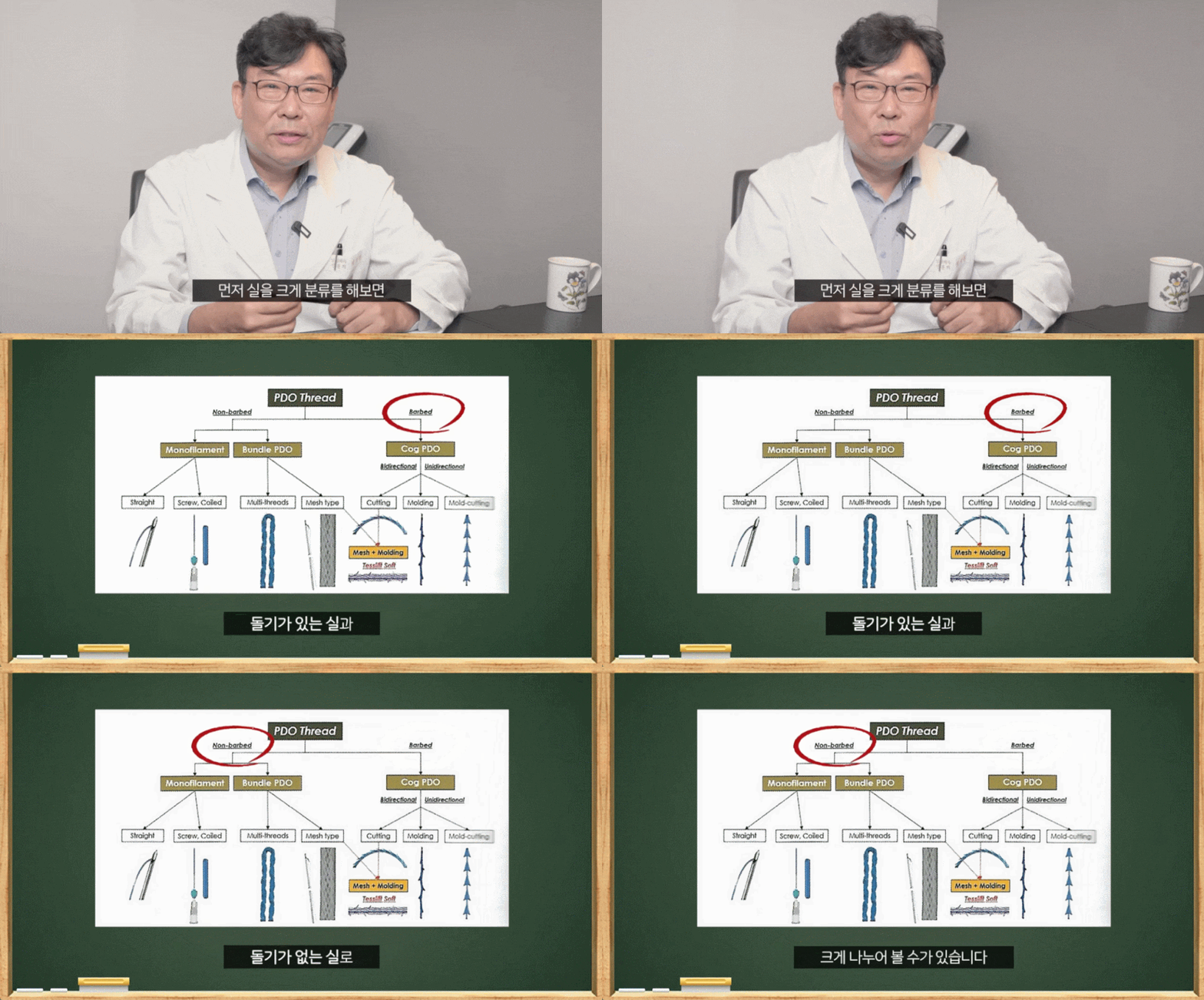
The most widely used types of PDO threads include cog threads and mono threads.
Each thread has a different shape and function, and is selected depending on the purpose and area of the procedure.
First, mono threads are smooth threads without barbs.
They have a smooth surface and are formed in a straight line without spikes or barbs.
These threads are thinner than a strand of hair and are inserted densely in multiple directions close to the superficial layers of the skin, rather than being aimed at "lifting" itself.
are the uses they are applied for.
In other words, they are used more for improving skin texture and tissue density than for lifting itself, and after the procedure the skin can feel firmer and brighter.
On the other hand, cog threads are currently the threads that represent "thread lifting."
They have a structure with very fine barbs protruding in a set direction on the surface of the thread.
These barbs firmly anchor and support the skin tissue, creating a strong lifting effect that physically raises the skin.
Cog threads are mainly used in areas with noticeable sagging, such as the nasolabial folds, jawline, jowls, and the area around the sagging cheekbones, and even immediately after the procedure, the pulling sensation is clearly noticeable.
For this reason, cog threads are often recommended for those who want relatively immediate changes.
In this way, the two types of threads each have distinct roles.
Because of that, they are sometimes used in combination depending on the treatment area, and sometimes only one type is used.
Today, there are many alternatives to mono threads, so when people say "thread lifting," they usually mean a procedure that pulls the skin tissue with cog threads.
PDO thread lifting precautions
Many people think of thread lifting as a "simple procedure."
However, thread lifting is a procedure that must take the entire facial structure into account.
In particular, the placement, depth, and direction of the threads can affect the outcome significantly even with small differences, so before the procedure the face must be sufficiently assessed and a more detailed consultation conducted.
Every person's face is different.
Moreover, even within the same face, the skin thickness, fat distribution, and degree of sagging can differ by area, so there are many factors to consider.
Based on a comprehensive judgment of these factors, the direction and position in which the threads are inserted, as well as the tension used to pull the threads, must be adjusted accordingly.
As such, thread lifting should be performed only after carefully diagnosing the current condition of the skin and having a thorough consultation about the desired result.
No matter how good the thread is, if the procedure is not tailored to your face, the effect may not appear properly or problems may occur, so special caution is needed.
Therefore, before undergoing thread lifting, we strongly recommend receiving sufficient consultation at a place with abundant understanding and experience in thread lifting, and then proceeding.
Thank you for reading this long post.
| This post was written for informational purposes in compliance with Article 56, Paragraphs 1 to 15 of the Medical Service Act. All treatments carry a risk of side effects and complications depending on the individual. Before treatment, be sure to make your decision only after having sufficient consultation with medical staff who have extensive experience. |