When nasolabial folds appear, they affect the overall impression of the face.
The area around the mouth sags, making the expression look darker, and can even give a negative impression even when the face is at rest.
As we age and the skin loses elasticity, the fat in the cheek area sags downward, creating wrinkles, and when the muscles around the mouth are repeatedly used, the wrinkles do not easily smooth out.
Therefore, rather than simply caring for the surface of the skin to erase nasolabial folds, a fundamental improvement is possible only when the approach also considers the position of fat, the action of muscles, and the thickness of the skin.
In particular, when sagging in the midface is the cause of nasolabial folds, lifting the sagging tissue itself is effective in improving deep nasolabial folds.
Silifting can help improve nasolabial folds because it can lift the volume of the midface upward without a surgical procedure.
 Why Silifting Is
Effective for Nasolabial Folds
Why Silifting Is
Effective for Nasolabial Folds
Silifting is a procedure that inserts special medical threads under the skin to pull sagging skin upward.
Compared with other procedures, you can feel a relatively immediate lifting effect, and the recovery period after the procedure is short, so it can be done with relatively little burden even in a busy daily life.
When silifting is applied to nasolabial folds, it has the advantage of lifting the skin itself upward while also correcting the midface volume that has lost support.
However, nasolabial folds are not something that can be completely improved simply by placing threads and pulling.
Because the face moves frequently and the facial muscles are intricately interconnected, the direction, depth, and placement of the threads must all be precise to expect good results.
If pulled too strongly, natural facial expressions may be disrupted or a sunken area may appear in the skin, and if pulled too loosely, it may be difficult to achieve the desired result.
Although the procedure is short and relatively low in burden, problems can arise if it is performed indiscriminately without a deep understanding of facial anatomy, so extra caution is needed.
Why Does Dimpling
Occur After Silifting for Nasolabial Folds?
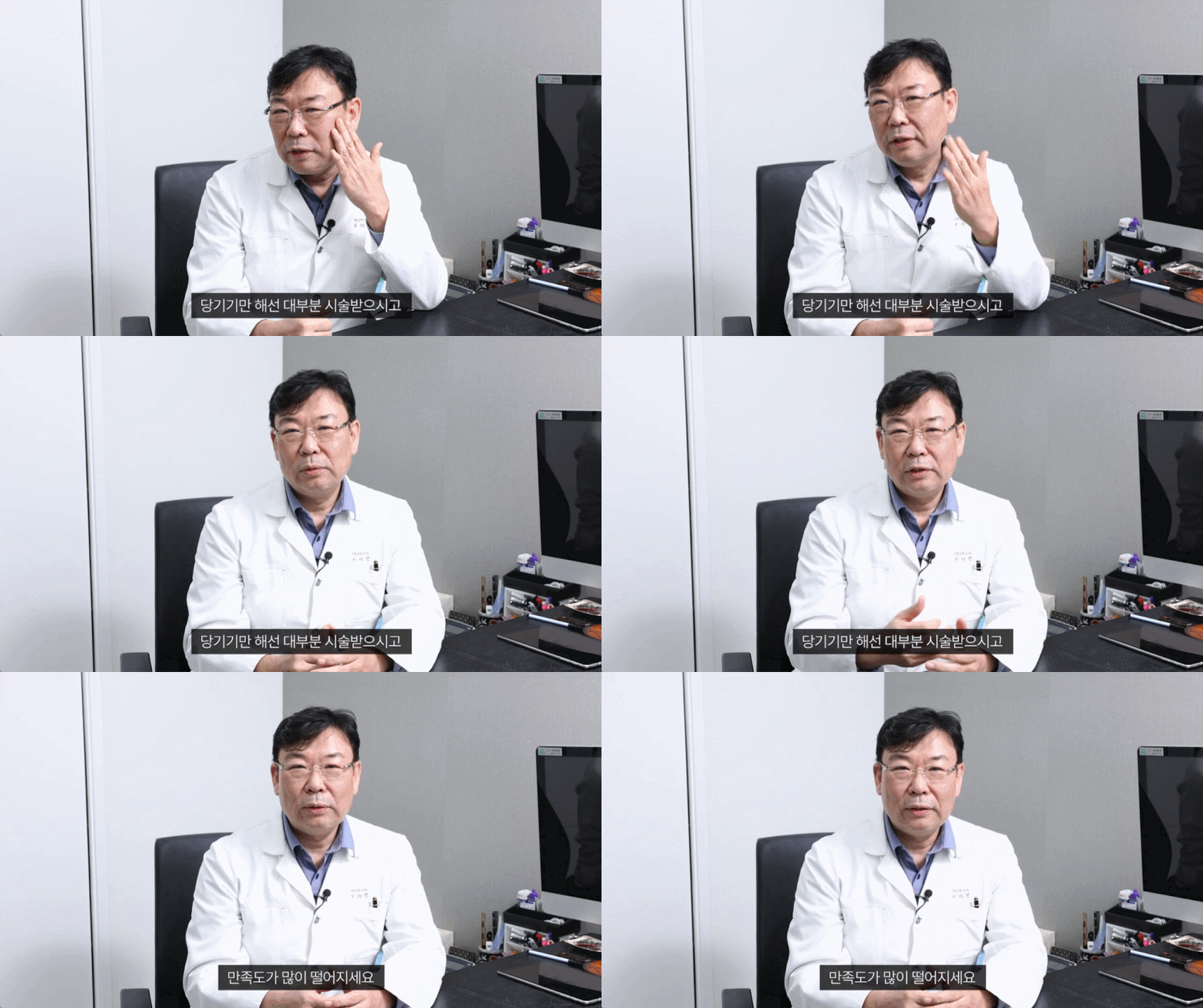
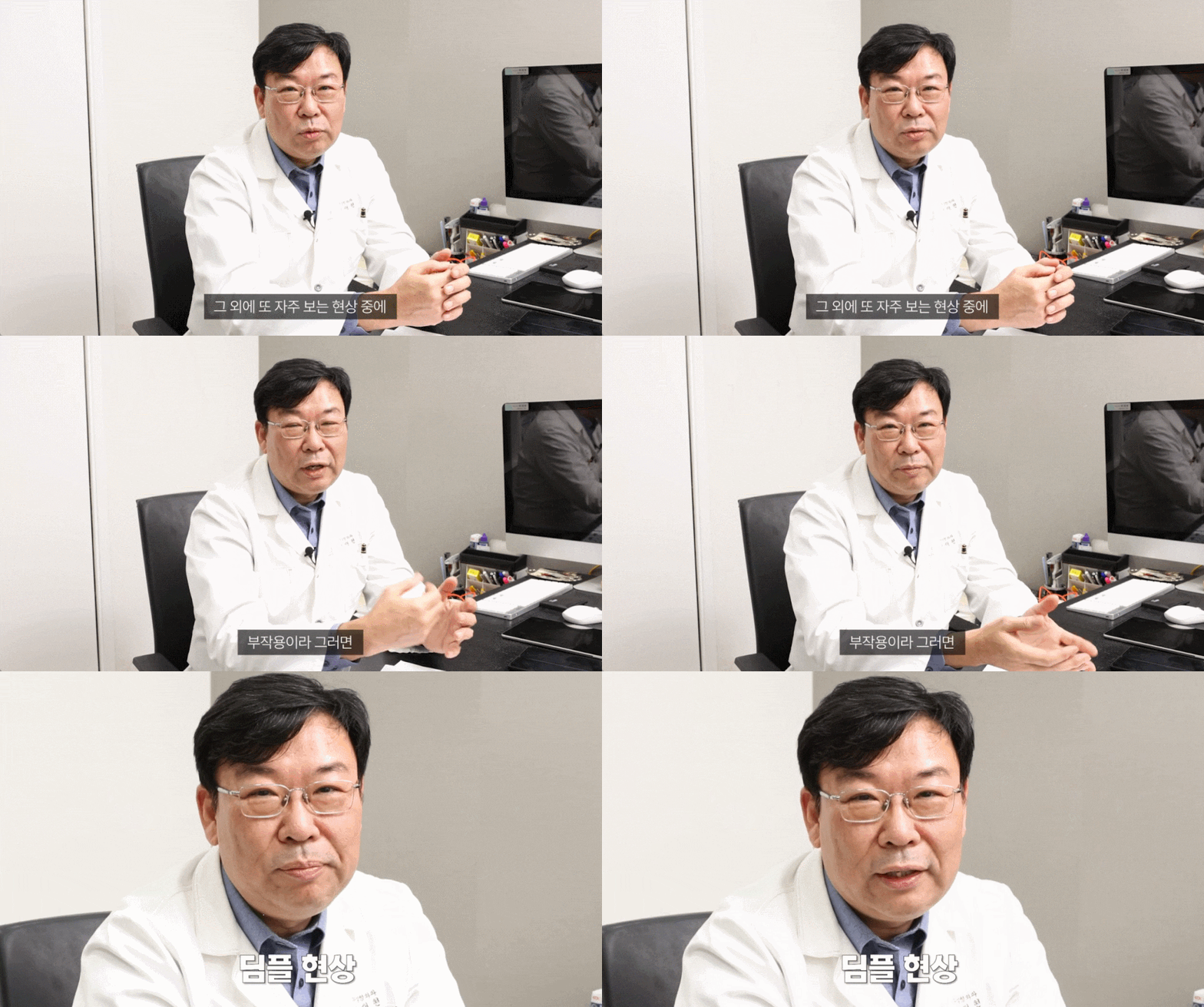
One of the representative side effects experienced by many people who undergo silifting for nasolabial folds is dimpling.
This area, commonly called a "dimple," is the intersection around the mouth where the muscles and fat layer are thin and movement is frequent.
If the thread is placed incorrectly in this area, unnatural indentations may form, or the expression may become asymmetrically stiff when smiling.
Even a slight misalignment in the placement of the thread can completely change the impression, so if a clinician with insufficient experience performs the procedure, problems such as dimpling can occur, requiring special caution.
Fortunately, dimpling is one of the side effects that gradually disappears as the thread dissolves over time.
If the indentation is too deep or does not go away over time, follow-up treatment may be necessary.
How Can Better Results Be Achieved
with Silifting for Nasolabial Folds?
To improve nasolabial folds, the procedure should be carried out while looking at the overall anatomical structure of the face, including sagging cheeks, prominent cheekbones, and a weakened jawline.
In particular, silifting must be performed delicately by thoroughly calculating in which direction and with how much force the lift should be applied.
If the procedure is done by simply pulling in one direction without care, the facial expression may become unnatural, or excessive force may concentrate in one area, making that area look larger or making the entire face look broader.
Also, because the supporting force for the skin tissue is insufficient, the result may not last long.
Therefore, if you are considering silifting for nasolabial folds, please be sure to receive enough consultation from a clinician with extensive experience in the procedure and the ability to precisely analyze the facial anatomy before proceeding.
 Nasolabial folds are connected to structural issues of the entire face, such as sagging cheeks, movement of midface volume, and imbalance in the jawline.
Because of this, it becomes difficult to achieve the desired result if approached in a fragmentary way.
Silifting is an effective procedure for improving nasolabial folds by pulling the skin tissue.
However, because it acts directly on the face, careful attention and technical skill from the clinician are required.
In addition, the procedure must be carried out in a way that properly preserves each patient's unique facial characteristics in order to achieve the desired result naturally.
If the procedure is performed carelessly without this caution, side effects such as skin dimpling or enlarged cheekbones may occur, so please be especially careful.
Therefore, if you are considering silifting to improve nasolabial folds that deepen over time,
please receive sufficient consultation from a clinician who fully understands the anatomical characteristics of the area and has extensive experience with various procedures before proceeding.
Thank you for reading this long post.
| This post was written for informational purposes in compliance with Article 56, Paragraphs 1 to 15 of the Medical Service Act. All treatments carry the risk of side effects and complications depending on the individual. Before treatment, be sure to make a decision after sufficient consultation with a clinician who has extensive experience. |