The information about thread lifting that people most often come across is that it is a procedure that lifts sagging facial features, or that it is a simple non-surgical lifting treatment.
However, if you keep searching a little longer, you will quickly learn about side effects such as hollowed cheeks, dimples, visible threads, and more prominent cheekbones.
On one hand, this raises expectations for the effects of thread lifting, but at the same time, it also makes people worry, "What if I get side effects too?"
Thread lifting is relatively short in procedure time, and the burden of recovery is also lighter compared to surgery.
In addition, because it is a procedure that physically pulls the skin tissue, the results tend to appear more quickly than with laser procedures or collagen boosters.
However, that also means that the fine anatomical structures inside the face must be well understood for the results to look natural.
Although it is one of the procedures used to restore a noticeably sagging facial line, if the changes that may occur during the process are not sufficiently predicted, designed, and then performed delicately,
you may end up with an awkward and unfamiliar result rather than the lifting effect you expected.
In particular, hollowed cheeks and dimples are among the side effects most often mentioned in relation to thread lifting.
This is also an issue that can be reduced only when the procedure is approached carefully by understanding thread lifting and individually diagnosing and analyzing the patient's skin condition.
The same lifting approach cannot be applied to everyone.
Because facial shape, skin thickness, and the distribution of the fat layer all differ, the type, direction, and depth of the threads must be precisely designed to match each person's face.
Only then can a natural and harmonious result be expected without unexpected hollowed cheeks or dimples.
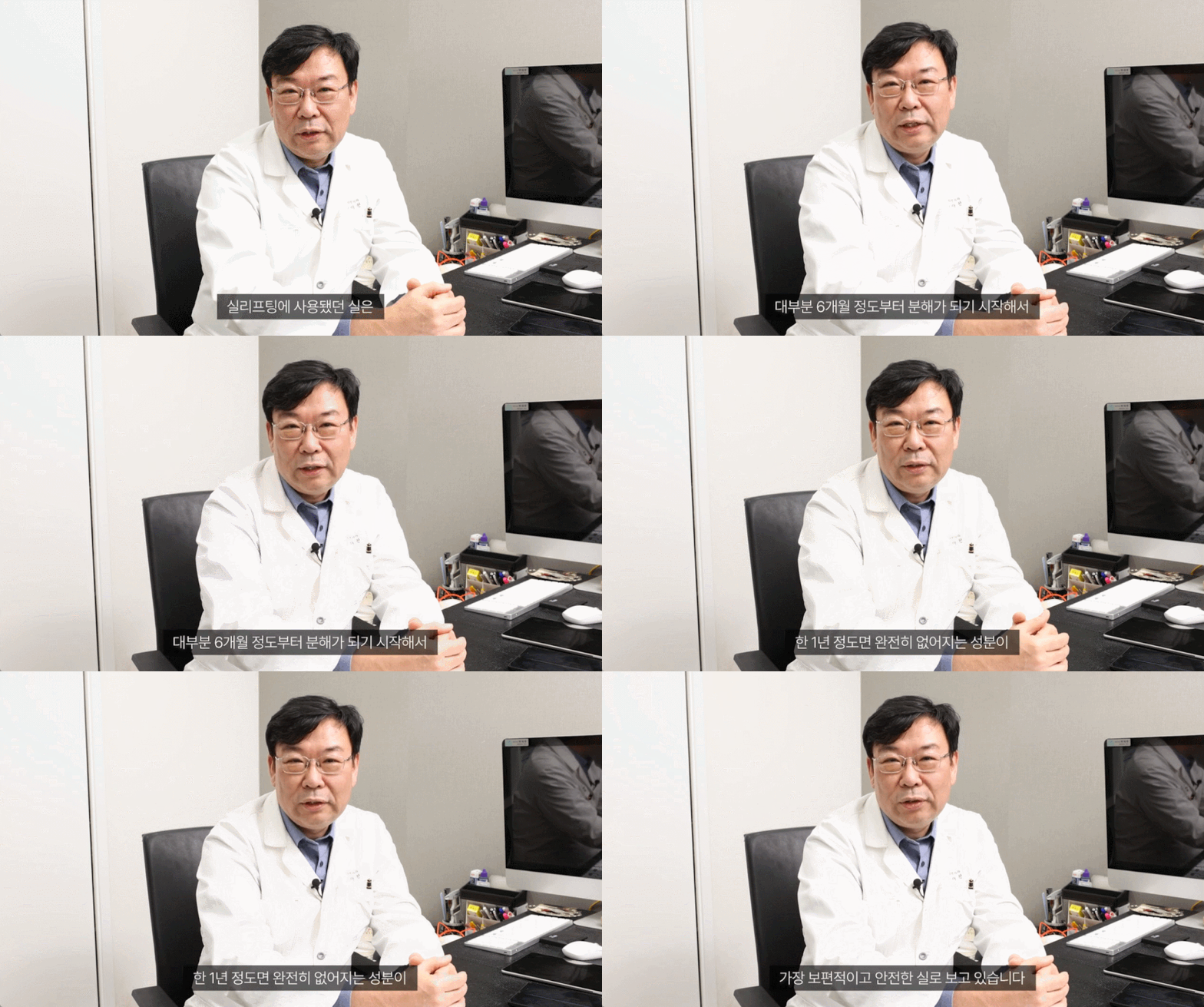
What is thread lifting?
Thread lifting is a procedure that places special threads under the skin to pull sagging tissue upward.
As people age, the cheeks and the area around the jawline tend to sag downward.
One way to correct this without an incision is thread lifting.
The threads are placed in a specific layer inside the skin and play a role in lifting the facial line while pulling in a certain direction.
The threads used in this procedure are mostly dissolvable materials, which are absorbed by the body after a certain period of time.
During that process, collagen production that helps improve skin elasticity also takes place, so along with the immediate lifting effect, there can also be positive expectations in terms of skin texture and density.
The main effects of thread lifting are improvement of sagging cheeks, refinement of a collapsed jawline, and softening of nasolabial folds.
It is suitable for people who want to refine the facial line without making it look too obvious, or for those who want a lifting effect but feel 부담 about surgery.
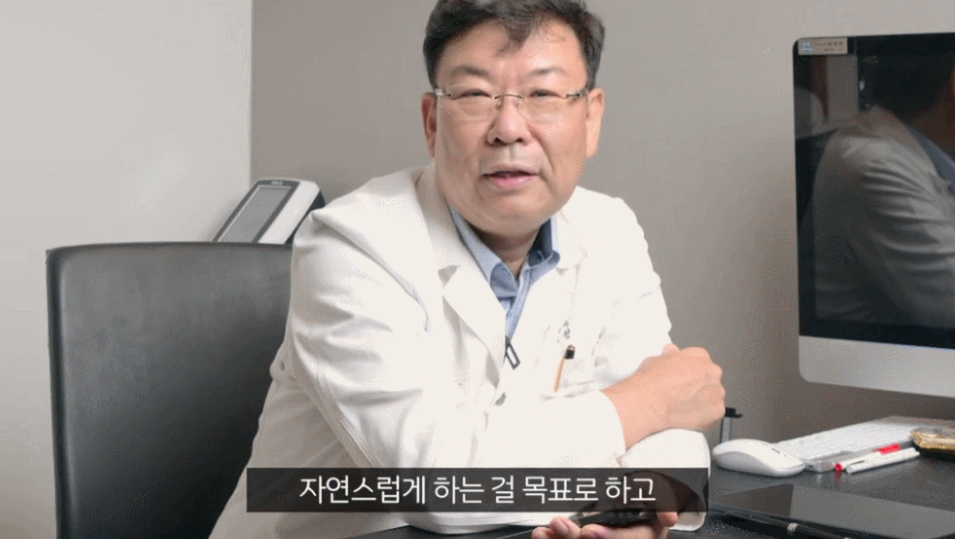
Why do dimples occur after thread lifting?
A "dimple" after thread lifting, which appears as a sunken mark, is a reaction that occurs when the flesh is pulled inward at the spot where the thread passes.
In particular, in people with thin cheek volume or in structurally sensitive areas such as below the cheekbones, such marks can remain if the thread is placed too tightly.
Before the procedure, if the clinician determines in advance whether the treatment area is a structure where dimples are likely to form, and adjusts the thread position or direction accordingly, the occurrence of dimples can be reduced.
Also, dimples may naturally become less noticeable over time.
As the threads that were firmly fixed gradually loosen and dissolve over time, the flesh can recover to its original state.
However, if necessary, volume can also be supplemented with fillers, for example.
That said, this possibility should be explained sufficiently before the procedure, and when performing the procedure, the medical staff must proceed delicately and carefully.
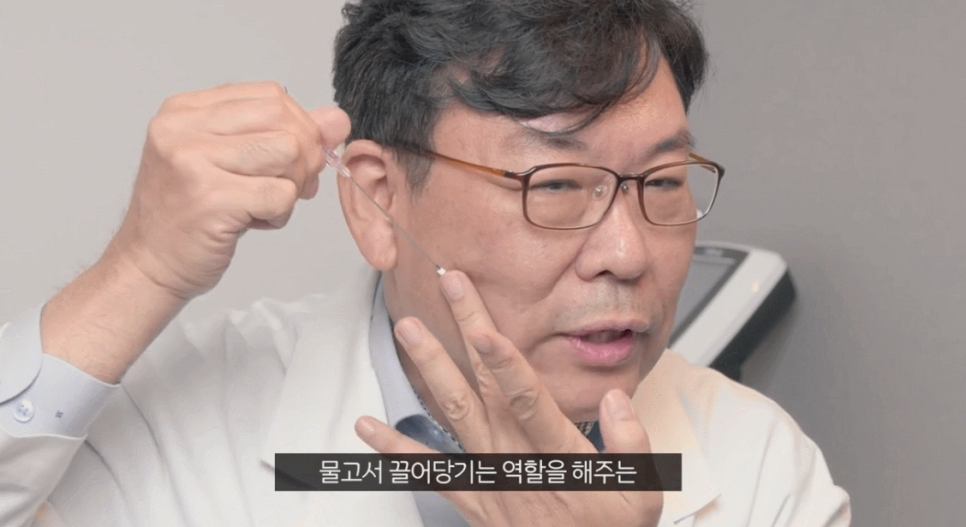
Thread lifting hollowed cheeks
Are there any other side effects?
The most representative side effects of thread lifting, besides dimples, include visible threads, rippling, and the appearance of more prominent cheekbones.
Among these, the phenomenon of cheekbones appearing larger may occur because the facial line changes and the cheekbone area appears more emphasized relatively, or when the lifting procedure is performed in one direction, the force gathers in one place (toward the cheekbones), making the face look wider.
Before the procedure, these points should be considered so that the thread direction does not cross the cheekbones, or so that it is adjusted not to pull too far upward.
From the design stage itself, these points must be kept in mind during the procedure.
In particular, if single threads are placed in the same direction, the force concentrates in one area, which can make that area stand out more.
Therefore, when performing thread lifting, the force on the threads should be distributed so that the lift appears more natural.
Visible threads and rippling can occur especially in people with thin skin and significantly reduced elasticity.
These can also be prevented by checking carefully before the procedure and adjusting the depth and direction of the threads.
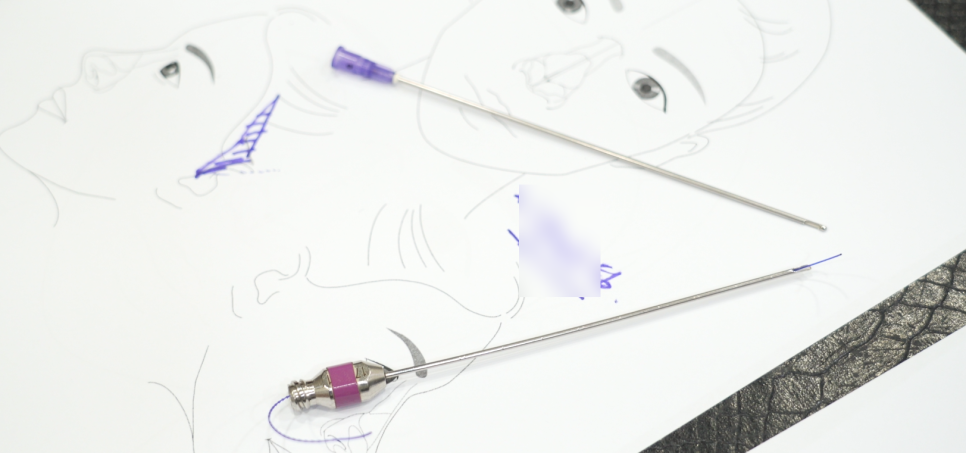
Thread lifting is not a procedure that is unconditionally dangerous or full of side effects.
However, since it is a method of physically pulling tissue by placing threads into the face, more delicate work is required.
Therefore, when considering the procedure, we strongly recommend that you receive a thorough diagnosis and consultation from a medical professional who has abundant clinical experience with this procedure and who carefully evaluates each case before making a decision.
Thank you for reading this long post.
| This post was written for informational purposes in compliance with Article 56, Paragraph 1 through Paragraph 15 of the Medical Service Act. All treatments carry a risk of side effects and complications depending on the individual. Please make sure to have a thorough consultation with a medical professional who has extensive experience before deciding on treatment. |