The buccal fat pad is a fat layer located deep below the cheekbones, and it is an important structure that determines the three-dimensional look and contour of the center of the face.
However, as we age, this tissue gradually shifts downward.
The fibrous tissue that supports the skin becomes loose, and the fat layer moves under the influence of gravity, causing the midface to sag.
During this process, the cheek volume is pushed downward and droops toward the mouth corners, which can deepen nasolabial folds and also create marionette lines.
It can also give a negative impression, such as making the expression look sullen because of the sagging cheek volume.
To address these problems, the sagging skin needs to be physically lifted.
Thread lifting is a procedure that inserts special threads under the skin to pull up the tissue.
Because this method aims to physically return the sagging volume of the midface to where it originally should be, it is one of the good ways to improve cheek sagging.

Thread lifting
How can cheek sagging be improved?
Thread lifting works by inserting special medical threads into a specific layer beneath the skin to lift and support sagging areas.
Because the threads provide physical support from within, the downward-dragged facial contour becomes more defined.
The threads used at this time are so-called dissolvable threads, which gradually dissolve and disappear over time.
As they dissolve and disappear, the threads inserted under the skin stimulate the surrounding tissue.
The stimulated skin tissue then produces collagen, which can help restore skin elasticity.
There are several types of threads used in thread lifting, depending on the material.
Commonly used materials include PDO, PLLA, and PCL.
Because each has different pulling strength, duration, and intensity of stimulation on the skin, the thread is selected and used according to the current skin condition and the purpose of the procedure.
For example, the procedure should be planned after comprehensively assessing whether the skin is thin or thick, whether there is a lot or little cheek volume, and how much the cheek volume has sagged.
Therefore, if you want to resolve cheek sagging with thread lifting, I urge you to receive a thorough diagnosis and sufficient consultation before making a decision from medical staff who understand facial anatomy and have extensive clinical experience.
 Thread lifting before the procedure
Please be sure to check!
Thread lifting before the procedure
Please be sure to check!
Cheek thread lifting is located at the very center of the face, involves a lot of movement, and is a delicate area.
Therefore, before choosing a clinic, you must check the following three points.
- The medical staff’s understanding of anatomy
To perform an appropriate procedure for the cheek area, they must be able to read the facial soft tissue and muscle structure, as well as the flow of the fat layer.
Rather than simply explaining the number or type of threads, they should properly analyze your current face and perform the procedure based on a suitable plan.
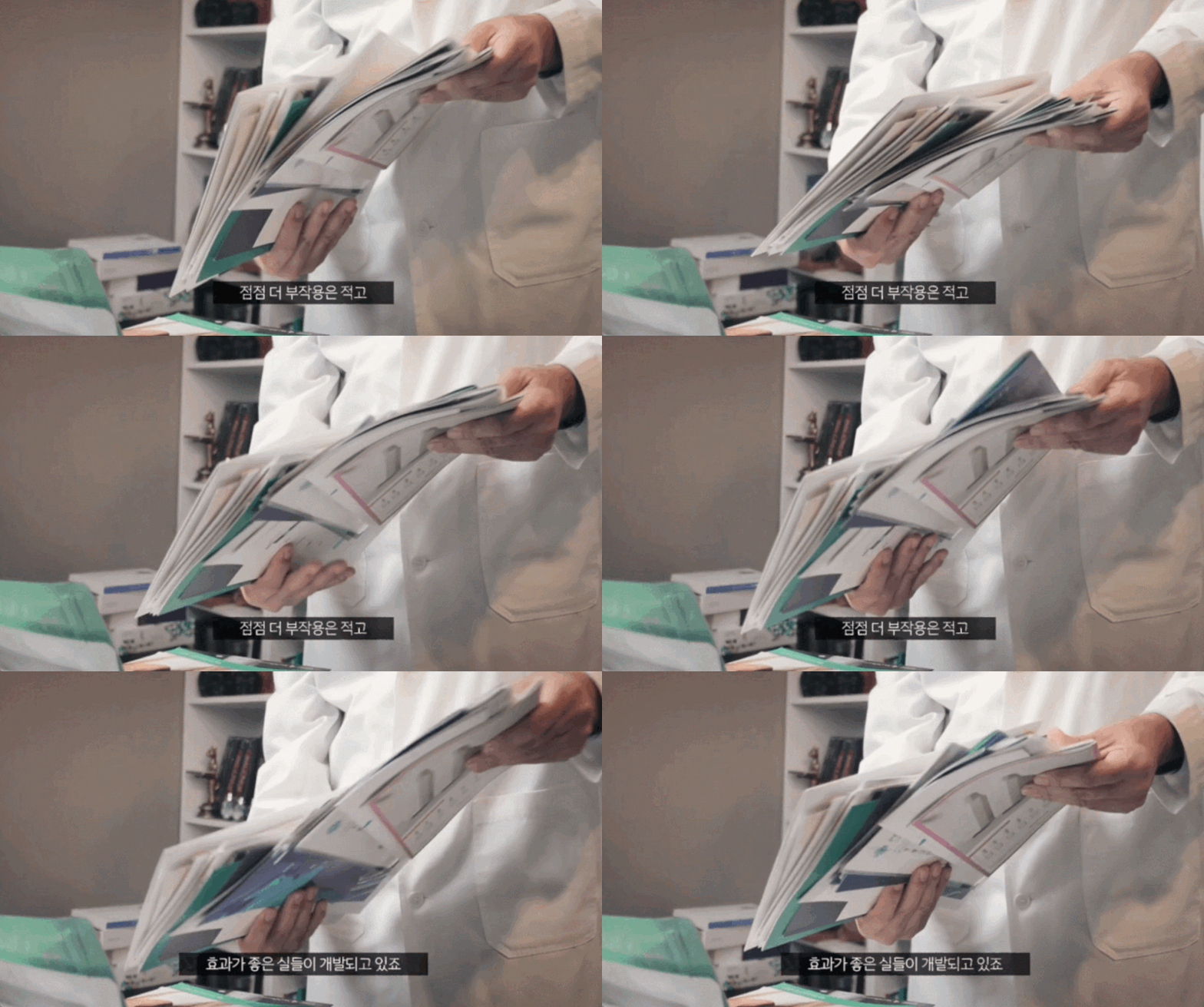
- Precision of diagnosis and consultation
Thread lifting is a procedure that directly changes our face.
Therefore, rather than simply looking in the mirror and saying, "It’s sagging here," there must be accurate explanations and a well-founded diagnosis regarding how the threads will be inserted, how far they will be pulled, and how symmetry will be matched.

- The skill of the practitioner
The face is not made up of a simple structure that can be handled by calculation alone, like numbers or formulas.
Even if the same thread is inserted in the same place, the outcome can vary greatly depending on the medical staff’s sense and skill.
Which direction the thread is inserted, how deeply it is placed, and how much force is used to pull it in which direction all depend entirely on the practitioner’s hands.
Therefore, if you are considering thread lifting, you should carefully examine how deeply the medical staff understands your face and how precisely they can perform the procedure.
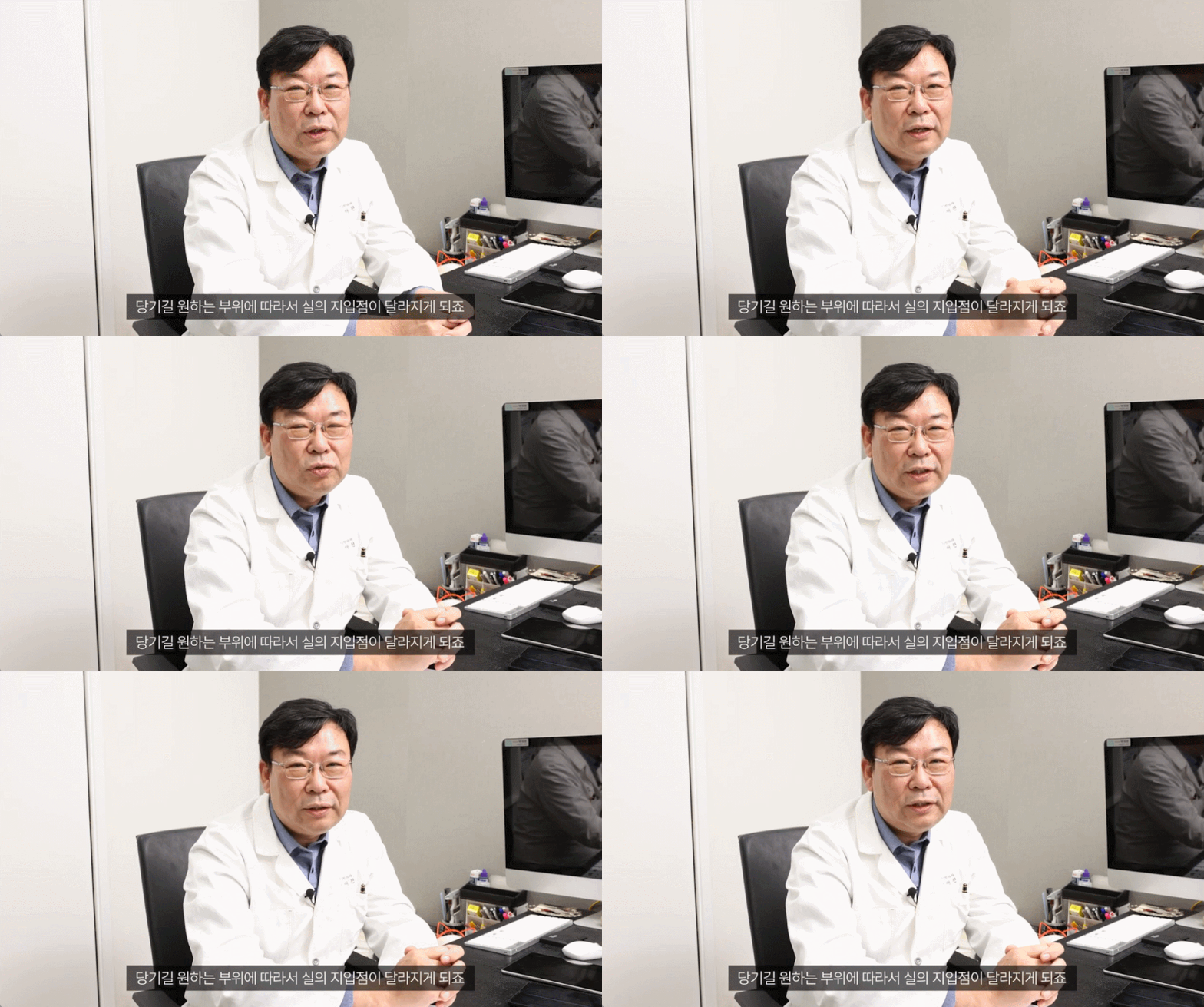
Sagging of the cheek area is a sign that the overall support of the midface has weakened.
Thread lifting is one way to address this problem.
What matters is not simply inserting threads and pulling them tight, but receiving treatment at a place that provides a careful one-on-one diagnosis tailored to your face and proper consultation.
Rather than choosing a place that only talks about the type and number of threads, I urge you to choose medical staff who analyze the structure of your face and the cause of the sagging, then plan the procedure precisely before carrying it out.
Thank you for reading this long post.
| This post was written for informational purposes in compliance with Article 56, Paragraphs 1 to 15 of the Medical Service Act. All treatments carry a risk of side effects and complications depending on the individual. Before treatment, please be sure to have sufficient consultation with experienced medical staff before making a decision. |