Swelling occurs in almost everyone after thread lifting.
For a patient, noticing some change in the face can be a moment where anticipation and tension are mixed together.
However, when the face looks more swollen than expected immediately after the procedure, unnecessary worry can set in.
"My face looks wider."
"Will this all go down?"
"Did something go wrong?"
In particular, thread lifting is a non-incisional lifting method that shapes the face without making cuts, so many people expect recovery to be relatively quick, which can make them even more anxious.
This swelling is mostly a normal reaction.
Thread lifting is not a procedure that simply touches the skin surface; it lifts by pulling up the tissues beneath the skin.
As the thread is inserted into the skin, tiny bleeding occurs, and an inflammatory response appears at that site to help the body recover.
This inflammatory response causes swelling.
Therefore, swelling can be seen as part of the treatment and a stage of recovery.
Of course, the degree and duration of swelling vary from person to person, and they can also differ depending on the treatment area and skin condition.
So, is it okay to simply leave the swelling alone?
Or is there a way to make it go down faster?
Today, I’ll talk about swelling after thread lifting.

After thread lifting
Why does swelling occur?
Thread lifting is a lifting procedure that inserts special medical threads into the soft tissue beneath the skin and pulls it upward.
When these threads are inserted, the skin layers receive microscopic stimulation, capillaries may be damaged, and tissue rearrangement takes place.
At this time, swelling naturally accompanies the process.
The first 48 hours after insertion are when the tissue reacts most sensitively,
and swelling may peak during this period.
Areas with thin skin or many capillaries are more likely to swell, and bruising may also occur.
In most cases, this swelling subsides within 3 days to 1 week.
Of course, even after that, you may still feel some tightness or pulling in the face.
Since the threads are settling in and reacting within the skin, there is no need to worry excessively.
However, if the swelling gradually worsens, if pain is accompanied by abnormal skin color, or if bruising lasts longer than 2 weeks, you must return to the clinic and receive a medical examination.

After thread lifting
How to reduce swelling
Rather than simply waiting for the swelling to go down on its own, you can make it subside more quickly through a few management steps.
First, it is best to avoid movements that 크게 move the facial muscles.
Chewing hard foods for a long time, opening your mouth wide while speaking, and even smiling can put stress on the treated area.
If the insertion site moves because of these expressions, the swelling may last longer, so please be careful.
You should also be cautious about the habit of lying on only one side and sleeping with your face buried in a pillow.
This is because pressure can cause the threads to shift or stretch, leaving swelling on only one side.
When washing your face, it is also better to gently cleanse using lukewarm water.
You should avoid saunas, steam rooms, and intense exercise for at least 2 weeks, as they can raise body heat.
Once the threads have settled to some extent, combining the procedure with treatments such as LDM or regenerative care, which help reduce swelling, can not only help the swelling go down but also support improved elasticity.
However, such treatments should only be performed after consultation with medical staff.
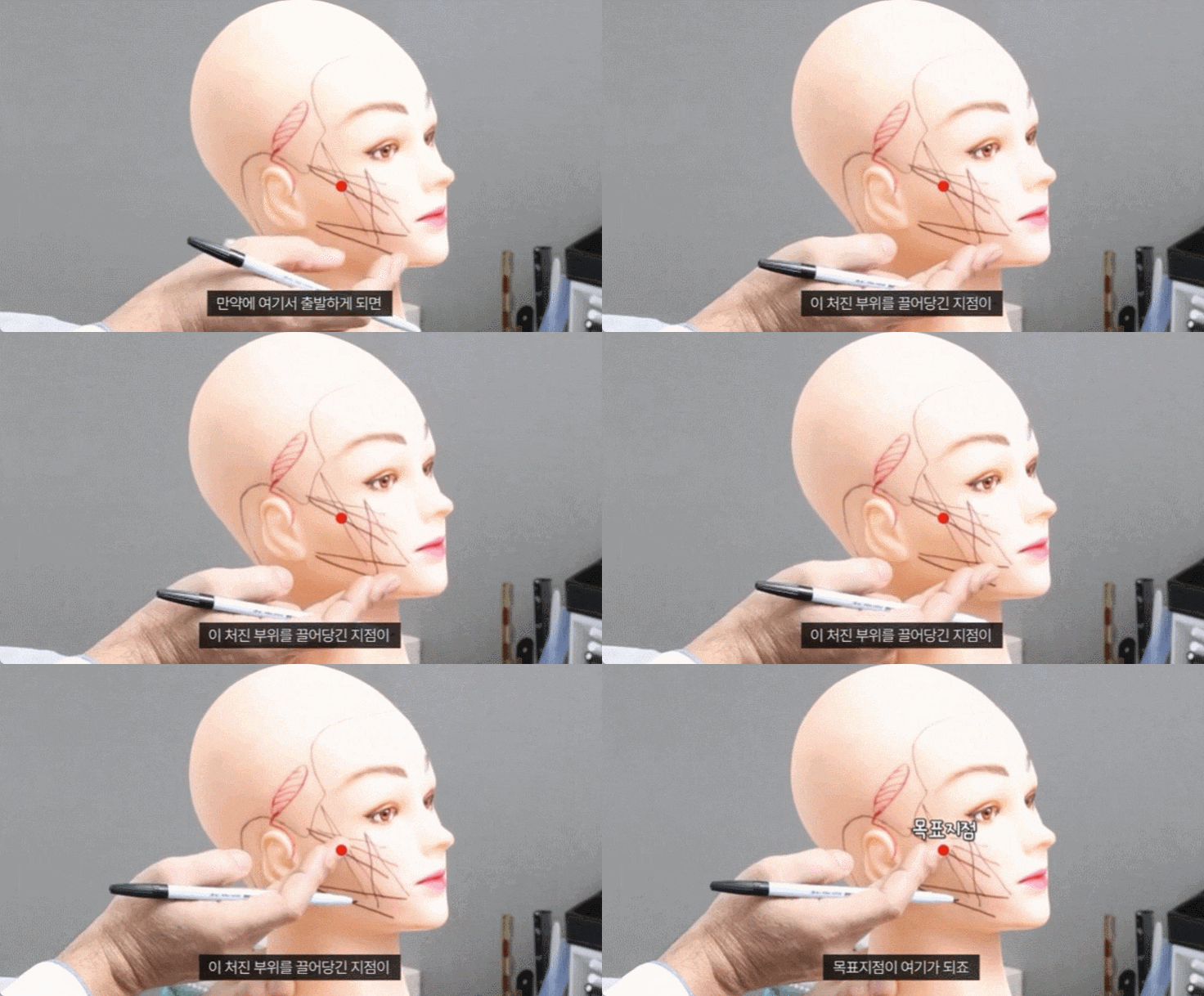 Many people think that once the swelling and bruising disappear after thread lifting, everything is over.
But what really matters is how you manage the area afterward.
That is because, after the swelling subsides, the threads begin to actively stimulate collagen production and strengthen the tissue inside the skin.
How this period is managed determines how long the lifting effect lasts and how natural it looks.
Therefore, after thread lifting, please make sure to consistently care for your skin in daily life, including sun protection, hydration, and correcting habits that involve excessive facial expressions.
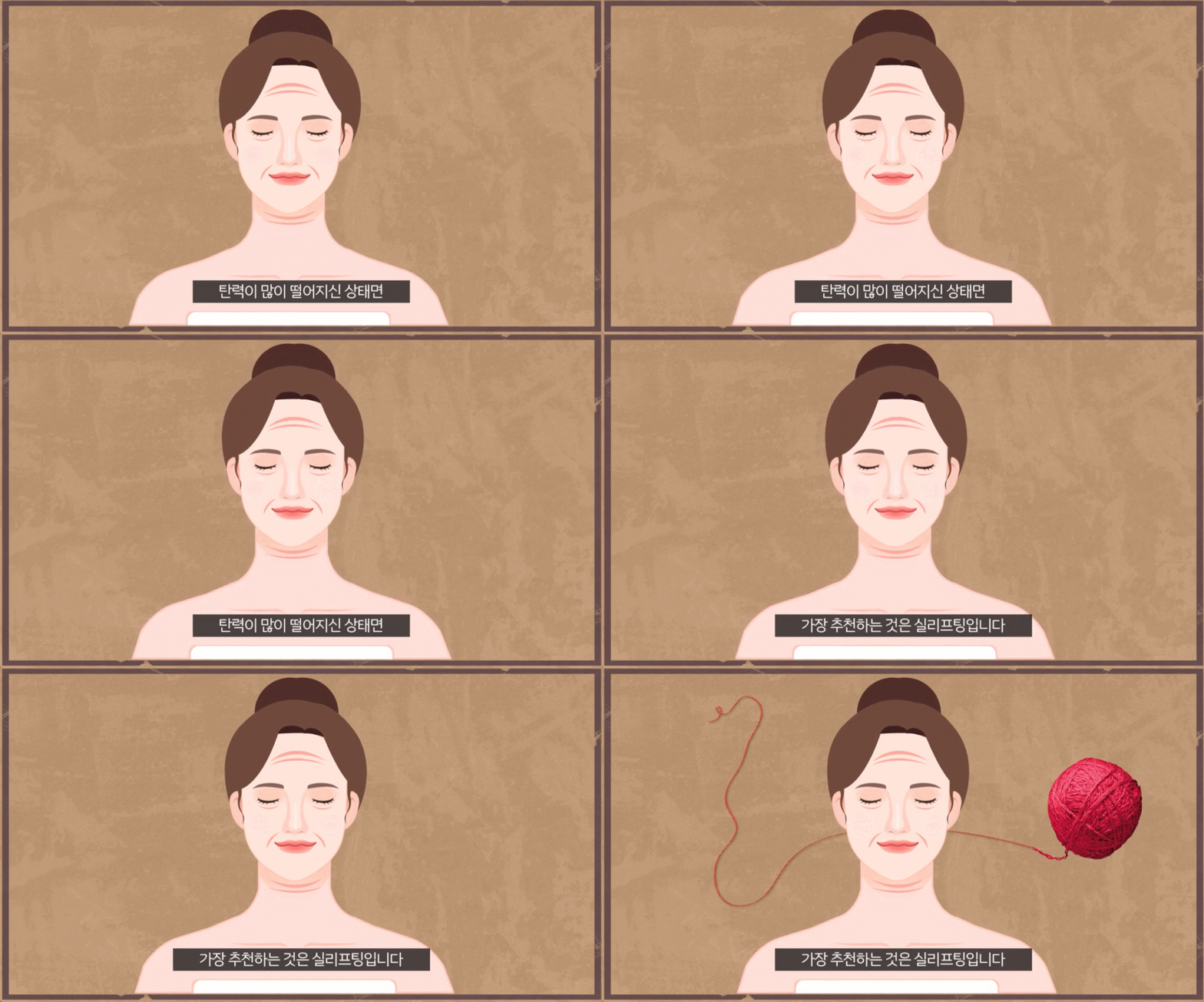
Today, I talked about swelling after thread lifting.
Swelling after the procedure is an indirect indicator of how the threads are settling into the skin.
If the swelling goes down too quickly, it may suggest that the threads did not properly hold the tissue,
while swelling that lasts too long may indicate an excessive reaction or a strong tissue response.
In other words, carefully observing the swelling and how long it lasts can also be an important clue for assessing the stability of the procedure’s effect and predicting future results.
Therefore, if you are considering thread lifting, be sure to choose a clinic that has extensive experience with lifting procedures,
and one that not only explains these facial changes well but also has a system in place to manage aftercare together.
Thank you for reading this long post.
[Criteria for Judging a Place That Does Thread Lifting Well?!]
| This post was written for informational purposes in compliance with Article 56, Paragraphs 1–15 of the Medical Service Act. All treatments carry the risk of side effects and complications depending on the individual. Before treatment, be sure to make a sufficiently thorough consultation with medical staff who have extensive experience and then make your decision. |