Many people who visit a plastic surgery clinic tend to think, “Thread lifting is a simple procedure, so it should be fine to get it done anywhere.”
There are also many cases where people decide on a procedure simply because the price is low or because the clinic is close to home or work.
However, thread lifting is not that simple a procedure.
It requires anatomical understanding and skilled technique, and without them, the result may not only look unnatural, but side effects such as skin irregularities, nerve damage, and inflammation can also occur.
Because one incorrect thread lift is not easy to reverse, I want to emphasize that this is not a procedure that should be chosen lightly.
Today, for those who are planning a procedure because of sagging in the midface area, I’d like to share a few helpful pieces of information.
If you are looking for a plastic surgery clinic for thread lifting, please read to the end.

Changes Caused by Midface Sagging
As we age, one of the first areas to change on the face is the midface.
It is easiest to understand the midface as the area extending from the cheekbones to the corners of the mouth.
When this area loses elasticity and sags, the cheeks droop downward, deepening the nasolabial folds and making the face look tired or older.
In addition, as the center of the face drops downward, the overall facial contour can appear less defined.
If the face looked three-dimensional when you were younger, midface sagging can make it seem flat and drooped downward, which can make you look older than your actual age.
The Difference Between Midface Lift Surgery and Thread Lifting
There are broadly two ways to address midface sagging.
One is a surgical method, midface lift surgery, and the other is a non-surgical method, thread lifting.
Midface lift surgery pulls and fixes the skin and fascia through an incision, so the effect is clear and long-lasting.
However, it requires an incision and involves a longer recovery period.
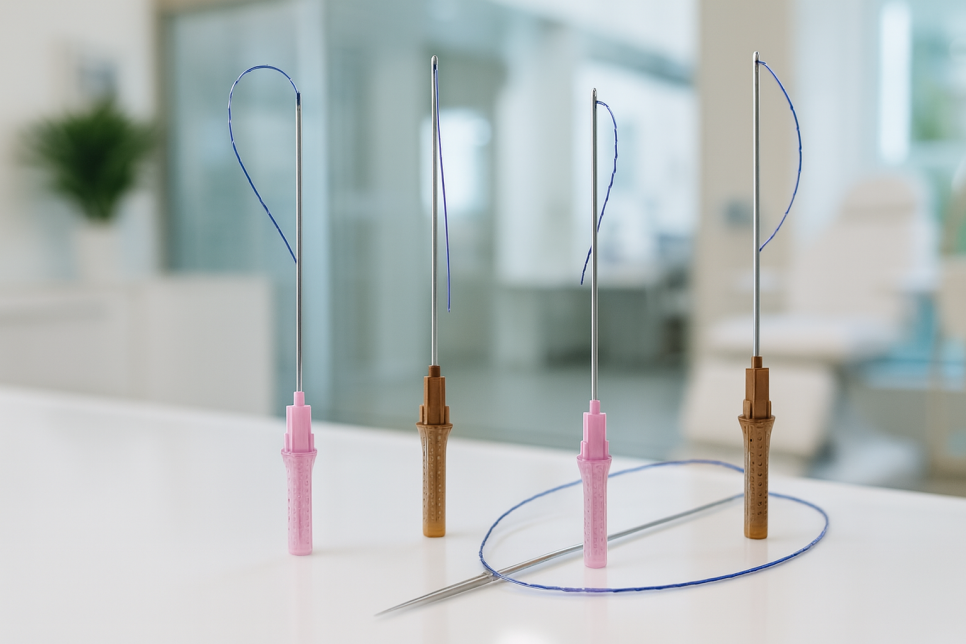
By contrast, thread lifting is a method in which medical threads are inserted under the skin without an incision to lift sagging tissue.
It is relatively simple, recovery is faster, and it has less concern about scarring than surgery.
Of course, the duration of the effect is shorter than that of a lift surgery, but the newer threads used these days do more than simply lift the skin; they also help induce collagen regeneration, so improvements in elasticity can also be expected.
The Key to Midface Thread Lifting?
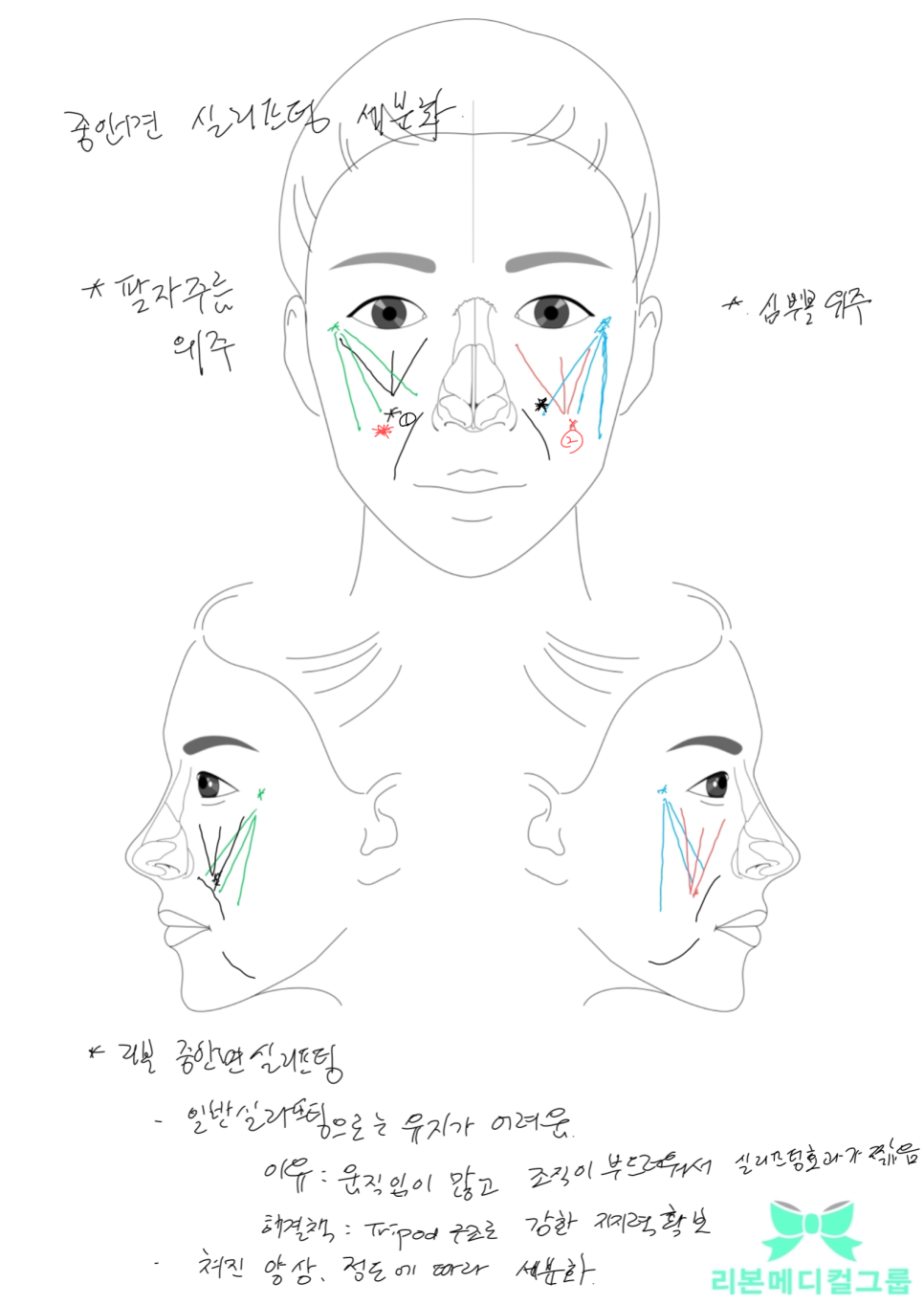
At our clinic, we do not simply insert threads; after carefully analyzing the patient’s facial structure and skin condition, we perform customized thread lifting.
Because everyone has different facial bone prominence, fat distribution, and skin thickness, inserting threads in the same way can actually make the result look awkward.
For example, for someone with prominent cheekbones, the area beneath them should be lifted, while for someone with fuller cheeks, the sagging should be addressed while naturally redistributing the volume.
Special care is also needed for patients with thin skin so that the threads do not show through.
We combine various types of medical threads according to the situation and plan the direction and strength of the threads to achieve the most natural lifting effect possible.
The biggest difference is that we do not simply lift sagging tissue, but perform the procedure while considering the balance and harmony of the entire face.
What to Check When Choosing a Plastic Surgery Clinic
When considering thread lifting, there are several things you must carefully check.
First, whether the doctor is a board-certified plastic surgeon.
If a non-specialist lacking anatomical knowledge performs the procedure, the risk of nerve or blood vessel damage increases.
Second, the doctor’s experience with the procedure.
The more experience a doctor has with thread lifting, the more natural the results and the lower the risk of side effects.
Third, whether the clinic has a variety of threads and equipment.
Every patient’s face is different, so it is best to avoid clinics that use only one or two types of threads and treat all patients the same way.
Fourth, the aftercare system.
Swelling, bruising, and pain after the procedure can vary from person to person, so it is important how systematically the clinic manages recovery.
What Are the Precautions After Thread Lifting?
Thread lifting is a procedure with a quick recovery, but the results can vary depending on aftercare.
First of all, immediately after the procedure, the threads need time to settle under the skin, so it is best to avoid actions that move the facial muscles a lot, such as making exaggerated facial expressions, laughing widely, or chewing hard foods.
Also, for a few days, you should avoid exercise that causes a lot of sweating, saunas, and alcohol to help reduce inflammation and swelling.
Washing your face and applying makeup should also be done carefully, and you should not massage or press on the face strongly.
Bruising and swelling after the procedure usually subside gradually over a few days, so there is no need to worry too much.
However, if the pain is severe or you notice unusual changes in the skin, it is safest to seek medical attention immediately.
If you follow these precautions well, the results can be more natural and last longer.

Thread lifting is certainly an effective method, but it is not a procedure that applies the same way to everyone.
Only when it is carefully planned according to the condition of your face and the results you want can you achieve satisfying results.
Rather than choosing based simply on price or advertising, I recommend finding an experienced and trustworthy board-certified plastic surgeon and making your decision after a thorough consultation.
Thank you.
| This post was written for informational purposes in compliance with Article 56, Paragraph 1 through Paragraph 15 of the Medical Service Act. All treatments carry a risk of side effects and complications depending on the individual. Before treatment, be sure to have a thorough consultation with a medical professional with extensive experience before making your decision. |