When you look in the mirror and notice that your nasolabial folds have become deeper, it is only natural for your concerns to grow.
Wanting to look younger is natural, but in reality, it is difficult to avoid the process of skin sagging and loss of elasticity.
There are various methods you can choose to improve nasolabial folds.
Representative options include laser lifting, facelift surgery, and thread lifting.
Laser lifting works by stimulating collagen in the skin to improve elasticity. It is relatively easy to try, but its immediate lifting effect is limited.
On the other hand, facelift surgery is a surgical method performed through incisions, so it offers definite results, but the recovery period and burden are greater.
Thread lifting sits between these two options.
Because it directly lifts sagging skin by inserting medical threads into the skin, you can expect visible change, and it is less burdensome than surgery.
That is why many people have recently become interested in thread lifting to improve nasolabial folds.
However, I would like to emphasize that thread lifting is not simply an easy “minor procedure.”

What is thread lifting?
Thread lifting is a procedure that inserts dissolvable threads into the skin to physically lift sagging tissue.
The inserted threads do more than simply provide lifting; over time, they also help stimulate collagen production, which aids in restoring skin elasticity.
Laser treatment works by applying heat deep into the skin to stimulate it.
However, heat-based stimulation can vary in effectiveness depending on each person’s skin response, and it has limitations when sagging is severe.
In contrast, thread lifting physically lifts the skin directly, so the effect is clearly visible and wrinkle improvement is more definite.
Facelift surgery is a method in which the skin is incised and the sagging tissue is directly removed and fixed.
You can expect definite results, but scarring and the burden of recovery are significant.
Thread lifting does not require incisions and is performed by inserting threads, so recovery is quick, and it has the advantage of causing little disruption to daily life, even for office workers.
In other words, thread lifting can be considered suitable for those who want to consider both “immediate results and a relatively short recovery period.”
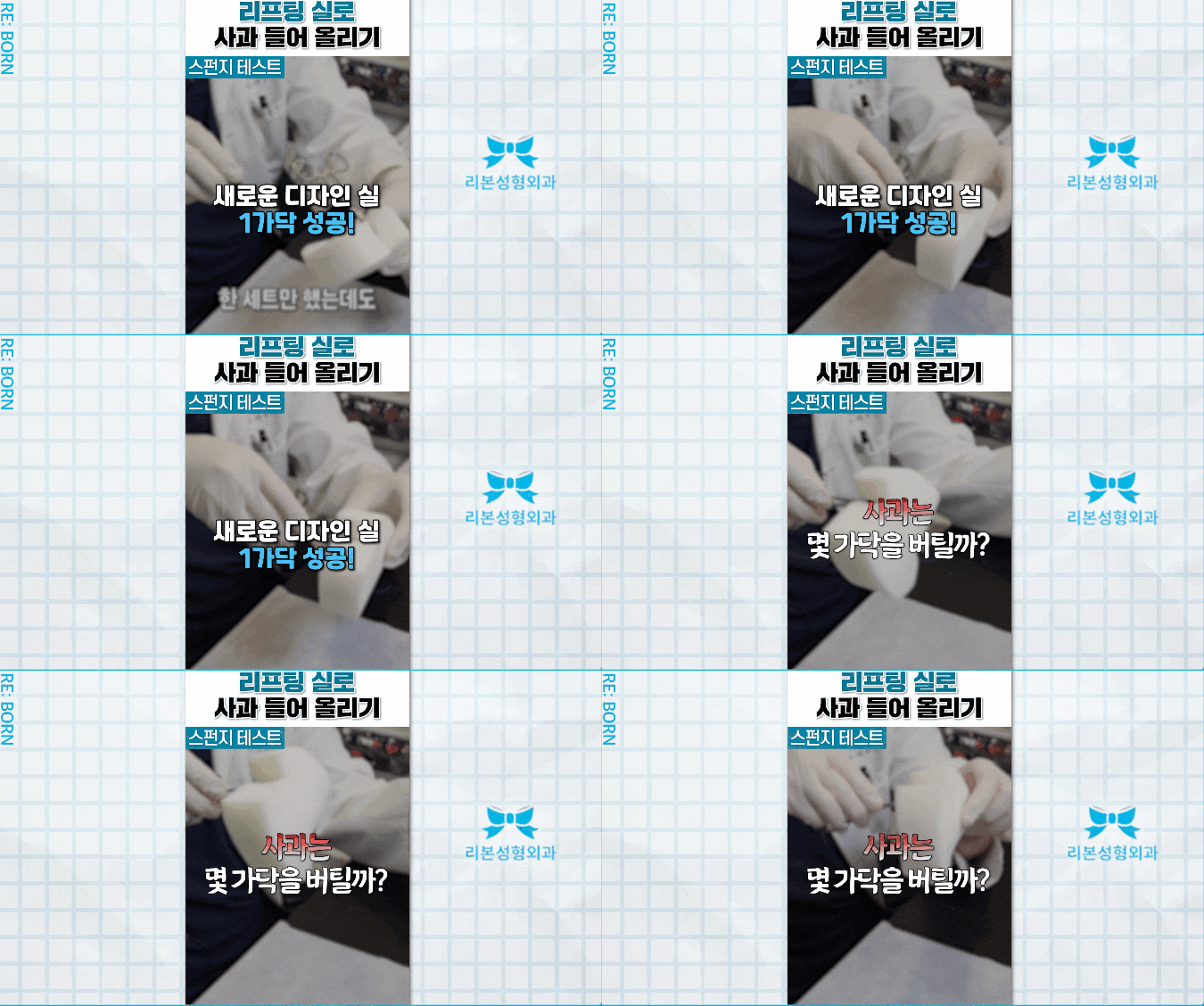 But thread lifting is by no means a simple procedure
Many people think of thread lifting lightly.
But thread lifting is by no means a simple procedure
Many people think of thread lifting lightly.
It is easy to assume it is just a simple minor procedure, but thread lifting is a complex treatment that requires careful consideration of skin thickness, the degree of sagging, fat distribution, facial bone structure, and more.
If these factors are overlooked and the procedure is done without proper planning, several problems can arise, such as asymmetry, unnatural volume, or unsatisfactory results.
Therefore, you must have a thorough consultation with an experienced plastic surgery specialist and find the thread lifting method that is right for you.
 How should nasolabial fold thread lifting be performed?
In our clinic, thread lifting for nasolabial fold improvement is not performed simply by inserting threads and pulling the skin.
How should nasolabial fold thread lifting be performed?
In our clinic, thread lifting for nasolabial fold improvement is not performed simply by inserting threads and pulling the skin.
After precisely analyzing each individual’s facial structure and skin condition, we proceed by inserting the threads in a tri-port formation.
The tri-port method is not just about pulling with one or two threads; it supports the skin from three directions.
This allows us to expect better retention beyond a simple lifting effect.
Because the skin is supported in a structurally stable way rather than being pulled in only one direction, a natural and longer-lasting effect can be expected.
In addition, the types of threads are combined in various ways, such as PDO, PLLA, and PCL, to suit the patient’s skin thickness, elasticity, and age group.
Thanks to this, you can receive a “customized thread lifting” treatment that fits you.
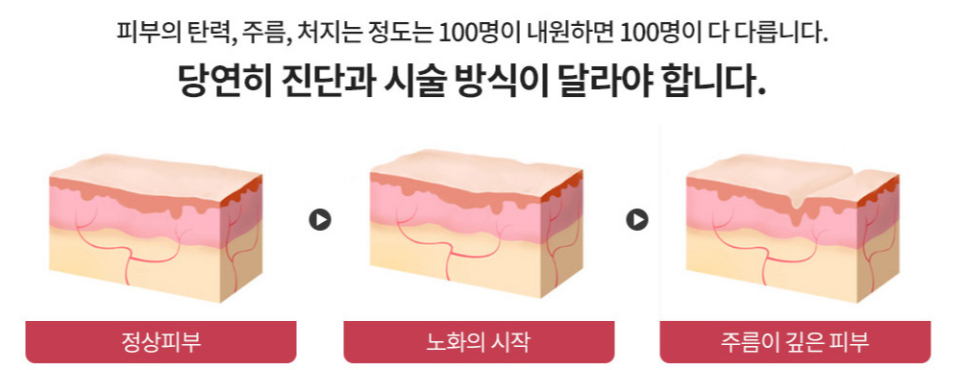
Things you must check when choosing a thread lifting plastic surgery clinic
These days, there are many places where thread lifting can be performed.
But what matters most is who performs the procedure.
To receive safe and satisfying thread lifting for nasolabial folds, you must check the following points.
First, whether the provider is a board-certified plastic surgery specialist.
There is a difference between someone who simply has procedure experience and a board-certified plastic surgery specialist who has studied anatomical structures.
The face has complex nerves and blood vessels, so it is safest to receive treatment from a specialist.
Whether personalized consultation is provided is also extremely important.
The approach should differ depending on each patient’s skin condition and facial structure.
It is best to avoid places that uniformly say, “You just need to insert this many threads.”
After the procedure, it is also important to receive systematic aftercare to help with quick recovery and stable results.
It is a good idea to check whether the clinic can explain and carry out this part well.

Nasolabial folds are not just a matter of making you look older; they can also make your impression appear darker and reduce your confidence.
There are various ways to improve them, but among them, thread lifting can be a good option that balances “effect and recovery.”
But once again, thread lifting is absolutely not a simple procedure.
Only by receiving enough consultation from an experienced plastic surgery specialist and undergoing the procedure with a customized method suited to your face can you obtain satisfying results.
At our clinic, we analyze each patient’s facial structure and perform nasolabial fold thread lifting in the most appropriate way.
Our goal is not simply to pull wrinkles, but to create results that look natural and last a long time.
If you are worried about nasolabial folds, we recommend that you fully understand the pros and cons of the procedure and choose a place with experience.
You are also welcome to visit our clinic. We will do our best to help you achieve satisfying results.
| This post was written for informational purposes in compliance with Article 56, Paragraph 1 through Paragraph 15 of the Medical Service Act. All treatments carry the risk of side effects and complications depending on the individual. Before treatment, please be sure to make your decision after receiving sufficient consultation with experienced medical staff. |