When the area under the eyes becomes saggy and puffy,
many people worry because it can make them look tired or older.
However, lower blepharoplasty is not simply
a cosmetic procedure.
Because weakened muscles, sagging fat,
and loosened soft tissue caused by aging work together,
if these are not corrected in detail,
it can instead lead to unnatural and awkward results.
An approach that removes only sagging skin or fat
can take away naturalness,
and in severe cases may cause side effects such as
eyelid eversion or tearing.
That is why lower blepharoplasty should be
carefully consulted and performed by
a plastic surgery specialist with extensive experience.

What is lower blepharoplasty, and why is it different from general eye surgery?
Lower blepharoplasty is a procedure that mainly
restores a younger, more lively impression by tidying
away sagging skin, loosened fat, and weakened muscles
under the eyes, especially in middle-aged and older adults.
It is often casually thought of as simply
“under-eye fat removal,” but aging under the eyes
cannot be improved by removing only the loose parts.
In fact, if too much is removed, the area under the eyes
can become hollow, making you look tired or even older.
For lower blepharoplasty to look natural, the loose
muscles and skin caused by aging, as well as protruding fat,
must be handled in a balanced way.
In other words, this is not simply a “fat removal surgery,”
but a procedure that should be approached as
“repositioning the structure under the eyes and
restoring elasticity.”
In this process, planning how much skin to remove
and how to reposition the fat on an individual basis
has a major impact on how natural the result will be.
Therefore, it requires an approach that is completely different
from eye surgery for younger people.
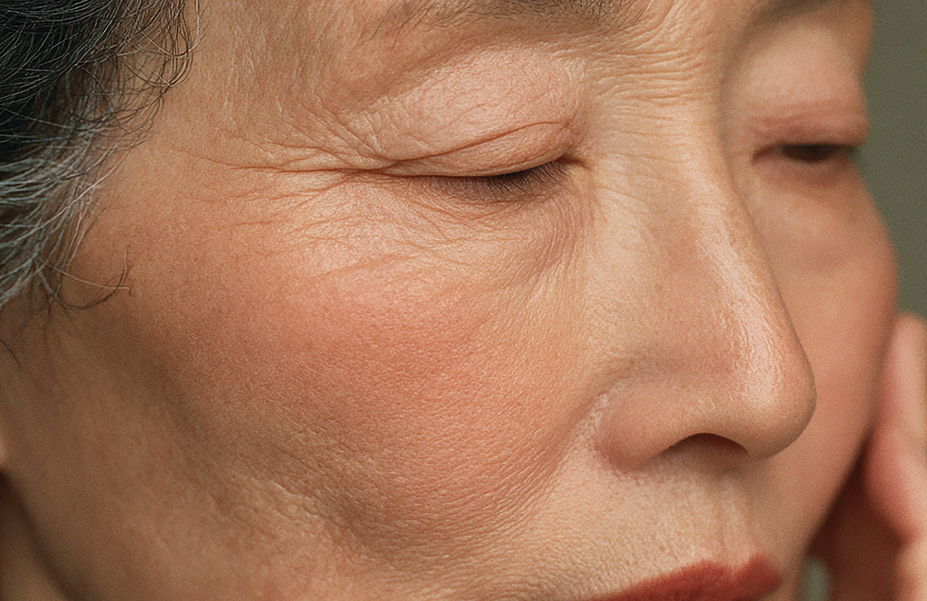
When the under-eye area looks puffy and saggy, lower blepharoplasty may help
As aging progresses, the fat under the eyes
pushes forward, and hollowness appears below it.
As a result, the under-eye area looks puffy,
while shadows form beneath it, creating a tired
and older-looking impression.
In such cases, lower blepharoplasty can be used to
appropriately reposition the fat and tidy up the loosened
muscles and skin, helping restore a much more natural
and brighter impression.
In particular, if the under-eye fat is not completely removed,
but instead redistributed where needed to match the volume,
the eye area can be improved to look younger
and softer.
In this way, lower blepharoplasty can be described as
a rejuvenation procedure that helps restore
the overall impression of the face to a younger look.
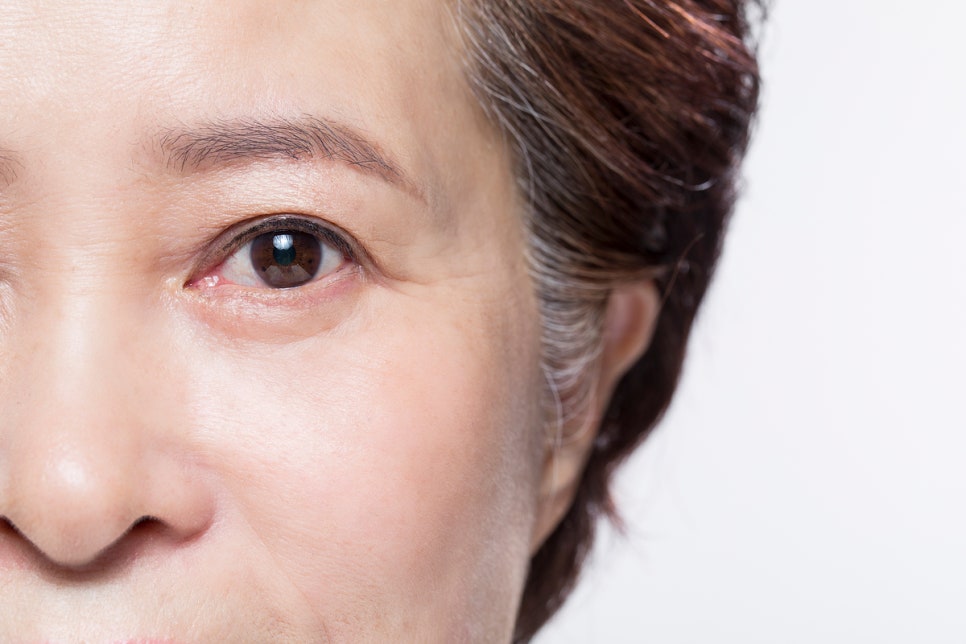
How long do bruising, swelling, and recovery take after lower blepharoplasty?
Postoperative swelling and bruising vary by person,
but in most cases, much of the swelling subsides
within about 1 to 2 weeks.
At first, you may feel some discomfort or tightness,
but this gradually eases over time.
Bruising usually fades in about a week,
and is light enough to be covered with makeup.
Sutures are generally removed after about 5 to 7 days,
and daily life can usually be resumed after that.
Completely natural results typically appear after about
3 to 4 weeks.
Recovery speed depends on each person’s skin condition,
but postoperative care and lifestyle habits are generally important.
Right after surgery, it is best to continue cold compresses
and avoid excessive exercise or saunas.
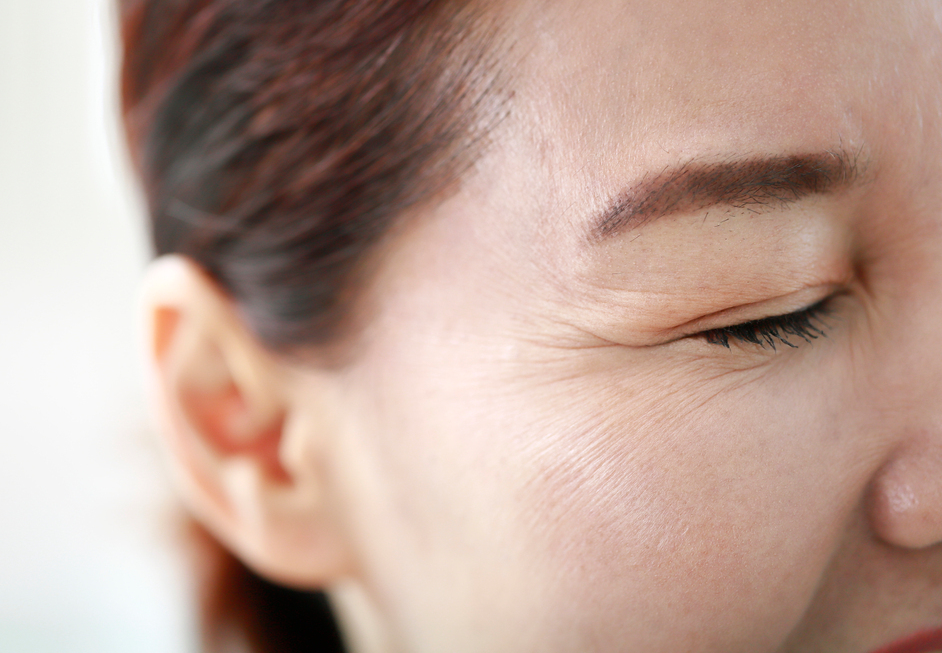
Natural results made possible by extensive experience and know-how
Because lower blepharoplasty involves a complex area
with various tissues such as skin, muscle, and fat under the eyes,
extensive experience with this procedure
and a delicate sense of balance are necessary.
At a plastic surgery clinic with extensive experience,
the procedure is performed not by simply removing sagging skin,
but by considering the patient’s eye shape, skin thickness,
the amount of fat, and even the strength of the muscles.
Through this, it is possible to create a natural,
defined impression that looks like your original self,
without an unnatural pull.
So it is natural to wonder how to find a skilled
plastic surgery clinic.
The most important thing is not to decide based only on
“price” or “location.”
Be sure to pay attention to the following points
before deciding on surgery.
Because the lower eyelid area varies greatly from person to person,
a plastic surgery specialist with experience in a wide range of cases
can provide customized surgery according to each individual’s condition.
During the consultation, check whether they carefully assess
the skin condition in detail, such as how prominent the under-eye fat is
and how much looseness there is.
Surgery based on this kind of detailed analysis
leads to safe and satisfying results.
It is also important whether the postoperative care system is well organized.
If care to minimize swelling, bruising, and scarring during recovery
is properly provided, the overall result can look much more natural,
and a faster recovery can be expected.
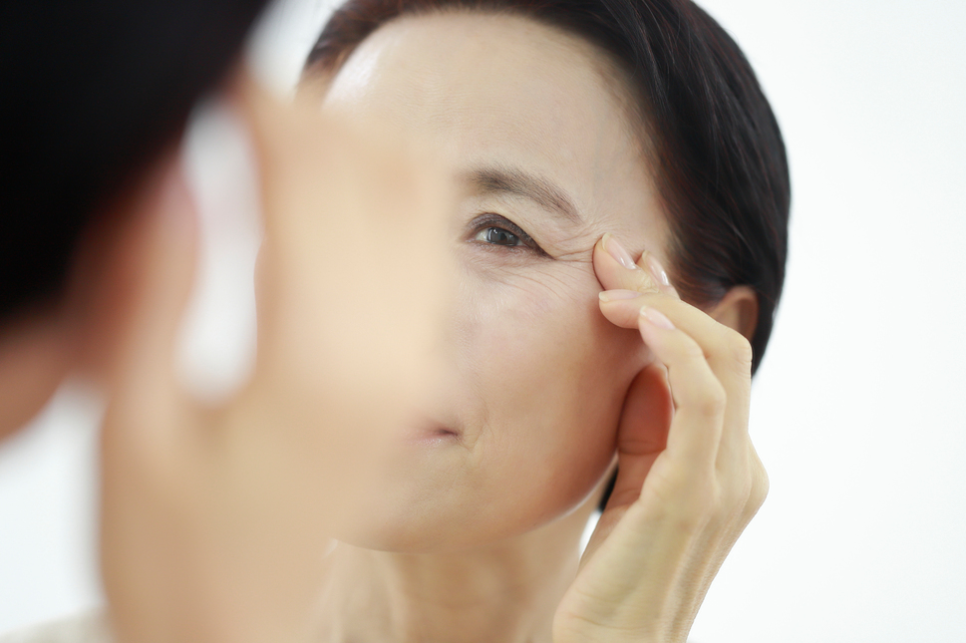
Lower blepharoplasty is not simply a surgery that improves
a tired-looking appearance.
It is a delicate process of correcting the under-eye structure
that has collapsed due to aging and restoring the original impression.
How naturally and harmoniously this process comes together
determines the outcome.
If you are worried about under-eye puffiness or wrinkles,
don’t see it as only a cosmetic issue—visit a plastic surgery clinic
with experience for an accurate diagnosis and consultation.
That’s all for today’s content.
Thank you.
| This post has been written for informational purposes in compliance with Article 56, Paragraphs 1 through 15 of the Medical Service Act. All treatments carry a risk of side effects and complications depending on the individual. Before treatment, please be sure to make a sufficient consultation with medical staff with extensive experience before making a decision. |