Changes in appearance that come with aging and the progression of age are not simply an issue of outward looks. In particular, the area around the eyes can cause not only cosmetic concerns but also functional problems.
Because the skin loses elasticity and sags, and fat pushes forward, the approach is completely different from the simple cosmetic eye surgery performed in younger years. That is why middle-aged eye surgery must be carried out more carefully, and choosing a plastic surgery specialist with extensive experience is the most important thing.
At this stage, the eyes become structurally more complex, so it is difficult to achieve natural results by simply removing loose skin. Surgery performed without sufficient analysis can increase the likelihood of revision surgery due to overcorrection or an unnatural impression.
Therefore, please remember that middle-aged eye surgery should always be approached based on an accurate diagnosis. Below, I will explain in more detail why middle-aged eye surgery should be chosen carefully.
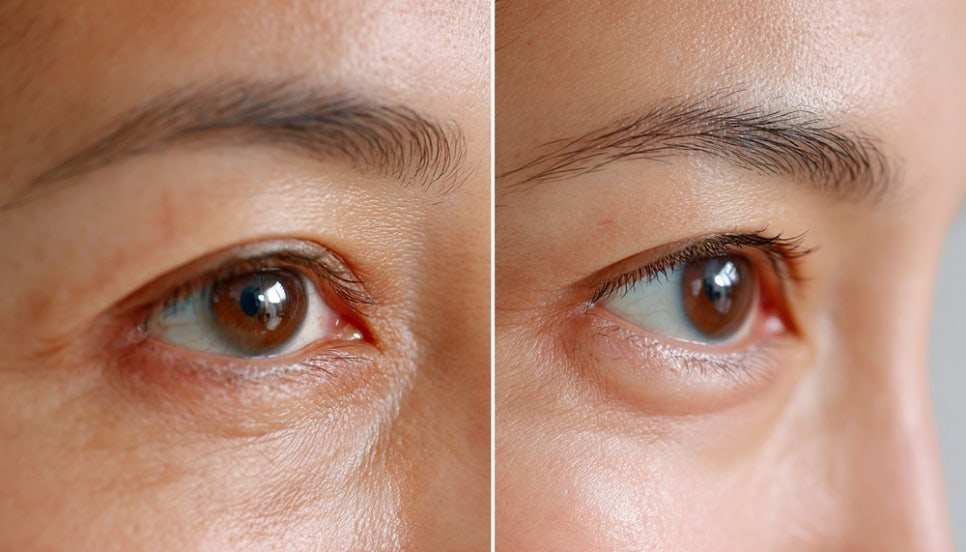
Why middle-aged eye surgery should not be taken lightly
When people reach middle age, the structures around the eyes change at the same time. The skin stretches, fat protrudes, and the muscles weaken; because these changes occur simultaneously, it should not be viewed in the same way as simple cosmetic eye surgery.
In particular, since the problem cannot be solved by removing only the skin, it is better to thoroughly check the current condition around the eyes individually before proceeding with surgery.
If sagging skin is removed excessively, the expression may become stronger or the eyes may look overly open, resulting in unnatural outcomes.
You should be careful because, in addition to the possibility of an unnatural appearance, functional discomfort can also occur.
The strength used to open the eyes may decrease further, and this can lead to the habit of opening the eyes with the forehead, causing forehead wrinkles to deepen.
In such cases, revision surgery is needed, but after middle age the skin and muscle tissues lose elasticity, making it difficult to recover structures that were incorrectly set in the first surgery, and the difficulty of revision surgery becomes very high.
As such, middle-aged eye surgery is not simply for cosmetic purposes; functional aspects must also be considered, so delicate planning is essential.
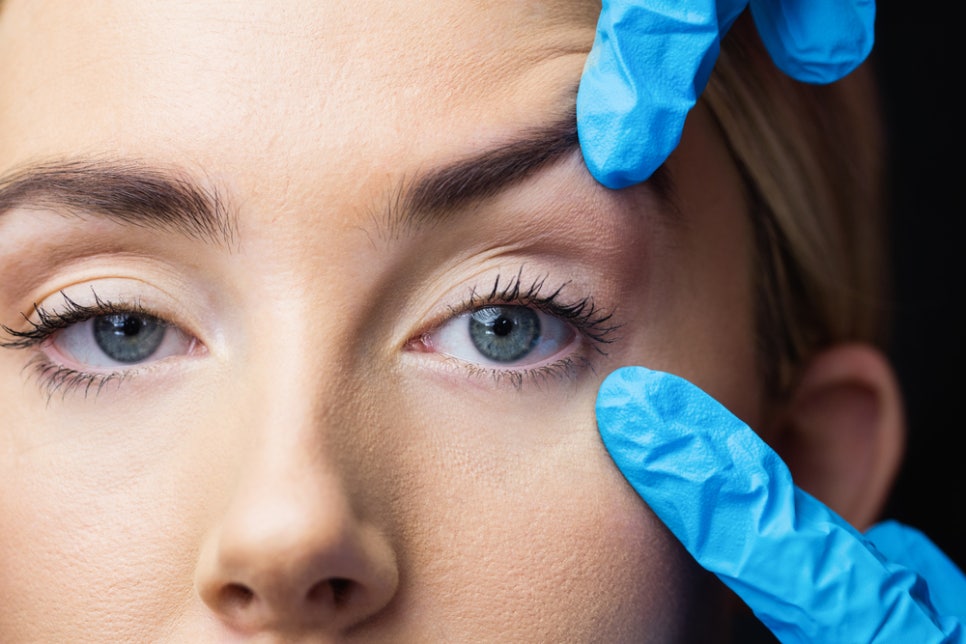
Typical middle-aged eye surgeries: upper blepharoplasty and lower blepharoplasty
The two most important surgeries in middle-aged eye surgery are upper blepharoplasty and lower blepharoplasty.
Both surgeries share the common goal of addressing aging around the eyes, but the surgical areas and effects are completely different, so it is important to understand each one separately.
Although I will explain these two surgeries separately, in actual middle-aged eye surgery, the two areas influence each other, so it is helpful to understand them as naturally connected.
Upper blepharoplasty
Upper blepharoplasty is a surgery that addresses the problem of drooping and heaviness in the upper eyelids.
As people age, not only the skin but also the muscles loosen, and the force used to open the eyes is not transmitted properly. This is exactly why skin removal alone is not enough.
Middle-aged upper blepharoplasty should consider the following factors together.
整理 of sagging skin
-> Sagging skin is appropriately removed to make the eye area look clearer.
Rearrangement of fat and muscles
-> Unnecessary forward-protruding fat is adjusted or repositioned to make the eyes look lighter. If sagging muscles are corrected as well, the function of opening the eyes becomes much more comfortable.
Balancing the strength used to open the eyes
-> If the muscles that open the eyes are weak, strengthening them can help the eyes open more clearly.
The key point of upper blepharoplasty is not simply cutting away skin, but balancing the correction of multiple sagging tissues.
After surgery, you can expect a brighter expression and a significant reduction in the burden of opening the eyes.

Lower blepharoplasty
Lower blepharoplasty is a surgery that improves sagging lower eyelids, bulging fat, and deepened dark circles. After middle age, fat under the eyes naturally moves forward, and the area beneath it hollows out, creating deep shadows and making the face look even more tired.
At this time, lower blepharoplasty can reposition the protruding fat and lift the sagging skin and muscle tissue.
Repositioning bulging fat
-> Simply removing fat can make the under-eye area look more hollow, so repositioning is the key.
Strengthening muscular support
-> In many cases, muscles weaken and sag, so the support structure must be firmly established for natural results.
Proper removal of sagging skin
-> If too much skin is removed, the lower eyelid can be pulled outward (ectropion), so the 'right amount' is very important.
In most middle-aged cases, upper eyelid sagging and lower eyelid protrusion occur together, so a comprehensive assessment of both surgeries is needed to improve overall aging around the eyes in a balanced way.

How is middle-aged eye surgery performed?
The most important point in middle-aged eye surgery is to closely check the individual’s current aging condition around the eyes and, based on that, identify and plan the appropriate surgery.
Because eyelid thickness, fat volume, muscle strength, skin elasticity, and eye-opening habits all differ from person to person, even if the surgery name is the same, the actual procedure can be completely different.
The approach is to carefully check how much the skin has stretched, in which direction the fat has protruded, how loose the muscles have become, whether the strength to open the eyes is sufficient, and what the person’s usual eye-opening habits are, then create a personalized plan based on this information.
For some people, fat repositioning may be the key; for others, muscle strengthening may be necessary or functional improvement may be more important.
Even with upper and lower blepharoplasty, the actual procedures are all different. After establishing such a plan, surgery should be performed so that not only the outward changes but also the function of opening the eyes can improve naturally.
In the end, the key to middle-aged eye surgery is 'sufficient consultation and examination, followed by a customized plan,' and when this process is done properly, it can lead to natural results.
Middle-aged eye surgery is not a simple cosmetic improvement; it is a procedure that must also address function and structure together. Therefore, approaching it only from a cosmetic standpoint can be risky, and a precise diagnosis and individualized surgical plan are absolutely necessary.
If you review the strength used to open the eyes, the position of the fat, muscle balance, and skin elasticity, and then create a plan tailored to the individual, you can expect natural and long-lasting results. If you are considering middle-aged eye surgery, I recommend receiving a consultation at a clinic that is based on careful analysis and extensive experience.
Thank you.
| This post was written for informational purposes in compliance with Article 56, Paragraphs 1 through 15 of the Medical Service Act. All treatments carry the risk of side effects and complications depending on the individual. Before treatment, be sure to have a thorough consultation with medical staff who have extensive experience before making a decision |