When facial sagging becomes more noticeable, many people naturally think of a facelift. It may seem like the obvious choice, but in fact, after consultation, there are quite a few cases where thread lifting alone can provide sufficient improvement.
Because results vary depending on an individual’s skin elasticity, amount of fat, direction of sagging, and age group, rather than deciding on facelift surgery right away, the most important thing is to go through enough consultation to find the solution that suits you best.
In particular, thread lifting has the advantages of no incision burden, a quick return to daily life, and a natural lifting effect.
Rather than immediately choosing an overly heavy surgery, simply knowing that there is a sufficiently effective middle option called thread lifting can broaden your choices.
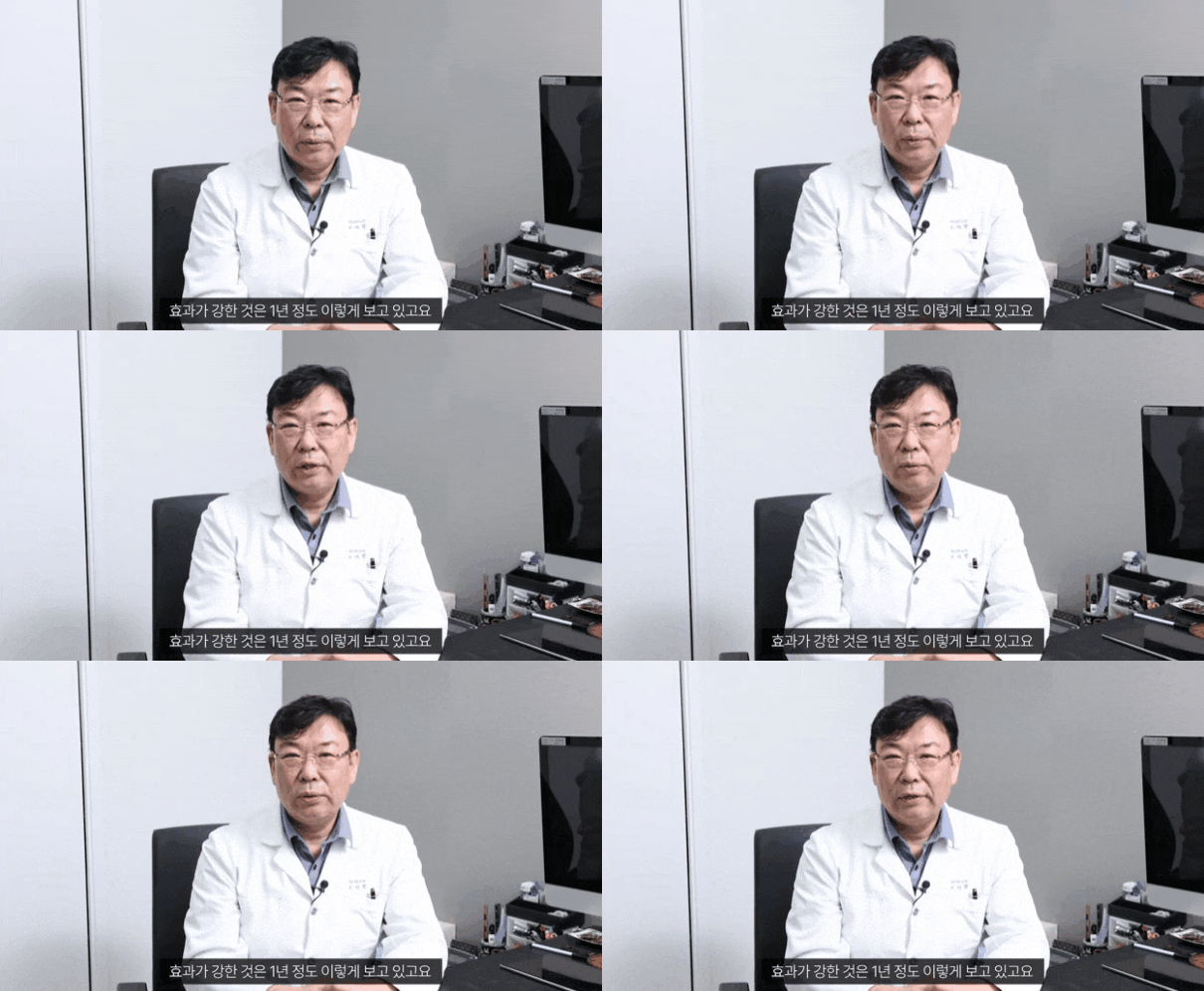
What Are the Benefits of Thread Lifting?
Thread lifting is not simply a procedure that pulls up sagging skin. It not only restores sagging skin, but also has the function of inducing collagen regeneration over time, which helps the lifting effect last longer and improves skin texture as well.
In addition, because there is no incision and the procedure time is short, there is no need to worry about scars, recovery is fast, and it is a good option for those who prefer a naturally lifted result.
If a facelift is a surgery that creates major change, thread lifting is a procedure suited for those who want a natural but clearly noticeable improvement. However, thread lifting is not automatically the right answer for everyone.
If skin sagging is very severe or there is a large amount of loose skin, a facelift may be more appropriate. That is why a doctor’s consultation is essential.
When considering a method, the most important thing is what your face currently needs. If you simply choose a method because people around you say it is good, you may end up with unsatisfactory results.

How Is Thread Lifting Performed, and What Effects Does It Have?
Thread lifting is a method in which lifting threads are inserted into the skin layers to raise sagging soft tissue in the desired direction.
Thanks to the structure of the threads, which firmly support sagging tissue, lifting effects can be expected in areas such as sagging cheeks, nasolabial folds, and the jawline.
In addition, as the inserted threads dissolve, they help stimulate collagen production, so over time after the procedure, you can also expect the skin to become firmer.
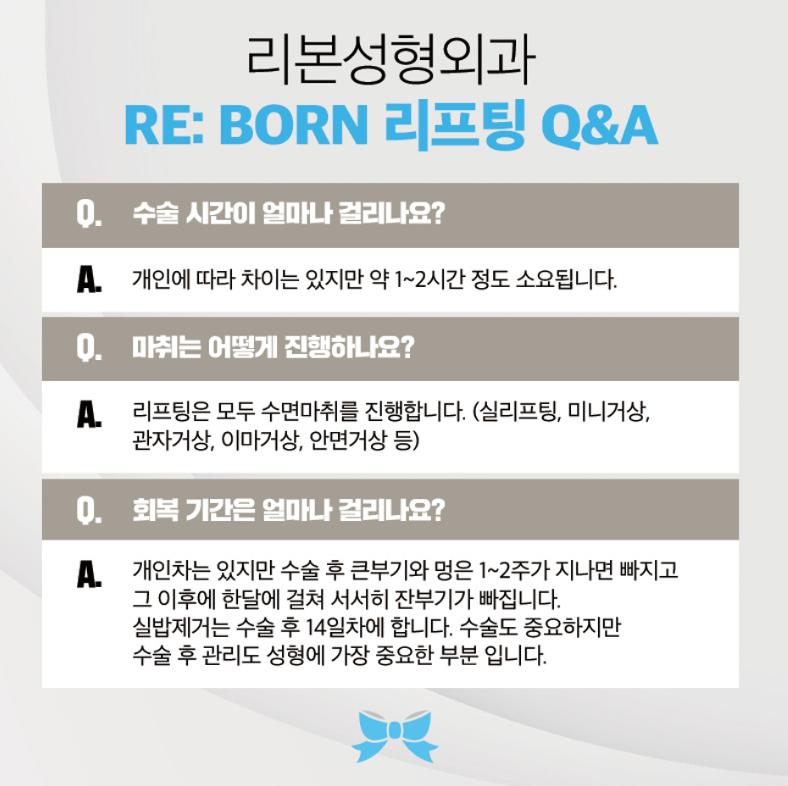
The procedure itself often takes around 30 minutes, and because returning to daily life afterward is quick, many people consider it a low-burden lifting procedure.
However, just because the procedure seems simple does not mean it can be performed in exactly the same way for everyone.
Depending on an individual’s skin thickness, amount of fat, direction of sagging, age, and elasticity, the type, number, depth, and pulling strength of the threads all need to be different.
Thread lifting performed without carefully checking these factors may have weak effects, cause uneven surface irregularities, or fail to keep the threads in place, making a repeat procedure necessary.
That is why, rather than focusing on immediate results, the facial structure of each individual must be carefully examined and the appropriate procedure direction determined accordingly.
At our clinic, we avoid uniform thread lifting and begin with the process of analyzing each person’s facial structure.
We carefully check the causes of facial sagging and create a procedure plan by considering each person’s degree of sagging, amount of fat, and age group.
After that, we create a personalized thread lifting plan by matching the type, length, and strength of the threads to the direction of sagging.
In particular, at our clinic, we do not use a method that simply pulls strongly. Instead, we focus on improving sagging in a natural way, so you can expect a natural and comfortable lifting result without an awkwardly pulled appearance.
Another advantage of our lifting system is that we also provide detailed management during the recovery process after the procedure to minimize swelling and bruising and help keep the threads securely in place.
The Risks of Choosing Thread Lifting Based Only on Price or Promotions
Thread lifting is a relatively simple procedure that does not take much time, but because of that, there are many cases where people choose it based only on price and promotions. However, because the face is an area that is difficult to reverse once something goes wrong, simply choosing a “cheap place” can be a big risk.
If the threads are inserted too superficially, inserted in fewer numbers than needed, or if threads that do not match the skin condition are used, sagging will not improve properly, and
the treated area may become uneven, the threads may show through the skin, or in severe cases, the threads may become exposed outside the skin.
Therefore, you should choose a skilled plastic surgery clinic. First, check whether they accurately analyze each person’s facial structure and establish a thread design suited to you.
The simpler a procedure looks, the more detailed the plan needs to be, and this is exactly where the difference in experience and know-how appears. If this part is handled properly, unnecessary side effects can be avoided.
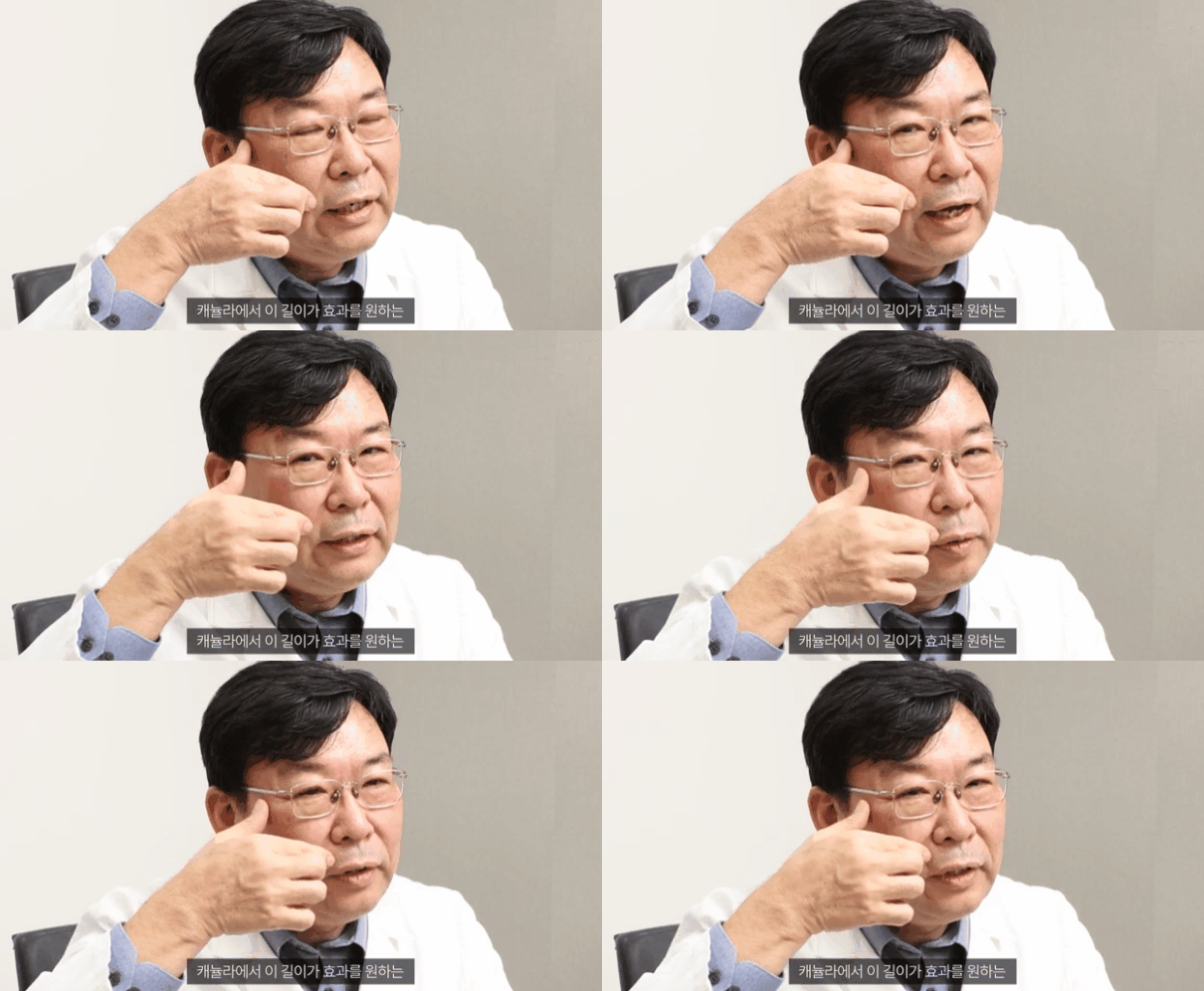
A facelift is a surgery that clearly improves facial sagging, but it is not necessary or suitable in every case.
Many people come in wondering, “Do I need surgery...?” but in reality, there are quite a few cases where thread lifting alone can provide enough improvement.
In plastic surgery, it is best to find the method that suits your facial condition most closely. So rather than starting with surgery, we recommend first taking a close look at the option of thread lifting through an accurate consultation with a board-certified plastic surgeon.
| This post was written for informational purposes in compliance with Article 56, Paragraphs 1 through 15 of the Medical Services Act. All treatments carry the risk of side effects and complications depending on the individual. Before treatment, please be sure to make a sufficient consultation with medical staff with extensive experience before making a decision |