At the moment you unexpectedly pull out old photos again, there are times when you compare them with your current face.
Even if you have not particularly gained a lot of weight, you may still feel like you look tired or older.
These changes are not simply a matter of how you feel; they are a natural process that appears as skin elasticity and support structures gradually weaken over time.
The question is how to accept and improve these changes.
Recently, various lifting procedures have been introduced, and many people are receiving help from them.
Among them, thread lifting is drawing a lot of attention because the recovery burden is relatively low and returning to daily life is fast.
However, as interest has increased, the process of deciding on a procedure should be even more careful.
This is because thread lifting is not a procedure that simply pulls on the surface of the skin, but a medical process that rebuilds the support structure inside the face.
If you do not consider each person's face shape, skin thickness, fat distribution, and the direction of sagging, the pull may look unnatural, or it may be difficult to achieve the expected change.
It is important to first understand that thread lifting is not a procedure you can receive quickly, but one that must be precisely designed.
In this article, we will carefully organize the key criteria that people considering thread lifting must know before the procedure.
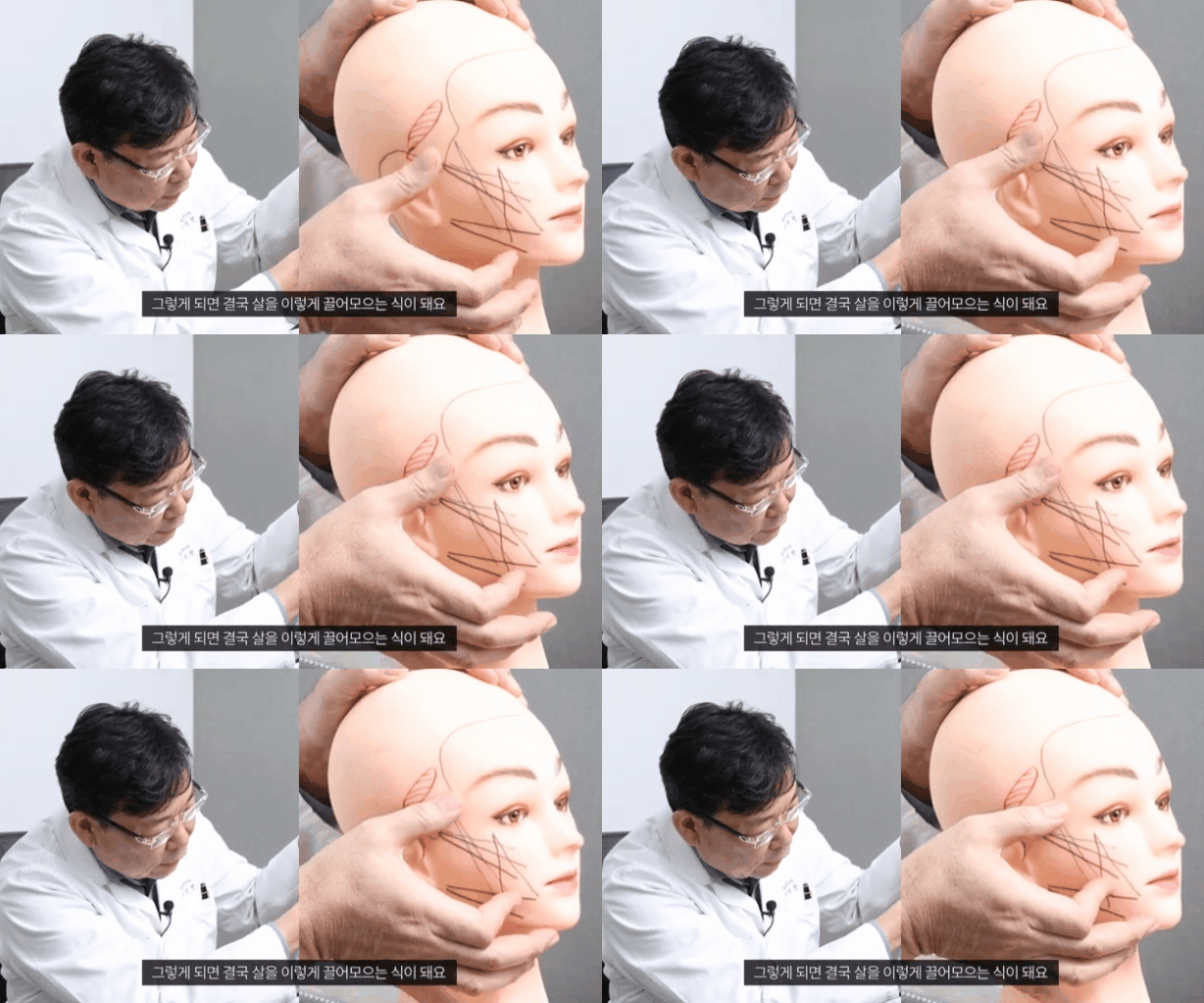
Thread lifting: Why you need to understand why results differ
Thread lifting is a procedure in which medical threads are inserted under the skin to lift and fix sagging tissue upward.
During this process, collagen production around the threads is induced, so over time you can also expect an improvement in skin elasticity.
However, even with the same thread lifting procedure, the results do not appear identically.
The reason is that the causes of facial sagging differ from person to person.
For some people, sagging appears overall as skin elasticity decreases.
By contrast, others show a pattern in which only certain areas sink downward due to the weight of fat.
In addition, the starting points of sagging, such as under the cheekbones, around the nasolabial folds, or along the jawline, also differ from person to person.
If you decide on the procedure based only on the number or type of threads without considering these differences, it becomes difficult to identify the exact direction to pull and the areas that need support.
As a result, there may be a feeling of being lifted immediately after the procedure, but over time the effect may fade quickly, or the expression may look awkward.
At our clinic, before the procedure we carefully analyze skin thickness, fat distribution, and the direction of sagging, then plan the type of threads, insertion points, and strength for each individual before performing the procedure.

Thread lifting: A selection criterion more important than price
Recently, thread lifting has become a procedure that can be received relatively easily in various places.
Accordingly, many people now choose a plastic surgery clinic based on price.
However, since thread lifting is a medical procedure performed directly inside the face, there are clear criteria that should be checked before cost.
First, it is important to check whether the medical staff performing the procedure have sufficient understanding and experience with facial anatomy.
Nerves and blood vessels are complexly located in the face, and if threads are inserted in the wrong place, it can lead to pain or side effects.
Therefore, the key is not simply to insert many threads, but to accurately identify a safe layer and perform the procedure.
Second, whether there is a thorough pre-procedure consultation process is also an important criterion.
If a procedure is recommended right away without carefully checking the individual's skin condition, degree of sagging, and desired direction of improvement, it is worth thinking again carefully.
This is because thread lifting should be approached differently for each person in order to lead to satisfying results.
At our clinic, through sufficient consultation and diagnosis before the procedure, we consider whether thread lifting is appropriate for the current condition, or whether combining it with another procedure would be better.
This is because the goal is not simply to perform the procedure, but to achieve natural and long-lasting results.
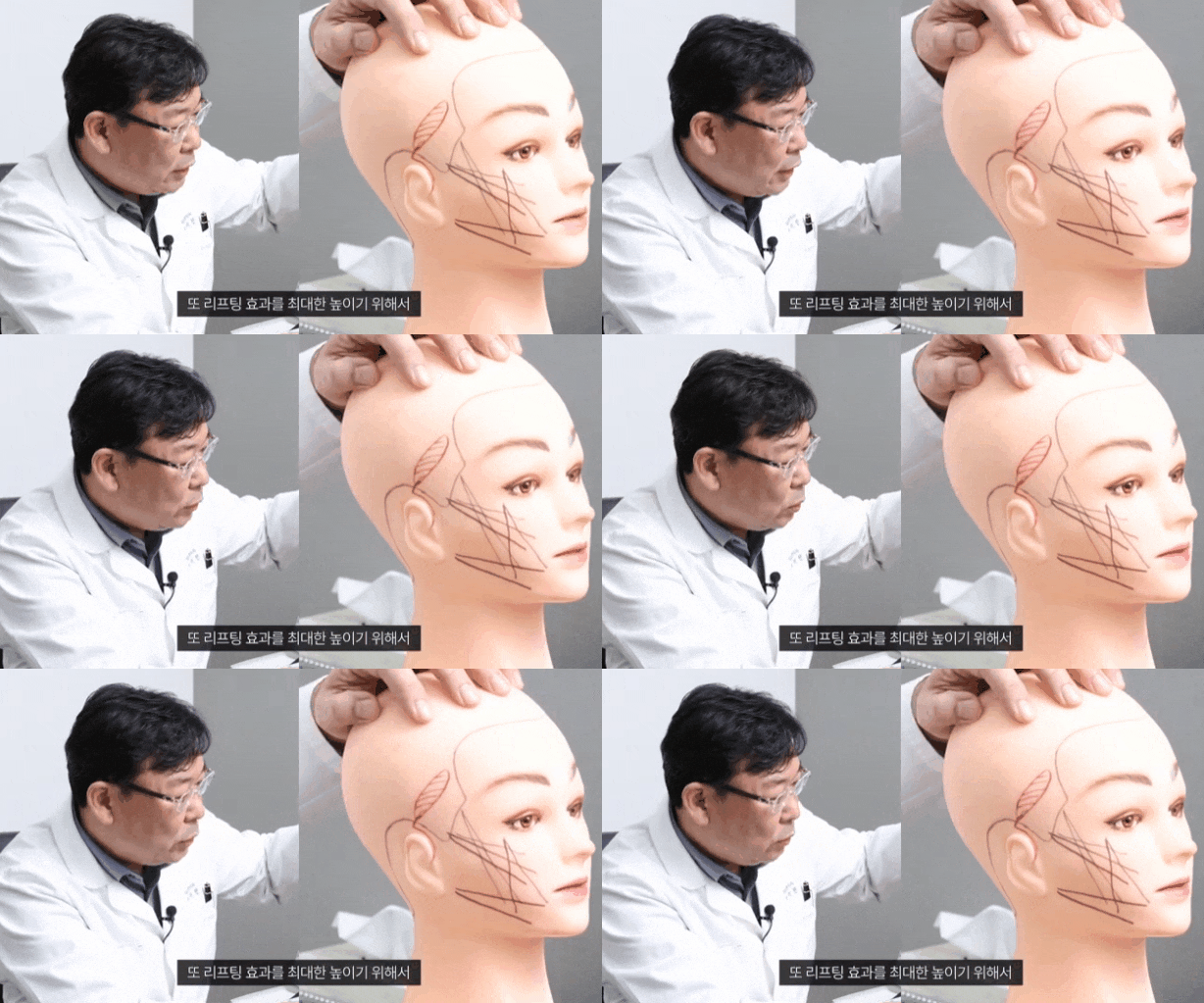
Thread lifting is a procedure performed without incision, but the results vary greatly depending on how accurately the facial structure is understood and designed.
Therefore, rather than deciding simply because it is fast and convenient, it is necessary to carefully examine the pre-procedure diagnosis process, the medical staff's experience, and whether the procedure is customized to the individual.
Even small differences in facial changes can alter the impression. That is why thread lifting is a procedure that requires a cautious approach.
We recommend finding the direction that suits you based on sufficient information through consultation with a board-certified plastic surgeon.
Thank you.
| This post was written for informational purposes in compliance with Article 56, Paragraphs 1–15 of the Medical Service Act. All treatments carry a risk of side effects and complications depending on the individual. Before treatment, please be sure to make a sufficient consultation with medical staff who have extensive experience before making a decision. |