These days, thread lifting has become very common. A quick search brings up countless clinics, various thread types, and strikingly low prices.
So many people end up thinking, “If it’s this common, maybe I can just get it done.”
But thread lifting is a procedure that can make you look younger without being obvious when it goes well, and can make your expressions and overall impression stand out first when it goes wrong.
Although it may look simple on the surface, thread lifting should be performed by comprehensively considering multiple factors, such as each person’s skin type and structural characteristics.
If the lifting direction is incorrect or the pull is excessive, your facial expression may become unnatural after the procedure, so caution is needed.
Many of you may also think that since the same threads are used anyway, the effect should be similar.
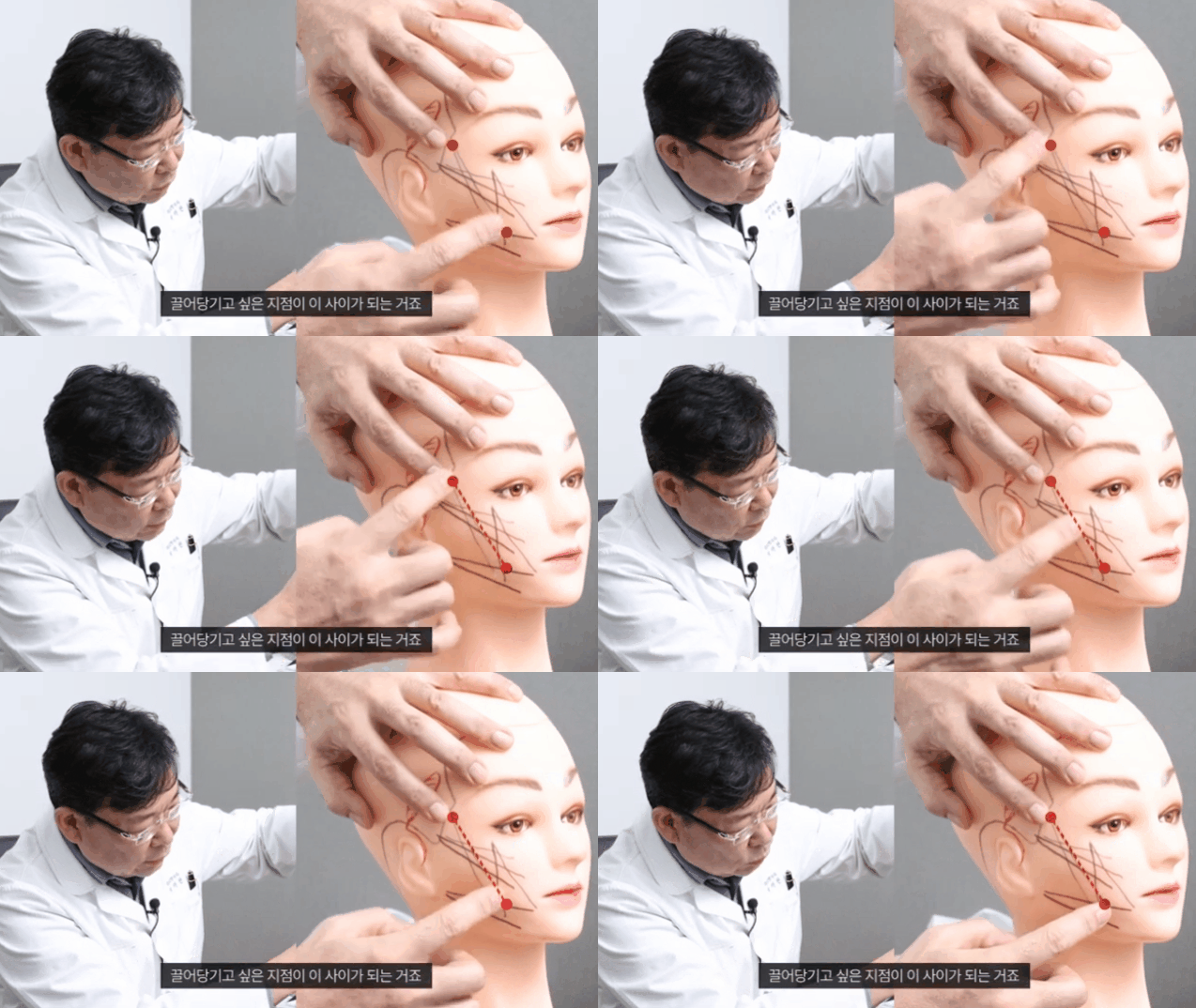
It is not simply a matter of “inserting threads and pulling upward.” Where they are placed, at what angle, at what depth, and how much they are distributed all determine the result.
That is why the same threads can produce completely different results.
So today, to help those considering thread lifting, I would like to organize the key points related to sagging face lifting.

Why do results differ from person to person with thread lifting?
The core of thread lifting is not just lifting sagging areas.
Depending on each person’s degree and direction of sagging, as well as the treatment area, the insertion points must be checked and the lifting direction and strength planned.
The face has skin, fat, and the fascial layer.
As we age, these structures lose elasticity and begin to sag downward. At this point, simply pulling the skin will not maintain the result for long.
That is why it is very important to decide which layer the thread should anchor to and which structure should be used as the support point.
Face shapes also vary widely. A face with prominent cheekbones, a face with fuller cheeks, a face with thin skin, a face that still has some elasticity. Depending on these differences, the type, number, and direction of the threads needed will also differ.
However, in actual practice, procedures are not infrequently carried out according to a “fixed pattern.” What happens then?
The area is lifted, but the expression looks awkward when smiling, or only the cheeks are lifted while sagging around the mouth remains, or it may look fine at first but the maintenance effect drops sharply after a few months.
In addition, before the procedure, the design and treatment plan should be tailored to the facial structure for a natural result.
At our clinic, before the procedure we first analyze the direction of sagging, fat volume, skin thickness, and elasticity. Then we inject only as much as needed into the necessary areas, without overdoing it. Excessive pulling can instead make the impression look stiff.
Another important point is that anatomical understanding and technical skill are required. Simply inserting more threads does not increase durability; they last longer and look natural only when placed in the correct layer and direction.
That is why the outcome of thread lifting is influenced more by the practitioner’s experience and technique than by the type of thread. This difference becomes even more apparent over time.

Why you should not decide based on price alone
Recently, thread lifting has become a relatively accessible procedure. There are many advertisements, and prices vary widely. Because of this, many people choose a clinic thinking, “Isn’t it basically the same wherever I go?”
However, thread lifting is a procedure that is difficult to correct once it has been fixed in the wrong direction. If the thread settles in the wrong layer, the skin surface may appear uneven, or you may feel the thread in certain facial expressions.
If the pulling direction is off, the facial balance may also look distorted. Problems like these often do not resolve naturally over time.
So what matters is not which thread is used, but who performs the procedure and by what standards.
At our clinic, from the consultation stage onward, we do not recommend excessive pulling. We also assess whether thread lifting alone is sufficient given the skin condition, whether a combined auxiliary procedure is needed for a natural result, or whether the timing for treatment is not yet appropriate.
That is because thread lifting is not the right answer for everyone. Post-procedure care and the recovery process are also important.
Swelling and bruising immediately after the procedure are normal, but guidance should also be provided on what falls within the normal range, when daily life can be resumed, and which lifestyle habits should be avoided so that the result can settle stably.
The key to thread lifting is to restore a younger version of your previous appearance while preserving your own unique image.
Please check carefully whether you are receiving personalized counseling in advance, whether thorough design is being done first, and whether systematic post-procedure care is available.
If you feel that the face in the mirror looks different from before, rather than deciding on a procedure right away, please consult a plastic surgery specialist to find out which approach would look most natural for your face.
Thank you.
| This post was written for informational purposes in compliance with Article 56, Paragraph 1 through Paragraph 15 of the Medical Service Act. All treatments carry a risk of side effects and complications depending on the individual. Before treatment, please be sure to have a thorough consultation with medical staff who have extensive experience before making a decision. |