“You look tired.”
“Your expression seems sharper than before.”
“When I take photos, my eyes always look smaller.”
The area where changes are felt first after middle age is undoubtedly the eyes.
As skin elasticity decreases, muscle strength weakens, and the position of fat changes, the eyelids sag and the under-eye area becomes puffy.
The problem is that this is not simply a matter of one more wrinkle.
When the eyelids sag, they can block the field of vision, and when the under-eye area becomes puffy, it can make you look constantly tired or older.
Sometimes it can also lead to headaches, eye fatigue, and forehead wrinkles.
That is why interest in upper blepharoplasty and lower blepharoplasty has recently been growing.
However, middle-aged eye surgery is approached very differently from double eyelid surgery for younger people.
Because it is surgery that addresses aging skin, weakened muscles, and sagging fat, unnatural results can occur if there is a lack of experience and anatomical understanding.
Today, for those considering middle-aged eye surgery, I will explain what upper blepharoplasty and lower blepharoplasty are and why careful selection is necessary.
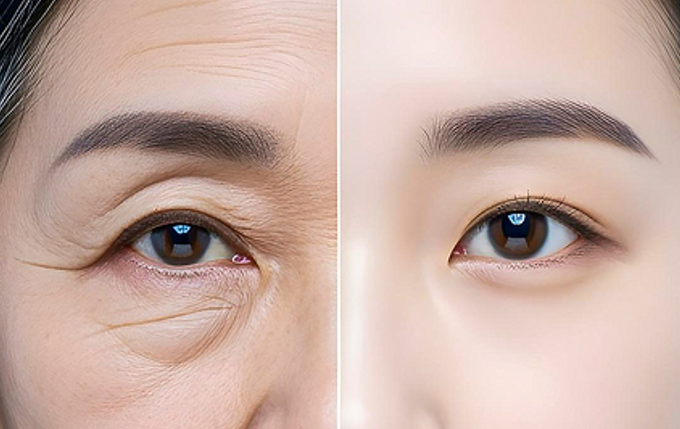
Upper blepharoplasty – the discomfort caused by sagging eyelids
As we age, the skin of the upper eyelids gradually becomes looser, and the strength of the muscles that open the eyes also weakens.
As a result, people develop the habit of using the forehead and eyebrows to open their eyes, and this often leads to deeper forehead wrinkles or irritation around the eyes.
Also, if sagging eyelids block the field of vision, it can make it hard to see your feet when going down stairs or create blind spots while driving, causing inconvenience in daily life.
In such cases, the needed procedure is upper blepharoplasty. It is a surgery that removes excess skin and corrects weakened eye-opening muscles to help the eyes open comfortably.
The most important point in middle-aged upper blepharoplasty is not to remove too much skin.
Excessive removal can lead to discomfort such as the eyes looking overly open or not closing properly.
At our clinic, we strive to create eyes that look naturally refreshed by comprehensively analyzing the amount of excess eyelid skin, the strength of the eye-opening muscles, eyebrow position, and the pattern of forehead wrinkles.
“I can open my eyes more comfortably now.”
“I can open my eyes without using my forehead muscles.”
Upper blepharoplasty is not simply a procedure that changes your expression; it is also a functional surgery that restores visual function and everyday comfort.

Lower blepharoplasty – a solution for tired-looking under-eyes
After middle age, the reason the under-eye area becomes puffy and wrinkles increase is that, along with decreased skin elasticity, the fat under the eyes shifts forward.
As a result, dark circles become more noticeable, and the face can look constantly tired and older.
In this case, the needed procedure is lower blepharoplasty.
It is a surgery that repositions or removes unnecessarily protruding fat and tidies up sagging skin to make the under-eye area smoother and firmer.
Here too, the important point is not to remove a lot of fat unconditionally.
If too much fat is removed, the under-eye area can become hollow and produce an older-looking result instead.
At our clinic, we perform surgery with the goal of creating a flat and natural under-eye area without hollows, taking into account the current amount of fat, skin elasticity, the depth of the under-eye groove, and even the line connecting to the cheeks.
In addition, because lower blepharoplasty is performed in an area densely packed with fine nerves and blood vessels beneath the eyes, anatomical understanding and skilled technique are essential.
Even for the same lower blepharoplasty, the recovery speed, scarring, and final result can vary significantly depending on the approach.
 Middle-aged eye surgery must consider the “balance of the entire face”
It is easy to think of upper blepharoplasty and lower blepharoplasty separately, but middle-aged eye surgery should be performed while considering the overall balance of facial structure.
Middle-aged eye surgery must consider the “balance of the entire face”
It is easy to think of upper blepharoplasty and lower blepharoplasty separately, but middle-aged eye surgery should be performed while considering the overall balance of facial structure.
When planning eye surgery, it is important not to look only at the eyes, but also to consider the overall direction of facial aging and balance.
If necessary, combinations with brow lift, forehead lift, or midface lifting are also fully explained to the patient, and the most natural direction is decided together.
Middle-aged eye surgery is not about how much sagging tissue is removed, but about whether the face that shows signs of time can be naturally restored to its previous appearance.
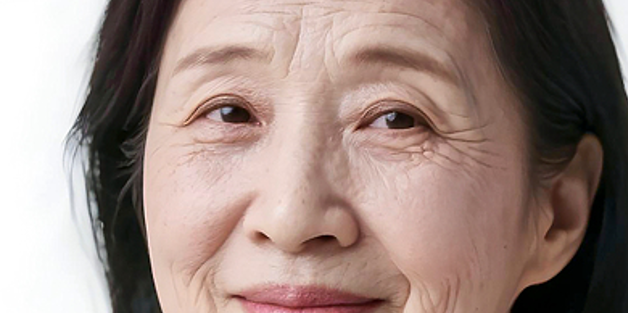
Eye surgery after middle age is not simply about making a dramatic change to look younger.
Beyond looking younger, if there are functional issues, those should also be improved.
Even this degree of change can be enough to make a noticeable difference in confidence and comfort in everyday life.
However, since this is surgery that deals with aging tissue, sufficient consultation, accurate diagnosis, and skilled technique are absolutely necessary.
Please approach upper blepharoplasty and lower blepharoplasty not as simple cosmetic procedures, but as a process that achieves both functional recovery and a naturally improved appearance.
Thank you for reading this long post today.
| This post was written for informational purposes in compliance with Article 56, Paragraphs 1–15 of the Medical Services Act. All treatments carry the risk of side effects and complications depending on the individual. Before treatment, please be sure to have a thorough consultation with medical staff who have extensive experience before making a decision. |