As aging causes the face to sag and the jawline to lose its definition, many people start considering a lifting procedure at least once. In the case of thread lifting, many are interested in it because it is relatively less burdensome than surgery.
However, there are important factors that can be easily overlooked if you decide on a procedure based only on outward appearance. Since everyone’s face differs in skin thickness, amount of fat, degree of sagging, and areas of concern, the results can be completely different even when the same method is applied. In particular, thread lifting requires careful planning and treatment of the insertion position, direction, and tension of the threads to achieve natural and stable results.
Problems such as dimpling or prominent cheekbones often occur when these individual differences are not fully considered. Therefore, if you are considering thread lifting, it is important to approach it carefully through thorough consultation.

What should be checked before a thread lifting procedure?
Thread lifting is a procedure that injects medical lifting threads into the skin layer to physically pull up sagging areas. It is known as a less burdensome procedure because it does not require incisions and has a relatively short recovery period.
However, in practice, a strong understanding of facial anatomy is very important. The face has a complex distribution of superficial fat layers, deep fat layers, fascia layers, and various nerves and blood vessels.
The threads must be placed in the appropriate position and lifted in the planned direction and with the planned tension to expect a natural and ideal effect.
If these steps are not carried out properly, the results in terms of durability and natural appearance may fall short of expectations, and if the threads are inserted into the wrong layer, uneven texture, pain, or even asymmetry can occur, so caution is needed.
Also, even when sagging looks the same, the causes can vary. Depending on whether the issue is reduced skin elasticity, fat movement, or changes influenced by the bone structure, the approach must be different. If threads are inserted using the same method without distinguishing these factors, the expected lifting effect may not appear, or the result may instead look unnatural.
In this way, thread lifting is not simply a matter of “inserting threads”; the key is the process of analyzing the individual’s facial structure and then planning the most appropriate direction and position. Therefore, the difficulty of the procedure is by no means low, and precise planning must come first.
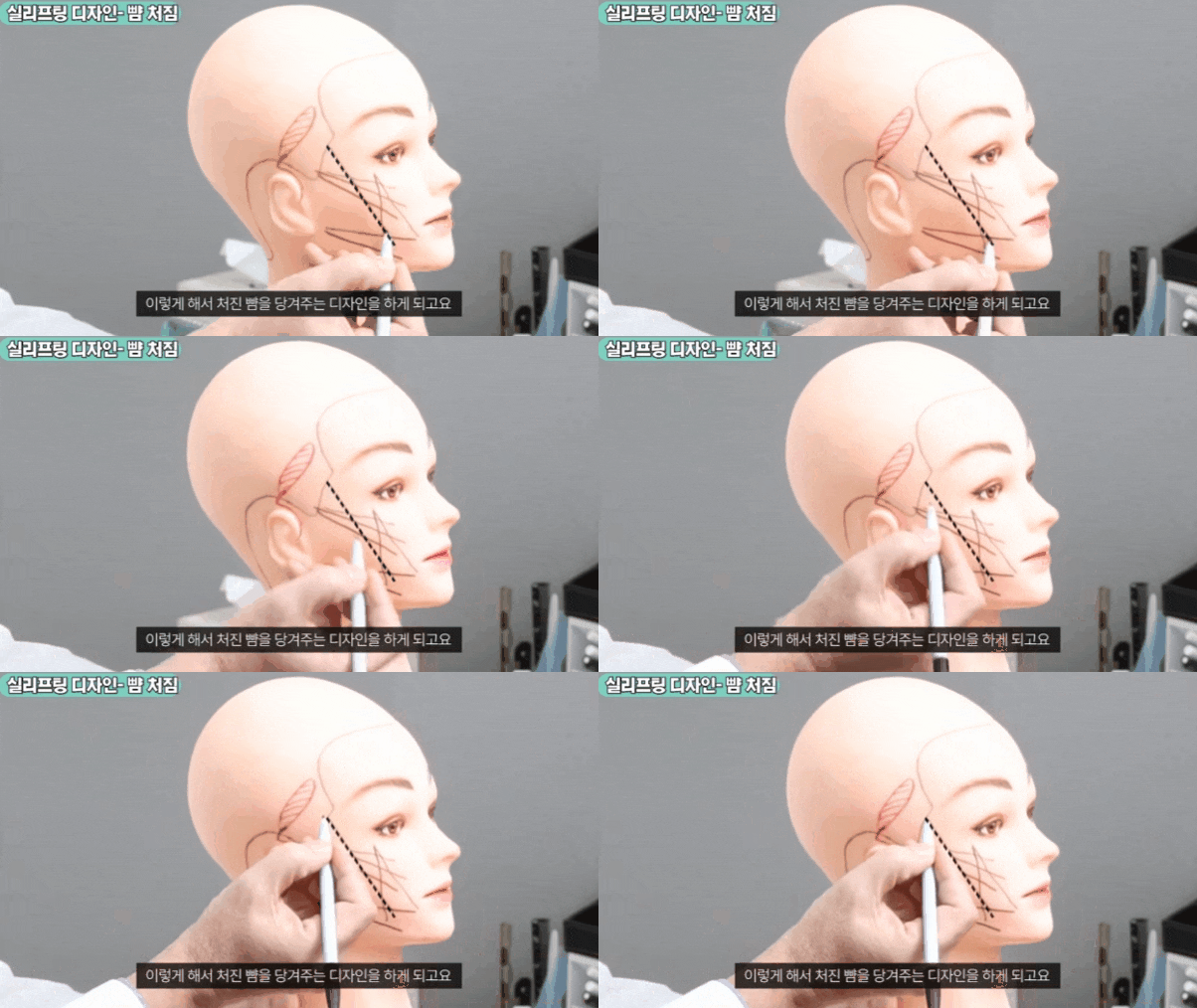
Why do dimpling and prominent cheekbones occur, and how can they be prevented?
One of the representative changes that can appear after thread lifting is dimpling. This refers to a state in which the skin surface appears temporarily indented. It usually occurs when the threads adhere strongly to the skin or when the pulling force is concentrated at a specific point.
Prominent cheekbones can also become more noticeable if one area is pulled excessively without considering the overall balance of the face.
To reduce these problems, several important factors must be considered.
First, the type and characteristics of the threads must be selected according to the patient’s condition. Second, the insertion depth and direction must be designed in a balanced way. Third, the three-dimensional structure of the entire face must be considered so that force is not concentrated in only one area.
Ultimately, the key is a 1:1 customized procedure. The way the threads are placed should differ depending on whether the skin is thin or thick, and whether there is a large or small amount of fat. In addition, if there is asymmetry between the left and right sides, the plan should be made to compensate for it in order to achieve a natural result.
When this kind of detailed approach is taken, unnatural changes such as dimpling or prominent cheekbones can be reduced, and the overall facial contour can be improved in a more balanced way.

What should you check when choosing an experienced medical team?
The result of thread lifting is not determined only by the equipment or materials used. The experience and judgment of the medical team performing the procedure have a very large impact. So what should you look at to find an experienced medical team?
First, an adequate consultation process is important. They should be able to analyze the individual’s facial structure and areas of concern in detail and determine why a particular method is appropriate. Rather than simply carrying out the procedure the patient wants, they should be able to identify the right procedure, plan it, design it, and then perform it.
Next, it is important to check whether they have experience with a variety of cases. Because facial shapes and aging patterns vary widely, a medical team with experience in many different types of cases can provide more customized treatment.
You should also check whether the procedure plan is designed with safety in mind. Designing a path that achieves results while avoiding areas dense with nerves and blood vessels is something that comes from experience. Only when these factors are comprehensively in place can stable results be expected.
Ultimately, thread lifting is a procedure in which the outcome can vary greatly depending on who performs it. Rather than simply comparing prices, it is necessary to understand the structure of the procedure and make a careful choice based on that understanding.
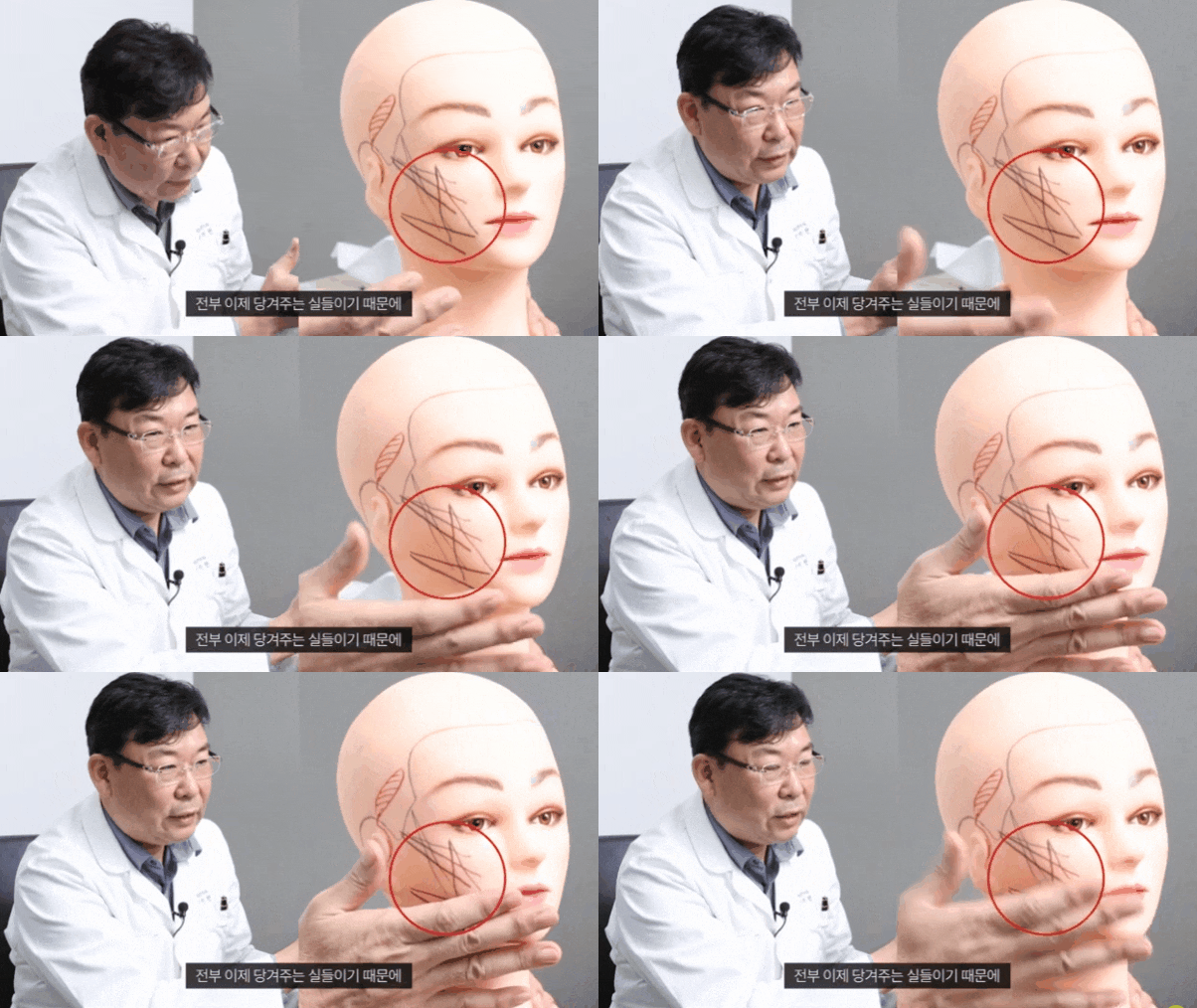
Although thread lifting is known as a lifting method that can be approached relatively simply, in reality it is a procedure that requires very precise planning. The individual’s facial structure, skin condition, and the causes of sagging must be identified, and a plan suited to those factors must be carried out to expect natural and stable results.
In particular, problems such as dimpling or prominent cheekbones often occur when customized design has not been sufficiently carried out. To prevent this, detailed analysis and planning must begin from the pre-procedure stage.
If you are considering thread lifting, please be careful and check whether customized treatment is possible and whether the medical team has sufficient experience and expertise.
Thank you.
| This post was written for informational purposes in compliance with Article 56, Paragraphs 1 through 15 of the Medical Services Act. All treatments carry the risk of side effects and complications depending on the individual. Before treatment, please be sure to have a thorough consultation with a medical team with extensive experience before making a decision. |