Double eyelid surgery is one of the more well-known eye surgeries.
However, after the first surgery, it is not uncommon for people to consider revision surgery because the line loosens over time, the left and right sides become uneven, or the result looks different from what they expected.
Among those looking into revision surgery, many people have questions like these.
“Does revision surgery have to be done with an incision?”
“Is it possible to do it again with the buried suture method?”
“Won’t it look more unnatural than before?”
“Why is revision surgery said to be more difficult?”
In fact, double eyelid revision surgery often requires a more cautious approach than the first surgery.
Because surgery has already been performed once, factors such as tissue changes, adhesion status, and whether the skin has sagged all need to be considered.
So today, for those considering double eyelid revision surgery, we will explain in detail whether buried suture revision is possible and what must be checked during revision surgery.
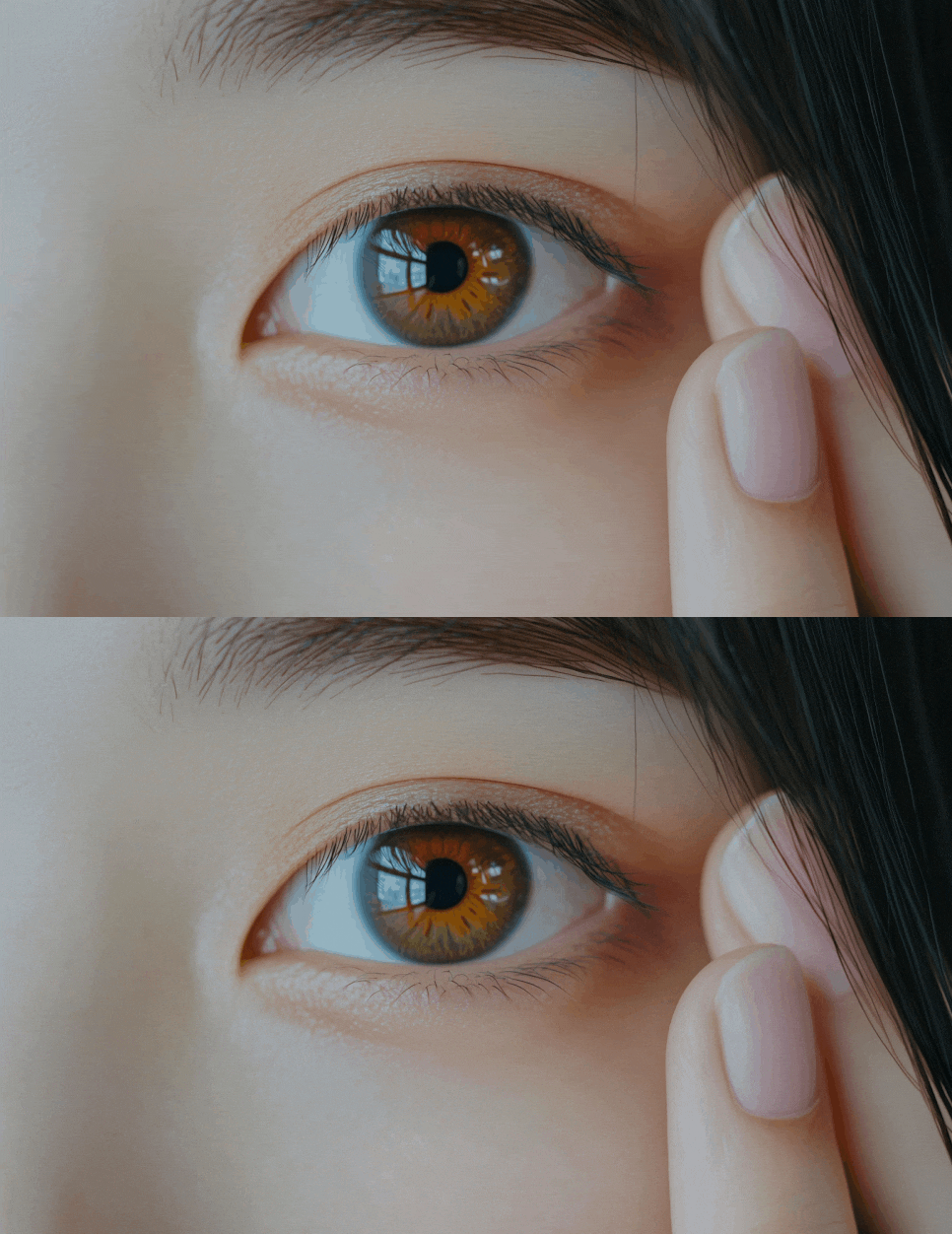
Why do people get double eyelid revision surgery?
The reasons for considering double eyelid revision surgery vary from person to person.
Typical reasons for revision surgery
✔ The double eyelid line has loosened
✔ Left-right asymmetry has developed
✔ The line is too high or too low
✔ Multiple folds have formed
✔ The eyes look unnatural when opened
✔ The impression has changed over time
✔ Eyelid drooping has also progressed
In particular, as time passes and skin elasticity changes or the eyelid fat changes, the result may start to feel different from before.
Also, a line that seemed fine at first may gradually become less distinct over time, or only one side may loosen.
Why is revision surgery more complicated?
Double eyelid revision surgery often requires a much more careful approach than the first surgery.
This is because tissue changes have already occurred.
After the first surgery, adhesions or scar tissue may remain inside the eyelid.
If revision surgery is performed in this state:
- the tissue may be firmer than expected
- skin movement may change
- the method used to fix the line may also need to change
In particular, because the current eye condition can differ depending on the previous surgical method, it is difficult to approach the case by looking only at the “line you want.”
Does double eyelid revision surgery have to be done with an incision?
Revision surgery does not necessarily mean that only the incision method is possible.
Depending on the eye condition, revision surgery may also be possible with the buried suture method.
What matters, however, is not whether it is revision surgery, but first understanding the current condition of the eyes.
The buried suture revision approach may be considered in the following cases.
Cases where buried suture revision may be possible
✔ The skin sagging is not severe
✔ The eyelid skin is relatively thin
✔ There is not an excessive amount of fat
✔ The previous adhesions are not severe
✔ Only part of the line has loosened
✔ A natural correction of the line is desired
Compared with the incision method, the buried suture method is relatively less burdensome in recovery, and many people consider it when they prefer a more natural result.
In particular, if the goal is not a drastic change but a natural improvement, some people consider the buried suture revision approach.
On the other hand, there are also cases where the incision method is needed
Not all revision surgeries can be done with the buried suture method.
The incision approach may be more appropriate in the following cases.
Cases where the incision method is needed
✔ Severe eyelid drooping
✔ Thick eyelid skin
✔ A lot of fat
✔ Severe scar adhesion from previous surgery
✔ Multiple revision surgeries have already been performed
✔ Repeated line instability
In particular, if the skin has sagged and buried suture surgery is forced anyway, the desired result may not be sufficiently achieved, and the durability may be reduced.

Important points in buried suture revision surgery
Buried suture revision surgery may seem relatively simple, but it can require much more careful design.
This is because there is already a history of surgery.
- Check the condition of the existing line
You need to check how much of the previous line remains.
Depending on the line traces or the direction of adhesion, the direction of the new line design may also change.
- Overcorrection should be avoided
Just because it is revision surgery does not mean that making the line sharper and stronger will lead to a better result.
A line that is too high or too thick can instead create an unnatural impression.
In revision surgery in particular, it is important that the result naturally suits the current eye shape and overall facial impression.
- Check left-right balance
Human eyes are not perfectly symmetrical left to right to begin with.
So during revision surgery, factors such as the strength of eyelid opening and differences in skin thickness must also be checked carefully.
Simply matching the line height does not automatically create a natural result.

Why is experience important when doing revision surgery?
Double eyelid revision surgery has far more variables than the first surgery.
The current eye condition is different for everyone, the previous surgical methods are different, and the condition of the skin tissue also varies greatly from person to person.
That is why sufficient experience and anatomical understanding are important.
These factors need to be considered together
✔ Existing adhesion status
✔ Degree of skin sagging
✔ Eye-opening strength
✔ Amount of fat
✔ Line stability
✔ Left-right balance
✔ Harmony with the overall facial image
In particular, revision surgery is not simply about modifying the line; it can be closer to the process of redesigning the overall impression.
So rather than creating a line that is unconditionally flashy or thick, it is important to find a direction that naturally suits the current eye condition.
Double eyelid revision surgery: what you must check before surgery
If you are considering revision surgery, it is a good idea to thoroughly check the following points.
Checklist
✔ Whether the current eye condition is being sufficiently analyzed
✔ Whether the choice between buried suture and incision is not being made uniformly
✔ Whether a natural direction is prioritized over overcorrection
✔ Whether there is sufficient revision surgery experience
✔ Whether the overall harmony of the face is being considered
✔ Whether there is enough consultation
Revision surgery requires consideration of the tissue changes that have occurred after the first surgery, and it often needs a more delicate approach than before.

Most people considering double eyelid revision surgery do not simply want to change one line.
That is why, in revision surgery, what matters is not an overly dramatic change, but a direction that naturally matches the current eye condition and overall facial impression.
If you are considering double eyelid revision surgery, rather than focusing only on the surgical method, please be sure to check how carefully the current eye condition is analyzed and whether the approach is customized accordingly.
| This post was written for informational purposes in compliance with Article 56, Paragraphs 1 to 15 of the Medical Service Act. All treatments carry risks of side effects and complications depending on the individual. Before treatment, please make sure to have a thorough consultation with experienced medical staff before making a decision. |