One of the areas where changes are first noticed in middle age is the eyes.
Many people feel that their eyes look more sleepy than before or that they have developed a more tired appearance.
In more severe cases, drooping eyelids may obstruct the field of vision and cause discomfort, or the skin around the eyes may become irritated.
The area under the eyes may also appear more aged as fat bulges outward or the skin sags, making dark circles look more pronounced and the overall appearance seem older.
Because of these changes, many people look into upper or lower blepharoplasty, but...
Eye procedures for middle-aged adults require a much more cautious approach than general cosmetic eye surgery.
In particular, making a hasty decision based only on the price or before-and-after photos may lead to a procedure that does not suit the current condition.
This may result in problems such as an unnatural appearance, overcorrection, or asymmetry between the two sides, so caution is necessary.

What Is Upper Blepharoplasty?
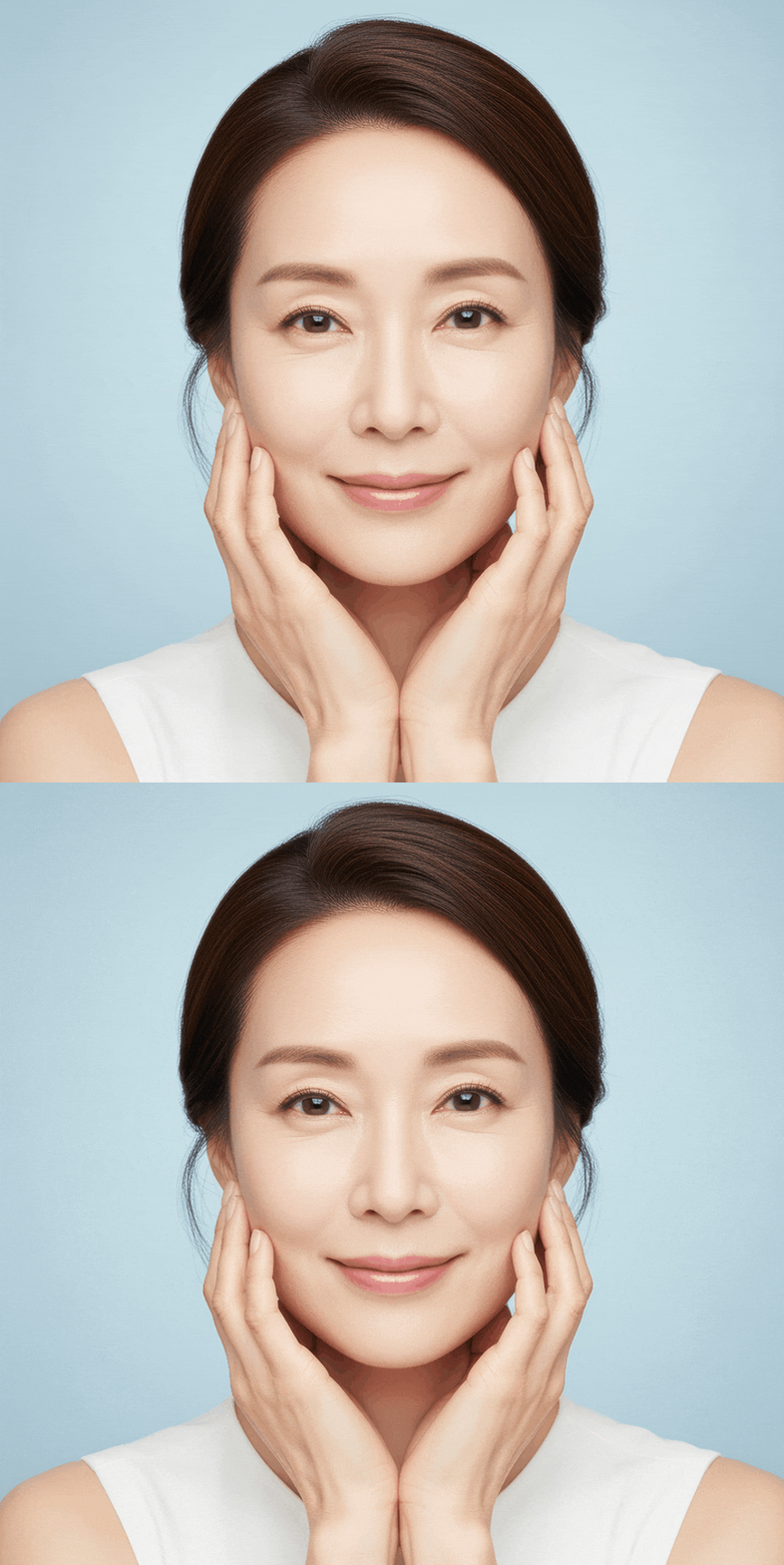
Upper blepharoplasty is a procedure that helps improve drooping eyelids and create a younger, more vibrant appearance.
After middle age, the eyelids may droop as skin elasticity decreases.
This can make the eyes look sleepy and the face appear older, while also causing functional problems such as restricted vision and irritation around the eyes.
Upper blepharoplasty removes excess, sagging eyelid skin and creates a double-eyelid crease, which may help produce a clearer and younger-looking appearance.
However, the procedure does not simply end with removing skin.
If too much skin is removed, the eyes may appear excessively open or the expression may become too intense. In severe cases, closing the eyes comfortably may also become difficult.
Therefore, the procedure should be approached with the goal of achieving a natural improvement suited to the current condition of the eyes.
Not Everyone With Drooping Eyelids Needs Upper Blepharoplasty
Not everyone with drooping eyelids in middle age needs upper blepharoplasty.
The appropriate method may vary depending on the actual cause.
If the skin is not severely drooping and only the double-eyelid crease has become less defined, a relatively simple non-incisional suture method may help create a clearer appearance.
On the other hand, upper blepharoplasty may be more suitable when the eyelids are severely drooping.
The following methods may also be considered:
✅ Non-incisional suture method
✅ Sub-brow lift
✅ Forehead lift
What Is Lower Blepharoplasty?
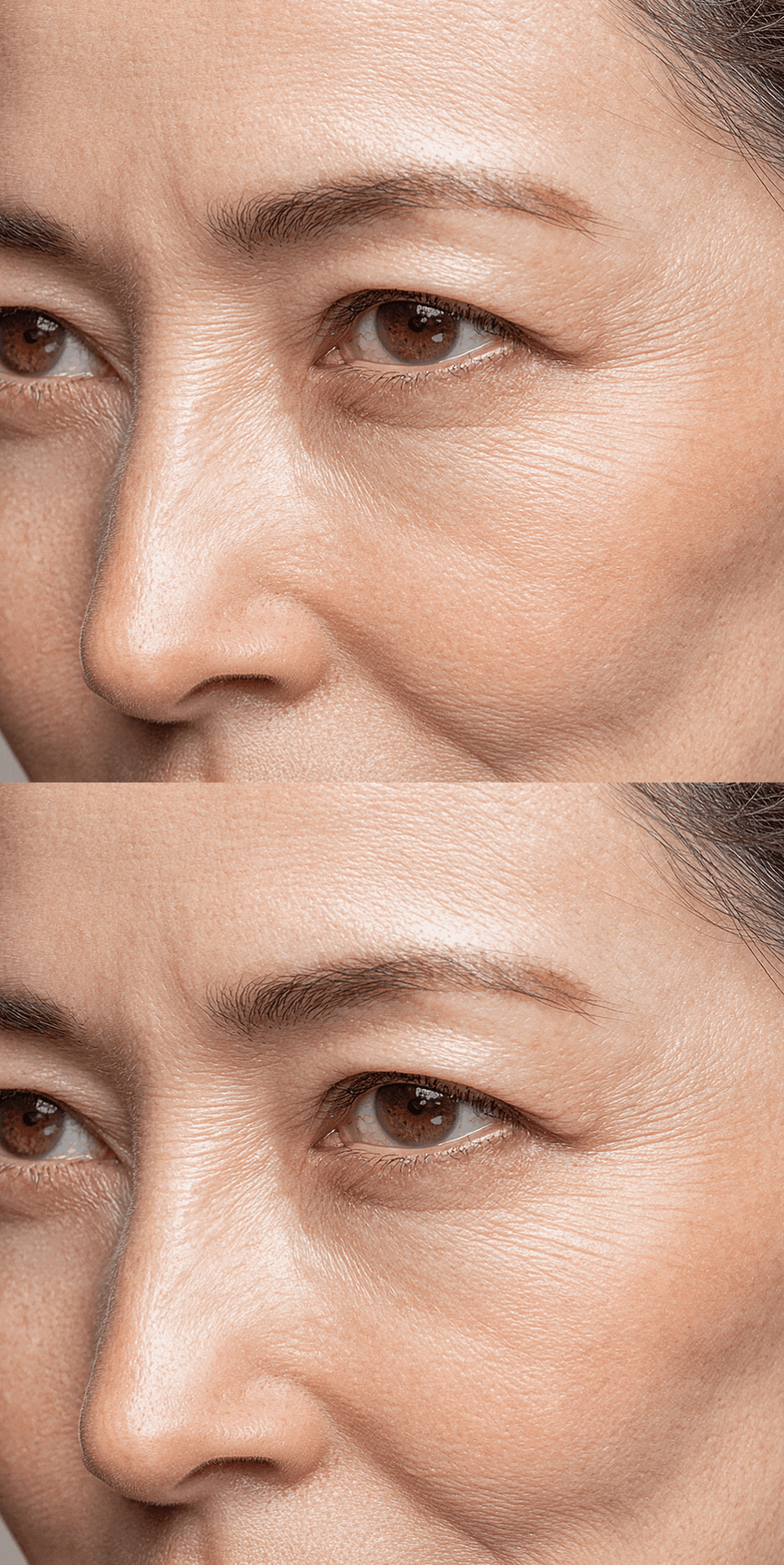
Changes also appear beneath the eyes in middle age.
The skin under the eyes may become loose and wrinkled, while the area may also become more prominent and bulge outward.
In particular, bulging under the eyes can make dark circles appear more severe or create a more tired appearance.
Many people may also look older than their actual age.
Lower blepharoplasty is one procedure that may be considered in such cases.
However, simply removing fat does not necessarily resolve the issue.
For the under-eye area in middle-aged adults, it is necessary to consider not only the degree of fat protrusion but also skin elasticity and whether there is hollowing under the eyes.
This is because excessive fat removal may instead make the under-eye area look sunken or cause the face to appear even more tired.
Therefore, lower blepharoplasty should also be approached by thoroughly analyzing the current condition of the eyes and aiming for a natural refinement.
Why Should Eye Procedures for Middle-Aged Adults Be Approached Carefully?
Eye procedures for middle-aged adults differ from simple cosmetic eye surgery performed on younger people.
This is because there are many more factors to consider when treating tissues affected by aging.
In particular, skin elasticity, the strength of the muscles that open the eyes, changes in the position of fat, and the position of the eyebrows and forehead must all be assessed to achieve a more natural result.
If surgery is performed uniformly without sufficiently considering these factors, satisfaction with the outcome may be reduced.
In addition, even small differences in eye procedures for middle-aged adults can significantly change the overall appearance, making the design process extremely important as well.
For this reason, it is advisable to carefully check the following points during a consultation:
✅ Whether the current condition of the eyes is analyzed in detail
✅ Whether various surgical methods are compared and explained
✅ Whether a natural result is prioritized
Drooping eyelids and changes under the eyes that appear after middle age can naturally develop in anyone.
What matters is not approaching every case with one fixed method, but finding an approach suited to the current condition.
Upper blepharoplasty may be appropriate in some cases, while a non-incisional suture method, sub-brow lift, or forehead lift may lead to a more natural result in others.
Changes under the eyes may also be considered for improvement through lower blepharoplasty.
Above all, because overall facial harmony and a natural appearance are important in eye procedures for middle-aged adults, carefully consider the appropriate method for you through a thorough consultation with a board-certified plastic surgeon who has extensive experience and expertise.
| This post was written for the purpose of providing information in compliance with Article 56, Paragraphs 1–15 of the Medical Service Act. All treatments carry individual risks of side effects and complications. Before undergoing treatment, be sure to have a thorough consultation with medical professionals who have extensive experience, and make your decision afterward. |