“Won’t my cheekbones look more prominent after thread lifting?”
“I'm considering it because I want my face to look smaller, but what if it actually looks larger?”
“I’m worried that being pulled too tightly will make my expression look harsh.”
Thread lifting is a procedure chosen to refine sagging facial contours.
But why do some people worry that their cheekbones may look more prominent or that their face may appear larger after the procedure?
The reason is that thread lifting is not simply a procedure that lifts sagging skin.
The result varies depending on which facial tissues are moved, at what depth, and in which direction.
If the pulling direction is not appropriate, sagging tissue may not lift naturally and may instead appear concentrated in a specific area.
The midface and the area around the cheekbones require particular care because even small changes in these areas can alter the appearance of the face shape.
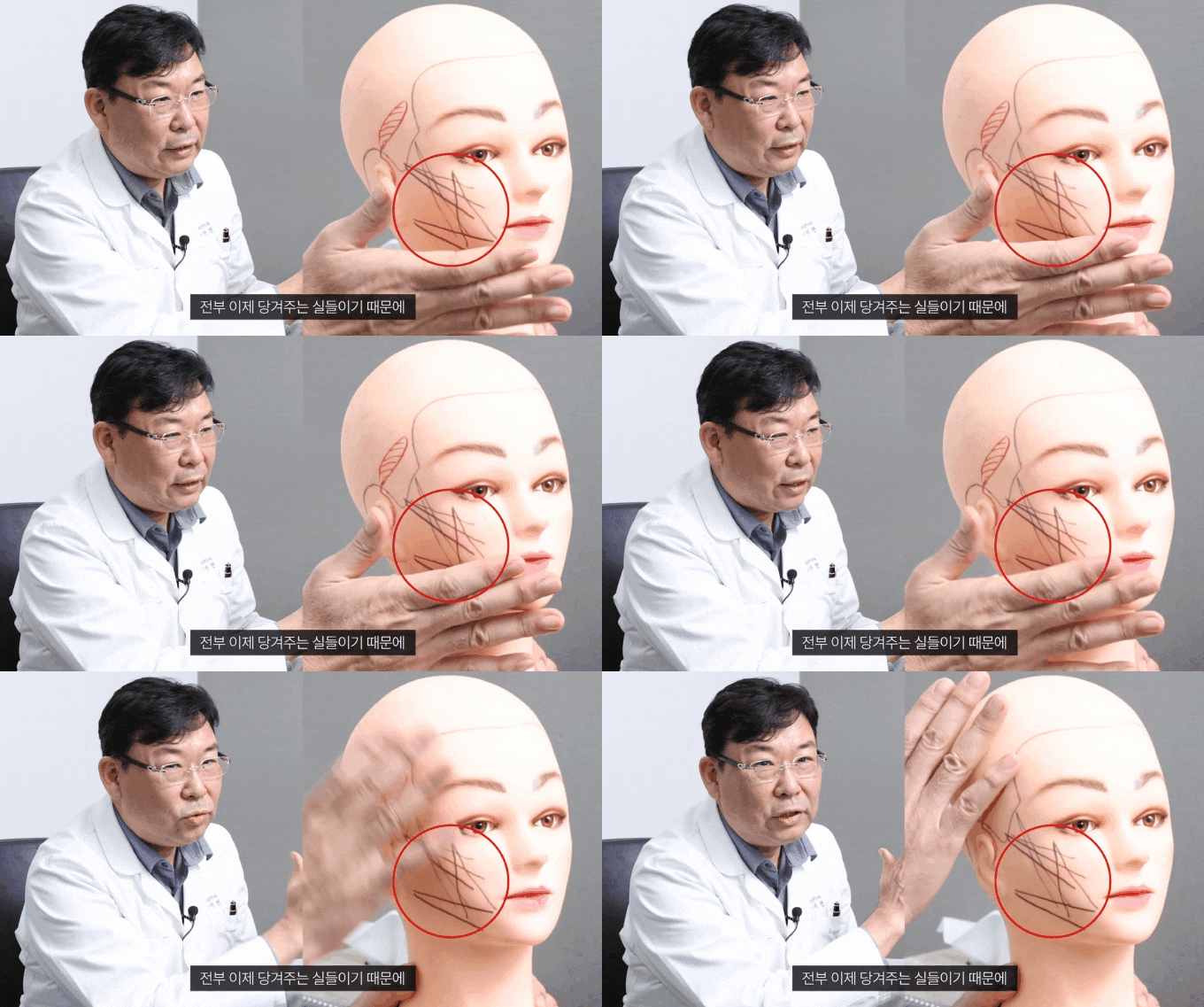
Thread lifting requires an individualized, one-on-one approach.
People considering thread lifting for the first time may easily assume that inserting more threads or pulling more firmly will produce better results.
However, that is not necessarily the case.
The face contains fat, muscles, skin, and retaining ligaments that are intricately connected. Sagging does not occur in just one direction.
Sagging cheeks, sagging lower-cheek fat, nasolabial folds, marionette lines, and a weakened jawline can appear in connection with one another.
Therefore, pulling everything strongly upward may result in an unnatural tightness rather than natural lifting.
Particular caution is needed if the cheekbones are already prominent. If sagging cheek fat is lifted in the wrong direction, volume may appear concentrated around the cheekbones.
In this case, rather than making the face look smaller, the midface may look wider or the overall impression may appear stronger.
Conversely, some people have insufficient cheekbone volume and cheeks that appear hollowed lower down.
In such cases, the goal is not simply to avoid pulling near the cheekbones. Instead, the sagging tissue should be repositioned while preserving the flow of volume in the areas that need it.
In other words, even with the same thread-lifting procedure, the direction should vary according to the individual’s facial shape.

The thread insertion point and fixation point can change the result
One of the important factors in thread lifting is the insertion point and fixation point. The insertion point is where the thread begins to enter, while the fixation point refers to the direction in which the lifted tissue is stably supported.
If these two points are not appropriate, the desired area may not be lifted, or volume may appear concentrated in a particular area.
Therefore, thread lifting should not be evaluated solely by the number of threads used.
During a consultation, the following should also be checked:
□ Whether the person naturally has a facial shape with prominent cheekbones
□ Whether sagging cheek fat is making the face appear larger
□ Whether the lower cheek area and marionette lines are sagging together
□ Whether a weakened jawline is making the facial shape look less defined
□ Whether the skin is thin and therefore more likely to show the threads
After these factors have been assessed, the direction and depth of the threads should be determined.
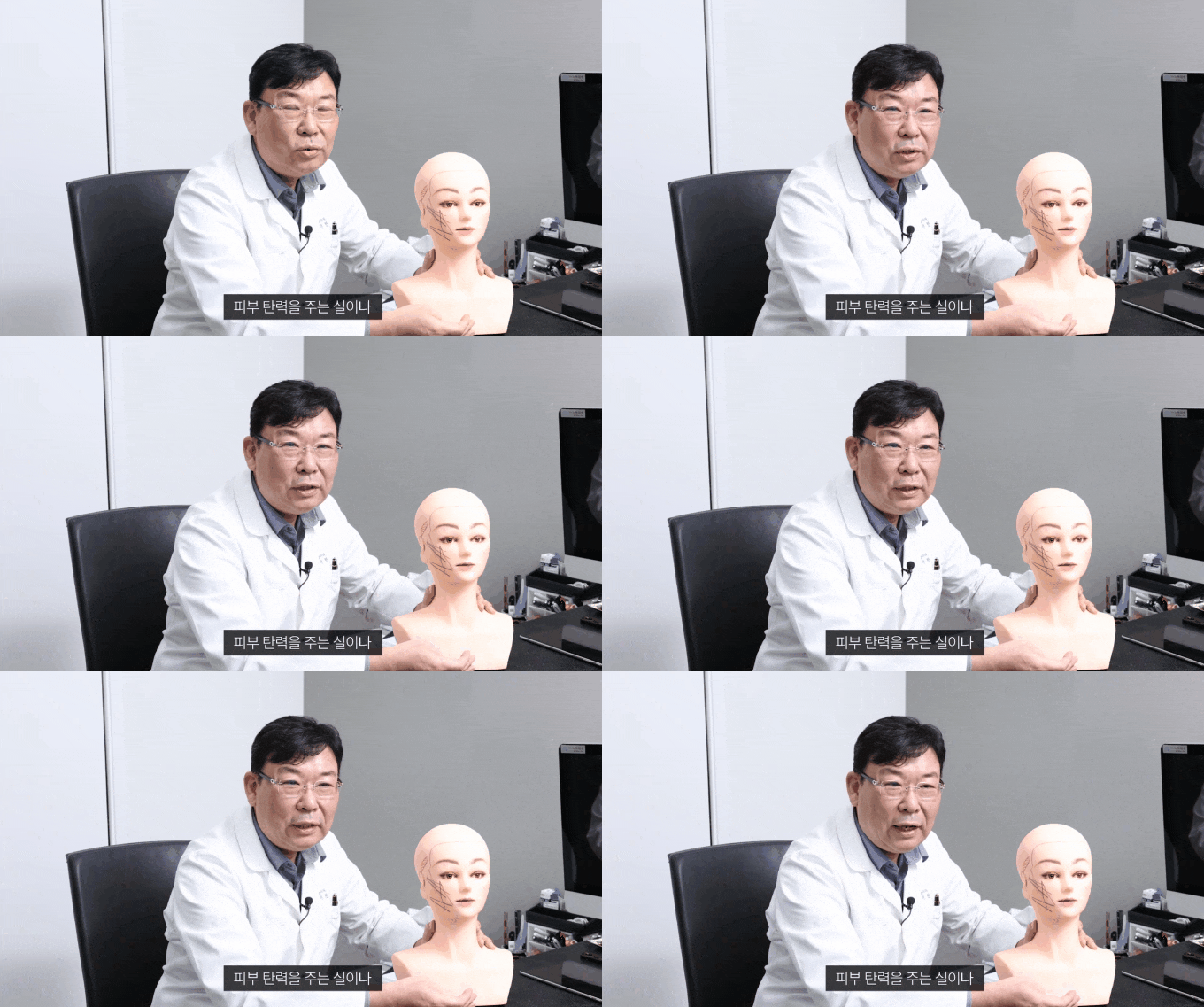
For this reason, it is important to first assess the direction of facial sagging and the distribution of fat. When necessary, custom-made threads and a tripod-style lifting design may be used, with consideration given to stable support from multiple points rather than pulling in only one direction.
If you are concerned about dimpling or an uneven appearance
Many people also worry that their skin may look uneven or indented after thread lifting. This is commonly called dimpling.
Immediately after the procedure, temporary pulling or folds may be visible as the threads hold the tissue in place.
These often improve naturally over time.
However, if the threads are placed at an inappropriate depth, the pulling direction is unnatural, or the skin thickness is not taken into account, discomfort may persist for longer.
Therefore, although planning before thread lifting is important, it is also important to check the condition after the procedure and make adjustments when necessary.
The face continues to move repeatedly while smiling, speaking, and chewing. These movements must also be considered to achieve thread lifting that does not make facial expressions look unnatural.

What is the purpose of thread lifting?
Many people want their face to look smaller through thread lifting. However, if thread lifting is understood as a procedure that completely changes the facial shape itself, there may be a difference between expectations and results.
Thread lifting may help reduce the heavy and broad appearance of the face by refining sagging tissue.
For someone with an indistinct jawline, the jawline may appear somewhat more defined, while a face that looked square because of sagging cheeks may appear softer overall.
However, the possible extent of improvement varies depending on facial shape, skin condition, and the degree of sagging.
If the sagging is severe or the skin is significantly lax, thread lifting alone may not be sufficient.
In such cases, another lifting method or a surgical approach may be more appropriate.
The important thing is to assess the current condition accurately.
Distinguishing between cases in which thread lifting is sufficient and those in which it is not can help reduce unnecessary procedures and find a more natural approach.
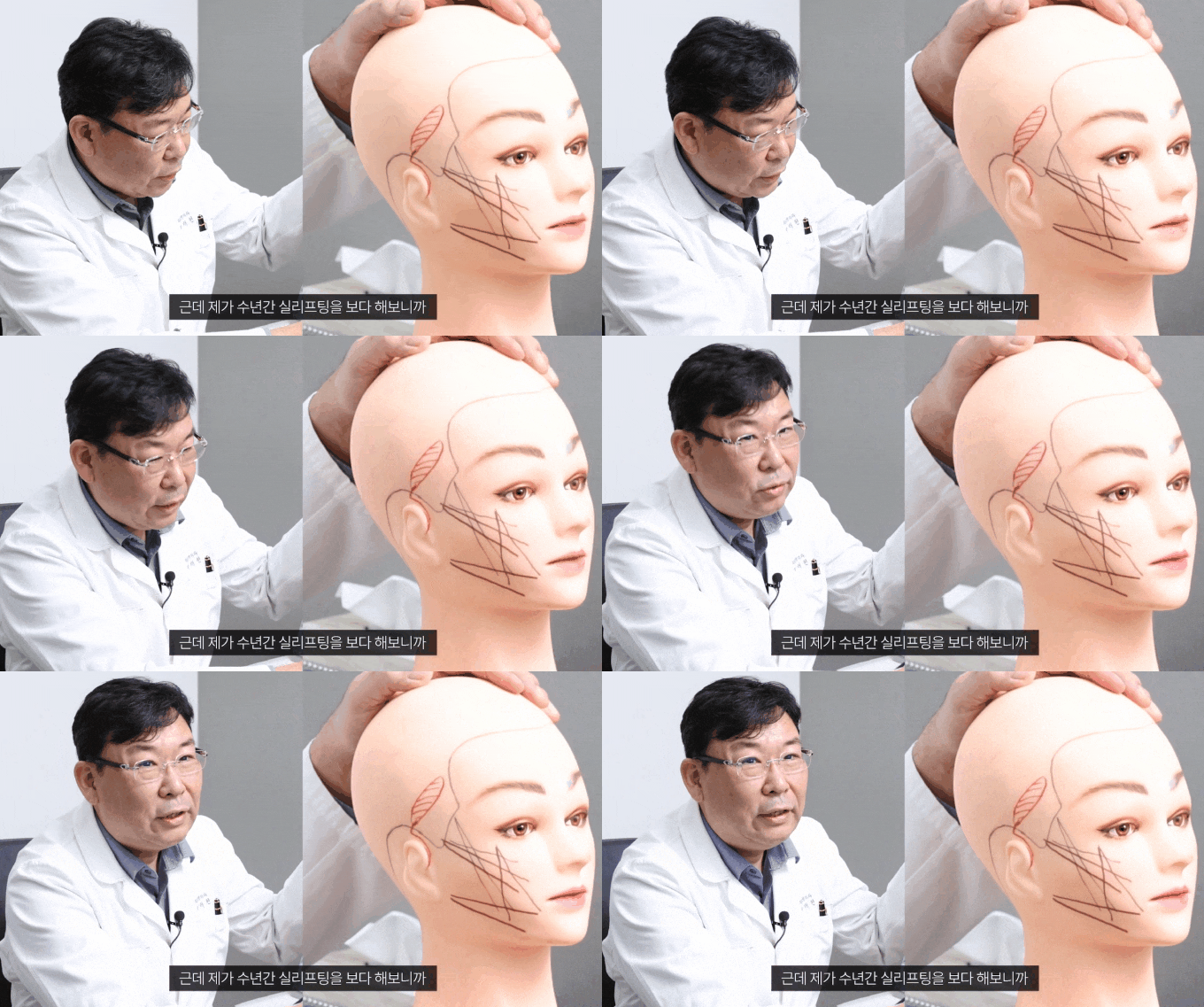
What to consider when choosing a plastic surgery clinic for thread lifting
When looking into thread lifting, it is important to be cautious about deciding based solely on the price or the number of threads.
Even when the same threads are used, the result can vary depending on who places them, in which direction, and at what depth.
If you are particularly concerned about prominent cheekbones, check during the consultation whether the clinic considers the balance of the entire face.
It is important to see whether they explain the midface, lower cheek area, marionette lines, and the volume around the cheekbones together, rather than focusing only on the nasolabial folds or the jawline.
It is also preferable to choose a provider who explains which areas should be lifted and which areas should be adjusted to prevent excessive concentration of tissue.
| This post was written for informational purposes in compliance with Article 56, Paragraphs 1–15 of the Medical Service Act. All treatments carry risks of side effects and complications that may vary from person to person. Before undergoing treatment, please have a thorough consultation with a medical professional with extensive experience and make your decision only afterward. |