Hollowness above the eyes can make your appearance look tired and older.
Some people are often told, “You look tired” or “Did you not get enough sleep?” even when they have had plenty of rest.
In such cases, it is easy to think that dark circles under the eyes are the only problem, but unexpectedly, the cause may often be hollowness above the eyes.
When the upper eyelid area is sunken, a shadow forms over the eyelids.
This shadow can make the overall impression of the face look darker, make the double-eyelid line appear layered, or make the eyes look less defined.
If the fat above the eyes has decreased with age, it is worth considering reduced eyelid volume rather than simply attributing the appearance to fatigue.
One option that may be considered in this situation is eyelid fat grafting.
This procedure fills the reduced volume above the eyes with the patient’s own fat to create a softer, more lively appearance around the eyes.
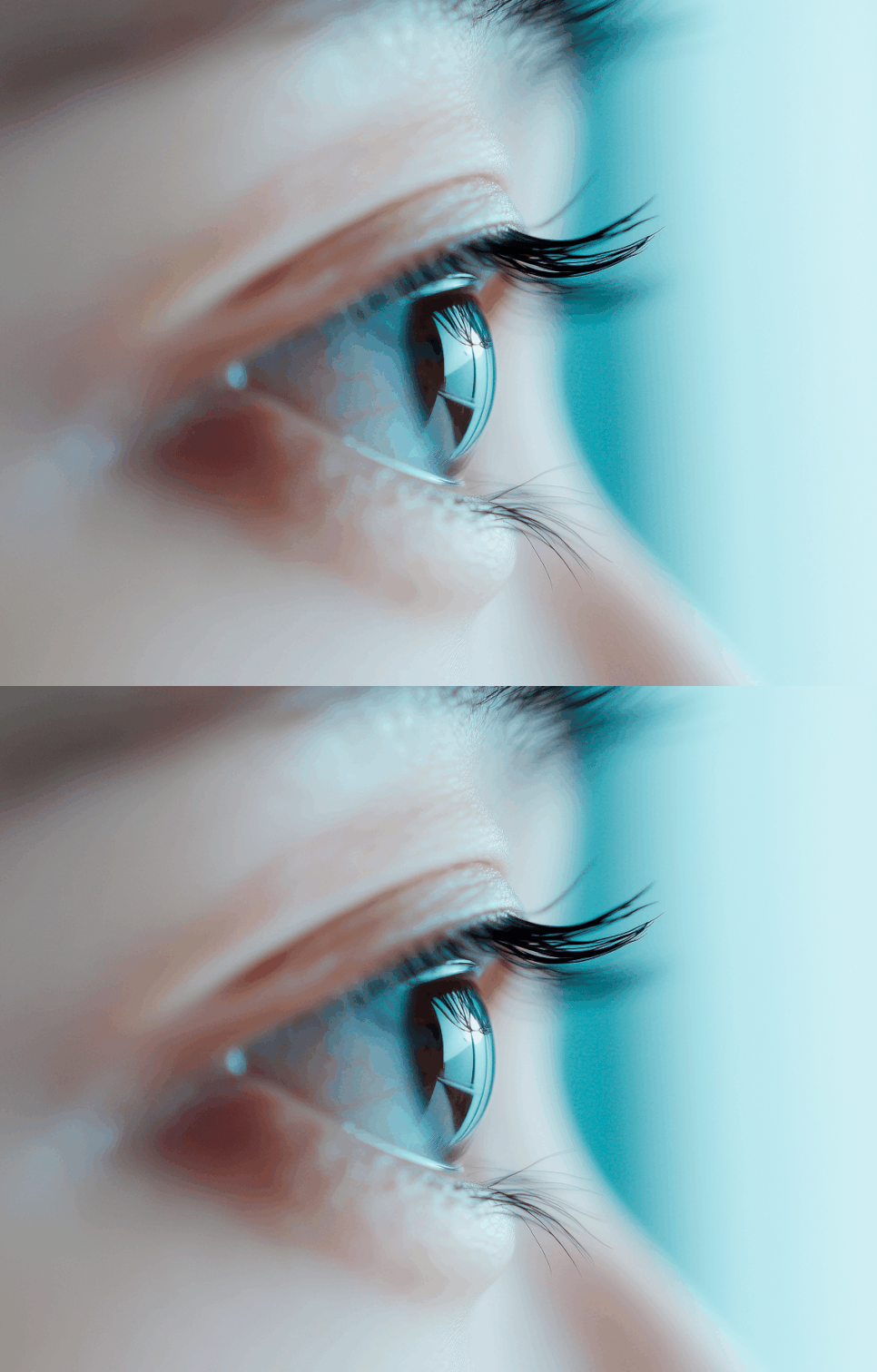
Why does hollowness above the eyes occur?
Hollowness above the eyes can occur for various reasons.
Some people are born with little fat in the upper eyelid area, while others gradually develop hollowness as fat and soft tissue decrease with age.
Hollowness may also become more pronounced after rapid weight loss or repeated eyelid surgery, when the tissue becomes thinner.
The fat above the eyelids does more than simply create volume.
It also helps the skin and tissue move smoothly when opening and closing the eyes.
If this area becomes excessively hollow, the eyes may feel dry and heavy, and some people experience increasing eye fatigue as the day progresses.
Common changes associated with hollowness above the eyes include the following.
■Deep shadows form above the eyes, making you look tired
■The double-eyelid line forms multiple layers
■The existing line rolls upward or becomes less defined
■The eyes may appear weaker when opening, creating a darker impression
■The eyelids may feel dry or become tired easily
As such, hollowness above the eyes is difficult to view as merely a cosmetic issue.
Because it can affect the impression of the eyes, the double-eyelid line, and eye fatigue, it is important to check your current condition before choosing an improvement method.

How is eyelid fat grafting performed?
Eyelid fat grafting involves harvesting a small amount of fat from areas such as the abdomen or thighs, purifying it, and then injecting it into the hollow area above the eyes.
Because the eyelids have thin skin and move frequently, it is difficult to expect a natural result by simply injecting a large amount of fat.
What matters is not “how much is injected,” but which layer it is placed in, how much is used, and how evenly it is distributed.
The area above the eyes can show significant changes in the eyelid line and overall impression even with small differences.
If too much is injected, the upper eyelids may look swollen or heavy, while injecting too little may result in insufficient improvement of the hollowness.
Therefore, eyelid fat grafting requires a delicate approach in which the fat is divided and injected in small amounts.
Because the patient’s own fat is used, the procedure has the advantage of causing little foreign-body sensation and providing a relatively soft tissue feel.
However, the fat retention rate can vary depending on the individual’s constitution, skin condition, and postoperative care.
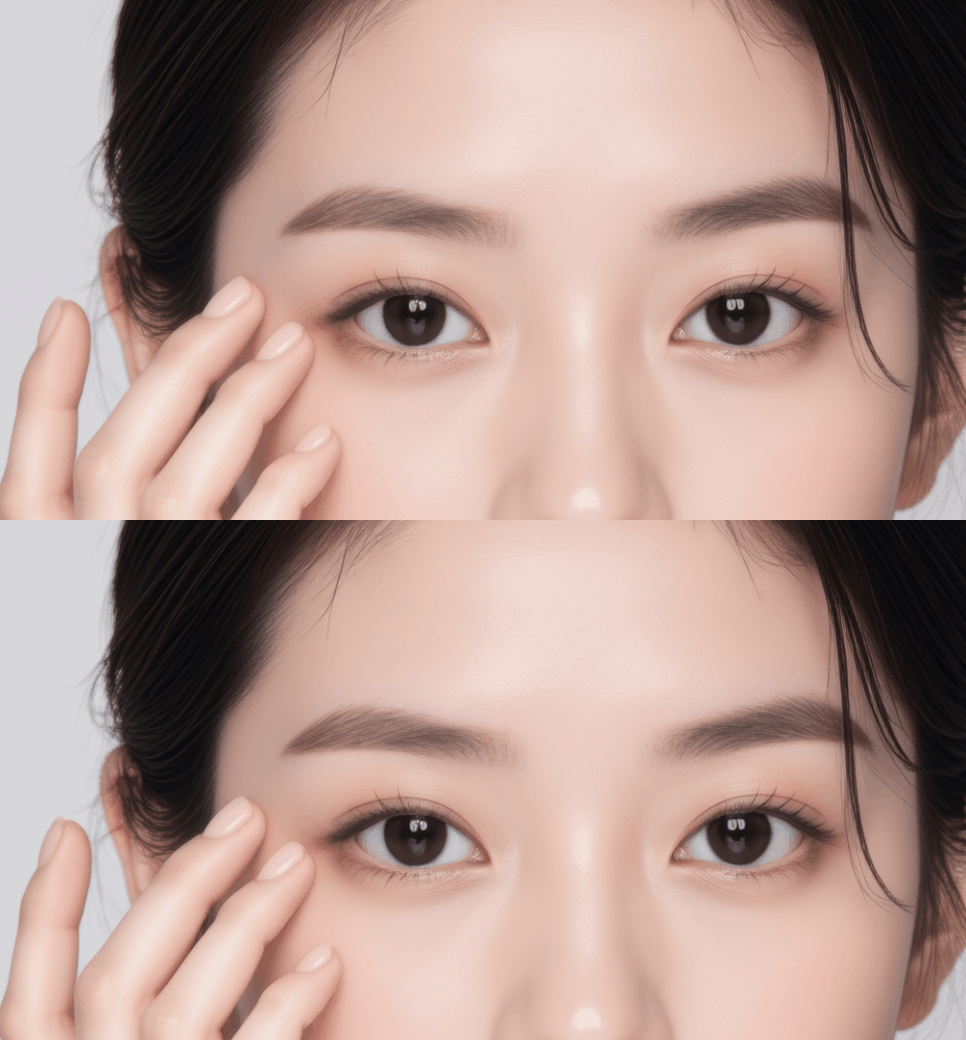
Is fat grafting alone possible without upper blepharoplasty?
Not everyone with hollowness above the eyes requires upper blepharoplasty.
If skin sagging is not severe and the main issue is a lack of volume, eyelid fat grafting alone may improve the overall impression.
As the sunken shadow is softened, the eyes may appear gentler, and a double-eyelid line that had formed multiple layers may become more defined.
Conversely, if the skin is significantly sagging or the eyelids themselves are considerably lax, fat grafting alone may have limitations.
In such cases, more stable results may require upper blepharoplasty, which also removes sagging skin, or another eyelid surgery method.
In other words, the key is to determine whether the main issue is “hollowness,” “sagging,” or a combination of both.
Although they may look like the same type of hollowness above the eyes, the actual cause differs from person to person.
If skin excision is performed first on someone who lacks fat, the eyes may look even more sunken. Conversely, if only fat is added for someone with significant skin sagging, a heavy impression may remain.

What if you are also concerned about fat under the eyes?
Some people have hollowness above the eyes while the area under the eyes appears bulging.
In such cases, the face may look more tired, and signs of aging around the eyes may appear more pronounced.
It is therefore worth examining the condition of the fat under the eyes as well.
If the fat under the eyes is protruding while the area above the eyes is hollow, improvement of the hollowness above the eyes can be planned together with procedures such as lower-eye fat repositioning or lower blepharoplasty.
Depending on the case, addressing the bulge under the eyes while supplementing the insufficient volume above the eyes may help create a more naturally balanced overall appearance around the eyes.
However, this should not be approached with the simple assumption that fat under the eyes can be used directly above the eyes.
The amount, quality, and location of the fat, as well as skin thickness and eyelid movement, must all be assessed together.
Because even very small changes can be noticeable around the eyes, it is important to have a thorough consultation with an experienced medical professional.
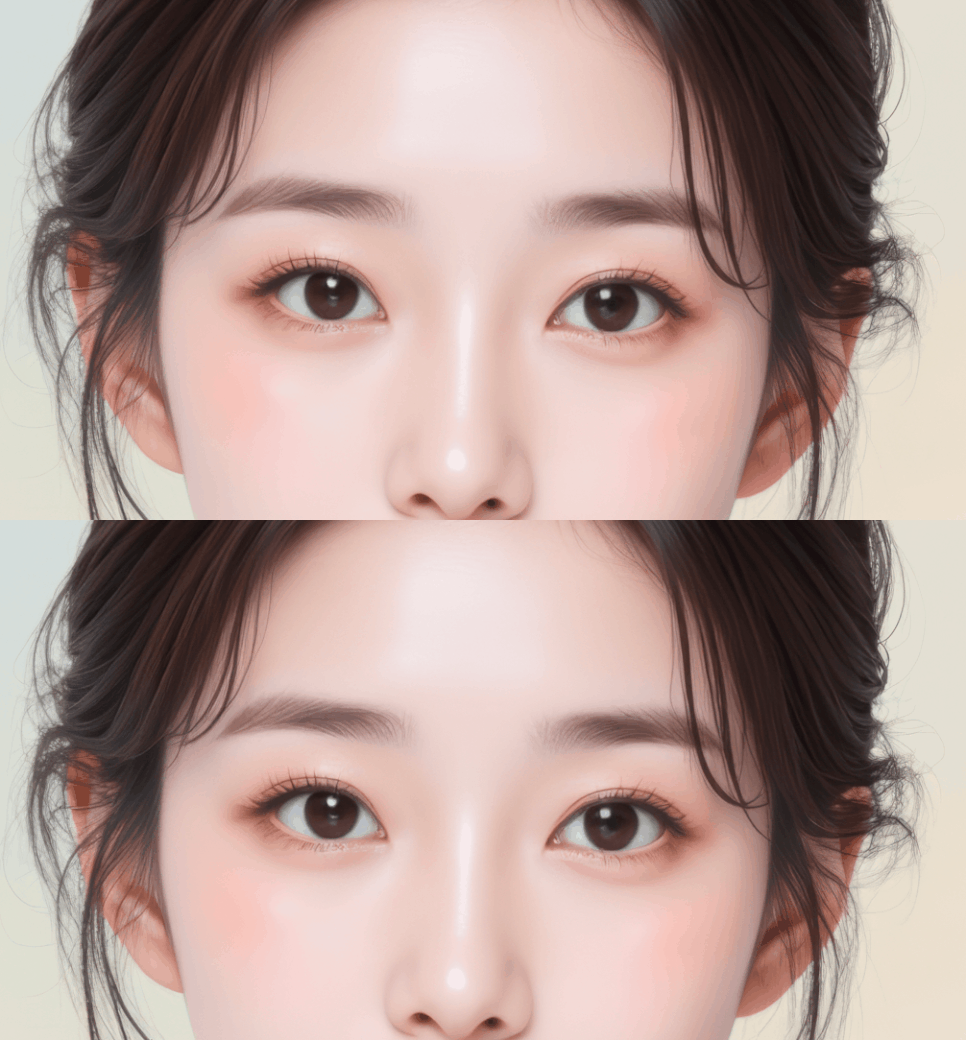
Important considerations for natural-looking eyelid fat grafting
The most important thing to avoid in eyelid fat grafting is excessive volume.
Filling the area until it looks bulging is not necessarily the right answer simply because the area above the eyes appears hollow.
It is important to maintain the original character of the eyes while gently softening only the sunken shadows.
The eyelids are particularly mobile areas. Changes when the eyes are closed, open, or smiling must all be taken into consideration.
A natural result should not look good only from the front; it should also appear unobtrusive across different expressions and angles.
For this purpose, the following points should be carefully assessed.
■The degree of fat deficiency above the eyes
■The condition of skin sagging and elasticity
■The position of the existing double-eyelid line
■The strength of eye opening and the structure of the eyes
■Whether fat under the eyes is protruding
■A history of previous eyelid surgery
Only by considering these factors together can it be determined whether fat grafting alone is sufficient or whether upper or lower blepharoplasty should also be considered.
Hollowness above the eyes can occur naturally as part of the aging process.
However, if it continuously makes you look tired, disrupts the double-eyelid line, and causes eye fatigue, you may consider ways to improve it.
Eyelid fat grafting is a method that may help soften shadows around the eyes by restoring insufficient volume and create a more lively appearance.
However, because the eyelids have thin skin and delicate structures, they should not be approached as an area where fat can simply be added.
If you are concerned about looking tired because of hollowness above the eyes, first seek an evaluation to determine the method suited to your current eye condition.
| This post was written for informational purposes in compliance with Article 56, Paragraphs 1–15 of the Medical Service Act. All treatments carry risks of side effects and complications that may vary from person to person. Before undergoing treatment, be sure to have a thorough consultation with a medical professional with extensive experience before making a decision. |