As you age, if your eyes start to look heavy and you are often told that you look tired, many people naturally begin to consider “eye surgery.”
Most people probably think of upper blepharoplasty first.
However, there are more causes of drooping-looking eyes than you might expect, and depending on the cause, a different method may be more suitable.
If you approach the issue based only on the formula “drooping eyes → upper blepharoplasty,” you may fail to achieve the desired result after surgery, or the improvement may be insufficient.
Today, I will organize the causes of drooping eyes that you should know about when considering eye cosmetic surgery in middle age, along with approaches suited to each condition.

Why Do the Eyes Droop with Age?
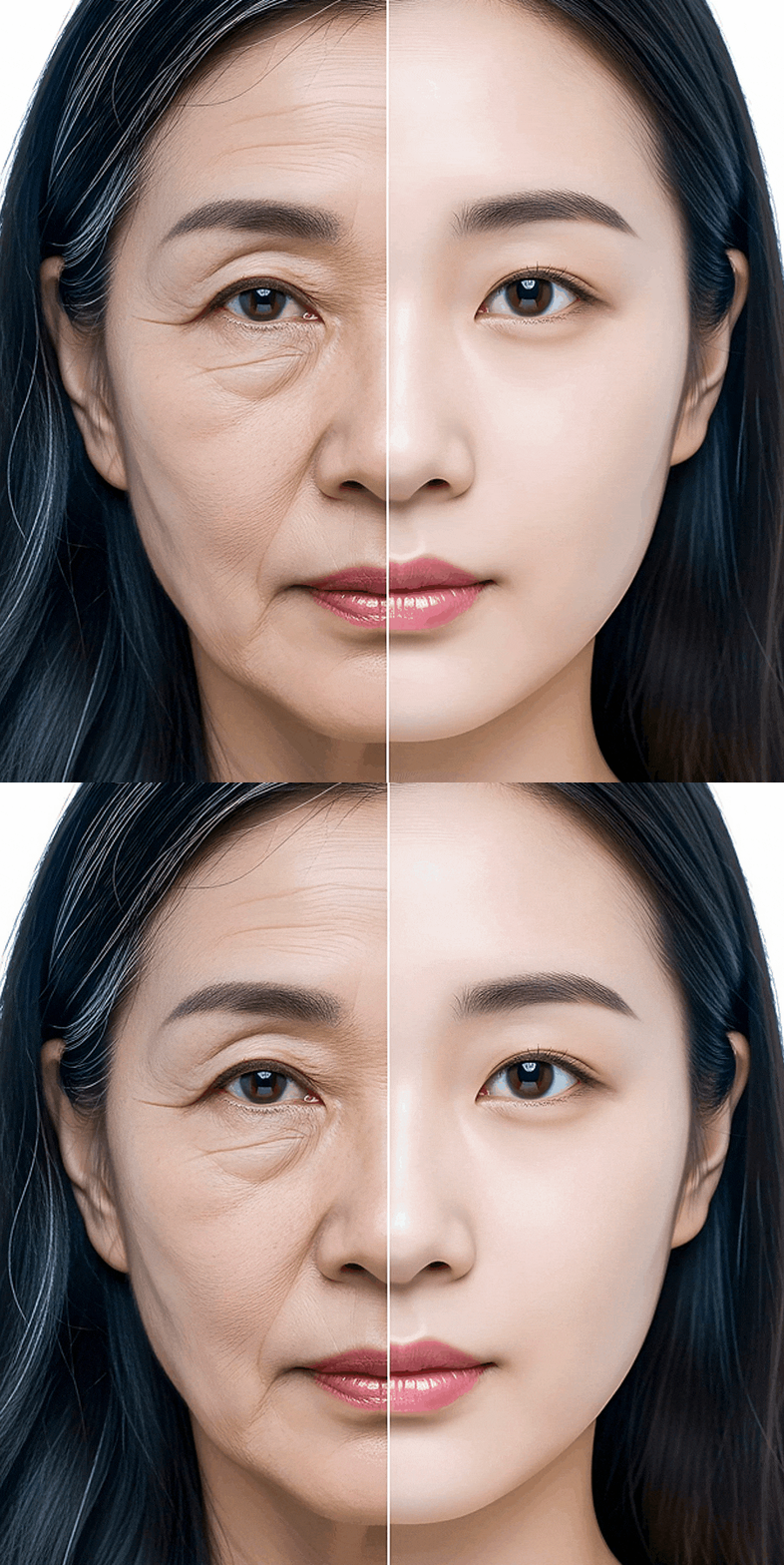
There is more than one reason why the eyes may appear droopy after middle age. In some cases, the skin of the eyelids themselves becomes loose; in others, the eyebrows descend and affect the appearance, or the strength used to open the eyes decreases.
These causes can be broadly divided into three categories.
✅ Laxity of the Eyelid Skin Itself: As the elasticity of the upper-eyelid skin decreases, excess skin stretches down over the eyelashes. Since the problem lies in the eyelid itself, surgery that directly corrects the eyelid skin is necessary.
✅ Lowering of the Eyebrow Position: In some cases, the primary cause is that the eyebrows have descended lower than the eyelid skin. In this situation, even if the eyelids are corrected, improvement may be limited if the eyebrows remain lowered.
✅ Reduced Eye-Opening Strength: As aging progresses, not only does the skin droop, but muscle strength also weakens. This can lead to drooping eyelids.
These three conditions may occur independently or in combination.
Suitable Surgical Methods for Each Condition
■ Non-Incisional Double-Eyelid Surgery
This may be considered when there is no double-eyelid crease or when an existing crease has loosened, or when some skin elasticity remains and the eyelid drooping is not severe.
This method creates a double-eyelid crease by connecting the skin and underlying tissue with sutures without making an incision. Its advantages include a relatively low recovery burden and no visible surgical scar.
However, if there is a large amount of excess skin or the skin has lost considerable elasticity, the effect may not last long. In middle-aged patients, the range of application may be limited depending on the condition of the skin.
■ Upper Blepharoplasty
This is the most commonly performed surgery for eye rejuvenation in middle age. An incision is made along the double-eyelid crease, excess skin and fat are removed, and the crease is refined.
It is effective when skin laxity is the primary cause—that is, when the eyelid skin itself has become loose. Because the scar is located within the eyelid crease, it is generally concealed naturally.
However, if drooping of the eyebrows or forehead is the primary cause, improvement may be limited with upper blepharoplasty alone.
■ Sub-Brow Lift
A sub-brow lift removes excess skin that has accumulated on the upper eyelid by excising skin directly beneath the eyebrow.
Because the incision follows the lower edge of the eyebrow, the scar is relatively concealed by the eyebrow. Since it does not affect the double-eyelid crease, it is chosen when the goal is to improve drooping while preserving the existing eye shape.
■ Forehead Lift
This surgery may be considered when the eyebrows have drooped or when the entire forehead has descended, affecting both the eyebrows and the eyelids.
The forehead skin and underlying tissue are lifted upward to correct the position of the eyebrows themselves.
When eyebrow drooping is severe or the forehead has descended considerably, fundamental improvement may be difficult with upper blepharoplasty or a sub-brow lift alone.
In such cases, a forehead lift may be considered in combination, or it may be necessary as the priority procedure.

What Surgery Is Right for Me?
The most important aspect of eye rejuvenation in middle age is identifying the cause. The appropriate surgical method differs depending on whether the eyelid skin has become loose, the eyebrows have descended, the entire forehead has drooped, or these conditions have occurred in combination.
During a consultation, rather than deciding on a surgical method based only on the feeling that “my eyes seem droopy,” it is necessary to identify where the drooping began.
You need to distinguish whether the drooping began in the eyelids, the eyebrows, or the entire forehead, so that you can choose the method most likely to achieve the desired result.
Before undergoing a procedure, check whether the entire structure around the eyes is being assessed and whether an approach tailored to you is being recommended after identifying the cause and location of the drooping.
Before recommending surgery, it is also important to explain non-surgical options when improvement may be possible through those methods.
Eye rejuvenation in middle age is not simply about removing skin. It is an area that requires an approach based on an accurate understanding of the structures around your eyes.
If you feel uncertain about which surgery is right for you, I recommend first identifying the cause of the drooping through a thorough consultation.
| This post was written for informational purposes in compliance with Article 56, Paragraphs 1–15 of the Medical Service Act. All treatments carry individual risks of side effects and complications. Before receiving treatment, be sure to make your decision after having a thorough consultation with a medical professional who has extensive experience. |